Quick Fixes for Slow Draining Kitchen Sink
Dealing with a slow-draining kitchen sink can be frustrating—you’re not alone in this. Many people struggle with clogs that disrupt their daily routines, but luckily, quick fixes can often get your sink flowing smoothly again.
To quickly fix a slow-draining kitchen sink, start by inspecting for visible clogs like hair or food debris and remove them with tongs or a drain brush.
Pour a mix of baking soda and vinegar down the drain, cover it, and wait 15-30 minutes before rinsing with hot water.
Check and clean the P-trap if necessary, and regularly flush with hot water to prevent buildup.
For more tips, you’ll find simple solutions to keep your drain flowing smoothly.
Key Takeaways
- Use a plunger to dislodge minor clogs and quickly get water flowing again.
- Pour hot water down the drain to break up grease and soap scum that might be causing the slowdown.
- Try a baking soda and vinegar mix to naturally fizz out minor blockages.
- Remove and clean the P-trap to clear out trapped debris and grease.
- Use a drain snake for stubborn or deeper clogs that won’t budge with other methods.
Why Is My Kitchen Sink Drain So Slow?

A slow-draining kitchen sink is often caused by a clog or buildup blocking the flow of water. Over time, grease, food particles, and soap scum accumulate, creating a stubborn blockage. Even if your kitchen decor looks pristine, hidden debris can impair drainage.
Poor appliance maintenance, like neglecting regular cleaning, worsens the problem. You might notice water pooling or draining slowly after washing dishes or rinsing produce. Sometimes, the issue stems from the pipes themselves, especially if they’re old or improperly installed.
Regularly inspecting and cleaning your sink and pipes helps prevent these problems. Proper maintenance keeps your drainage flowing smoothly and preserves your kitchen’s overall look and function. Addressing slow drainage early can save you from bigger plumbing issues later.
How to Check for and Remove Visible Clogs
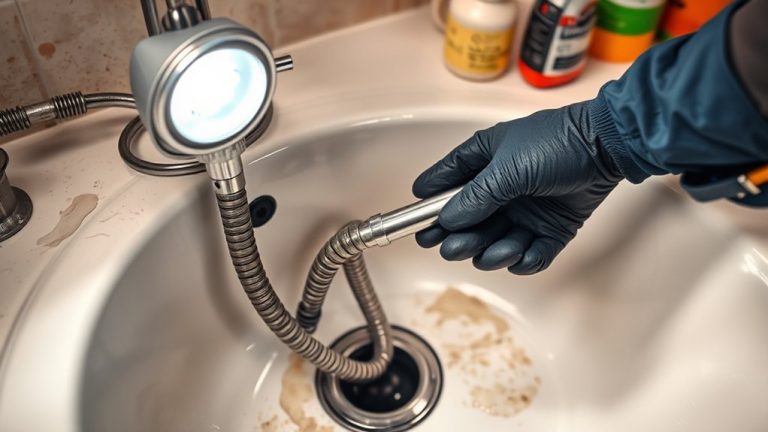
Sometimes, visible clogs are the main reason your sink drains slowly. To check, look inside the drain for debris like hair, soap scum, or food particles. Use gloves and a flashlight if needed.
If you spot a clog, remove it carefully with your hands or a tool like tongs. For eco-friendly solutions, try a natural drain brush or a plumbing maintenance tool designed for minimal environmental impact.
| Tip | Benefit |
|---|---|
| Use gloves | Protect your hands while inspecting or removing clogs |
| Clear debris | Restores proper drainage and prevents buildup |
| Avoid harsh chemicals | Protects pipes and the ecosystem |
If the clog persists or you prefer a sustainable approach, opt for eco-friendly solutions like biodegradable drain cleaners. Regular inspection and maintenance help prevent future clogs and keep your plumbing in top shape.
Using Baking Soda and Vinegar to Clear Your Sink
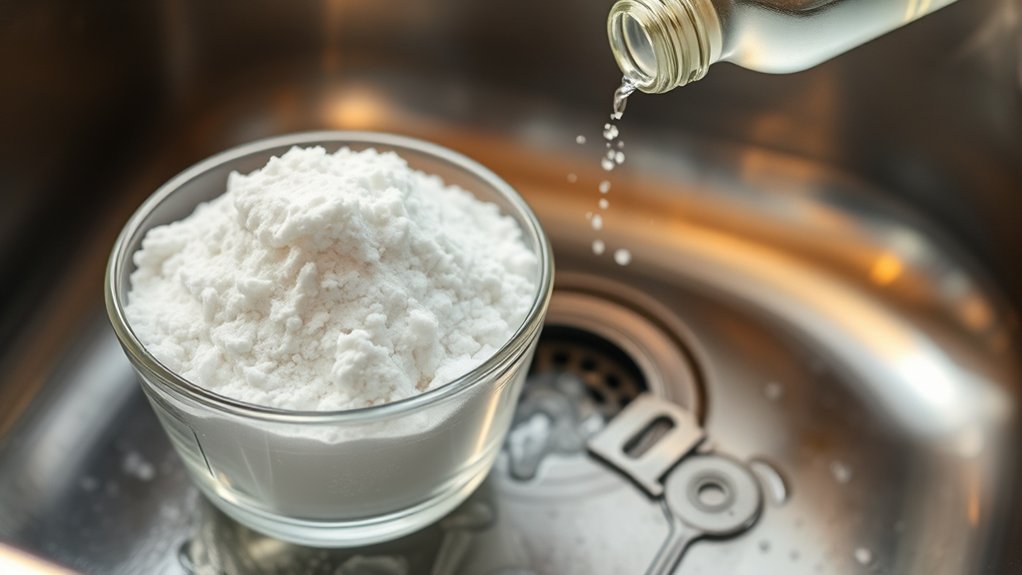
If your sink is draining slowly, using a mix of baking soda and vinegar can be a simple, eco-friendly fix. This DIY method is safe for your pipes and good for the environment, so many people prefer it for cleaning.
Start by pouring half a cup of baking soda directly into the drain. Then add half a cup of vinegar, which will fizz and bubble, helping to loosen grime and debris. Cover the drain with a cloth or stopper to contain the reaction, and let it sit for 15-30 minutes.
After that, flush the drain with hot water to wash away the loosened buildup. This easy trick can break down grease, soap scum, and minor clogs without harsh chemicals.
Using baking soda and vinegar regularly keeps your pipes clear and reduces the need for professional repairs. It’s an inexpensive, natural way to DIY plumbing and keep your sink flowing smoothly.
How to Properly Clean and Maintain Your Sink’s P-Trap
Regularly cleaning and maintaining your sink’s P-trap is key to preventing odors and clogs. Doing a quick inspection can help you spot buildup or leaks before they become bigger problems.
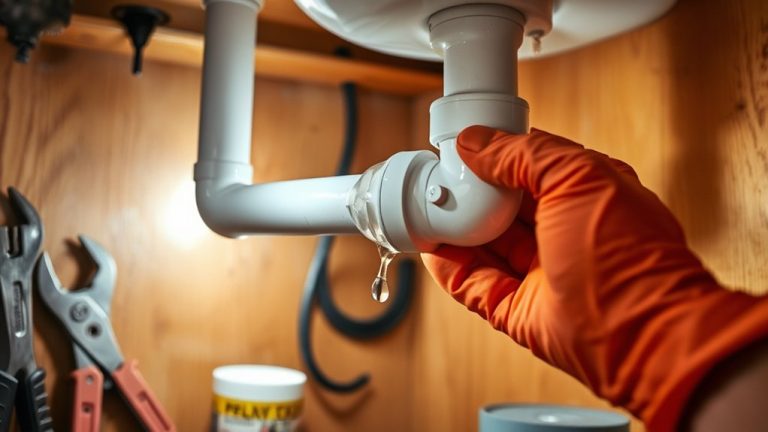
To clean effectively, start by placing a bucket under the trap, then loosen the slip nuts with pliers. Carefully remove the trap and check for debris or grease inside.
Use these simple techniques for effective maintenance:
- Remove debris: Scrub away grime inside the trap using a brush or old toothbrush.
- Soak and scrub: Let the trap soak in vinegar or a cleaning solution to dissolve stubborn buildup.
- Check for cracks: During your inspection, look for any leaks or cracks in the trap.
- Reassemble properly: Make sure all connections are tight and secure when putting everything back together.
Following these steps helps keep your sink draining smoothly and prevents future problems. Regular maintenance is quick, inexpensive, and saves you time and money on repairs later.
Flushing With Hot Water to Break up Minor Blockages
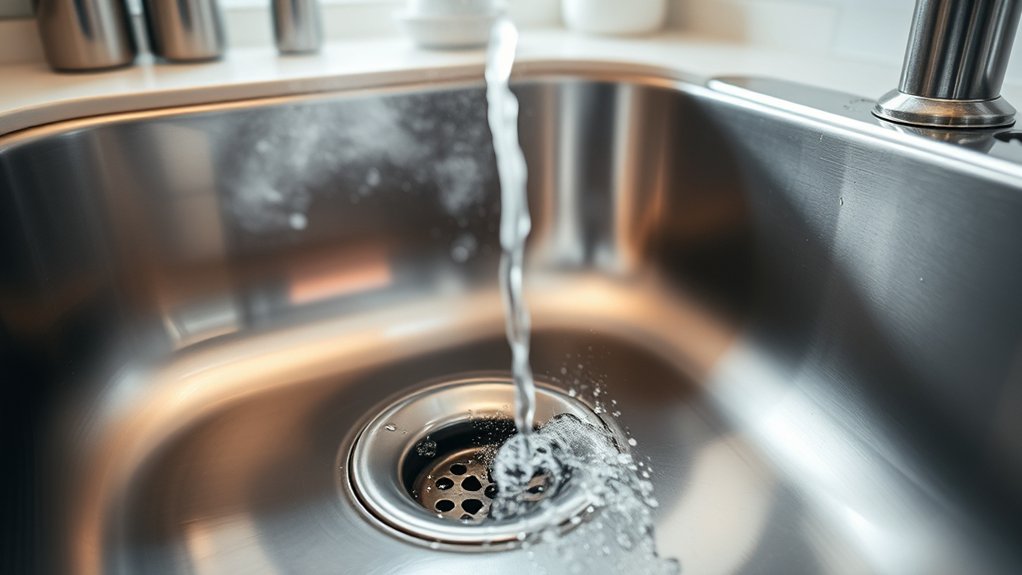
Using hot water can often help loosen up those minor clogs and get your drain flowing better. Just pour a steady stream of hot water directly into the drain and let it sit for a few minutes. It’s a simple trick that can do wonders!
But, a quick heads-up—if your pipes are plastic or already a bit damaged, hot water might cause some problems, so it’s best to be cautious.
Benefits of Hot Water
Have you ever noticed how pouring hot water down your drain can quickly clear minor blockages? Hot water works by loosening grease, soap scum, and other buildup, making it an effective, eco-friendly cleaning method. Regularly using hot water helps with plumbing maintenance by preventing stubborn clogs. Here are some benefits:
- Breaks up grease and soap buildup.
- Reduces the need for harsh chemical cleaners.
- Promotes smoother drainage.
- Saves time and money on professional repairs.
Using hot water is a simple, natural way to keep your sink flowing freely without relying on chemicals. It’s an eco-friendly cleaning approach that supports sustainable plumbing maintenance, helping you avoid costly repairs and keep your kitchen working well.
Proper Flushing Technique
When your sink starts to drain slowly, a simple and effective method is flushing it with hot water. This helps break up minor blockages caused by grease, soap scum, or food debris.
Start by boiling a kettle of water and pouring it directly into the drain in a steady stream. Use hot water rather than boiling to avoid damaging your sink or pipes.
While doing this, consider your kitchen decor—keeping the area tidy makes maintenance easier. Regularly flushing with hot water can prevent buildup that slows drainage, saving you from bigger issues.
Just remember, this works best for minor clogs and should be part of your routine sink maintenance. It’s especially useful if you’ve recently upgraded your kitchen decor or installed a new sink.
When To Avoid Hot Water
While hot water can often clear minor clogs effectively, there are times when it’s better to hold off. Hot water hazards, like pipe corrosion, can get worse with repeated use, especially in older pipes. If you notice rust or leaks, using hot water might speed up the damage.
Also, avoid hot water if you think there’s a chemical buildup or if your drain has plastic pipes that could warp under high heat. These situations call for other methods, like mechanical removal or calling in a professional.
Safer Alternatives to Chemical Drain Cleaners
Are chemical drain cleaners really your only option for clearing a slow drain? Not necessarily. You can try eco-friendly solutions that are safer for your pipes and the environment.
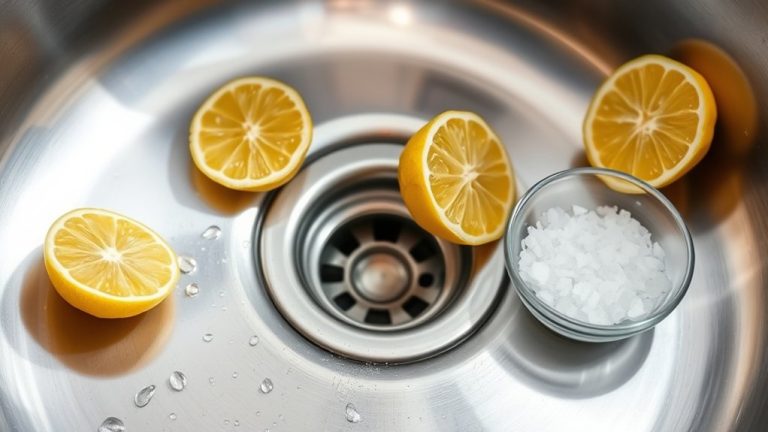
Baking soda and vinegar create a natural reaction that can break down minor clogs and buildup. Simply pour half a cup of baking soda into the drain, followed by half a cup of vinegar, and let it fizz for 15-30 minutes before rinsing with hot water.
This DIY maintenance method works well for mild blockages and reduces exposure to harsh chemicals. Alternatively, a plunger or a drain snake can physically dislodge debris without any chemicals.
These tools are inexpensive and easy to use, making them a safer and more sustainable choice. By opting for eco-friendly solutions and simple tools, you can keep your kitchen sink clear without risking damage to your pipes or harming the environment.
When and How to Inspect Your Sink’s P-Trap
Regularly inspecting your sink’s P-trap helps prevent stubborn clogs and unpleasant odors from developing unnoticed. Knowing when and how to do this plumbing check is key to maintaining your P trap properly.
You should check your P-trap if you notice slow drainage or a foul smell coming from your sink. To inspect:
- Place a bucket underneath the P-trap to catch any water.
- Loosen the slip nuts on both ends with pliers.
- Carefully remove the trap and clear out debris or buildup.
- Rinse the trap thoroughly before reattaching it securely.
Performing these steps every few months keeps your plumbing clear and odor-free. Regular inspections also help catch leaks or corrosion early, saving you money on repairs later.
Always tighten the connections properly and double-check for leaks before finishing your P-trap maintenance.
Tips to Prevent Future Clogs and Keep Your Drain Flowing
To keep your kitchen drain flowing smoothly, taking proactive steps can make all the difference. Regular drain maintenance helps prevent future clogs and extends the life of your pipes.
Use eco-friendly materials like biodegradable drain cleaners or natural solutions such as baking soda and vinegar to clear minor buildup without harming the environment. Avoid pouring grease, oil, or food scraps down the drain, as these are common clog culprits.
Use biodegradable cleaners or baking soda and vinegar to clear buildup without harming the environment.
Installing a drain strainer can catch debris before it enters your pipes, reducing the risk of blockages. Periodically flush your drain with hot water to dissolve grease and prevent buildup.
Keep an eye on slow drains and address minor issues promptly. By maintaining a clean drain and choosing eco-friendly options, you’ll reduce the need for harsh chemicals and avoid expensive repairs.
Consistent drain maintenance guarantees your sink stays clear and functions efficiently over time.
Troubleshooting Persistent Drain Issues: Next Steps
When your drain stays slow despite regular maintenance, it’s time to dig a little deeper and find the real issue. Start by looking at plumbing diagrams to understand your system’s layout. This can help you spot potential choke points or hidden problems.
Next, watch how the water flows. Slow drainage could mean there’s a partial blockage or venting issues that need attention.
Here are the next steps:
- Check accessible pipes and traps for hidden blockages.
- Look at the vent system to make sure air is circulating properly, as it impacts water flow.
- Think about buildup inside the pipes; sometimes, deposits aren’t visible but can restrict flow.
- If these steps don’t fix the problem, it’s a good idea to call in a professional. They can do a thorough inspection with specialized tools.
Tools and Supplies to Keep Handy for Quick Fixes
Having the right tools and supplies on hand can make quick fixes to a slow-draining kitchen sink much easier. Keep essential items ready for DIY repair, focusing on eco-friendly solutions whenever possible.
A plunger is your first defense against minor clogs. Use it with water for a better seal and to improve effectiveness.
A drain snake helps clear deeper blockages without relying on harsh chemicals, making it a manual, chemical-free solution.
Eco-friendly cleaning solutions like baking soda and vinegar are great for maintaining drain health and tackling minor issues naturally.
A small bucket and rags are handy for catching water and cleaning up spills. Reusing them for other DIY projects is an eco-friendly bonus.
Having a wrench and gloves can assist with pipe inspection and disassembly. Use eco-friendly lubricants to keep things safe and green.
Frequently Asked Questions
Can Hair Cause Kitchen Sink Clogs?
Yes, hair can cause kitchen sink clogs. Hair buildup often mixes with grease and soap scum, leading to drain blockages over time.
When hair gets trapped in the pipes, it creates a stubborn clog that slows or stops water flow. Regularly removing hair from the drain or using a drain guard can help prevent these blockages.
Doing this keeps your sink draining smoothly and helps avoid more complicated plumbing issues.
How Often Should I Clean My Sink’s P-Trap?
You should clean your sink’s P trap every six months to keep the drain flowing smoothly. Regular drain maintenance includes checking the P trap for clogs or buildup.
This buildup can cause slow drainage or bad odors. To clean it, place a bucket underneath, remove the trap, and clear out any debris or hair.
Routine inspections help prevent big clogs later on, which can save you time and money on repairs.
Are Natural Remedies Safer Than Chemical Drain Cleaners?
Think of natural remedies as gentle rivers flowing through a forest. They’re safer for your pipes and the environment.
Eco-friendly solutions like baking soda and vinegar are chemical alternatives that effectively clear drains without harsh chemicals.
Unlike chemical drain cleaners, which can damage pipes and harm ecosystems, natural options reduce health risks. They’re safer for your family too.
What Signs Indicate a Plumbing Professional Is Needed?
You need a plumbing professional when you notice persistent clogs, foul odors, or slow drains despite trying quick fixes.
If you see water around your fixtures, suspect leaks that require leak repairs, or notice decreased water pressure, it’s time to schedule plumbing inspections.
These professionals can identify hidden issues early, perform necessary leak repairs, and prevent future problems.
This can save you money and hassle down the line.
How Do I Prevent Grease Buildup in My Drain?
To prevent grease buildup in your drain, regularly use grease traps and practice proper drain maintenance.
Install a grease trap to catch fats before they reach your plumbing, and dispose of cooking grease in a container instead of pouring it down the drain.
Routinely clean your drain and traps to remove any accumulated grease, keeping your pipes clear and functioning smoothly.
These steps help avoid clogs and costly repairs.
Conclusion
If your sink drain keeps slowing down, don’t wait for it to turn into a full-blown disaster.
With these quick fixes, you can banish clogs faster than you can say “plumber,” saving yourself from endless frustration and costly repairs.
Regular maintenance and a bit of proactive care will keep your sink flowing smoother than a mountain stream.
Stay vigilant, act fast, and enjoy a sink so clear it outshines the morning sun—no more slow-draining nightmares.
Keeping your drain clear is the best way to prevent slow drainage and avoid bigger plumbing problems.