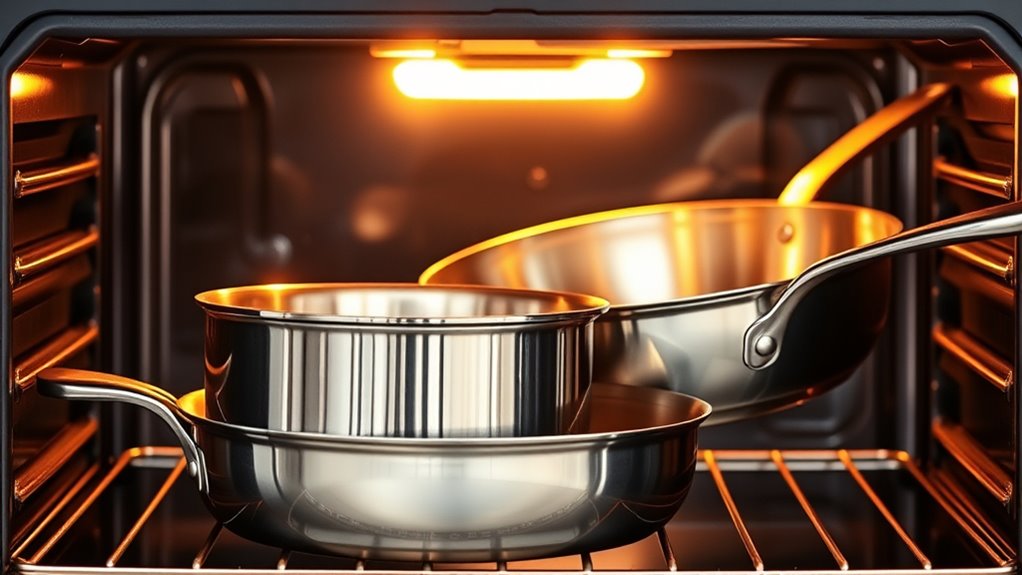
What Types of All-Clad Go in the Oven?
Many home cooks struggle to figure out which pans are safe to use in the oven, especially when it comes to versatile cookware like All-Clad. You’re not alone—navigating oven-safe cookware can be confusing, but knowing the ins and outs can make a big difference in your kitchen.
You can use most All-Clad pans made from stainless steel, aluminum cores, or copper accents in the oven, as they’re designed to handle high temperatures—often up to 500°F or more. Non-stick pans usually have a lower limit around 400°F.
Always check for labels or manufacturer instructions to confirm oven safety. If you keep temperature limits in mind and handle your cookware carefully, you’ll get the best results.
To learn more, continue exploring how to maximize your All-Clad’s oven performance.
Key Takeaways
Most stainless steel and hard-anodized aluminum All-Clad cookware are oven-safe up to 500°F or higher.
Non-stick All-Clad pans usually handle oven temperatures up to 400°F.
Always check for oven-safe labels or symbols on the bottom or handles before using them in the oven.
Make sure handles and lids are made of heat-resistant materials that can handle oven baking.
It’s also a good idea to verify the specific model’s maximum temperature limits to avoid warping or damage.
What Makes All-Clad Cookware Oven-Safe?
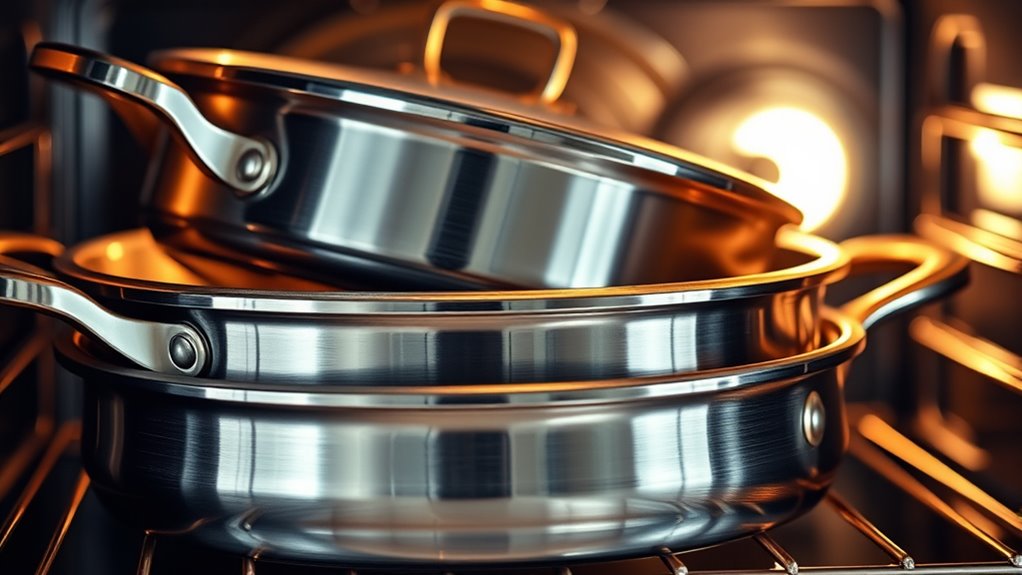
All-Clad cookware is oven-safe because of its durable construction and high-quality materials. Its design relies on a careful mix of stainless steel and aluminum layers.
All-Clad cookware is oven-safe thanks to durable stainless steel and aluminum construction.
The stainless steel exterior resists warping, scratching, and corrosion, so it can handle high oven temperatures without damage. The aluminum core provides excellent heat conduction, ensuring even cooking every time.
This combination makes the cookware sturdy and capable of withstanding oven heat without losing its integrity. The high-grade stainless steel is also non-reactive, which helps preserve the flavors of your food.
Plus, All-Clad designs its handles and lids with oven safety in mind, using heat-resistant materials that can handle high temperatures. Overall, the careful choice of materials and construction techniques makes sure your cookware stays reliable and durable in the oven.
This means you can confidently use All-Clad cookware for a variety of oven recipes without worry.
Which All-Clad Pans Can Handle Oven Temperatures?
Most All-Clad pans are designed to handle high oven temperatures, but it’s good to know which ones can take the heat without damage. Typically, their stainless steel and hard-anodized aluminum collections are built for durability and can handle oven temperatures up to 500°F or even higher.
These materials support a variety of cooking techniques, from roasting to baking, without risking damage to the cookware. Non-stick pans usually have a temperature limit around 400°F to protect the coating, so it’s best to check the manufacturer’s guidelines before putting them in the oven.
Always verify the specific model’s maximum heat tolerance to avoid warping or damage. Your choice should depend on your cooking needs and how much durability you require—stainless steel and anodized aluminum pans are versatile and resilient for high-heat oven cooking.
How to Identify Oven-Safe All-Clad Cookware in Your Kitchen
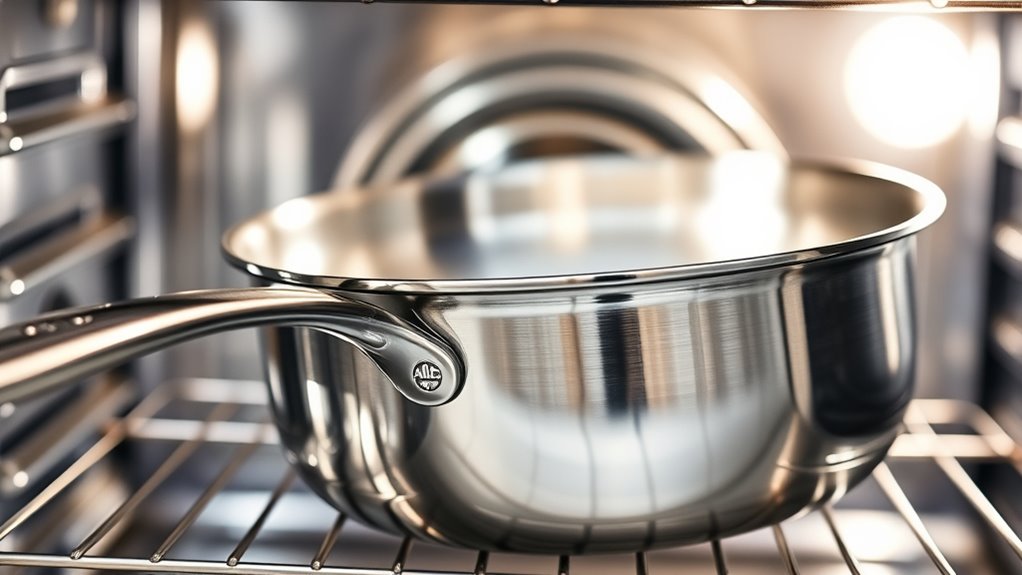
To determine if your All-Clad cookware is oven-safe, start by inspecting the bottom or handles for any markings or labels. Many All-Clad pieces have stamped or printed information indicating oven safety, including maximum temperature limits.
Inspect the bottom or handles for labels indicating oven safety and maximum temperature limits.
Check the cookware materials—All-Clad typically uses stainless steel, aluminum cores, or copper, all of which are oven-safe, but confirm the specific product details. Look for symbols like an oven icon or wording such as “oven safe” or “max temperature” to guide you.
If labels aren’t visible, consult the manufacturer’s instructions or website for details on your specific cookware model. Recognizing oven-safe cookware is essential for kitchen safety, preventing damage or accidents during cooking.
Always verify the materials and labels before placing your All-Clad in the oven, ensuring you use your cookware correctly and safely. Proper identification helps you make the most of your investment and avoid mishaps.
Safety Tips for Baking With All-Clad in the Oven
When you’re baking with All-Clad in the oven, it’s really important to check the maximum temperature limits first. That way, you can prevent any damage to your cookware. And when you’re taking hot stuff out of the oven, make sure to use oven mitts or proper handling techniques to avoid burns. Just a few simple steps like these can help keep you safe and ensure your cookware stays in great shape for a long time.
Oven Temperature Limits
Are you aware of the maximum temperature limits for All-Clad cookware? Understanding these limits is key to safe cooking and keeping your kitchen safe.
Most All-Clad pieces can handle up to 500°F, but it’s always best to double-check your specific product. Going above this temperature can damage the pan and release harmful fumes.
To keep your cookware in good shape, avoid sudden temperature changes and don’t use it under the broiler unless the manufacturer says it’s okay.
Here are some important tips:
- Check your cookware’s heat limit before using it
- Keep oven temperatures below 500°F
- Use oven mitts to handle hot pans safely
- Avoid overheating to preserve your cookware
Following these simple guidelines helps prevent accidents and makes your All-Clad last longer.
Proper Handling Techniques
Handling your All-Clad cookware properly during baking is key for safety and to keep your pans in good shape. Always use oven mitts or pot holders to protect your hands when taking cookware out of the oven.
Keeping your kitchen organized helps prevent accidents. Store your cookware in accessible, stable spots so they don’t slip or fall when you need them. When stacking or storing, place heavier pieces on the bottom to avoid tipping.
Avoid sudden temperature changes that could warp or damage your pans. Let them cool down gradually instead. Be mindful of the handles, especially if they’re made from heat-sensitive materials.
Clear countertops and designated storage areas make handling your cookware safer and more efficient. This reduces the risk of burns or damage during baking.
Understanding Temperature Limits of All-Clad Ovenware
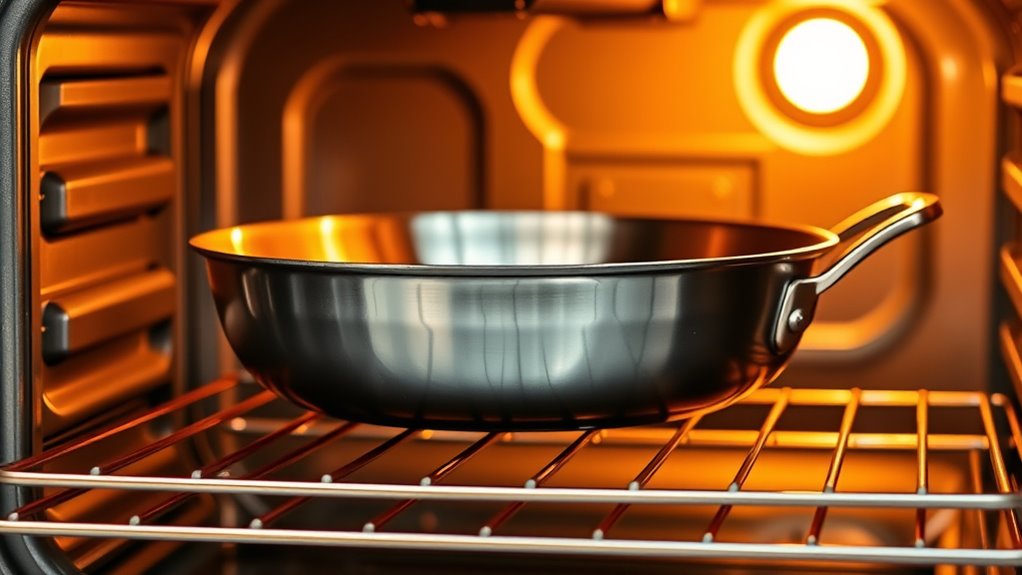
Understanding the temperature limits of All-Clad ovenware is key to using it safely and effectively. Exceeding these limits can damage the cookware and impact your cooking.
Most All-Clad pieces are built to handle oven temperatures up to 500°F, but always double-check your specific product details. You can safely roast, bake, and broil within these temperatures to ensure even heat without risking damage.
To keep your cookware in great shape, avoid sudden temperature changes that might cause warping. Use oven mitts when handling hot items and follow the manufacturer’s instructions for maximum temperature.
Never use metal utensils that could scratch or damage the surface. Sticking to these guidelines helps preserve the integrity of your All-Clad and ensures consistent, safe cooking results.
How to Care for and Maintain Your All-Clad Oven-Safe Pieces
Proper care and maintenance are key to keeping your All-Clad oven-safe pieces working their best over time. To make sure they last, understand the different materials and follow the right cleaning steps.
All-Clad cookware is usually made of stainless steel, which resists rust and stains. Some pieces also include aluminum cores for even heat distribution.
Here’s a quick comparison:
| Material | Durability | Cleaning Guidelines |
|---|---|---|
| Stainless Steel | Very durable and resistant to corrosion | Use warm, soapy water and avoid abrasive scrubbers |
| Aluminum Core | Great for heat conduction and lighter | Hand wash gently, avoid harsh dishwasher cycles |
| Non-stick Layers | Easy to clean and prevents sticking | Use non-abrasive sponges and avoid metal utensils |
| Copper Accents | Looks beautiful but delicate | Hand wash carefully and polish regularly |
Always follow the manufacturer’s cleaning instructions. Avoid sudden temperature changes to prevent damage.
Proper care will keep your All-Clad pieces shining and working well for years to come.
Using All-Clad With Other Oven-Safe Materials
When using All-Clad cookware with other oven-safe materials, it’s important to check if they’re compatible to ensure safe, even cooking. Not all materials heat the same or can handle the same temperatures, so knowing this helps prevent warping or damage.
When stacking cookware, make sure items are stable and won’t slide or scratch each other. Using oven-safe silicone or cloth pads between pieces can protect surfaces and prevent scratches.
Avoid stacking heavier materials with delicate All-Clad pieces to prevent warping. Also, always check the temperature limits for each material so you don’t overheat and damage your cookware.
Using oven-safe racks or trivets can improve airflow and reduce direct contact, helping everything heat evenly and stay in good shape.
Common Mistakes When Using All-Clad in the Oven
One mistake people often make is using pieces that aren’t actually oven safe. That can lead to damage or even safety hazards, so it’s really important to double-check before putting your cookware in the oven.
Another thing to watch out for is ignoring the recommended temperature limits. Pushing beyond those can cause warping or damage to your All-Clad.
Paying attention to these details will help keep your cookware in great shape and ensure it lasts for years to come.
Using Non-Oven Safe Pieces
Are you aware that using non-oven safe pieces with your All-Clad cookware can lead to damage or safety hazards? Material compatibility is key—check if your pieces are designed for oven use. Ignoring oven safety features can cause warping, cracking, or even dangerous breakage. Always verify that your cookware is oven-safe before proceeding.
Some common mistakes include using non-metallic handles not designed for high temperatures, ignoring manufacturer’s guidelines on oven safety, using glass or ceramic pieces not rated for oven use, and overlooking labels indicating oven safety features.
Ensuring your All-Clad pieces are compatible with oven conditions helps prevent damage and keeps you safe during cooking. Always follow the manufacturer’s instructions for proper use.
Ignoring Temperature Limits
Ignoring the specified temperature limits for your All-Clad cookware can quickly lead to damage or safety hazards. If you set the oven temperature too high, you risk warping or damaging the cookware’s bonded layers, which compromises its durability.
All-Clad pans are designed to withstand certain temperature thresholds. Exceeding these can cause the metal to warp or delaminate. Always check the manufacturer’s recommended oven temperature to ensure both your cookware and your food are safe.
Overlooking these limits may also result in unsafe cooking conditions or make it hard to clean residue from burnt-on food. To keep your All-Clad in top shape and maintain its durability, stick to the recommended temperature guidelines and avoid pushing your oven beyond those limits.
Troubleshooting: Is Your All-Clad Oven-Ready?
Before you start cooking, it’s important to verify that your All-Clad oven is truly oven-ready. This guarantees kitchen safety and helps maintain the cookware’s durability.
Always check your All-Clad for damage before oven use to ensure safety and prolong its lifespan.
To troubleshoot, check for these signs:
- Warping or dents on the cookware’s surface
- Loose or damaged handles
- Cracks in the ceramic or non-stick coating
- Unusual odors or smoke during preheating
If you notice any of these issues, it’s best to avoid using the piece in the oven. Using damaged cookware can compromise safety and cause further damage, reducing its lifespan.
Always inspect your All-Clad thoroughly before placing it in the oven, especially if it’s been used often or exposed to sudden temperature changes. Proper maintenance and careful inspection help preserve its durability, ensuring safe and effective cooking every time.
Conclusion: Maximize Your All-Clad’s Oven Performance
To get the most out of your All-Clad oven, it’s important to keep up with proper maintenance, inspections, and correct usage. Regular cleaning helps prevent buildup that could affect safety and performance.
Avoid using abrasive cleaners that might damage the surface, so your cookware stays durable over time. Always check for warping or scratches before using it, since damage can cause uneven heating or safety issues.
When cooking, stick to the temperature limits recommended by the manufacturer. This helps prevent warping or deterioration, keeping your cookware in good shape.
Handling and storing your All-Clad properly also helps extend its lifespan. Well-maintained cookware ensures safety and optimal performance.
A little routine care can keep your All-Clad oven-ready, safe, and long-lasting. This way, you can enjoy reliable results every time you cook.
Frequently Asked Questions
Can All-Clad Cookware Be Used Under a Broiler?
Yes, All-Clad cookware can usually be used under a broiler, but it’s important to check your specific product’s broiler safety first. Not all All-Clad pans are designed for broiling, so it’s best to confirm.
Keep in mind that the oven temperature and the broiler’s heat can affect how well your pan performs. Use high heat carefully, and try to avoid direct contact with the broiler element to prevent damage.
Always follow the manufacturer’s instructions to ensure safe use. This helps prevent warping or other damage to your cookware.
Are All-Clad Pans Safe for Dishwasher Cleaning After Oven Use?
Yes, most All-Clad pans are dishwasher safe after oven use, making cleaning convenient. However, check your specific cookware’s dishwasher safety label to prevent damage.
While they’re generally oven compatible, avoid exposing non-oven-safe pieces to high heat. Always let your pans cool before dishwashing to protect their finish.
Following these guidelines guarantees your cookware remains in great condition while maintaining their oven compatibility and dishwasher safety.
How Does Oven Temperature Affect All-Clad’s Non-Stick Coating?
You might notice that when you increase the oven temperature, it can impact All-Clad’s non-stick durability. Higher oven temps can cause the coating to break down over time, especially if it exceeds recommended guidelines.
Keeping the oven temperature within the manufacturer’s suggested range helps preserve the non-stick surface and extends your pan’s lifespan. So, stay mindful of the heat, and your All-Clad will continue to perform beautifully.
Can I Use All-Clad Cookware in a Convection Oven?
Yes, you can use All-Clad cookware in a convection oven, but it’s important to think about oven safety and the material of the cookware. All-Clad, made from stainless steel and aluminum, is built to handle high temperatures, so it’s generally suitable for convection baking.
Just be sure to follow the manufacturer’s temperature guidelines to avoid any damage. Even tough cookware can warp or discolor if exposed to extreme heat, so it’s best to use moderate settings.
What Are Signs My All-Clad Cookware Is Damaged From Oven Use?
Your All-Clad cookware might be telling you it’s damaged if you notice warped bottoms, discoloration, or peeling non-stick coatings—like a worn-out soldier. These signs threaten oven safety and can shorten cookware longevity.
Watch for cracks or distorted shapes, which indicate heat stress. Addressing these issues early guarantees your cookware remains a reliable kitchen companion, preserving both your safety and the lifespan of your investment.
Conclusion
To get the most out of your All-Clad cookware, always check its oven-safe labels and temperature limits. Did you know that over 80% of All-Clad pans are designed to withstand oven temperatures up to 600°F?
Understanding your cookware’s specific capabilities and following safety tips can help you confidently bake, broil, and roast. Your All-Clad will perform beautifully without damage or safety concerns.
Maximize your investment and enjoy perfect results every time with the right oven-safe All-Clad pieces.