Which Pans Are Safe to Go in the Oven?
Many home cooks find themselves wondering which pans are safe to go in the oven. It can be confusing, especially with so many materials and designs out there. You’re not alone—figuring out oven-safe cookware is a common challenge.
Most pans are safe for the oven if they’re made of materials like cast iron, stainless steel, or ceramic. If their handles are oven-safe—usually metal or silicone—they are generally suitable for oven use.
Look for labels or symbols that confirm oven compatibility, or check for signs of damage or wear.
Non-stick pans are often safe up to 450°F, but coating type matters. If you want to guarantee safety and learn key tips, keep exploring what to watch for.
Key Takeaways
- Look for labels or symbols indicating “oven safe” and check the manufacturer’s temperature guidelines.
- Cast iron, stainless steel, and ceramic pans are usually safe for the oven. Just make sure to verify the handle materials too.
- Handles made of metal or silicone are safe in high heat. Plastic or rubber handles are generally not oven-safe.
- Check for any damage like cracks, warping, or peeling coatings. These signs mean the pan might not be safe to go in the oven anymore.
- Always follow the manufacturer’s recommended maximum oven temperature to avoid damaging the coating or the pan itself.
How Can I Tell If My Pan Is Oven-Safe?
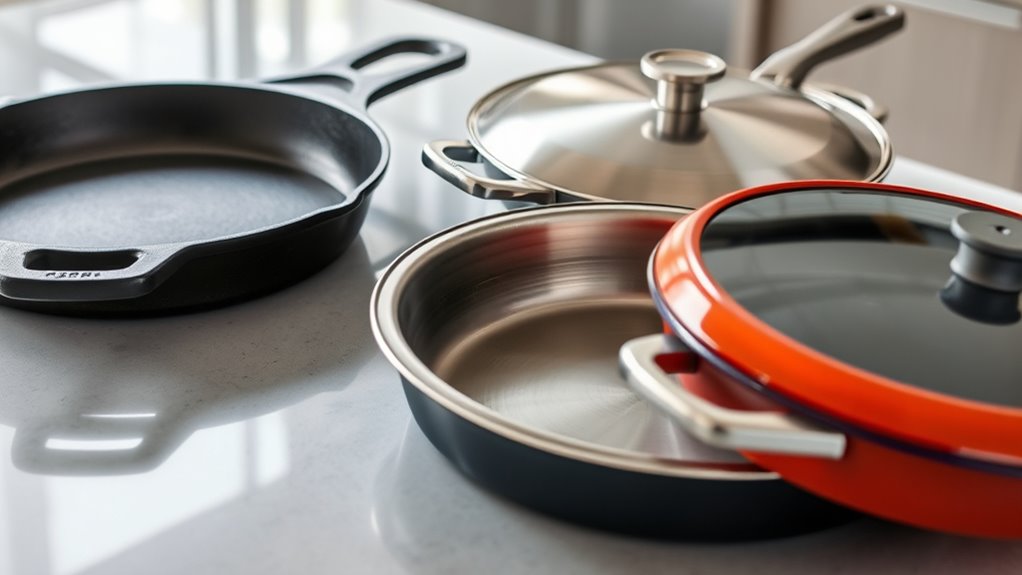
To find out if your pan is oven-safe, look for any labels or markings on the bottom or handle that show it can handle high temperatures. Many pans have symbols or words like “oven safe” or temperature limits printed on them.
If there are no markings, check how the pan is built. A thick pan usually handles heat better, so it’s more likely to be oven-safe. A thinner one might warp or get damaged in the oven.
Pay attention to the handle design too. Sturdy, heat-resistant handles made of metal or silicone are usually a good sign. Avoid pans with plastic or rubber handles, as these can melt or release fumes when heated.
Think about the overall build of the pan. Well-made pans with reinforced handles tend to withstand oven heat better. When you’re unsure, it’s best to check the manufacturer’s instructions or try testing the pan at a low temperature first.
What Factors Determine If a Pan Can Handle the Oven?
Several key factors influence whether a pan can safely handle oven temperatures. One vital aspect is the pan coating. Some coatings, like non-stick surfaces, can degrade or release fumes if exposed to high heat. Check manufacturer guidelines to verify they’re oven-safe.
The handle material also matters. Metal handles typically withstand oven heat well, while plastic or rubber ones may melt or crack at high temperatures. Consider the construction of the pan—solid, one-piece handles are usually more durable in the oven.
Moreover, the overall build quality and materials used in the pan influence its heat resistance. If a pan has multiple materials or coatings, verify each component’s oven safety. By understanding these factors—especially pan coating and handle material—you can confidently determine whether your cookware can handle oven use without damage or safety concerns.
Are Cast Iron Pans Oven-Safe?
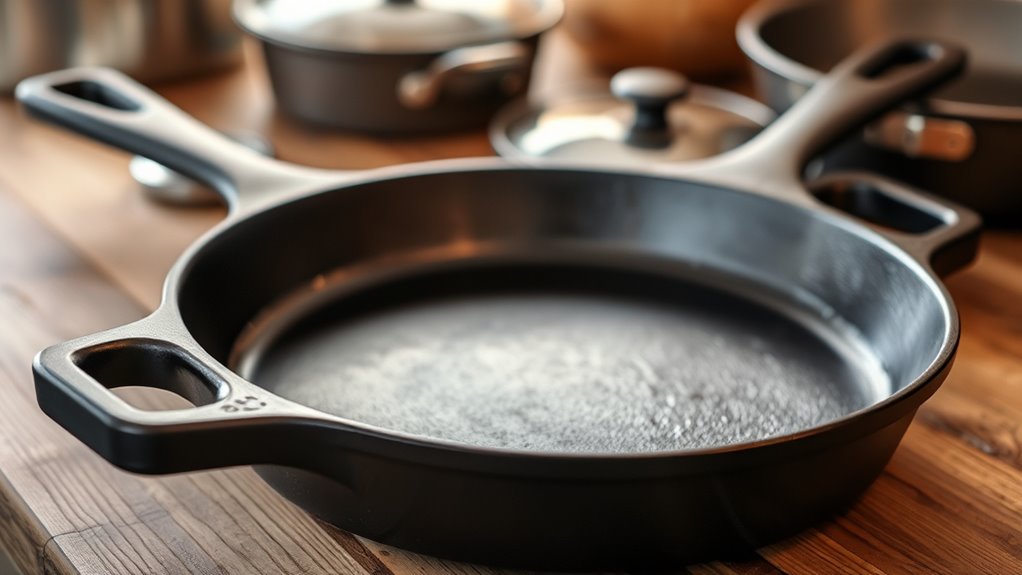
Cast iron pans are pretty much built for the oven. They’re known for being super durable and can handle high temperatures without any trouble. So, if you love baking or roasting, they’re a great choice.
Just a heads-up, though—taking good care of your cast iron is key to keeping it in tip-top shape. With the right maintenance, your pan can last a lifetime and stay in perfect condition. Avoid rust and damage by seasoning it regularly and avoiding sudden temperature changes. All in all, yes, cast iron pans are oven-safe and make a fantastic addition to your kitchen arsenal!
Durability and Heat Tolerance
Because cast iron pans are known for their exceptional durability, they can withstand high temperatures without warping or cracking. Their material composition, made from a blend of iron and carbon, gives them excellent heat tolerance, making them ideal for oven use.
Many reputable brands design their pans to endure oven temperatures up to 500°F or higher. Brand reputation also matters; trusted manufacturers often test their products for oven safety and durability.
This ensures they won’t warp or break under high heat. Keep in mind that a well-seasoned cast iron pan can handle repeated oven use without deterioration.
Maintenance and Care
Maintaining your cast iron pan properly is key to keeping it safe for oven use and ensuring it works well over time. Focus on the right cleaning methods and cooking techniques.
After each use, clean the pan with hot water and a brush or scraper. Avoid soap because it can strip away the seasoning. Dry it thoroughly and apply a thin layer of oil before storing to prevent rust.
When using your pan in the oven, make sure it’s well seasoned so it can handle high temperatures without damage. Proper care will help your pan last longer and stay oven-safe.
| Cleaning Methods | Cooking Techniques |
|---|---|
| Hot water & brush | Use moderate heat initially |
| Avoid soap | Gradually increase oven temps |
Is Stainless Steel Safe for Oven Use?
Stainless steel is generally safe for oven use, making it a popular choice for cookware and bakeware. Its durability and resistance to high temperatures mean it can handle oven conditions without warping or melting.
When it comes to looks, stainless steel has a sleek, polished appearance that fits nicely in any kitchen. Its shiny surface and timeless style can really boost your presentation, whether you’re roasting, baking, or broiling.
Material compatibility is important—stainless steel works well with most oven recipes because it can withstand heat without degrading. Plus, it’s safe at high temperatures, unlike some non-stick coatings that might release harmful fumes.
Just make sure your stainless steel cookware has oven-safe handles. Avoid ones with plastic or non-oven-safe parts to stay safe. Overall, stainless steel is a reliable, safe, and attractive choice for all your oven cooking needs.
Can Non-Stick Pans Go in the Oven?
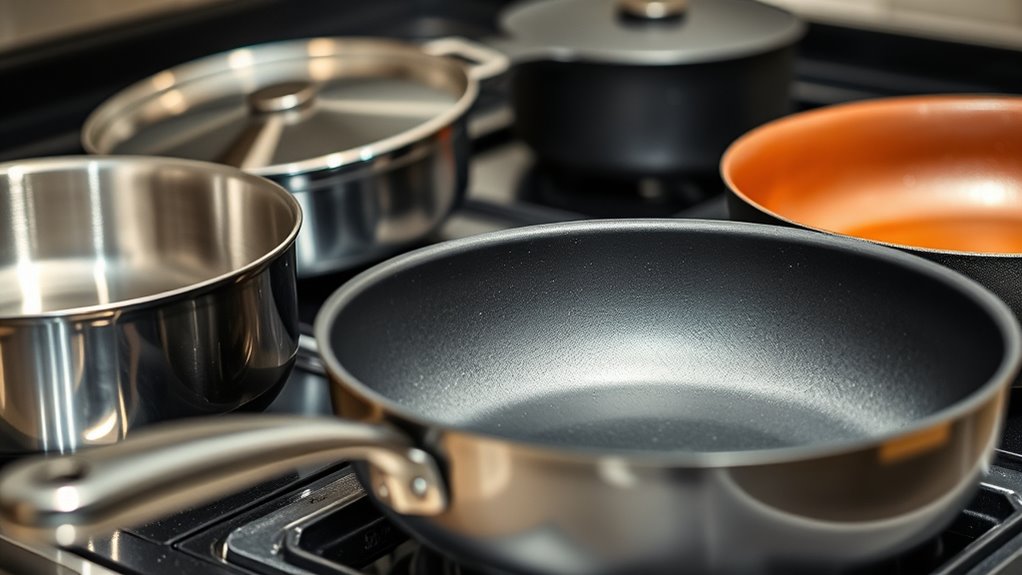
You might be curious whether you can put non-stick pans in the oven, right? Well, it really depends on the type of coating and the handles. Some non-stick coatings have temperature limits, so if you go over those, you might damage the coating or even release fumes, which isn’t great.
Also, keep in mind that the handles matter, too. If they’re made of plastic or rubber, they probably won’t hold up to high oven temperatures and could melt or become damaged. So, it’s always a good idea to check the manufacturer’s instructions before tossing your non-stick pan into the oven.
Temperature Limits of Coatings
Many non-stick coatings have temperature limits you should know before putting your pan in the oven. Going beyond these limits can damage the coating and make your kitchen unsafe.
Most non-stick pans are safe up to around 450°F, but some are rated for lower temperatures. Ignoring these limits can cause fumes to be released or damage the coating, which affects your cooking and safety.
Keep in mind that overheating can produce toxic fumes. Damaged coatings won’t work as well, and excess heat can warp the pan. Using the wrong temperature can also void your warranty.
Knowing and following the manufacturer’s guidelines helps protect your cookware and ensures safe, effective cooking.
Handle Material Concerns
Since handle materials vary in their heat resistance, it’s important to consider whether your non-stick pan’s handle can withstand oven temperatures. Handle safety depends on the material compatibility of the pan’s grip.
Some handles, like stainless steel or silicone, are designed to endure high heat, making them oven-safe. Others, such as plastic or rubber, may melt or become damaged, which can be a safety hazard.
Before putting a non-stick pan in the oven, check the manufacturer’s guidelines regarding handle durability. If the handle is marked oven-safe, you can proceed confidently.
If not, it’s best to avoid exposing it to high temperatures. Ensuring handle safety helps prevent accidents and keeps your cookware in good shape, making cooking safer and more reliable.
Oven Safety of Non-Stick Layers
The oven safety of non-stick layers mainly depends on the type and quality of the coating. Many modern pans have oven-resistant coatings designed to handle high temperatures, but it’s always best to check the manufacturer’s guidelines.
If your pan has heat-resistant handles, you can often put it directly into the oven without worries. Just be aware that some non-stick coatings may degrade or release fumes if exposed to extreme heat.
Keep these key points in mind:
- Check if your non-stick coating is oven resistant
- Don’t go beyond the recommended temperature limits
- Use pans with heat-resistant handles for added safety
- Replace scratched or peeling coatings right away
- Follow the manufacturer’s instructions for oven use
Following these tips helps you enjoy cooking safely without risking damage or health issues.
Are Ceramic and Glass Pans Suitable for Baking in the Oven?
Ceramic and glass pans are popular choices for baking because they distribute heat evenly and can often be used directly from the oven to the table. These pans are versatile and work well for many cooking techniques, from casseroles to baked desserts.
You can bake in most ceramic and glass dishes at typical oven temperatures, but always check the manufacturer’s guidelines. They are generally oven-safe up to certain temperature limits, usually around 350-450°F, depending on the product.
Keep in mind that sudden temperature changes can cause cracking or shattering, so avoid moving a hot dish directly from the fridge to the oven. Also, don’t use ceramic or glass pans with damaged or chipped surfaces.
How to Recognize Oven-Safe Cookware Without Labels
You can usually figure out if your cookware is oven-safe just by taking a good look at what it’s made of. Sturdy metals like cast iron or stainless steel tend to be great at handling high temperatures, so they’re often safe to put in the oven.
It’s also a good idea to check for any signs of wear and tear. Scratches, cracks, or chips might mean the cookware isn’t as durable as it needs to be for oven use. If your pan looks pretty worn out or damaged, it’s probably best to skip putting it in the oven to stay safe.
Material Durability Indicators
Identifying oven-safe cookware without labels often depends on evaluating the material’s durability. You want to assess how well the material can handle high temperatures during different cooking techniques and how easily it responds to cleaning.
Look for cookware made from sturdy materials like cast iron, stainless steel, or oven-safe glass, which can withstand the heat. Signs of durability include a heavyweight feel, which shows resilience under high heat.
A smooth, intact surface indicates resistance to warping, and no visible cracks or chips mean it’s safe for oven use. Also, check if the cookware can handle rapid temperature changes without damage.
Finally, consistent performance through repeated cooking and cleaning is a good sign. These indicators help you confidently pick cookware built for oven use, even when it’s unlabeled.
Visual Wear and Tear
Even without labels, you can tell if your cookware is oven-safe by looking at the visual wear and tear. Check for signs like cracks, warping, or bubbling, which show the material may be compromised.
A pan with chips or loose handles probably won’t handle high oven temperatures well. Also, look for peeling or discoloration on the surface, as that indicates the coating has deteriorated.
| Signs of Damage | Implications |
|---|---|
| Cracks or chips | Not oven-safe; could break |
| Warping | Causes uneven heating and can be unsafe |
| Bubbling or peeling | Damage to the coating, avoid using in oven |
| Discoloration | Shows heat or chemical damage |
| Loose handles | Safety hazard; might detach during use |
Use these clues to decide if your cookware is still oven-friendly.
Tips for Using Pans Safely in the Oven
To guarantee safety when using pans in the oven, always check that they are oven-safe before placing them inside. Proper cookware labeling helps you identify which pans can withstand high temperatures, preventing accidents. Remember, not all cookware is designed for oven use, so verifying this is essential for kitchen safety.
Here are some tips to keep in mind:
- Always follow manufacturer instructions for maximum oven temperature.
- Avoid sudden temperature changes to prevent warping or cracking.
- Use oven mitts to handle hot pans safely.
- Keep pan handles turned inward to avoid knocking them over.
- Regularly inspect your pans for damage or warping that could compromise safety.
Common Signs That a Pan Isn’t Oven-Safe
If a pan shows visible damage or deterioration, it’s a clear sign it may not be safe for oven use. Cracks, warping, or chipped surfaces can compromise safety and suggest the material may no longer handle high temperatures.
Check for peeling coatings or flaking, which can contaminate your food. Material compatibility is key; some materials like plastic or certain non-stick coatings aren’t designed for oven heat and can release harmful fumes or degrade.
Peeling coatings or flaking can contaminate food and indicate unsafe, oven-incompatible materials.
Look for signs of discoloration or burn marks, indicating the pan has been exposed to excessive heat that weakens its structure. If the handles are loose or damaged, it’s best to avoid using the pan in the oven to prevent accidents.
Regularly inspecting your cookware for these signs helps prevent mishaps and ensures you’re choosing safe, oven-friendly options for your cooking needs.
When Should You Replace Your Oven-Ready Cookware?
Knowing when to replace your oven-ready cookware is important for safe and effective cooking. Over time, wear and tear can compromise your kitchen safety and affect your cooking results.
You should replace your pans if you notice cracks or chips in the material, which could cause breakage during use. Warping that prevents even heat distribution is also a sign it’s time to get new cookware.
Loose handles that might detach during cooking are a safety hazard. Persistent stains or odors that won’t wash out can indicate the need for replacement. Visible corrosion or rust can contaminate your food, so it’s best to replace those pans too.
Using damaged cookware can lead to uneven cooking, accidents, or exposure to harmful materials. Regularly inspecting your pans helps ensure they stay safe for oven use.
Keeping your cookware in good shape not only improves your cooking techniques but also keeps your kitchen safe. When in doubt, it’s better to replace or repair your pans to maintain high safety standards.
Enjoy peace of mind with every meal by taking care of your oven-ready cookware and replacing it when necessary.
Frequently Asked Questions
Can Silicone Baking Molds Withstand High Oven Temperatures?
Silicone baking molds can handle high oven temperatures because of their durability. Most are designed to withstand up to 450°F (232°C), so they’re safe for baking.
But it’s really important to check the heat resistance details on your specific mold. Some might have lower temperature limits.
Always follow the manufacturer’s guidelines to avoid melting or damaging your mold. This way, you can enjoy versatile baking with your silicone molds without worries.
Are Enamel-Coated Pans Safe for Oven Use?
Think of enamel-coated pans as the sturdy armor of your kitchen arsenal. They’re generally safe for oven use if their enamel durability holds up.
Most enamel-coated pans are designed for oven safety at temperatures usually up to 500°F, but always check manufacturer guidelines. When cared for properly, these pans resist chipping and cracking.
That makes them reliable for baking or roasting, ensuring your dishes come out perfectly every time.
How Do I Clean Oven-Safe Pans Properly?
To clean oven-safe cookware properly, start with tips like soaking stubborn stains and avoiding harsh abrasives.
Use warm, soapy water and a soft sponge to gently scrub the surface, especially for enamel or non-stick coatings.
For stubborn residue, a baking soda paste works wonders. Always let your oven-safe pans cool before cleaning, and avoid sudden temperature changes to preserve their quality.
Can Metal Pans Be Used in Convection Ovens?
You’re baking cookies when you realize your metal pans are perfect for your convection oven. Metal pans are safe to use, as long as they can handle the oven temperature you set. Their durability makes them a good choice, but always check your pan’s heat limit to avoid damage.
Convection ovens cook faster and more evenly, so make sure your metal pans are sturdy enough to withstand the high heat without warping or discoloring.
Are Aluminum Pans Suitable for Oven Baking?
Aluminum pans are great for oven baking because they conduct heat well and can handle high temperatures.
Just keep in mind, avoid aluminum pans with non-stick coatings since those can break down or release fumes when heated too much.
Glass bakeware is also oven-safe, but it heats differently and can shatter if you suddenly expose it to high temperatures.
Always check the manufacturer’s instructions to make sure your pans are safe for oven use so you don’t run into any accidents.
Conclusion
Knowing which pans are oven-safe is like holding the key to your culinary kingdom.
Understanding the materials and features that make cookware oven-friendly helps you cook with confidence and avoid mishaps.
Remember, not all that glitters is oven-safe. Sometimes, the true treasure lies in the labels and signs.
So, arm yourself with knowledge about oven-safe pans, and let your oven adventures be safe, successful, and truly sizzling!