Can Plastic Wrap Go in the Oven?
Many people struggle with figuring out what’s safe to use in the oven, especially when it comes to plastic wrap. You’re not alone—it’s a common concern. The last thing you want is to accidentally damage your food or your oven.
No, plastic wrap shouldn’t go in the oven because it can melt, release harmful chemicals, or even ignite, creating fire hazards. Most wraps aren’t designed to withstand high heat, and melting plastic can contaminate your food and damage your oven.
To avoid these risks, use oven-safe alternatives like aluminum foil, parchment paper, or glass lids.
Want to learn more about safe practices and better options? Keep exploring for useful tips and detailed insights.
Key Takeaways
- Most plastic wraps aren’t oven-safe and can melt or catch fire at high temperatures.
- Only use plastic wraps labeled as oven-safe or heat-resistant, and always follow the manufacturer’s instructions.
- Melting plastic can release harmful chemicals like dioxins and phthalates into your food.
- Safer options include aluminum foil, parchment paper, or oven-safe glass and silicone covers.
- Always check product labels to make sure the materials are suitable for oven use before heating.
Can You Safely Use Plastic Wrap in the Oven?
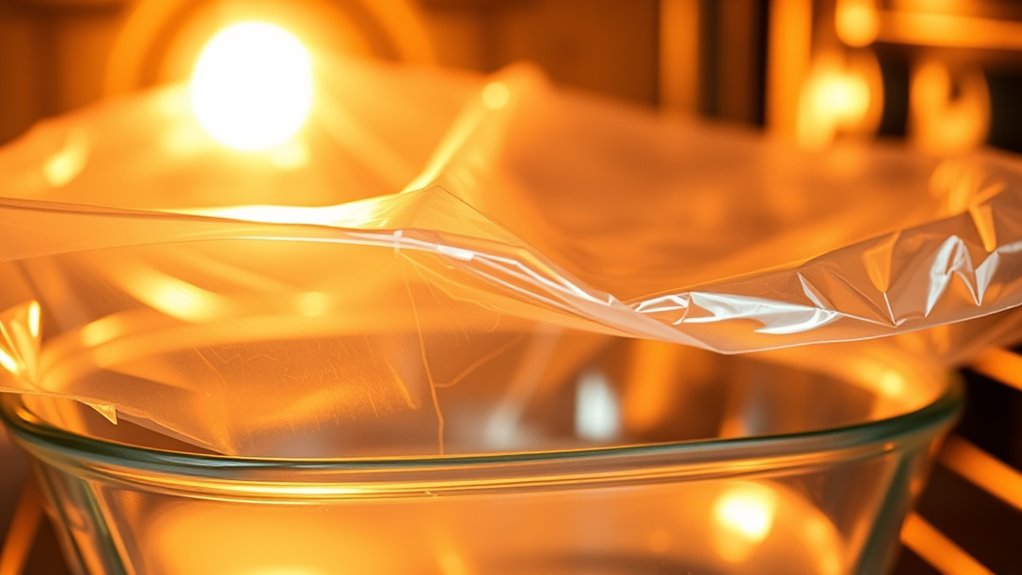
While plastic wrap is a common kitchen staple, you shouldn’t use it in the oven at all. Plastic wrap isn’t designed to handle high heat, and exposing it to oven temperatures can cause it to melt, release harmful chemicals, or even ignite.
Plastic wrap shouldn’t go in the oven; it melts, releases chemicals, or ignites under high heat.
Using plastic wrap in the oven isn’t safe and can lead to dangerous situations. When you’re done with plastic wrap, proper disposal is essential to minimize environmental impact.
Throwing it in the trash might seem simple, but it contributes to plastic pollution, which harms wildlife and pollutes ecosystems. Recycling options are limited because most plastic wraps aren’t recyclable through regular programs.
To reduce environmental impact, consider switching to more sustainable alternatives like silicone lids or oven-safe covers. Always prioritize safety and eco-friendliness: avoid placing plastic wrap in the oven, and dispose of it responsibly to protect both your home and the planet.
Why Plastic Wrap Is Not Oven-Safe and the Risks Involved
Plastic wrap isn’t actually made to handle the heat of an oven, so putting it in there is risky. When it gets too hot, it can melt and release chemicals that aren’t good for you if you end up eating them. That’s definitely something you want to avoid.
Plus, if the plastic melts and catches fire, it could cause a fire in your kitchen, which is obviously pretty dangerous. So, it’s best to keep plastic wrap out of the oven and use oven-safe alternatives instead.
Melting and Chemical Release
When plastic wrap is heated in an oven, it can quickly melt and release harmful chemicals. These chemicals, like dioxins and phthalates, can contaminate your food and pose health risks.
Melting plastic also weakens its structure, making it more likely to break apart. Harmful residues can then contaminate food surfaces, which isn’t good for your health.
Plus, these chemical residues can end up in the environment, causing pollution and affecting ecosystems. Recycling becomes more difficult because melted plastic is hard to process and often ends up in landfills or incinerators.
Fire Hazard Risks
Placing plastic wrap in the oven creates a serious fire hazard because it’s not designed to withstand high temperatures. When exposed to heat, it can melt quickly, causing flames or smoke that threaten your safety.
Beyond the immediate danger, burning plastic releases toxic fumes harmful to your health and the environment. These fumes contribute to air pollution and make recycling more difficult because plastic waste becomes contaminated and harder to process.
| Fire Risk | Environmental Impact | Recycling Challenges |
|---|---|---|
| Melts easily | Toxic fumes released | Difficult to recycle |
| Ignites quickly | Air pollution | Contaminates waste stream |
| Causes fires | Long-lasting pollution | Increased landfill waste |
| Endangers lives | Eco-system damage | Higher disposal costs |
What Happens When Plastic Wrap Is Exposed to Heat?
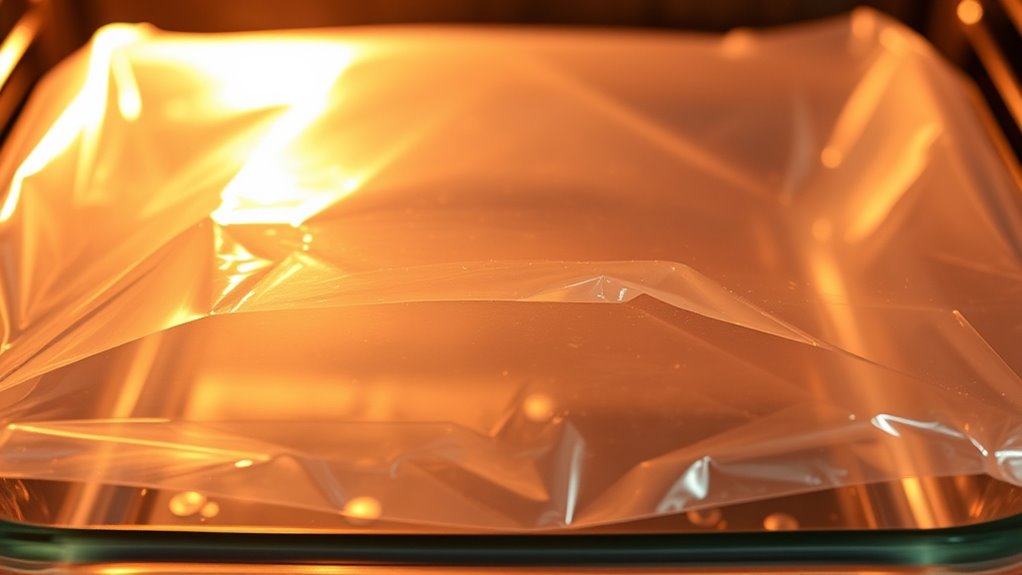
Exposing plastic wrap to heat causes it to soften and often melt, which can lead to dangerous situations in the oven. When plastic wrap melts, it can stick to food, oven surfaces, or even cause fires.
Heating plastic wrap can cause it to melt, stick, and potentially start fires in your oven.
Heated plastic can also release harmful chemicals that may contaminate your food and compromise plastic hygiene. This makes your food unsafe to eat.
The environmental impact is also a concern. Melting plastic contributes to pollution and waste problems.
Be aware of these risks:
- Melting plastic wrap releases toxic fumes.
- Food can become contaminated with harmful chemicals.
- Melting plastic can cause oven fires or damage.
- Releasing chemicals harms plastic hygiene and affects food safety.
- Discarded melted plastic pollutes the environment, adding to waste.
To stay safe and protect the environment, avoid using plastic wrap in the oven, especially at high temperatures.
How to Recognize Oven-Safe Plastic Wraps and Alternatives
When you’re trying to find plastic wraps that are safe for the oven, look for ones that are labeled as heat-resistant or oven-safe. That way, you know they can handle the high temperatures without any issues. It’s always a good idea to double-check the packaging to make sure you’re using the right kind.
If you’re unsure about plastic wraps, or if you want to avoid any risk, there are some great alternatives you can try. Silicone lids or parchment paper, for example, work really well for baking and are oven-safe. Just remember to always read the product labels carefully to keep your dishes safe and avoid any accidents.
Identifying Heat-Resistant Labels
To see if plastic wrap is heat-resistant enough for oven use, start by checking the labels or symbols on the packaging. Look for clear signs that the plastic wrap is oven-safe or heat-resistant, which shows its durability.
Packaging often includes symbols like a microwave or oven icon to guide you. Check for these icons to confirm suitability.
Also, look for temperature limits printed on the packaging. Reading the label for specific heat resistance claims can help too.
Make sure the plastic wrap is labeled as “oven-safe” and that the packaging materials are designed to handle high heat.
Safe Alternatives for Cooking
When choosing plastic wraps or alternatives for oven use, it’s important to check that they are specifically labeled as oven-safe. Not all plastics can handle high heat, so look for products meant for cooking or baking.
Silicone baking mats, parchment paper, and aluminum foil are great oven-safe options. They offer dependable heat resistance and are easy to use.
Using these alternatives can help cut down on plastic waste, which is better for the environment if plastics aren’t disposed of properly. They also reduce the risk of chemical leaching into your food and generate less waste.
Always read labels and manufacturer’s instructions before using any material in the oven. Picking the right, oven-safe options ensures safe cooking and supports eco-friendly habits.
Risks of Melting Plastic and Chemical Leaching When Baking
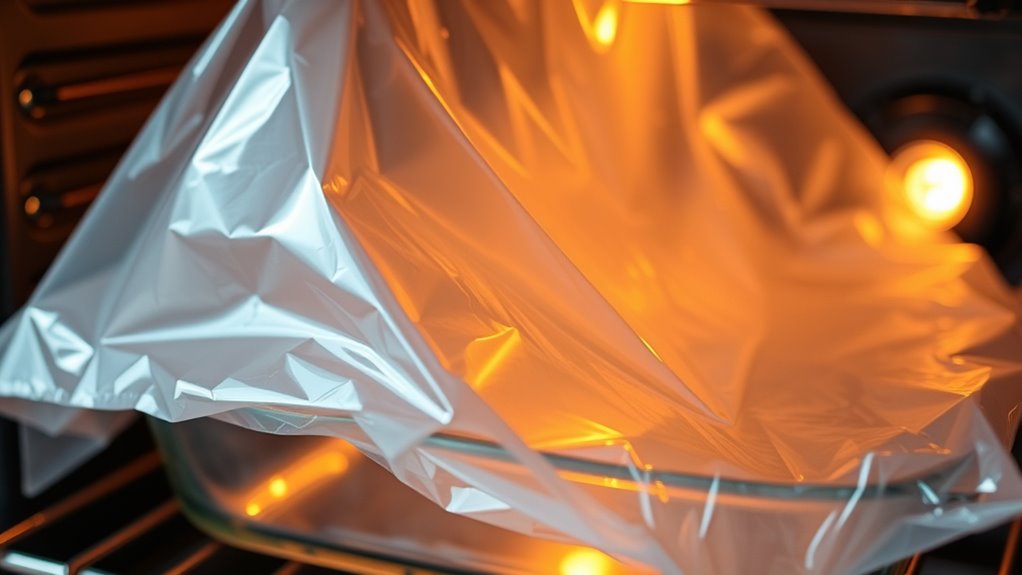
Although plastic wrap is meant for food storage, using it in the oven can cause it to melt or break down. When that happens, harmful chemicals can leak into your food, which isn’t safe.
Heating plastic wrap releases chemicals like plasticizers and stabilizers. These can contaminate your dish and pose health risks over time. Plus, melted plastic can start a fire or damage your oven.
Heating plastic wrap releases harmful chemicals that can contaminate food and increase fire risk.
Disposing of plastic wrap improperly also hurts the environment. Plastic waste can take hundreds of years to decompose and releases toxins into ecosystems. To avoid these dangers:
- The chemicals can contaminate your food and affect your health.
- Melting plastic creates smoke and unpleasant smells in your kitchen.
- Toxic chemicals may build up in your body if exposed repeatedly.
- Plastic waste from melted wrap adds to pollution.
- Using oven-safe alternatives helps protect your health and the environment.
Choosing the right cookware is the best way to stay safe and reduce environmental harm.
Common Mistakes to Avoid When Using Plastic Wrap in the Oven
Using plastic wrap in the oven is a common mistake that can lead to dangerous outcomes if you’re not careful. One mistake is leaving plastic wrap on your food during baking, since it can melt and release harmful chemicals. Always check if your plastic wrap is microwave safe, but keep in mind that not all are oven-safe.
Relying on plastic wrap designed for microwave use can be tempting, but it’s not always suitable for high heat. Avoid using plastic wraps that aren’t explicitly labeled for oven use to prevent melting and chemical leaching.
Improper disposal of plastic wrap can also harm the environment. Consider plastic wrap recycling options if they are available in your area. Using the right protective coverings, like oven-safe wraps or alternatives, helps prevent accidents.
Being mindful of these common mistakes ensures your cooking remains safe and reduces waste. It also promotes better practices in the kitchen while considering environmental impacts.
Safer Alternatives to Plastic Wrap for Oven Use
To keep your food covered safely in the oven, consider using oven-safe alternatives instead of plastic wrap. These options are safer and environmentally friendly, supporting sustainable packaging practices. Using alternatives also helps with plastic wrap recycling efforts, reducing plastic waste.
Here are some great options:
- Silicone oven mitts or lids that seal tightly
- Glass or ceramic baking dishes with tight-fitting lids
- Aluminum foil, which can withstand high temperatures
- Reusable silicone food covers
- Parchment paper for covering or lining dishes
These alternatives are heat-resistant and prevent food from drying out or splattering. They’re better for the environment and reduce reliance on single-use plastics. Many options, like silicone covers, are durable and can be used repeatedly, making them cost-effective and eco-friendly.
Choosing these safer alternatives aligns with sustainable packaging goals and keeps your kitchen safer for your family and the planet.
How to Cover Dishes Safely in the Oven Without Plastic
Covering dishes safely in the oven without plastic is simple when you pick the right materials. Use oven-safe covers like glass or ceramic lids, which can handle high temperatures and trap heat well.
Aluminum foil is also a good option; just make sure it doesn’t touch the heating element and is used loosely to avoid tearing. Avoid plastic wrap entirely, as it melts and releases harmful chemicals when heated.
Choosing safer coverings helps reduce environmental impact since plastic wrap contributes to pollution and non-biodegradable waste. Reusable options like silicone lids or oven-safe glass covers are great alternatives to minimize waste and protect the environment.
Always check the manufacturer’s instructions to confirm your chosen cover can handle oven heat. This way, you keep your food covered safely while being eco-friendly.
Tips for Choosing Oven-Safe Covering Materials
When you’re choosing oven-safe covering materials, it’s important to think about safety and how well they handle heat. You want to pick something that can handle high temperatures without melting or releasing any harmful chemicals into your food.
It’s a good idea to check out the manufacturer’s guidelines before you use any cover. That way, you can be sure you’re picking a cover that’s not only safe but also works well in the oven.
Material Safety Considerations
Choosing oven-safe covering materials requires careful attention to their composition and heat tolerance. You want to verify the material won’t melt or release harmful chemicals when heated. Check labels and product specifications to confirm heat resistance.
Consider the environmental impact of your choice. Some plastics can’t be recycled easily, which adds to plastic waste. Proper disposal of plastic wrap is essential to minimize pollution.
Avoid using materials like standard plastic wrap unless it’s explicitly labeled oven-safe, as they can emit toxic fumes. Instead, opt for silicone covers or oven-safe glass wraps.
Be aware that some plastics may degrade over time, releasing microplastics. Always follow manufacturer guidelines for safe use.
Choosing sustainable options helps reduce your ecological footprint and is better for the environment.
Heat Resistance Limits
Understanding the heat resistance limits of different materials is key to selecting a safe oven cover. Plastic wrap isn’t designed to withstand high temperatures, so exposing it to oven heat can cause melting or releasing harmful chemicals.
When choosing an oven-safe cover, look for materials explicitly labeled as heat-resistant, like certain silicone or oven-safe glass covers. Remember, safe plastic wrap disposal is essential to prevent environmental impact, especially if it’s not heat-resistant and melts during use.
Using the wrong material can lead to plastic contamination in your food and environmental pollution. Always check the manufacturer’s guidelines for temperature limits.
Avoid using plastic wrap that isn’t rated for oven use to guarantee safety and minimize environmental harm.
FAQs About Plastic Wrap and Oven Safety
Many people wonder if plastic wrap is safe to use in the oven, but the answer is generally no. There are many plastic wrap myths suggesting it’s oven-safe, but most are false. The main concern is oven temperature, which can easily go beyond what plastic wrap can handle, causing it to melt or release harmful chemicals.
Most plastic wraps are not oven-safe and can melt or release harmful chemicals when exposed to high heat.
Here are some common questions:
- Can I microwave plastic wrap? Yes, if it’s labeled microwave-safe, but avoid letting it touch the food directly.
- Is all plastic wrap oven-safe? No, only certain types are designed to withstand high heat.
- What happens if plastic wrap melts? It can contaminate your food and damage your oven.
- How hot can plastic wrap get? Usually, it melts above 220°F (104°C).
- Are there safer options? Yes, parchment paper or oven-safe lids work well and are safer.
Always check the product labels and avoid using plastic wrap in the oven unless it’s specifically marked as oven-safe.
Frequently Asked Questions
Can Plastic Wrap Be Reused After Oven Exposure?
You shouldn’t reuse plastic wrap after oven exposure because it can melt or release harmful chemicals.
Recycling options are limited for plastic wrap, especially if it’s been exposed to high heat.
Reusing it can also have environmental impacts, as melted or contaminated plastic may not be recyclable and could cause pollution.
For safety and eco-friendliness, consider using reusable alternatives like silicone covers or oven-safe wraps designed for heat.
Does Plastic Wrap Release Fumes When Heated?
When heated, plastic wrap acts like a hesitant performer on stage, releasing plastic fumes into the air. These fumes come from the plastic’s limited heat tolerance, which causes it to melt and emit potentially harmful chemicals.
You should avoid using plastic wrap in the oven because those fumes can be a health concern. Instead, choose oven-safe alternatives to keep your cooking safe and fumes at bay.
How Does Plastic Wrap Affect Cooking Times?
Plastic wrap can slightly affect cooking times because its durability and heat transfer properties vary. When you cover food with plastic wrap, it traps heat and moisture, which can speed up or slow down cooking depending on the situation.
But keep in mind, plastic wrap isn’t designed for high heat. It might melt or cause uneven cooking if exposed to too much heat.
Are There Specific Brands of Oven-Safe Plastic Wrap?
Approximately 90% of plastic wraps aren’t oven-safe, so it’s important to pick the right brand.
Some brands like Saran and Glad Press’n Seal are designed to handle heat and are durable enough for oven use. Always check the labels to make sure they’re oven-safe.
These brands guarantee that the plastic wrap can withstand baking or roasting without melting or releasing harmful chemicals. Feel confident using them in your cooking.
Can Plastic Wrap Be Used in Microwave Ovens?
Yes, you can use plastic wrap in microwave ovens if you choose microwave-safe plastic wrap. Always check the plastic wrap safety and oven temperature limits on the packaging.
Use it only for short periods and avoid direct contact with food to prevent melting or chemical leaching. Keep the microwave at a moderate temperature, and never use regular plastic wrap designed for storage in high heat.
Conclusion
Remember, never put plastic wrap in the oven—it’s risky and can release harmful chemicals.
For example, if you’re baking a casserole and cover it with plastic wrap, the heat could cause it to melt and contaminate your food.
Instead, choose oven-safe covers like foil or silicone lids.
Prioritize safety to enjoy your cooking without worries—using the right materials keeps your food healthy and your oven safe.
So, when it comes to plastic wrap and the oven, just say no.
It’s best to stick with oven-safe options to protect yourself and your food.