Which Frying Pans Are Safe for You to Put in the Oven?
Many people struggle with figuring out which frying pans are safe to put in the oven. It’s frustrating to worry about damaging your cookware or causing accidents when you’re trying to cook a delicious meal. Don’t worry—you’re not alone, and the good news is that some pans are designed to handle the heat.
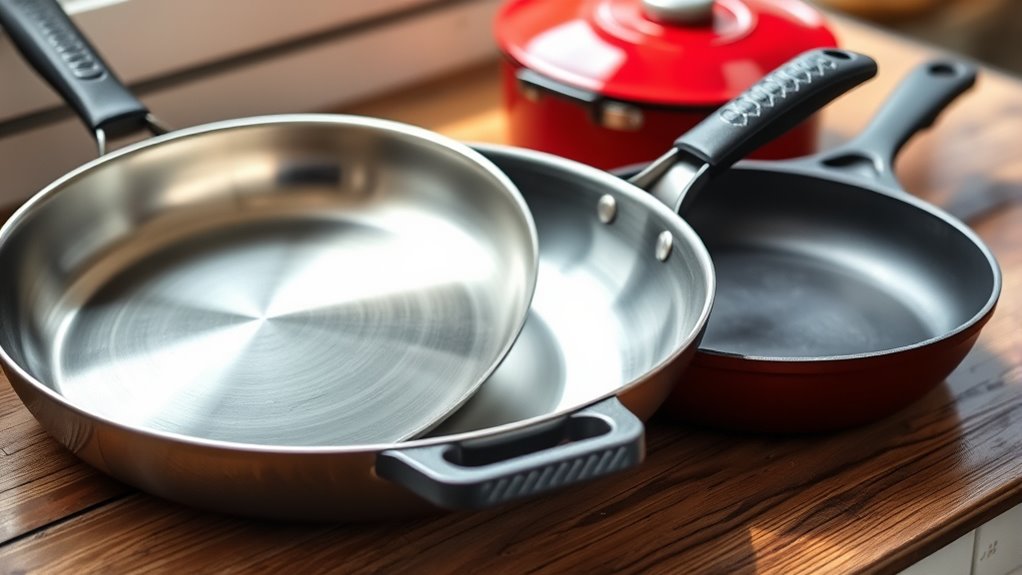
You can safely put frying pans made from heat-resistant materials like cast iron, stainless steel, or certain anodized aluminum in the oven. Make sure the pan has oven-safe handles, such as metal, and avoid those with rubber or silicone grips that can melt.
Nonstick coatings like PTFE and ceramic are oven-safe up to specific temperatures, but always check manufacturer instructions.
Want to learn more about choosing and caring for oven-safe pans? Keep exploring for detailed tips.
Key Takeaways
- Choose pans made from oven-safe materials like cast iron, stainless steel, or anodized aluminum, and always follow the manufacturer’s instructions.
- Make sure handles are oven-safe too, usually metal or heat-resistant materials like Bakelite. Avoid silicone or rubber handles that might not hold up.
- Check that nonstick coatings are rated for oven use, such as PTFE, ceramic, or anodized finishes, and stay within the recommended temperature limits.
- You can test if a pan is oven-safe by gradually heating it and looking for warping or damage, but always follow the manufacturer’s guidelines.
- To keep your pans in good shape, clean them gently and store them safely, helping preserve their oven-safe features and extend their lifespan.
What Makes a Frying Pan Suitable for Oven Use?
To determine if a frying pan is suitable for oven use, you need to look at the materials and construction. The pan must withstand high cooking temperatures without warping or releasing harmful fumes. Cast iron and certain stainless steel pans are designed for this purpose because they handle oven heat well.
Check materials and construction to ensure your frying pan can handle oven temperatures safely.
Non-stick coatings are more delicate. Check if they’re oven-safe at specific temperatures. Knowing the maximum cooking temperature the pan can handle is essential for safe oven use.
Proper pan maintenance also matters. Avoid abrasive cleaning that could damage the surface, especially with non-stick coatings. Always follow manufacturer instructions regarding oven compatibility.
A well-maintained pan not only lasts longer but also ensures safety and consistent cooking results. By understanding the materials and caring for your pan properly, you can confidently use it in the oven without risking damage or safety issues.
Which Materials Are Best for Oven-Safe Frying Pans?
Choosing the right materials for oven-safe frying pans is really important for both safety and performance. You want pans made from metals that can handle high heat without any issues. Think about sturdy handles too—that way, they won’t weaken or melt when you’re cooking at high temperatures. And don’t forget to consider how non-stick coatings might affect oven use and how long they’ll last.
Metal Compatibility and Safety
When choosing a frying pan that’s safe for oven use, it’s important to look at the materials it’s made from. Not all metals handle high heat the same way.
Metal compatibility affects how well your pan can handle oven temperatures and impacts your cooking techniques. For example, cast iron distributes heat really well, making it perfect for searing and roasting.
Stainless steel also works great because it provides even heat and is durable. Aluminum heats up quickly and evenly but might need an extra layer to be oven safe.
Avoid pans with coatings or interior layers that aren’t oven-safe, as high heat can damage them. Making sure your pan’s metal type is compatible with oven use ensures safe, effective cooking without warping or damage.
Handle Materials and Durability
Handle materials are essential in deciding if a frying pan is oven-safe. They need to withstand high temperatures without breaking down or becoming unsafe. You want handles that feel good in your hand and stay secure, even when hot.
Look for materials with strong heat resistance to prevent warping, melting, or releasing harmful fumes in the oven. This makes your cooking experience safer and more reliable.
Key handle materials include silicone, which offers excellent heat resistance and an ergonomic grip. Bakelite is a durable, heat-resistant plastic that’s comfortable to hold. Wood or phenolic resin are natural or composite options that provide comfort and heat resistance.
Choosing the right handle material ensures safety, durability, and a comfortable experience when cooking in the oven.
Non-Stick Coating Considerations
Not all non-stick coatings are suitable for oven use, so it’s important to pick materials that can handle high temperatures without breaking down or releasing harmful fumes. Look for coatings that have high durability, so they won’t peel or wear out quickly when exposed to heat.
Ceramic coatings, for example, generally last longer than traditional Teflon, especially at oven temperatures. But even with ceramic, avoid going beyond the temperature limits set by the manufacturer.
Non-stick coatings that aren’t oven-safe might give off fumes or lose their non-stick qualities if heated too high. To stay safe and keep your pan performing well, choose ones with oven-safe coatings specifically designed for high-temperature cooking.
This way, you’ll enjoy better longevity and reduce health risks over time.
Do Handle Materials Affect Oven Safety?
The materials used for frying pan handles can significantly impact their safety in the oven. Handles’ safety depends on the material, which determines whether they can withstand high temperatures without melting, warping, or releasing harmful chemicals.
Metal handles, like stainless steel or cast iron, are usually oven-safe because they handle heat well and don’t degrade. Silicone or rubber handles, on the other hand, may melt or degrade under high heat, making them unsafe for oven use.
It’s important to check handle materials before putting your pan in the oven to avoid accidents or damage. Always verify manufacturer instructions to confirm if the handle is oven-safe.
Choose handles made of durable, heat-resistant materials like metal or silicone rated for high temperatures. Avoid handles with glued or plastic parts, as these can weaken or melt when heated.
Focusing on handle safety ensures your cooking remains safe and efficient.
Are Nonstick Coatings Safe for Oven Cooking?
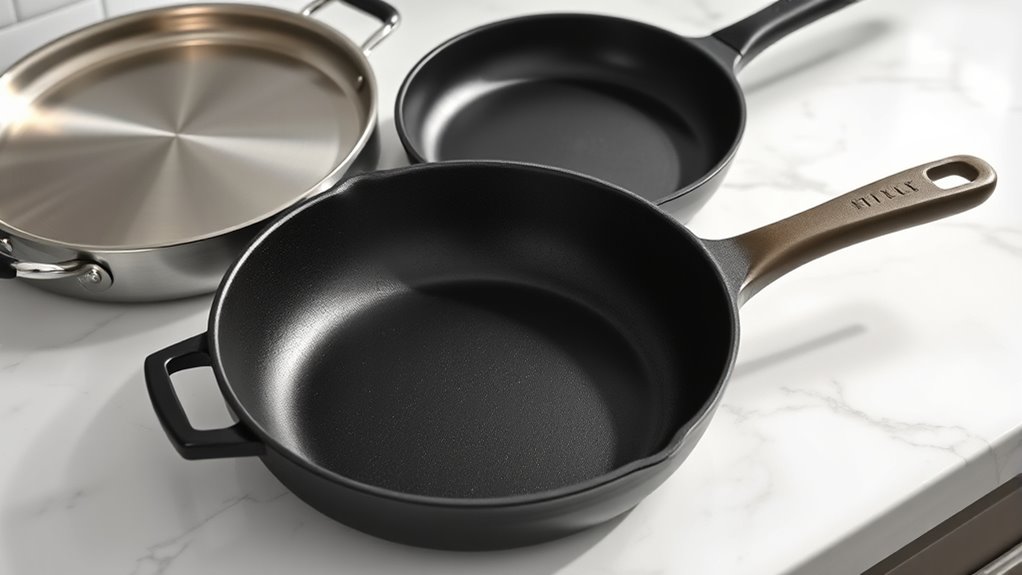
Nonstick coatings are popular because they make cooking and cleaning easier, but their safety in oven cooking depends on the type of coating and temperature used. Many nonstick pans feature coatings like PTFE or ceramic, which vary in durability.
Some coatings can handle oven temperatures up to 500°F, but others may degrade or emit fumes if heated too high. To help you visualize, here’s a quick comparison:
| Coating Type | Max Oven Temp | Durability | Safety Notes |
|---|---|---|---|
| PTFE | 450-500°F | Moderate | Avoid overheating to prevent fumes |
| Ceramic | 450°F | Good | Generally safe, but can chip over time |
| Anodized | 500°F | High | Very durable, safe for oven use |
Understanding coating safety and nonstick durability will help you choose pans that are safe and reliable for oven use, ensuring your cooking is both efficient and safe.
How Construction and Durability Impact Oven Use
Construction and durability are key factors in how well a frying pan performs in the oven. They directly impact safety and how long the pan lasts. A sturdy build means it can handle high temperatures without warping or breaking, which is crucial for safe cooking.
Materials like cast iron and some stainless steels are known for their heat resistance. They help you cook evenly and safely, reducing the risk of accidents. Poorly built pans can cause uneven heating, increasing the chance of damage or mishaps.
When picking an oven-safe pan, check for reinforced handles that offer a secure grip. A thick, solid base helps distribute heat evenly, preventing hot spots. Also, ensure the materials won’t warp or degrade over time.
Good construction prevents issues like metal leaching or coating breakdown. This keeps your food safe and maintains the pan’s quality over time.
Top Types of Frying Pans That Are Oven Safe
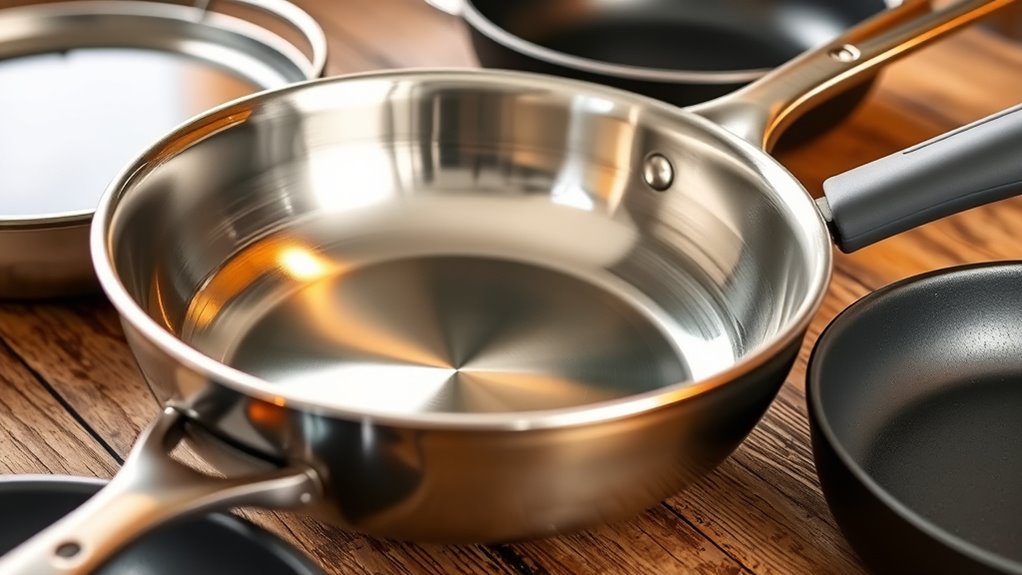
Choosing the right frying pan for oven use depends heavily on its material and design. Cast iron pans are among the top options because they withstand high cooking temperatures and distribute heat evenly. Their substantial weight makes them stable in the oven and ideal for searing and roasting.
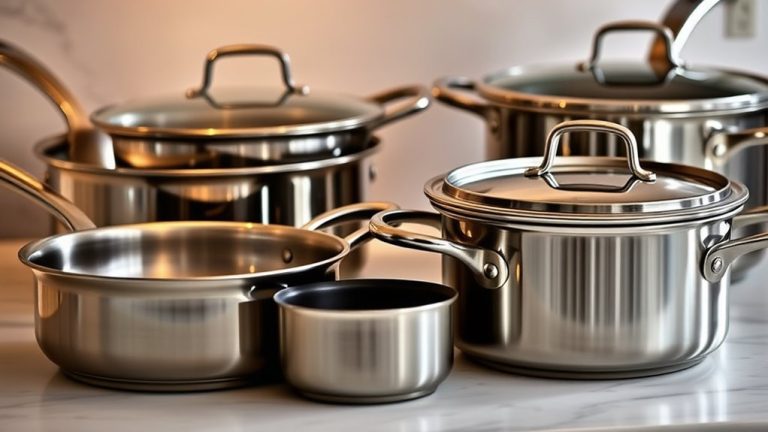
Stainless steel pans are also oven safe, especially those with metal handles. This allows you to cook at higher temperatures without worry. Non-stick pans with oven-safe coatings are convenient, but be sure to check the manufacturer’s guidelines to confirm the maximum temperature they can handle.
Copper pans, though less common, are excellent for precise temperature control. They can often be used in the oven if they have oven-safe handles. Remember, pan weight plays a role—heavier pans tend to be more durable and better at withstanding high temperatures.
Always verify the manufacturer’s instructions to guarantee the pan’s oven safety and prevent damage.
How to Choose the Right Oven-Safe Frying Pan
When selecting an oven-safe frying pan, it’s important to consider the material, handle design, and your cooking needs. The material impacts heat distribution and durability, so choose options like stainless steel, cast iron, or oven-safe non-stick coatings.
Make sure the handle is heat-resistant and comfortable to hold. This improves safety and reduces the need for frequent handling, which can also help with kitchen ventilation.
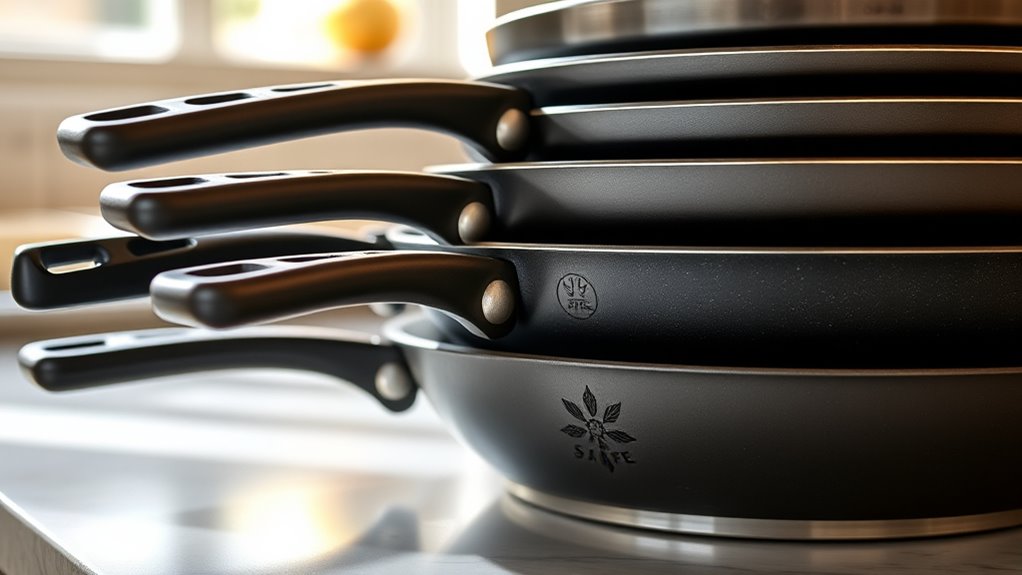
Think about your storage options. Stackable pans save space but require careful placement to avoid damage. Also, consider the size of the pan based on what you typically cook.
If you often bake casseroles, a larger pan might be better. For quick sautéing, smaller pans are usually more convenient.
It’s also important to check that your new pan is compatible with your existing cookware and kitchen ventilation system. This helps prevent smoke and odors from lingering.
How to Test If Your Frying Pan Is Oven Safe
To find out if your frying pan is oven safe, start by checking the manufacturer’s instructions or labels. They usually state the oven temperature limits and whether it’s safe to use in the oven.
If there’s no label, you can test it carefully. Preheat your oven to about 350°F (175°C) and place the pan inside for 10-15 minutes. Then, look for any warping, discoloration, or damage.
If the pan holds up without issues, you can try increasing the oven temperature gradually to your usual cooking level. Keep an eye out for any signs of damage during this process.
Common Mistakes That Damage Oven-Safe Pans
Even if your frying pan is labeled oven safe, improper use can still cause damage over time. Common mistakes include exposing it to sudden temperature changes, which can warp the metal or damage the non-stick coating. Using the wrong frying pan accessories, like metal utensils, can scratch or chip the surface, reducing its oven durability.
Neglecting proper oven cleaning tips can lead to residue buildup, affecting heat distribution and damaging the pan’s finish. To protect your oven-safe frying pan, avoid these mistakes:
- Sudden temperature shifts from stovetop to oven
- Using abrasive cleaning tools or harsh chemicals
- Forgetting to remove or secure frying pan accessories before oven use
Being mindful of these errors helps extend your pan’s lifespan and ensures safe oven use over time. Proper care and gentle handling are key to preserving its quality and performance.
Tips for Using and Caring for Oven-Ready Frying Pans
Proper use and care are essential to keep your oven-ready frying pan in top condition. Always follow manufacturer guidelines for oven temperatures to prevent warping or damage.
Before cooking, check if your pan needs any specific recipe adjustments, like changing cook times or ingredients—especially when moving from stovetop to oven. Use oven mitts when handling hot pans to protect your hands and stay safe in the kitchen.
Clean your pan promptly after use with gentle scrubbers to preserve its surface. Avoid abrasive cleaners that can damage coatings. Regularly inspect your pan for chips or cracks that could affect safety or performance.
Proper storage is important, too. Stack your pans with soft cloths or keep them in a designated area to prevent scratches. By following these tips, you’ll help ensure your pan lasts longer and stays safe to use.
Good care also helps prevent accidents and keeps your kitchen environment safe. With a little attention, you can confidently prepare oven recipes without worry.
Frequently Asked Questions
Can I Put All Types of Nonstick Pans in the Oven Safely?
You can’t put all types of nonstick pans in the oven safely. Some oven-safe cookware with a durable nonstick coating can handle oven temperatures, but many aren’t designed for oven use.
Always check the manufacturer’s guidelines for heat limits. Nonstick coating durability varies, so even if the pan says oven safe, avoid high temperatures to prevent damage.
When in doubt, go for pans that are explicitly marked as oven safe.
What Temperature Limits Should I Consider for Oven-Safe Frying Pans?
You should consider material durability and heat resistance limits when using oven-safe frying pans. Most pans are safe up to 350-500°F, but always check the manufacturer’s guidelines for exact limits.
Cast iron and stainless steel usually handle higher temperatures, making them great options for oven use. Nonstick pans, on the other hand, may be limited to lower temperatures around 350°F.
Always verify your pan’s specifications before putting it in the oven. This helps prevent damage or safety hazards, ensuring your cooking stays both safe and effective.
Are Ceramic-Coated Pans More Oven-Safe Than Traditional Nonstick?
Ceramic-coated pans are generally more oven-safe than traditional nonstick pans because they offer better ceramic durability, allowing them to withstand higher temperatures.
However, their nonstick surface can wear down over time with frequent oven use. You should check the manufacturer’s guidelines, but typically, ceramic pans can handle temperatures up to 450°F, making them suitable for oven baking.
Traditional nonstick pans often have lower temperature limits, so they may not be as safe for high-heat oven cooking.
How Do I Prevent Handles From Melting in the Oven?
Oh, the joys of melting handles—truly a modern kitchen tragedy! To prevent this, make sure your frying pan has handle insulation, keeping heat away from your fingers.
Always use oven mitts when handling hot pans, even if they seem cool enough. This way, you protect yourself from burns and keep your pans intact.
Is It Safe to Use Metal Utensils on Oven-Safe Nonstick Pans?
Using metal utensils on oven-safe nonstick pans isn’t recommended because it can damage the nonstick coating.
Metal utensils may scratch or chip the surface, which can reduce the pan’s durability and affect its nonstick properties.
For the best results, choose silicone, wooden, or plastic utensils. They’re gentle on the nonstick surface and help keep it in good shape.
This way, you’ll preserve the pan’s nonstick qualities and extend its lifespan, making your cooking safer and more effective.
Conclusion
So, now that you know which pans can brave the oven, go ahead—test those handles, skip the nonstick paranoia, and treat your cookware like royalty.
After all, if your pan survives the oven apocalypse, it’s practically invincible. Just remember, a little care goes a long way—because nothing says “chef” like rescuing a battered pan from the depths of your kitchen stash.
Happy baking, hero of the culinary universe! And if you want to keep your cookware oven-safe, always check that it’s oven-friendly before putting it in.