What Should You Know About Putting Aluminum Pans in the Oven?
Many home cooks and bakers know the frustration of accidentally damaging their aluminum pans or worrying about safety when using them in the oven. You’re not alone—navigating the best way to use aluminum pans can be tricky.
When putting aluminum pans in the oven, make sure they are labeled oven-safe and check their construction for durability, especially handles and coatings. Keep temperature limits in mind, usually around 450°F, to prevent warping or damage.
Properly prepare and handle pans with care to avoid warping, and always follow manufacturer guidelines.
For a full guide on safe use, tips, and maintenance, you’ll find everything you need to know further inside.
Key Takeaways
- Make sure the aluminum pan is labeled as oven-safe and built to handle high temperatures.
- Steer clear of pans with plastic handles, non-oven-safe coatings, or any damage like dents or cracks.
- Check the maximum temperature limit, usually around 450°F, to avoid warping or melting.
- Preheat the oven and prepare the pan with oil or lining for easy food release.
- Always follow the manufacturer’s guidelines, avoid sudden temperature changes, and use gentle cleaning methods after cooking.
How to Tell If Your Aluminum Pan Is Oven-Safe
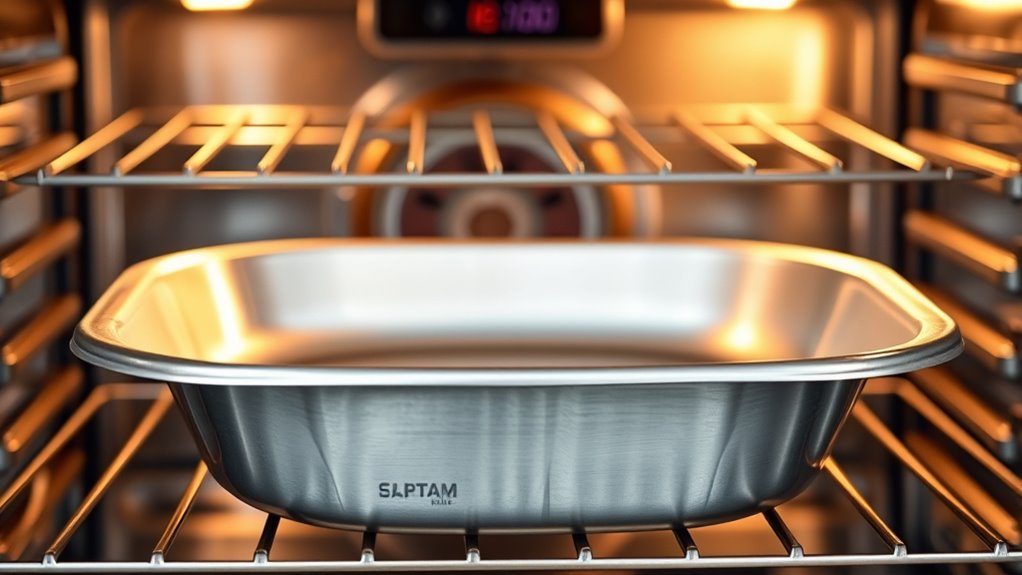
Wondering if your aluminum pan is safe for the oven? First, check the manufacturer’s label or packaging for oven compatibility. Many aluminum pans are designed with high durability, making them suitable for oven use without warping or melting. Look for words like “oven-safe” or specific temperature limits; these indicate the pan can handle oven heat.
If there’s no label, examine the pan’s construction. Thick, heavy-duty aluminum generally offers better resistance, while very thin pans might warp or discolor. Avoid pans with plastic handles or coatings, as these aren’t oven-safe and could release harmful fumes.
Also, inspect for signs of damage like dents or cracks, which can affect aluminum’s durability. By confirming the product details and physical condition, you ensure your aluminum pan is compatible with oven cooking. This makes it a safe and reliable choice for your baking needs.
Which Aluminum Pans Are Safe for Oven Baking?
Not all aluminum pans are created equal when it comes to oven baking, so you want to pick the right one. Generally, it’s best to go for pans made from uncoated, food-grade aluminum because they tend to be safe and long-lasting.
Also, pay attention to the coating and the overall quality of the material. A good-quality aluminum pan can handle high temperatures without warping or getting damaged, making your baking experience smoother and worry-free.
Types of Oven-Safe Aluminum
When choosing aluminum pans for oven baking, make sure they’re specifically built to handle high temperatures without warping or melting. Look for durable aluminum cookware labeled oven-safe, so you know it can take the heat.
Aluminum foil is also oven-safe and perfect for covering dishes or lining pans to prevent sticking. Just check that the foil is heavy-duty to avoid tearing at high temperatures.
Here are some common types of oven-safe aluminum: thick, anodized aluminum pans made for baking, heavy-duty aluminum foil for wrapping or lining, and commercial-grade aluminum cookware designed for high-heat cooking.
These options are reliable and make your baking safer and more efficient. Always double-check the manufacturer’s guidelines to confirm that your aluminum cookware is oven-safe before use.
Coating and Material Considerations
Choosing aluminum pans with the right coating and material is key for safe oven baking. Look for pans made from high-quality aluminum alloy, which offers better heat conduction and durability.
The coating’s durability matters too. Opt for pans with a non-stick or reinforced coating that can handle high oven temperatures without peeling or degrading.
Some aluminum alloys are lightweight but may warp under intense heat, so always check the manufacturer’s specifications.
Avoid pans with flimsy or poorly applied coatings, as these can chip or release harmful substances when heated.
A well-made aluminum pan with a sturdy coating ensures even cooking and lasts longer, reducing the risk of damage during oven use.
Picking the right combination of alloy and coating guarantees both your food’s safety and your cookware investment.
How to Prepare Your Aluminum Pan for Baking or Roasting
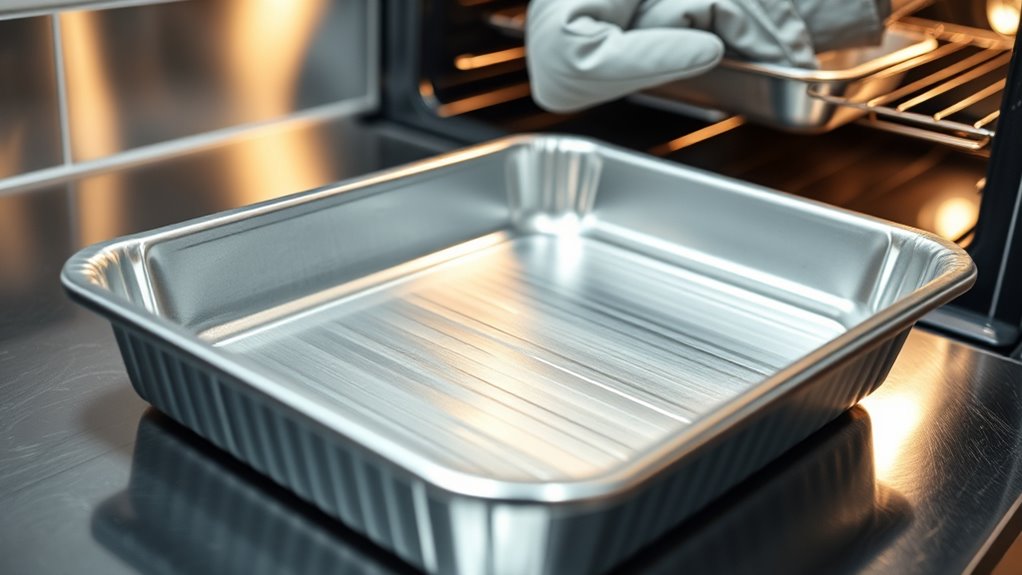
Before you start using your aluminum pan, give it a good clean to get rid of any dirt or residues. It’s always better to start with a fresh, clean surface! If you want your food to come out easily and make cleanup a breeze, consider applying a non-stick coating or a little bit of oil to the pan.
And don’t forget to preheat your oven properly before putting the pan in. This helps everything bake evenly and can prevent sticking or burning, making your cooking experience much smoother.
Clean Thoroughly Before Use
Even if your aluminum pan looks clean, it’s important to give it a thorough wash before using it for baking or roasting. This removes dust, oils, or residues from storage that could affect your food’s flavor or safety.
To prepare your pan properly, wash it with warm, soapy water, scrubbing away any dirt or grease. Rinse well to make sure no soap residue remains.
Dry completely to prevent any corrosion or sticking. Cleaning your aluminum pan before use also helps with customization later, like applying coatings or seasonings smoothly.
Proper cleaning is essential regardless of how you store it, ensuring your pan performs well and your baked goods turn out perfectly. A clean pan guarantees better results and easier cleanup afterward.
Apply Non-Stick Coating
Applying a non-stick coating to your aluminum pan can make baking and roasting much easier by preventing foods from sticking and simplifying cleanup. To ensure good non-stick durability, choose a high-quality coating designed for oven use.
Before applying, clean the pan thoroughly to remove any residue that could affect adhesion. Lightly grease the surface or use a non-stick spray to improve coating longevity.
Use a silicone or soft brush to spread the coating evenly, avoiding excess buildup. Be cautious not to damage the coating during application, as scratches can reduce non-stick durability over time.
Proper application helps the coating last longer, keeping your pan non-stick through many uses. Follow the manufacturer’s instructions for the best results and avoid abrasive tools that could harm the coating.
Preheat the Oven Properly
Preheating the oven sets the stage for successful baking or roasting, making sure your aluminum pan heats evenly from the start. Proper preheating takes advantage of aluminum’s durability, preventing hotspots that could affect pan looks or food quality.
To prepare, set your oven to the desired temperature and give it enough time to fully preheat before placing your pan inside. This step helps avoid uneven cooking and protects your pan’s surface.
Make sure your oven reaches the right temperature before inserting the pan. Use the middle rack for even heat distribution and avoid sudden temperature changes to protect aluminum’s integrity.
Preheating helps maintain the pan’s appearance and prevents warping. This makes your aluminum cookware last longer while delivering top-notch results. Proper prep boosts both durability and aesthetics, ensuring your baking experience is smooth and successful.
What Are the Temperature Limits for Aluminum Pans?
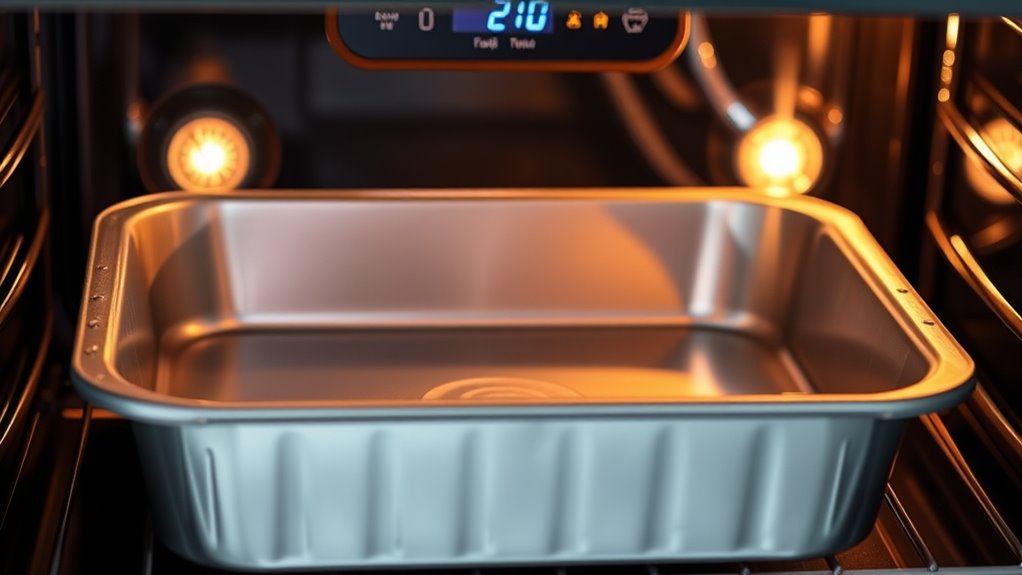
Aluminum pans are known for their excellent heat conductivity, but understanding their temperature limits is essential to prevent damage or safety hazards. Generally, aluminum pans can withstand oven temperatures up to 450°F (232°C) without risking warping or deterioration.
Aluminum pans tolerate oven temperatures up to 450°F (232°C) without warping or damage.
This is because aluminum’s durability allows it to handle high heat, but only within recommended ranges. Exceeding these limits can cause the pan to warp, weaken, or even melt if temperatures get extremely high.
Thanks to their heat conduction properties, aluminum pans heat evenly, making them great for baking and roasting. However, prolonged exposure to very high temperatures can compromise the pan’s integrity.
Always check the manufacturer’s guidelines for specific temperature limits, as some aluminum pans may have coatings or handles that require lower settings. Staying within these limits ensures safe use and helps maintain the pan’s performance over time.
How to Avoid Warping or Damage When Using Aluminum Pans
To prevent warping or damage, it’s important to handle aluminum pans carefully and follow best practices during oven use. Aluminum alloy composition affects how durable the pan is, so choose high-quality pans designed for oven use.
Sudden temperature changes can cause warping, so always preheat your oven before placing the pan inside. Avoid stacking heavy items on top, as this can deform the pan’s shape.
To keep your pan in good shape, use moderate oven temperatures, especially if the aluminum alloy isn’t rated for high heat. Don’t expose the pan to extreme cold or hot environments suddenly.
Hand wash your aluminum pans with gentle scrubbers instead of abrasive cleaners, which can weaken the material. Following these tips will help maintain your pan’s integrity over time.
Best Practices for Baking and Roasting With Aluminum Pans
Sure! Here’s a more conversational version of the text:
When you’re ready to bake or roast with aluminum pans, it’s a good idea to start by prepping the pan properly. You might want to grease it or line it with parchment paper to make things easier when you’re done.
Also, keep an eye on the temperature and cooking time. Every oven is a little different, so you might need to tweak things a bit to avoid overcooking or warping the pan. Adjust as needed depending on what you’re making.
If you follow these simple tips, you’ll get great results every time, and your baked goods and roasted dishes will turn out just right!
Proper Pan Preparation
Before placing your aluminum pan in the oven, make sure to prepare it properly to guarantee even baking and easy cleanup. Using the right aluminum alloys can improve heat distribution, so choose high-quality pans suitable for your baking techniques.
To prepare, grease or line the pan with parchment paper to prevent sticking. Apply a thin layer of non-stick spray or butter for easy release.
Consider adding a light dusting of flour or cocoa powder for baked goods prone to sticking. These steps help protect your pan and promote uniform cooking.
Proper preparation minimizes sticking and makes cleanup simpler, especially when working with different aluminum alloys that vary in durability. Mastering these techniques ensures your baked goods turn out perfectly every time.
Temperature and Timing Tips
When baking or roasting with aluminum pans, maintaining the correct temperature and timing is key to getting great results. Aluminum’s durability means it can handle high oven temperatures, but it also conducts heat really well, so even heat distribution is important.
Since aluminum pans heat up quickly, always follow your recipe’s timing and check for doneness a few minutes early. This helps prevent overcooking or burning. Adjust the timing if needed to make sure your food turns out just right.
Avoid sudden temperature changes, as they can warp the pan. Using a reliable oven thermometer is a good way to keep track of accurate temperatures. Proper heat and timing management ensure your food cooks evenly and turns out delicious every time.
Are Coated or Linished Aluminum Pans Oven-Safe?
Are coated or linished aluminum pans oven-safe? Generally, yes, but it depends on the specific pan and its coating. The key factors are the aluminum alloy used and the coating’s durability. Some pans have a sturdy, heat-resistant coating that can handle oven temperatures, while others may not.
To find out if your coated pan is oven-safe, check the manufacturer’s guidelines for maximum temperature limits. Make sure the coating is labeled as oven-safe or heat-resistant. The quality of the coating also matters—higher durability coatings tend to last longer in the oven.
If the coating isn’t designed for oven use, it could peel or emit fumes. Always verify the specifications to avoid damaging the pan or risking safety. When in doubt, stick to pans that are explicitly marked as oven-safe for reliable performance and longer lifespan.
Common Mistakes to Avoid When Using Aluminum Pans in the Oven
Using aluminum pans in the oven can be convenient, but it’s easy to make mistakes that could damage the pan or affect your food. One common mistake is using aluminum foil improperly; avoid lining your pan with foil if it’s not designed for oven use, as this can cause uneven heating or even melting.
Also, don’t use decorative pans that aren’t oven-safe, since they might warp or discolor under high heat. Be cautious about overfilling aluminum pans, which can lead to spills or uneven cooking.
Furthermore, avoid exposing aluminum foil to direct flames or heating elements, as it can cause sparks or fires. Remember, not all aluminum pans are created equal—check manufacturer instructions to prevent warping or damage.
How to Clean and Maintain Your Aluminum Pans After Oven Use
After taking your aluminum pans out of the oven, it’s important to clean them promptly to prevent food and grease buildup. Proper cleaning routines will keep your aluminum cookware in good shape and last longer.
Start by rinsing the pan with warm water to loosen any residue. Then, use a soft sponge or cloth with mild dish soap to gently scrub away stains and baked-on grease. Avoid abrasive cleaners or steel wool, as they can scratch the surface.
If you have stubborn spots or discoloration, make a paste with baking soda and water, then scrub lightly. Rinse thoroughly and dry immediately to prevent water spots.
Use gentle cleaning tools to avoid scratching. Regularly check for signs of pitting or damage. Store your pans in a dry place to prevent corrosion.
Following these simple steps will keep your aluminum cookware clean and functional for years to come.
Alternatives to Aluminum Pans for Oven Cooking
While aluminum pans are popular for oven cooking, they aren’t the only options out there. If you’re worried about their durability or want different features, there are several alternatives that work well.
Cast iron, for example, offers great heat retention and can go from stovetop to oven easily. It’s perfect for roasting and baking without needing different cookware. Ceramic and stoneware pans heat evenly and are non-reactive, so they won’t change your food’s flavor.
Stainless steel pans are tough, resistant to scratches, and often dishwasher safe. They’re a practical choice for everyday cooking. Glass baking dishes like Pyrex let you see your food as it bakes, and they don’t react with your ingredients.
Each of these options has its own benefits, giving you versatile ways to cook in the oven without relying solely on aluminum pans. Choose based on your cooking style, how durable you want your cookware to be, and whether you prefer non-reactive, lightweight, or highly durable materials.
Frequently Asked Questions
Can Aluminum Pans Be Used in Convection Ovens?
Yes, you can use aluminum pans in convection ovens. Their durability makes them suitable for high heat, but avoid direct contact with heating elements to prevent warping.
Aluminum pans heat evenly, making them great for convection cooking. Plus, recycling aluminum cookware is good for the environment.
Just make sure the pan fits comfortably and isn’t damaged, so it performs well and lasts longer in your oven.
How Does Aluminum Affect Cooking Times and Heat Distribution?
Aluminum affects cooking times and heat distribution by providing excellent conductivity, so heat spreads quickly and evenly across the pan. This means your food cooks faster and more uniformly, reducing hot spots.
You’ll notice improved heat consistency, which makes aluminum pans great for delicate baked goods and precise cooking. Just keep in mind that because heat transfers quickly, you might need to adjust cooking times a bit to avoid overcooking.
Are There Health Concerns With Using Aluminum Pans in the Oven?
You should be aware of potential health concerns with aluminum pans, especially if you have an aluminum allergy, which can cause skin irritation or other reactions. While most people safely use aluminum cookware, it’s good to keep this in mind.
Consider the environmental impact too, since aluminum production and disposal can harm ecosystems. If you’re sensitive or environmentally conscious, you might want to choose alternatives like stainless steel or silicone.
Using these options can help you avoid potential health issues and reduce your environmental footprint while still enjoying cooking.
How Do I Prevent Aluminum Pans From Discoloring in the Oven?
To prevent aluminum pans from discoloring, practice proper maintenance with gentle cleaning and avoid drastic temperature changes.
Use oven-safe aluminum tips like lining pans with parchment paper or avoiding high heat, which can cause discoloration.
Keep temperatures moderate, and don’t forget to dry pans thoroughly after cleaning.
These simple steps help preserve your aluminum pans’ shine, ensuring they stay bright and beautiful in your oven endeavors.
Can Aluminum Pans Be Used Directly on a Grill or Open Flame?
Yes, aluminum cookware can be used directly on a grill or open flame, but you should always prioritize oven safety. Aluminum pans heat quickly and evenly, making them suitable for grilling.
However, avoid direct contact with flames to prevent warping or damage. Keep an eye on the temperature, and use grill-safe aluminum cookware designed for high heat.
Always follow manufacturer guidelines to guarantee safe and effective use.
Conclusion
Using aluminum pans in the oven is generally safe and convenient, but it’s important to know their limits to avoid any damage. Aluminum pans are among the most popular bakeware choices, with over 70% of home bakers opting for them because of their affordability and excellent heat conduction.
By following proper preparation, temperature guidelines, and maintenance tips, you can enjoy perfectly baked dishes every time without any worries. Just remember, a little care goes a long way in keeping your aluminum pans in top shape.
Knowing how to use aluminum pans properly helps ensure they last longer and perform better. So, if you’re wondering what you should know about putting aluminum pans in the oven, keep these tips in mind for safe and successful baking.