Safe Ceramic Types for Oven Use
Many people struggle with finding the right ceramic dishes that are safe for oven use. It can be confusing to pick the right type that won’t crack or break under high heat. You’re not alone—making the right choice is important for safety and longevity.
When choosing safe ceramic types for oven use, look for stoneware and high-fired porcelain, as they are durable, heat-resistant, and often labeled oven-safe. Avoid fine china or unmarked earthenware unless confirmed, since they may crack or break under high heat.
Confirm the ceramic has a smooth, crack-free glaze that is lead-free and food-safe.
Proper care and verification can help you select the best option. Stay tuned to learn more about ceramic safety and maintenance.
Key Takeaways
- Look for ceramics labeled as oven-safe, like stoneware, fireclay, or high-fired porcelain. Make sure they specify heat resistance.
- Check that the ceramic has a smooth, crack-free glaze that’s food-safe and free from chips or defects.
- Look for certifications like FDA or CE to ensure they meet safety standards for oven use.
- Avoid using earthenware or fine china unless it’s explicitly marked as oven-safe, since they can be fragile.
- Handle ceramics carefully, and avoid sudden temperature changes or abrasive cleaning to prevent damage.
What Makes Ceramic Safe for Oven Cooking?
Ceramics are safe for oven cooking mainly because they can handle high temperatures without breaking or releasing harmful substances. Their ceramic composition typically includes clay, silica, and other natural materials that are fired at high heat.
This firing process creates a dense, durable material that can withstand intense heat without cracking or warping. During firing, impurities and potentially harmful chemicals are burned out, making the ceramic stable and inert.
This stability prevents toxins from being released when exposed to oven heat. Plus, quality ceramics often get glazed, which seals the surface and stops moisture from being absorbed, adding to their safety and durability.
The careful manufacturing process ensures the ceramic keeps its integrity under oven conditions, making it a reliable choice for baking, roasting, and other high-temperature cooking.
Which Ceramic Types Are Best for Baking and Roasting?
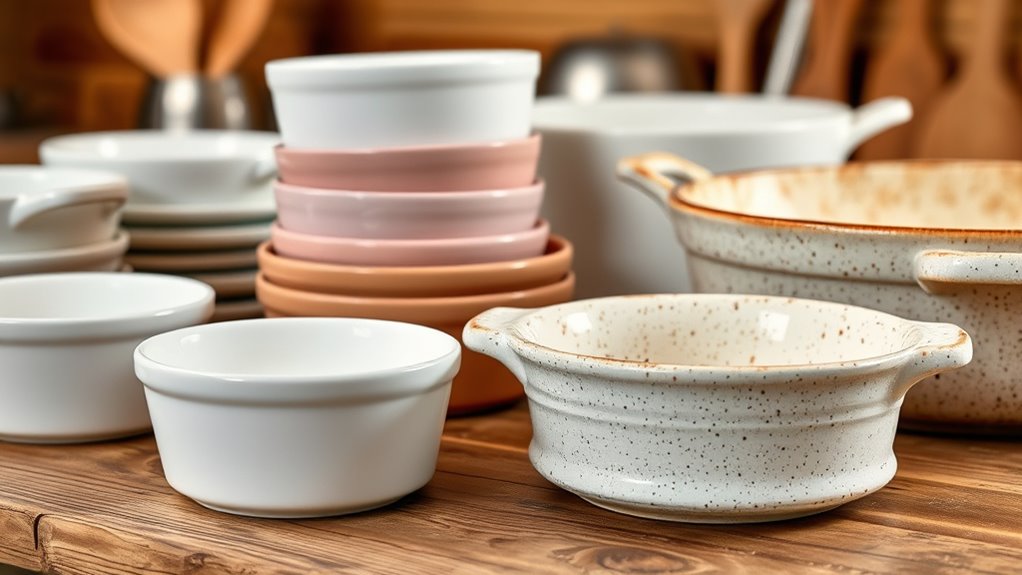
When selecting ceramics for baking and roasting, it’s best to choose those designed to withstand high temperatures without cracking or staining. Stoneware and fireclay ceramics are great options because they handle heat well and are durable.
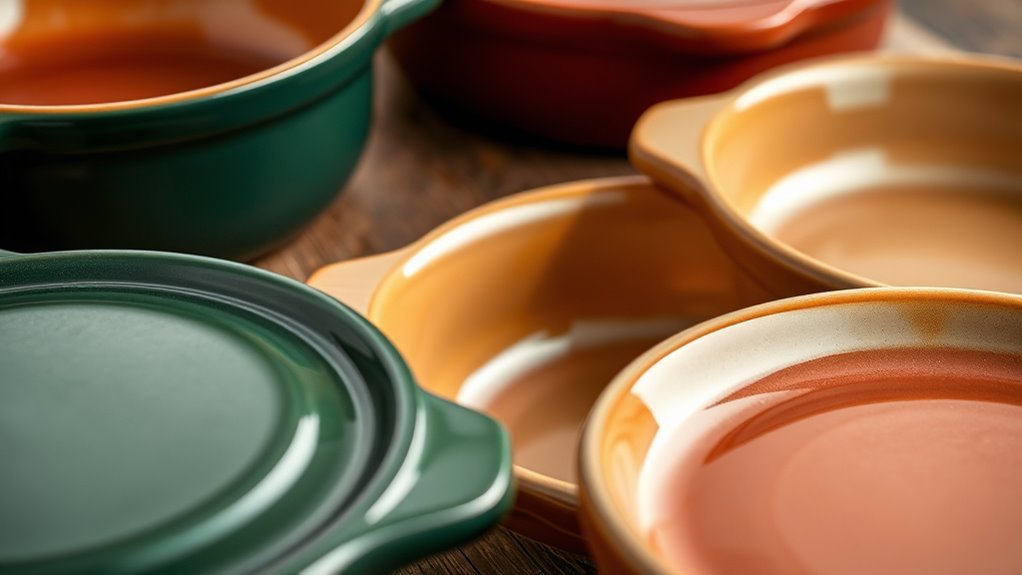
These types often come in various colors, so you can match your kitchen decor or personal style easily. Some ceramics also feature decorative patterns that add visual appeal to your oven dishes.
They’re perfect for serving directly from oven to table, especially if they’re labeled as oven-safe. This indicates they’ve been tested for high-temperature use and are safe to use in the oven.
Avoid delicate or glazed ceramics that aren’t meant for high heat, as they might crack or discolor over time. Choosing the right ceramic types means you’ll get reliable performance, attractive presentation, and long-lasting use for all your baking and roasting.
Are Porcelain and Fine China Suitable for Oven Use?
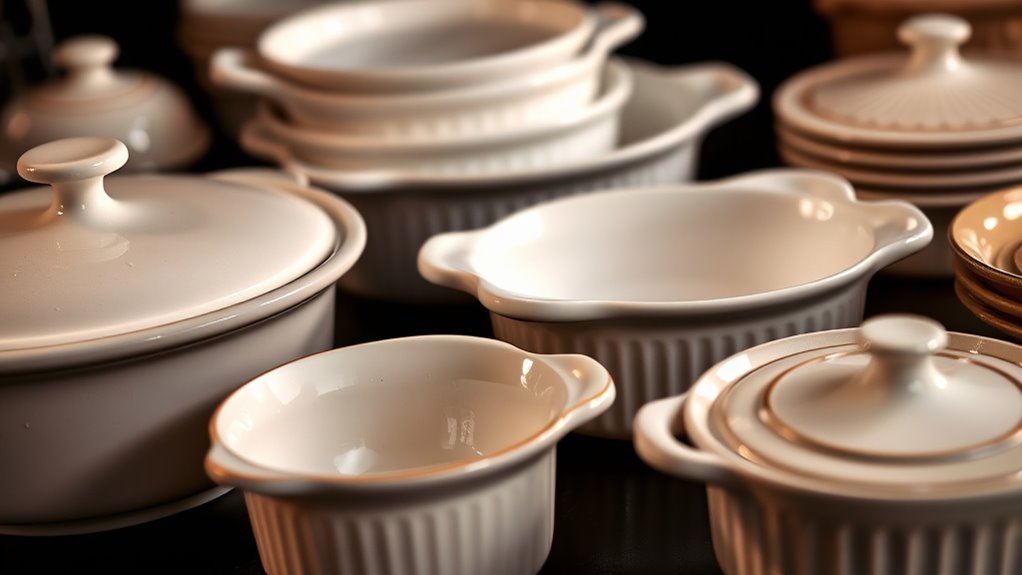
Porcelain and fine china are often chosen for their elegant look and delicate craftsmanship, but many wonder if they’re safe for oven use. Generally, porcelain’s durability varies; some pieces are fired at high temperatures, making them oven-safe, while others aren’t designed to handle high heat.
Fine china, known for being fragile, usually isn’t suitable for oven use because it can crack or break under thermal stress. If you want to use porcelain or fine china safely, check for manufacturer guidance or oven-safe markings.
Without proper indications, it’s best to avoid putting these ceramics in the oven. Their delicate nature makes them prone to damage. Using them for baking or roasting can cause unexpected breakage, ruining your dish and the piece itself.
Always look for ceramics labeled as oven-safe to ensure safety and prevent unnecessary breakage.
Are Earthenware and Stoneware Safe for Baking?
Wondering if earthenware and stoneware are safe for baking? It’s a good question because not all ceramics are created equal when it comes to handling high heat. The truth is, their ability to withstand the oven’s heat depends on the specific type and how they’re made. Some can handle the heat really well, while others might crack or break if you’re not careful.
The key is understanding their heat resistance and durability. For example, stoneware is generally more durable and can handle higher temperatures, making it a great choice for baking. Earthenware, on the other hand, tends to be more porous and may not be as heat-resistant, so it’s important to check if it’s oven-safe before using it for baking.
To keep your ceramics safe in the oven, it’s also smart to follow some simple tips. Avoid sudden temperature changes, like placing a cold dish into a hot oven, because that can cause cracking. Also, always read the manufacturer’s instructions to see if your pieces are oven-safe. When in doubt, it’s better to be cautious so you can enjoy baking without any surprises!
Heat Resistance of Earthenware
Earthenware is generally safe for baking, but its heat resistance can vary depending on how it’s made and fired. Its heat resistance properties are influenced by factors like clay composition and firing temperature, which affect durability. You should consider these key points:
- Earthenware durability can be lower than other ceramics, risking cracks if exposed to sudden temperature changes.
- Its heat resistance properties typically range from 1,000°F to 1,200°F, making it suitable for most oven baking tasks.
- Properly fired earthenware withstands oven heat, but it’s best to avoid direct flame or rapid temperature shifts.
Understanding these aspects helps you determine if your earthenware can handle baking at high temperatures, ensuring safe use and longevity.
Durability of Stoneware
Stoneware is known for its exceptional durability, making it a popular choice for baking dishes that need to withstand high temperatures and frequent use. Its strength comes from proper kiln firing, which vitrifies the clay and boosts its resilience.
Unlike earthenware, stoneware often features ceramic coatings that add a protective layer, preventing chips and cracks during baking. This coating also makes cleaning easier and helps distribute heat evenly.
Because of the high-temperature kiln firing process, stoneware becomes dense and sturdy, capable of handling oven conditions without warping. Its durability means you can use it repeatedly for baking and roasting without worry.
Safety Tips for Baking
When using stoneware or earthenware for baking, it’s important to understand their safety considerations to prevent accidents and damage. These types of ceramic art and decorative pottery can be safe if handled properly.
Always check if your piece is oven-safe before baking. Avoid sudden temperature changes to prevent cracking. Use oven mitts when handling hot ceramics to avoid burns.
Also, verify that your pottery is free from cracks or chips, as these can worsen in high heat. Preheat gradually to avoid thermal shock. Use a baking liner or parchment paper to prevent sticking.
Finally, follow the manufacturer’s instructions for temperature limits to keep everything safe and in good shape.
How to Identify Lead-Free and Food-Safe Ceramic Cookware
Want to make sure your ceramic cookware is both lead-free and food-safe? One good way is to look for certification labels on the product. These labels tell you that the cookware meets certain safety standards, so it’s a smart first step.
Next, take a close look at the glaze. A high-quality ceramic piece will have a smooth, even surface without any cracks or chips. If the glaze looks rough or damaged, it could be a sign of lower quality or potential safety issues.
Always double-check that the labels and the glaze meet safety requirements before you start using the cookware. Better to be safe and enjoy your cooking!
Checking Certification Labels
Checking certification labels is an essential step in ensuring your ceramic cookware is both lead-free and food-safe. These labels verify that the ceramic meets safety standards and often highlight important details like origin and manufacturing practices.
When examining labels, look for symbols indicating food safety, such as FDA or CE marks. You should also consider the ceramic’s aesthetic appeal and cultural significance, as authentic pieces often carry markings or labels that reflect their origin.
Be aware that some ceramics with vibrant colors or intricate designs may still be safe if properly certified. Always verify that the label indicates the ceramic is free from harmful substances.
This simple check helps you enjoy your oven-safe ceramics confidently, knowing they’re both beautiful and safe for food preparation.
Examining Glaze Quality
How can you quickly determine if a ceramic glaze is safe for oven use? Start by inspecting the glaze’s consistency; it should be smooth, even, and free from cracks or pinholes.
Look for color uniformity—an even, consistent hue across the surface indicates good quality and proper firing. Uneven color or rough patches might mean poor application or safety issues.
Avoid ceramics with glazed areas that look drippy or uneven, as these can contain lead or other harmful substances.
If you’re unsure, test the piece with a lead test kit or check for labels that say lead-free and food-safe glaze.
What Role Does Glazing Play in Oven-Safe Ceramics?
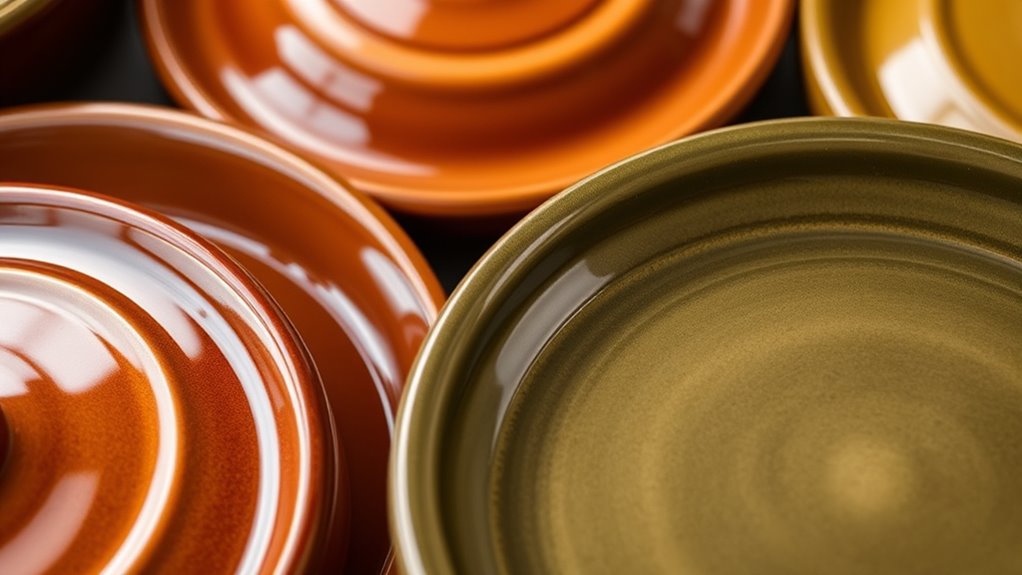
Glazing plays a crucial role in making ceramic pieces safe for oven use by creating a protective, non-porous layer. The glaze composition determines how well it can handle high temperatures and prevent liquids from seeping in.
Glazing creates a protective, non-porous layer essential for oven-safe ceramics.
A durable glaze helps the ceramic withstand oven heat without cracking or peeling. When choosing oven-safe ceramics, it’s important to consider these key aspects:
- Glaze composition: Look for formulas designed for thermal shock resistance and high-temperature stability.
- Glaze durability: Make sure the glaze can handle frequent oven cycles without deteriorating or losing its coating.
- Application quality: Proper glazing techniques ensure even coverage and reduce imperfections that could compromise safety.
How to Properly Care for and Maintain Your Ceramic Cookware
Taking care of your ceramic cookware is key to keeping it in good shape and making sure it lasts a long time. You want to be gentle when cleaning it, so avoid harsh scrubbing or abrasive cleaners that can scratch the surface. Instead, use soft sponges and mild dish soap to keep it looking fresh.
It’s also a good idea to keep an eye on your cooking temperatures. Cooking on too high heat can sometimes damage the ceramic coating, so try to stick to medium or low heat whenever possible. This not only protects your cookware but also helps your food cook more evenly.
And don’t forget about how you store your ceramic pieces. Stacking them carefully or using soft padding between them can prevent chips and cracks. Taking these simple steps will help your cookware stay beautiful and functional for years to come!
Proper Cleaning Techniques
To keep your ceramic cookware in top shape, it’s important to follow proper cleaning techniques. Gentle care helps preserve the beauty of your ceramic art and decorative ceramics, preventing scratches or damage.
Always use a soft sponge or cloth with mild dish soap to clean your cookware. Avoid abrasive scrubbers that could scratch the surface.
Rinse thoroughly to remove soap residue, then dry with a soft towel to prevent water spots. For stubborn stains, soak the cookware briefly in warm water and baking soda.
Temperature Management Tips
Wondering how to keep your ceramic cookware in perfect condition? Temperature management is key. Always start with low to medium heat to prevent thermal shock, which can crack or warp the ceramic.
Avoid sudden temperature changes. Don’t transfer a hot piece directly to cold water, as this can damage the surface. When used for kitchen decoration or ceramic art, gentle heating helps preserve its beauty and integrity.
Use preheated oven settings carefully, and never exceed the manufacturer’s recommended temperatures. Regularly check for any cracks or chips, as these can affect heat distribution and safety.
Proper temperature regulation not only prolongs the life of your ceramic pieces but also keeps them looking great and working well for years to come.
Storage Best Practices
Proper storage is essential to maintaining your ceramic cookware’s durability and appearance. To protect your ceramic decoration and preserve the quality of ceramic art, store items carefully.
Avoid stacking heavy objects on top to prevent chipping or cracking. Use a soft cloth or padding between pieces to prevent scratches.
Keep your cookware in a dry, cool place away from extreme temperature changes, which can weaken the ceramic material. When not in use, make sure lids are stored separately or fit gently to avoid damage.
Regularly check for any signs of wear or damage, and handle your items with care. Proper storage helps keep your ceramic pieces looking beautiful and intact, ready for safe oven use and display.
Common Mistakes That Can Damage Your Ceramic Bakeware
One common mistake that can damage your ceramic bakeware is exposing it to sudden temperature changes. For example, taking a hot dish straight from the oven and placing it on a cold surface can cause cracking or breakage. This risk is higher if your ceramic has decorative patterns or unique colors, which may be more prone to stress from thermal shock.
Using abrasive cleaning tools or harsh detergents can scratch or dull the surface, especially around detailed patterns. Avoid stacking ceramic pieces without proper padding, as this can lead to chipping or fractures. Always let your ceramic bakeware cool gradually before washing or storing.
Failing to do so can weaken the material, especially if the patterns or colors have been glazed or painted. Being mindful of these mistakes helps preserve the appearance and longevity of your ceramic bakeware.
Which Ceramic Materials Offer the Best Value for Baking?
When choosing ceramic materials for baking, you want options that balance durability, heat retention, and affordability. Ceramic art and decorative tiles often showcase quality materials that also perform well in the oven. For baking, high-fired stoneware and porcelain stand out as the best value options. They’re sturdy, offer excellent heat retention, and resist chipping.
Consider these top choices:
- Stoneware: Durable, oven-safe, and affordable, perfect for everyday baking.
- Porcelain: Elegant and highly heat-resistant, ideal for precise baking needs.
- Earthenware: Budget-friendly, but make sure it’s properly glazed to withstand oven use.
These materials are versatile and are often used in both artistic ceramic pieces and decorative tiles. While ceramic art may focus on aesthetics, choosing the right baking ceramic guarantees longevity and performance. This way, you get the best value for your investment.
How to Choose the Right Oven-Safe Ceramic for Your Cooking Needs
Choosing the right oven-safe ceramic depends on your specific cooking needs and how you plan to use it.
Selecting the right oven-safe ceramic depends on your cooking needs and intended use.
If you’re mainly baking or roasting, look for ceramics labeled as oven-proof, heat-resistant, and durable.
For ceramic art or decorative uses, prioritize aesthetics and craftsmanship but make sure the piece can handle oven temperatures if needed.
Consider the type of glaze and clay; some glazes are more resistant to thermal shock, making them safer for oven use.
Check for manufacturer labels or certifications indicating oven safety.
If you want multi-purpose ceramics that serve both functional and decorative roles, choose versatile pieces designed for oven use and artistic display.
Keep in mind that some ceramics are better suited for high temperatures, while others are more fragile.
Frequently Asked Questions
Can Ceramic Cookware Be Used in Microwave Ovens?
Yes, ceramic cookware can be used in microwave ovens if it’s microwave safe and ceramic microwave compatible. Always look for labels or symbols indicating microwave safety to avoid damage or hazards.
Not all ceramic cookware is suitable for microwaves, so it’s important to check the manufacturer’s instructions. When properly identified, ceramic cookware heats evenly and is a safe, durable option for microwave cooking.
This makes your meal prep quick and convenient. Just make sure to verify that your ceramic piece is microwave friendly before using it in the oven.
How Do I Prevent Thermal Shock in Oven-Safe Ceramics?
To prevent thermal shock in oven-safe ceramics, treat your cookware like a delicate dance partner—gradually warm and cool it. Avoid sudden temperature changes to reduce stress caused by thermal expansion.
Always preheat your oven and let the ceramic come to room temperature before moving it from cold to hot. This gentle approach helps your ceramic stay strong and crack-free, ensuring your culinary dance continues smoothly.
Are There Specific Brands Known for High-Quality Oven-Safe Ceramics?
You should look for brands with a strong reputation for quality and safety. Brands like Le Creuset, Emile Henry, and Pyrex are well-known for their oven-safe ceramics.
Check for material certification to guarantee they meet safety standards and are designed for oven use. These brands prioritize durability and heat resistance.
Choosing them can give you confidence and peace of mind when cooking with ceramic ware in your oven.
What Is the Typical Lifespan of Oven-Safe Ceramic Cookware?
Your oven-safe ceramic cookware typically lasts 5 to 10 years, depending on how you use and care for it.
To make it last longer, clean it regularly with gentle, non-abrasive cleaners. Avoid sudden changes in temperature that can cause damage.
Proper storage is also key to preventing chipping or cracking. If you take good care of it, your ceramic cookware will stay durable and safe for oven use for many years.
Can Ceramic Bakeware Withstand High-Temperature Broiling?
Yes, ceramic bakeware can handle high-temperature broiling, but it really depends on the glazing techniques and the ceramic composition. Look for bakeware with a high-quality glaze that’s made for broiling, as this helps prevent cracking or damage.
The ceramic’s makeup also matters. Thicker, well-fired ceramics tend to handle heat better. Always check the manufacturer’s guidelines, but generally, with proper glazing and good composition, your ceramic bakeware should perform well under broiling conditions.
Conclusion
Choosing the right oven-safe ceramic isn’t just about convenience; it’s about your safety and delicious results. Always check that your ceramic ware is lead-free and food-safe. Handle it with care to help it last longer.
Remember, “A stitch in time saves nine.” Proper maintenance and knowledge can help you avoid costly mistakes. With the right ceramic, you can create wonderful meals confidently.
Investing in oven-safe ceramic ensures safety and quality for years to come. It’s the key to enjoying tasty, worry-free cooking every time.