How to Determine If Cuisinart Pans Go in the Oven
Many home cooks love their Cuisinart pans but often wonder if they can use them in the oven. You’re not alone—figuring out which cookware is oven-safe can be confusing. Knowing this can help you cook more efficiently and avoid accidents or damage to your pans.
To find out if your Cuisinart pan is oven-safe, check for labels or markings on the bottom or handles, and review the user manual or official website for your model.
Look at the material—stainless steel and cast iron are usually safe, while non-stick coatings and plastic handles may not withstand high temperatures.
Clear signs, such as melting or cracks, indicate it’s not suitable for oven use.
Keep exploring to learn more about ensuring safe and effective oven use.
Key Takeaways
- Look for oven-safe labels, markings, or icons on the bottom or handle of the pan. These can give you quick clues about whether it’s oven safe.
- Check the user manual or visit the Cuisinart website for information specific to your model. This can save you from guesswork.
- Conduct a gradual heating test by warming the pan at 200°F and watch for any warping or damage. This helps ensure safety before using it in the oven.
- Make sure the handle material is oven-safe. Usually, stainless steel or silicone handles can handle oven heat better than plastic ones.
- Be cautious with non-stick coatings. If they’re scratched or not explicitly marked as oven-safe, it’s best to avoid putting the pan in the oven.
How to Tell if Your Cuisinart Pan Is Oven-Safe
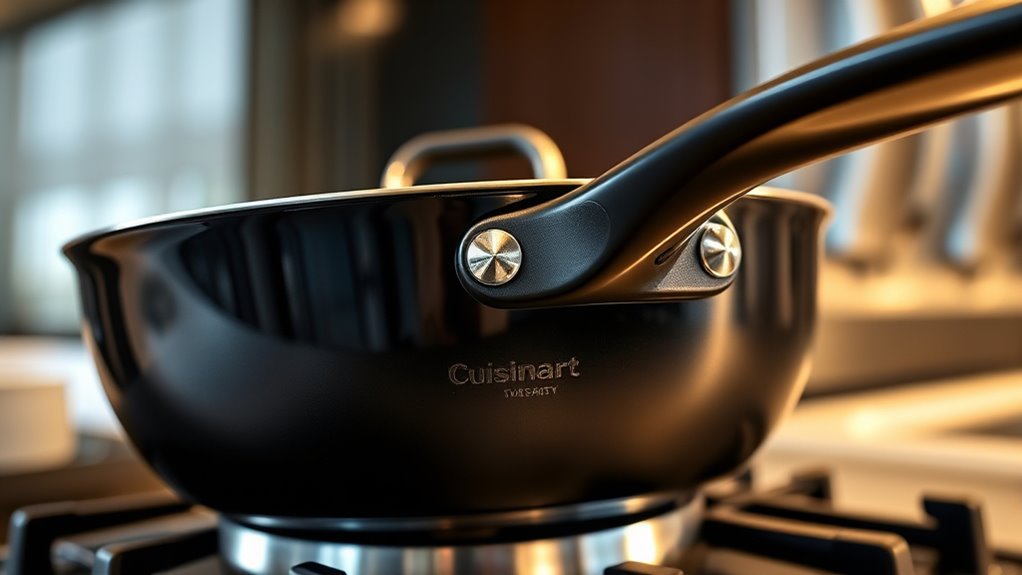
To figure out if your Cuisinart pan is oven-safe, start by looking for any labels or markings on the bottom or handle. Many pans have symbols or text that show if they can go in the oven, like an oven icon or temperature limits.
If you don’t see clear markings, check the user manual or visit Cuisinart’s website for details about your specific model. It’s a good idea to clean your pan thoroughly before testing oven safety—make sure there’s no residue or food stuck on it.
When you’re storing your pan, keep it in a dry, cool place to avoid damage that could affect its oven safety. Don’t stack heavy objects on top, as this could warp the pan or damage the handle.
Check Your Cuisinart Pan’s Material to Confirm Oven Compatibility
Checking the material of your Cuisinart pan is key to making sure it can handle oven temperatures. Different materials react differently when heated, so knowing what yours is made of helps prevent damage. For example, stainless steel and cast iron are oven-safe, but non-stick coatings might not be.
Look for labels or manufacturer info to verify your pan’s material. Here’s a quick guide:
| Material | Oven Safety | Notes |
|---|---|---|
| Stainless Steel | Yes | Very durable and great for high heat |
| Cast Iron | Yes | Perfect for oven use; keep proper care in mind |
| Non-Stick Coating | Usually No | Always check manufacturer instructions |
Knowing your pan’s material makes oven cooking safer and easier.
How Handle Materials Affect Cuisinart Pans’ Oven Use
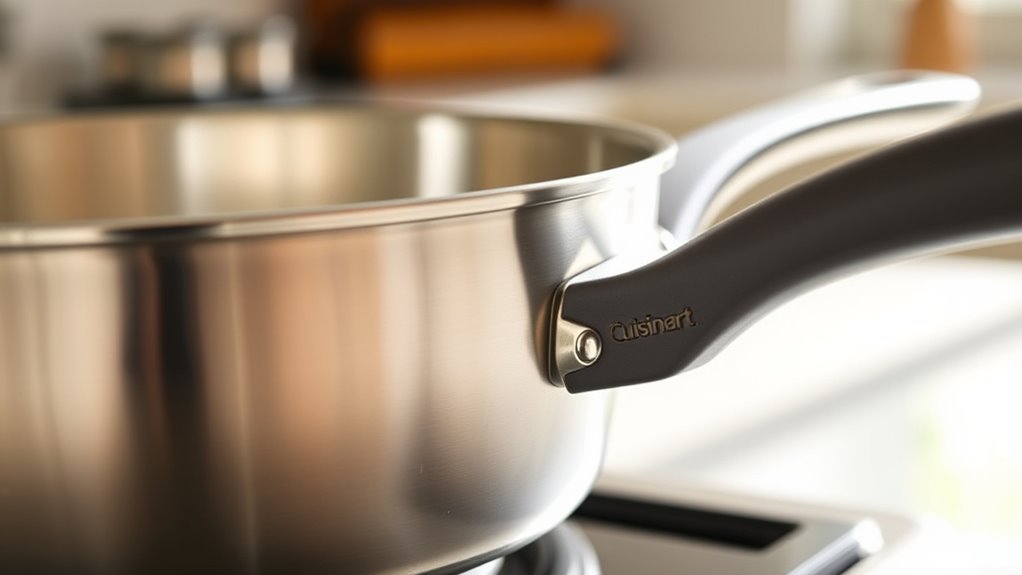
Ever wondered how the material of a pan’s handle influences its oven safety? The handle material plays a big role in your cooking techniques and how you clean your pan afterward.
Handles made from stainless steel or heat-resistant silicone can usually handle oven temperatures, so you can easily transfer the pan from stovetop to oven. However, plastic or rubber handles often aren’t oven-safe because they might melt or weaken at high heat.
Stainless steel and silicone handles are oven-safe, but plastic and rubber handles may melt or weaken at high temperatures.
When choosing a pan, always check the handle material to see if it’s suitable for oven use. Proper cleaning also depends on the handle type—some coatings or adhesives can be damaged if exposed to high temperatures.
Make sure to verify the manufacturer’s guidelines to confirm your handle material can withstand oven conditions. Knowing how handle materials affect oven use helps you avoid accidents and makes your cookware last longer.
Plus, it gives you confidence in your cooking techniques.
Spot Oven-Safe Nonstick Coatings on Your Cuisinart Cookware
Are you able to identify oven-safe nonstick coatings on your Cuisinart cookware? To do this, look for labels or markings on the bottom or packaging that specify oven safety.
Many Cuisinart pans feature a nonstick coating designed to withstand oven temperatures, but not all coatings are made the same. When you’re preparing for cooking techniques that involve oven use, verify that the pan’s coating can handle the heat.
You can also check the manufacturer’s instructions or website for specific details. Proper pan cleaning is essential to maintain the nonstick surface and guarantee it remains oven-safe.
Avoid abrasive scrubbers, which can damage the coating. If the nonstick surface is scratched or peeling, it’s best not to use the pan in the oven.
Spotting the right coating helps you confidently incorporate your Cuisinart cookware into a variety of cooking techniques, including oven baking and roasting.
Where to Find Cuisinart’s Official Oven Safety Guidelines
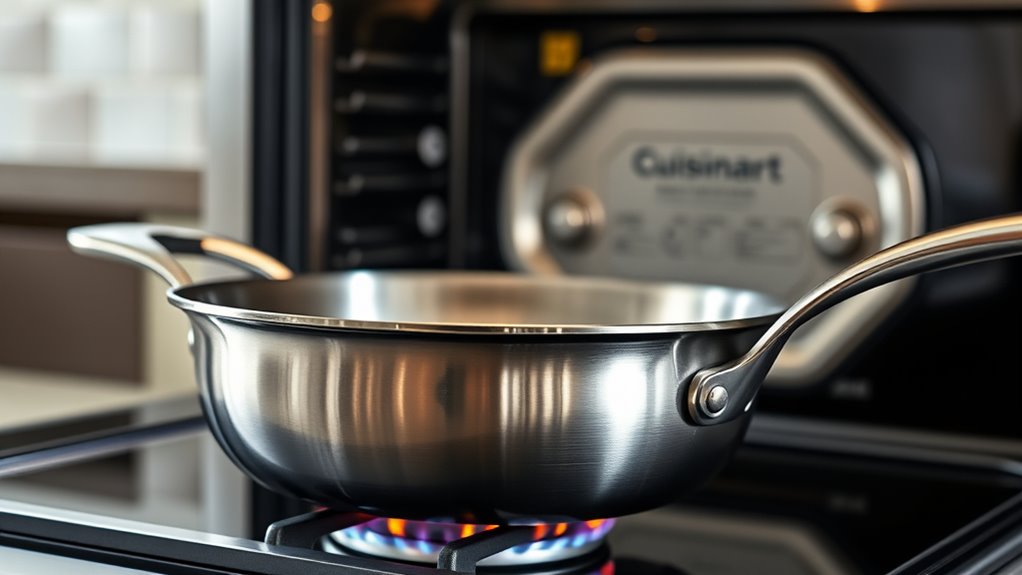
Looking for Cuisinart’s official oven safety guidelines? You’ll find them in the user manual that comes with your cookware – it’s always a good idea to give that a quick read.
You can also check out the manufacturer’s website, which has detailed safety tips and usage instructions. It’s a handy resource to make sure you’re using your pans correctly and safely in the oven.
Official Safety Recommendations
To find Cuisinart’s official oven safety guidelines, start by checking the product manual that comes with your pan. It often includes specific recommendations about oven use.
These guidelines give you important details on suitable cooking techniques and temperature limits, helping you use your pan safely in the oven. The manual also offers advice on proper kitchen maintenance, like avoiding metal utensils or abrasive cleaners that could harm the surface.
Always review the manual to see if your Cuisinart pan is oven-safe and at what temperatures. Following these official safety tips reduces risks, helps your pan last longer, and keeps your cooking safe.
Make sure to prioritize the manufacturer’s guidance to prevent accidents and maintain your cookware’s quality over time.
Manufacturer’s Usage Instructions
Since manufacturer’s instructions are the most reliable source for safe oven use, it’s important to find the official guidelines from Cuisinart. You can usually find these in the user manual that comes with your pan or on Cuisinart’s website.
The manual will tell you if your pan is oven-safe, including details on the maximum oven temperature and how to clean the pan properly. Make sure to pay attention to any warnings about temperature limits to avoid damage.
Following these instructions carefully helps ensure your pan lasts longer and is safe to use in the oven. If the manual says your pan is oven-safe, it’s generally fine to use it in the oven as long as you stick to the recommended temperature and cleaning instructions.
How to Safely Test Your Cuisinart Pan for Oven Use at Home
Before placing your Cuisinart pan in the oven, it’s important to do a quick safety test to make sure it can handle the heat. This helps prevent damage and keeps your cooking safe.
Start by heating the pan gradually in the oven at a low temperature, around 200°F, for about 10-15 minutes. After that, let it cool down and look for any warping, discoloration, or cracks.
If you see any signs of damage, it’s best to avoid putting the pan in the oven. You can also do a simple water test—apply a small amount of water to the surface. If the water beads smoothly, your pan probably tolerates oven heat well.
| Step | Action |
|---|---|
| 1 | Heat the pan at a low temperature in the oven. |
| 2 | Let it cool and check for warping or cracks. |
| 3 | Test water bead adhesion. |
| 4 | Look for discoloration or damage. |
| 5 | Make sure your pan is properly maintained. |
This quick test confirms if your pan is safe for oven use, helping you cook confidently and effectively.
Signs That Your Cuisinart Pan Isn’t Suitable for the Oven
If your Cuisinart pan isn’t made from oven-safe materials, it might warp or get damaged when you crank up the heat. So, it’s a good idea to double-check what it’s made of before popping it in the oven.
Also, don’t forget to look at the handles. If they’re made of plastic or wood, they can melt or crack when exposed to high temperatures. Being aware of these signs can really help you avoid ruining your cookware unnecessarily.
Material Compatibility Concerns
Your Cuisinart pan may not be oven-safe if its material isn’t designed to handle high temperatures. Check the manufacturer’s instructions or labels for any warnings about oven use.
If the pan is made from plastic, silicone, or has parts that aren’t heat-resistant, it’s probably unsafe for oven cooking. Metal pans like stainless steel or aluminum are usually oven-friendly, but make sure they don’t have plastic or rubber components that could melt.
Ignoring material limitations can cause damage or safety hazards. Always follow cooking tips for oven safety. If you’re unsure, try testing the pan at a lower temperature first or look up the product details.
Properly checking material compatibility helps keep your cooking safe and effective. It also helps maintain kitchen safety and prevents accidents.
Handle Material Limitations
Even if the pan’s main body is oven-safe, its handle might not be suitable for oven use. Handle material safety and durability are important factors when checking if a pan can go in the oven.
Some handles are made from materials that can handle high temperatures without melting or warping. Others may degrade or release harmful chemicals when exposed to heat.
Watch out for signs like handles made of plastic or rubber that can’t endure high heat. Also, be cautious if the handle feels loose or wobbly, which can mean poor durability.
Visible cracks, chips, or melting on the handle are red flags. If the handle isn’t designed to withstand oven heat, using the pan in the oven could be unsafe.
Always check the manufacturer’s guidelines to confirm that the handle material is oven-safe before you use it.
Tips to Maintain and Extend the Oven-Ready Life of Your Cuisinart Pans
To keep your Cuisinart pans oven-ready for as long as possible, proper care and maintenance are key. Focus on gentle cooking methods and careful cleaning to extend their lifespan.
Avoid using metal utensils that can scratch the surface. Instead, choose silicone or wooden tools to protect the coating. When cleaning, hand wash with warm, soapy water and steer clear of abrasive scrubbers that can cause damage.
Here’s a quick guide:
| Cooking Techniques | Pan Cleaning |
|---|---|
| Use low to medium heat | Wash immediately after use |
| Avoid rapid temperature changes | Use non-abrasive sponges |
| Use oil to prevent sticking | Dry thoroughly to prevent rust |
Alternatives if Your Cuisinart Pan Isn’t Oven-Safe
If your Cuisinart pan isn’t oven-safe, don’t worry—there are plenty of other options you can turn to for oven cooking. Just make sure to choose cookware that’s specifically designed to handle oven temperatures so you don’t end up damaging your tools or creating a safety hazard.
When you’re transferring food into or out of the oven, just take your time and be careful. That way, you’ll avoid spills or accidents and keep everything running smoothly.
Use Oven-Safe Alternatives
When your Cuisinart pan isn’t oven-safe, exploring alternative cookware options can save your meal. You can switch to other oven-safe tools to continue your cooking techniques and develop new recipe ideas. Consider using:
- Cast iron skillets, which withstand high temperatures and distribute heat evenly.
- Glass bakeware, perfect for casseroles and roasting, and easy to see through during cooking.
- Silicone baking mats or molds, ideal for baking delicate items or desserts without risk of damage.
These alternatives allow you to adapt your preparation methods without compromising your dish. Keep in mind that choosing the right oven-safe cookware depends on your recipe’s needs and the ingredients involved. Using suitable options ensures safe, efficient cooking and delicious results.
Check Material Compatibility
Before using your Cuisinart pan in the oven, make sure to check if the material can handle high temperatures. Different materials react differently to oven heat, which can affect your cooking and safety.
If you’re unsure, look at the manufacturer’s instructions or do a simple test. Here’s a quick guide to help you out:
| Material | Oven Safe | Notes |
|---|---|---|
| Stainless Steel | Yes | Great for high temperatures |
| Non-stick Coating | No | Can peel or degrade in the oven |
| Aluminum | Yes | Lightweight and conducts heat well |
| Ceramic | Usually | Check labels for temperature limits |
Always prioritize safety by knowing your pan’s material limits. This helps prevent accidents or damage while cooking.
Transfer Food Safely
Sometimes, your Cuisinart pan isn’t oven-safe, so you’ll need to transfer your food without risking damage or safety hazards. To do this effectively, consider these alternatives to keep your cooking safe and proper.
First, transfer your food to an oven-safe dish, like a glass or metal baking sheet. Second, use tongs or a spatula to carefully lift and move hot food, avoiding splashes or burns.
If your recipe allows, finish cooking on the stovetop or in a microwave. Always double-check the new container’s material to ensure it’s oven-safe.
When in Doubt, Contact Cuisinart Customer Support
If you’re unsure whether your Cuisinart pans are oven-safe, it’s best to contact Cuisinart customer support. They can give you specific advice based on your pan’s model and materials.
This way, you’ll know you’re following the proper cooking techniques and keeping your kitchen safe. Reaching out helps prevent accidents or damage from using incompatible cookware in the oven.
When you talk to a representative, have details like the model number and any labels on your pan ready. This info helps them determine if your pan is oven-safe.
Manufacturers often update their guidelines, so even if you’ve used the pan before, it’s smart to double-check. Contacting support ensures you’re following the latest recommendations.
Getting in touch with Cuisinart can help you avoid hazards, extend the life of your cookware, and enjoy safe oven use. When in doubt, it’s always a good idea to ask an expert.
Frequently Asked Questions
Can Cuisinart Pans Be Used Under a Broiler Safely?
Yes, Cuisinart pans can often be used under a broiler safely if they’re oven-compatible. Just be sure to check the manufacturer’s guidelines for broiler safety and oven use.
Avoid using pans with plastic handles or non-stick coatings that aren’t broiler-safe, as they can melt or get damaged. Make sure the pan is oven-safe and can handle high heat.
When you’re unsure, it’s best to consult your Cuisinart pan’s instructions. This will help prevent accidents or damage and keep you safe while cooking.
Do All Cuisinart Pans Have the Same Oven Temperature Limits?
Did you know not all Cuisinart pans share the same oven temperature limits? You’ll find that material compatibility plays a key role. Some pans, like stainless steel, typically withstand higher temperatures, while non-stick coatings may have lower limits.
Handle durability also varies, affecting how much heat they can safely endure. Always check your specific pan’s label or manual to make sure you don’t exceed its maximum oven temperature.
Are Cuisinart Pans Dishwasher Safe for Oven Use?
Cuisinart pans are dishwasher safe, but you should consider material compatibility and cleaning guidelines. While many are dishwasher safe, not all are oven safe, so check the manufacturer’s instructions for heat limits.
For cleaning, hand washing is often recommended to preserve non-stick surfaces. Always verify your specific pan’s details to guarantee it’s suitable for dishwasher use and oven safety, avoiding damage and extending its lifespan.
How Long Can Cuisinart Pans Be Exposed to High Oven Temperatures?
They say “a chain is only as strong as its weakest link,” and that’s true for your Cuisinart pans. You can usually expose them to high oven temperatures up to 500°F, depending on their material and heat resistance.
But try not to leave them in extreme heat for too long. Over time, this can weaken the pan’s structure. Always check the manufacturer’s guidelines to keep your pans in top shape.
Can Cuisinart Pans Be Used in a Convection Oven?
Yes, you can use Cuisinart pans in a convection oven if their material is oven-safe. Make sure your pan can handle convection heat, which circulates air for even cooking.
Also, check the handles. If they are heat-resistant and secure, you won’t have to worry about melting or damage. Always follow the manufacturer’s guidelines.
This way, you can prevent accidents and help your pan last longer.
Conclusion
Think of your Cuisinart pans as a trusted map—knowing their oven safety guides you through cooking adventures with confidence. Always check your pan’s material, handle, and coatings before oven use.
When in doubt, reach out to Cuisinart customer support. They’re like a lighthouse guiding you safely home. Proper care ensures your pans will serve as reliable tools for countless delicious journeys.
And remember, not all Cuisinart pans are oven-safe. Always verify if your specific pan can go in the oven before using it at high temperatures.