What Happens When You Put a Ceramic Plate in the Oven?
Many people struggle with figuring out whether their ceramic plates are safe to use in the oven. It can be stressful to guess if your favorite dishware will hold up under heat without cracking or breaking. You’re not alone—knowingly or not, many of us have damaged ceramics because we weren’t sure if they were oven-safe.
When you put a ceramic plate in the oven, it heats up depending on its material and glaze, but not all ceramics are oven-safe. High-quality, properly fired ceramics can withstand heat, while others might crack, warp, or even break under high temperatures or sudden temperature changes.
Glazed designs may crack or fade over time if exposed to heat improperly. To avoid damage, it’s important to know if your ceramic is oven-safe, and there’s more to evaluate if you want to keep it safe.
Key Takeaways
- Properly fired high-quality ceramics usually handle oven heat well, but decorative or glazed patterns might crack or fade over time.
- Non-oven-safe ceramics can crack, shatter, or even release harmful fumes because of thermal stress and glaze breakdown.
- Sudden temperature changes cause internal stress, which can lead to cracks, crazing, or breakage in ceramic plates.
- After oven use, look out for signs of damage like cracks, glaze crazing, chips, warping, or discoloration.
- Using oven-safe ceramics within the recommended temperatures helps prevent damage and keeps heating safe and effective.
How Do Ceramic Plates React to Oven Heat?
Ceramic plates generally withstand oven heat well, but their reaction depends on the type of ceramic and how it’s made. If your plate has decorative patterns or traditional styles, those can influence how it reacts to heat.
Glazed ceramics with vibrant designs often tolerate oven temperatures, but too much heat might cause the glaze to crack or fade over time. Plates with intricate decorative patterns, especially painted or glazed ones, can be more sensitive to temperature changes.
If the ceramic is high-quality and properly fired, it’s less likely to warp or break. But some traditional styles, made with specific kiln methods, might have a lower melting point or be more prone to thermal shock.
Always check if your ceramic plate is labeled oven-safe before putting it in the oven. Knowing how your plate’s design and style affect its durability helps you avoid damage when heating it up.
Are All Ceramics Oven-Safe? Understanding Material Variations
Not all ceramics are made the same when it comes to oven safety. The thing is, their material compositions can vary quite a bit. Some ceramics can handle high temperatures without a problem, while others might crack or even break if they get too hot.
Material Composition Differences
Since not all ceramics are created equal, understanding their material composition is key to figuring out if they’re oven-safe. Variations in ceramic glaze, clay type, and manufacturing process influence how well they handle heat.
Some ceramics are designed to withstand high oven temperatures, while others may crack or even release harmful fumes. It’s important to know what kind you’re dealing with.
The ceramic glaze acts as a protective coating but can melt or degrade if exposed to too much heat. The type of clay also impacts how much heat it can handle without breaking.
Here’s a quick overview of the features that matter:
| Feature | Description |
|---|---|
| Ceramic glaze | Protects surface and affects oven temperature tolerance |
| Clay type | Determines heat resistance and durability |
| Manufacturing process | Influences overall heat resilience |
| Oven safety rating | Varies depending on material composition |
Temperature Tolerance Limits
Understanding the temperature tolerance limits of ceramic cookware is key before using a ceramic plate in the oven. Not all ceramics are oven-safe, and their durability varies.
Some ceramics can handle high temperatures, making them great for baking and roasting. Others might crack or break if exposed to too much heat. Always check if your ceramic plate is labeled oven-safe or designed for heat exposure.
Temperature limits depend on the material—porcelain, stoneware, and earthenware each have their own tolerances. Ignoring these limits can damage the plate or cause accidents.
Knowing the specific temperature your ceramic can handle helps prevent breakage and extends its lifespan. Be sure to follow the manufacturer’s guidelines for safe oven use.
How Can You Tell If Your Ceramic Plate Is Oven-Safe?
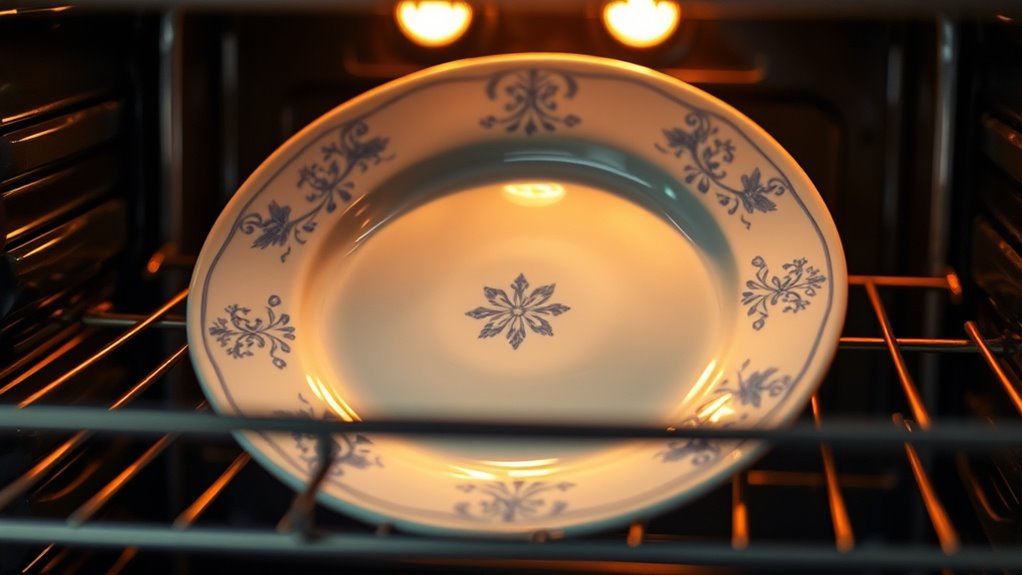
To figure out if your ceramic plate is oven-safe, check the bottom or packaging for any markings or labels. Many oven-safe plates will have symbols like a microwave or oven icon, or a label that says they can handle high temperatures.
Check the bottom or packaging for symbols indicating your ceramic plate is oven-safe.
If there’s no clear marking, look at the material and design of the plate. Plates made for food presentation or decoration might not be oven-safe, especially if they’re glazed with non-heat-resistant finishes.
You can also try a simple test: gently heat the plate in a low-temperature oven to see if it can handle the heat without cracking or warping. But always follow the manufacturer’s instructions if they’re available.
Knowing whether your ceramic plate is oven-safe helps you use it safely and keeps your food presentation and decorations intact.
What Causes Ceramic Plates to Crack or Break in the Oven?
You might crack your ceramic plate if you expose it to sudden temperature changes, like taking it straight from the fridge and putting it into a hot oven. That quick shift can cause the ceramic to expand or contract too quickly, which often leads to cracking.
Also, sometimes there are tiny manufacturing flaws or defects in the ceramic that you can’t see with the naked eye. These weak spots can make the plate more vulnerable to breaking when heated.
Rapid Temperature Changes
When ceramic plates are exposed to sudden temperature changes, they can crack or break easily. Rapid shifts cause stress inside the material, especially if the plate is meant for display or ceramic art rather than oven use.
To avoid damage, keep these tips in mind:
- Don’t put a cold plate directly into a hot oven.
- Let the plate warm up gradually before increasing the heat.
- Avoid transferring a hot plate into a cold environment right away.
- Use plates designed for oven use, which are better for kitchen tasks and ceramic art.
Quick temperature changes create internal stress that weakens the ceramic, leading to cracks or shattering. Being mindful of these steps helps keep your ceramic pieces looking great and functioning well.
Manufacturing Defects or Flaws
Manufacturing defects or flaws can make ceramic plates more likely to crack or break when exposed to oven conditions. These issues usually happen during production, like improper firing or material inconsistencies.
These flaws weaken the plate’s structure and reduce its ability to handle thermal stress. While quality checks try to catch these defects before sale, some can still slip through.
Knowing common manufacturing issues can help you avoid breakage. For example, incomplete firing creates weak spots prone to cracking. Air pockets can create stress points that lead to fractures.
Material inconsistencies weaken the overall strength of the plate, making it more fragile. Surface defects can initiate cracks when exposed to heat, and poor glazing can weaken the ceramic’s surface.
All these flaws compromise your plate’s resilience in the oven, increasing the risk of damage.
What Happens If You Put Non-Oven-Safe Ceramics in the Oven?
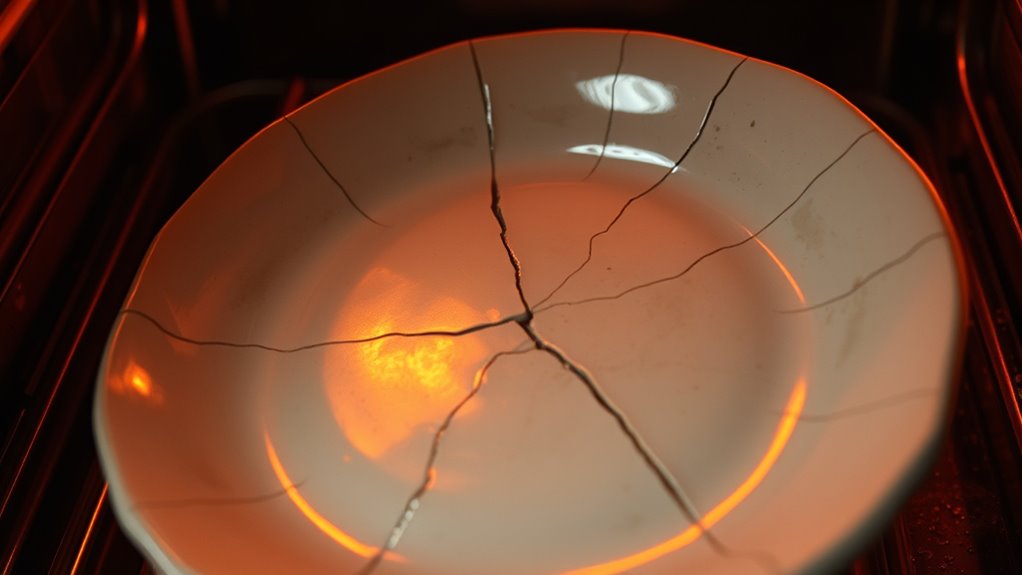
Putting non-oven-safe ceramics in the oven can lead to unexpected and often dangerous results. These ceramics aren’t made to handle high heat, and their glaze may crack or peel because of thermal stress. This weakens the plate’s ability to withstand the oven environment, increasing the chance it will break.
Using non-oven-safe ceramics in the oven risks cracks, breakage, and potential safety hazards.
Here’s what can happen:
- Cracking or Shattering: Sudden temperature changes make the ceramic expand unevenly, causing cracks or even shattering.
- Glaze Damage: The glaze can bubble, peel, or crack, exposing the porous material underneath which weakens the plate.
- Toxic Fumes: Some glazes contain harmful materials that can release fumes when heated improperly.
- Fire Hazard: In extreme cases, the plate might break apart, potentially leading to a fire or damaging the oven.
Always check if your ceramic dish is oven-safe before using it to avoid damage or safety risks.
How to Use Ceramic Plates Safely in the Oven
To use ceramic plates safely in the oven, make sure they are labeled as oven-safe by the manufacturer. Look for markings or packaging that confirm this.
Once you know they’re safe, avoid exposing the plate to sudden temperature changes, which can cause cracking. When preheating your oven, set the temperature gradually to prevent thermal shock.
Be mindful of the ceramic glaze; some glazes may not handle high oven temperatures and could crack or leach chemicals. Follow the manufacturer’s recommended oven temperature limits closely.
Always place the ceramic plate on a middle rack to ensure even heat distribution. Avoid direct contact with flames or heating elements, as this can damage the glaze or break the plate.
After removing the plate from the oven, let it cool gradually before handling. Proper usage keeps your ceramic plate safe, durable, and damage-free.
How Can You Prevent Damaging Your Ceramic Dish in the Oven?
Preventing damage to your ceramic dish in the oven starts with proper handling and care. First, always check if your ceramic dish is oven-safe and has a heat-resistant ceramic glaze.
Always verify your ceramic dish is oven-safe and heat-resistant before use.
Second, avoid sudden temperature changes. Don’t place a cold dish directly into a hot oven—let it warm up gradually.
Third, keep an eye on the oven temperature. Stick within the manufacturer’s recommended range to prevent stressing the ceramic glaze.
Fourth, use oven mitts when handling the dish to avoid accidental drops or impacts.
Also, don’t expose the dish to direct flames or broiler heat, which can crack the ceramic.
Properly preheating your oven and respecting temperature limits helps prevent thermal shock.
Following these tips will help your ceramic dishes stay in good shape and last longer, protecting your investment and keeping your oven safe from damage.
Signs That Your Ceramic Plate Has Been Damaged by Heat
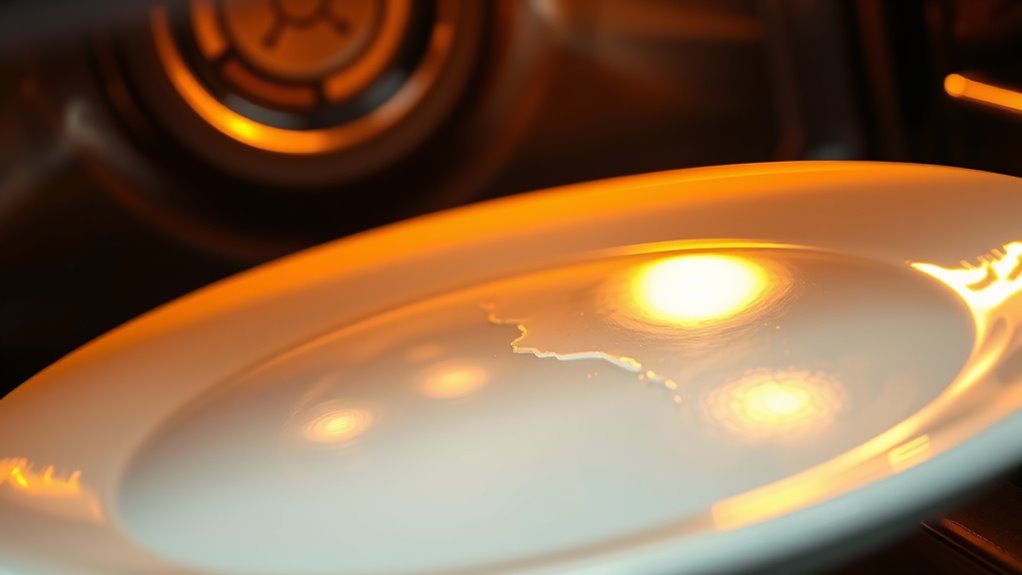
When you take a ceramic plate out of the oven, it’s important to check for signs of damage caused by heat. One key indicator is the ceramic glaze; if you notice cracks, crazing, or chips in the glaze, it suggests the heat exceeded what the glaze can handle.
These cracks can develop from repeated exposure to high oven temperatures, weakening the plate’s structure. Warping or warped edges also signal heat damage, especially if the plate no longer sits flat.
If the ceramic surface shows discoloration or becomes dull, it may have experienced thermal shock. Sometimes, the glaze can develop tiny hairline fractures, which aren’t immediately visible but can worsen over time.
Always consider the oven temperature you used. Exposing the plate to temperatures beyond its recommended limit increases the risk of damage. Recognizing these signs helps you avoid using compromised dishes that could break or leach materials into your food.
Alternatives to Ceramic Plates for Oven Cooking
If you’re looking for alternatives to ceramic plates for oven cooking, several options can better withstand high temperatures and reduce the risk of damage. These alternatives also add style to your kitchen decor and complement your ceramic art collection.
Glass Bakeware: Tempered glass dishes, like Pyrex, handle oven heat well and are easy to clean, making them a practical choice.
Stoneware: Thick, durable, and heat-retentive, stoneware offers a rustic look that elevates your kitchen decor while functioning safely in the oven.
Cast Iron: Known for its superior heat retention, cast iron pans are perfect for roasting or baking and provide a timeless aesthetic.
Metal Bakeware: Aluminum or stainless steel trays are resilient and versatile, ideal for high-temperature cooking without risking damage to your ceramic art.
These options help you enjoy oven cooking while preserving your kitchen’s aesthetic appeal and artistic elements.
Tips for Caring for and Maintaining Your Ceramic Tableware
Taking care of your ceramic tableware is pretty simple if you follow a few basic tips. When you’re cleaning them, just make sure to use gentle methods and steer clear of harsh abrasives that can scratch or damage the surface.
Also, be careful with temperature changes. Don’t expose your ceramics to sudden shifts from hot to cold or vice versa — it can cause cracking, and nobody wants that!
Finally, store your plates and bowls in a dry, stable spot where they won’t get knocked around or damaged. With these simple steps, your ceramic tableware will stay beautiful and last for years to come.
Proper Cleaning Techniques
Proper cleaning is essential to keep your ceramic tableware looking its best and lasting longer. To maintain its quality, follow these tips:
Use a gentle dishwasher cycle to prevent damage and preserve the glaze.
For stubborn stains, soak the plate in warm, soapy water before gently scrubbing with a non-abrasive sponge.
Avoid abrasive cleaners that can scratch the surface, making stains harder to remove.
Rinse thoroughly to remove any residue, then dry with a soft cloth to prevent water spots.
Avoid Sudden Temperature Changes
Exposing your ceramic tableware to sudden temperature changes can cause cracks or breakage. Temperature shock happens when a hot ceramic piece encounters cold air, water, or surfaces, stressing the material beyond its limits.
To protect your ceramics, avoid placing hot plates directly into cold water or transferring them from the oven to a cool countertop too quickly. Rapid temperature shifts can also weaken the glaze, making it more prone to chipping or cracking over time.
Always let your ceramicware cool gradually before cleaning or storing it. Using warm water instead of cold helps prevent stress on the material. By controlling temperature changes, you help preserve your ceramic tableware’s strength, look, and lifespan.
Safe Storage Practices
Storing your ceramic tableware correctly is key to keeping it looking great and avoiding damage over time. Here are some simple tips to help you do that:
- Store plates vertically to prevent pressure on the glaze, which can cause chips or cracks.
- Avoid stacking with heavy items, as this can stress the glaze and breakage.
- Keep ceramics in a dry, stable space away from extreme oven temperature changes that could weaken the material.
- Make sure they are clean and completely dry before storing to prevent mold or odors.
Good storage habits reduce the risk of damage from sudden temperature shifts and help preserve your ceramic glaze, making your tableware last longer.
Frequently Asked Questions
Can Ceramic Plates Go From Freezer to Oven Safely?
Yes, ceramic plates can go from freezer to oven if they have high thermal shock resistance and are made from durable materials like porcelain or stoneware.
Always check the manufacturer’s guidelines to make sure they’re oven-safe, as some ceramics may crack due to rapid temperature changes.
Material composition affects how well they withstand thermal shock, so it’s important to verify before shifting from freezing to baking.
How Long Can Ceramic Plates Withstand Oven Temperatures?
Ceramic plates generally withstand oven temperatures for about 30 minutes to an hour, depending on their material durability. You should be cautious of thermal expansion, which can cause cracking if exposed to rapid temperature changes or prolonged heat.
To avoid damage, always check the manufacturer’s guidelines and avoid sudden temperature shifts. Properly tested ceramic plates can handle typical oven temperatures safely within recommended timeframes, ensuring your dish stays intact.
Do Glazed Ceramic Plates Handle Oven Heat Better Than Unglazed?
You might think glazed ceramic plates handle oven heat better, but it’s not that simple. Glaze durability depends on how well it withstands thermal expansion. If it cracks under heat, it can’t protect the ceramic beneath.
Unglazed plates, lacking that glaze layer, often absorb heat differently. So, while glaze offers some extra protection, the real key is in the quality of the glaze and how it handles thermal stress.
Are There Specific Brands Known for Oven-Safe Ceramic Plates?
You’ll find several brands known for oven-safe ceramic plates, emphasizing brand safety and ceramic durability. Brands like Fiery Foods, Emile Henry, and Le Creuset are reputable for their oven-friendly ceramics, ensuring your plates withstand high temperatures without cracking.
Always check the manufacturer’s guidelines to confirm oven safety, but these brands are trusted choices. They prioritize durability and safety, making them ideal for baking, roasting, or reheating in the oven.
Can Ceramic Plates Be Used in Microwave and Oven Interchangeably?
You can often use ceramic plates in both the microwave and oven, but it’s important to check if they’re microwave-safe first.
About 80% of ceramic plates are oven-safe, but always stay within the heat limits set by the manufacturer. Ignoring these limits could cause cracking or breaking.
While many ceramic plates are versatile, confirming their safety for microwave and oven use helps prevent damage. This way, you can enjoy using them without any worries.
Conclusion
In the end, understanding your ceramic plate’s heat tolerance is key to avoiding disaster. Think of it as the difference between a gentle summer breeze and a hurricane.
When you choose oven-safe ceramics, you’re protecting your dinnerware from shattering like glass in a fireworks explosion.
Treat your ceramics with care, follow the guidelines, and they’ll serve you well. This way, you can turn your oven into a culinary masterpiece without risking a ceramic catastrophe that could rival the end of the world.