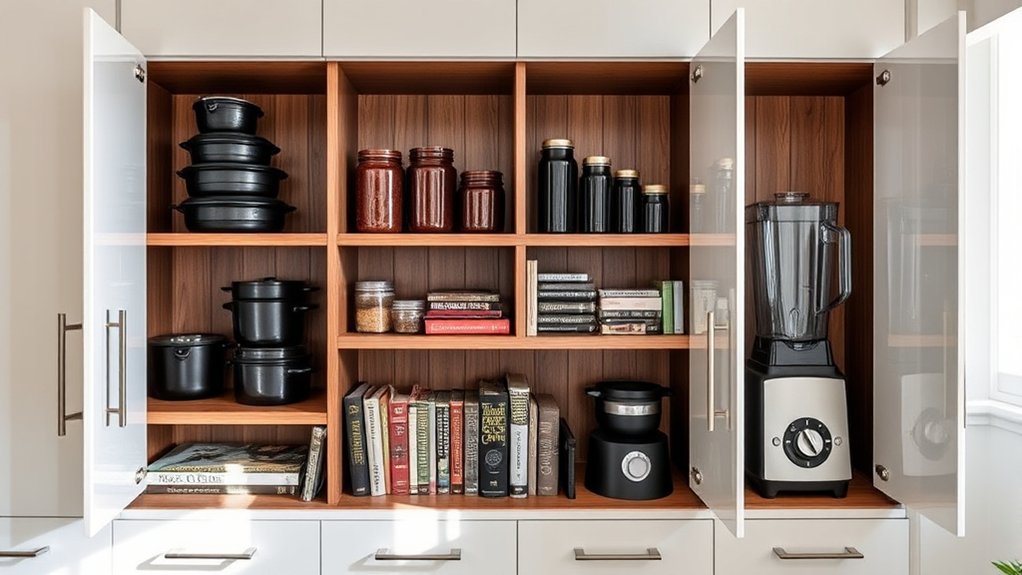
How Much Weight Can Kitchen Cabinets Hold?
Are you tired of wondering whether your kitchen cabinets can handle the weight of all your essentials? Many people struggle with figuring out if their cabinets can support heavy pots, dishes, or pantry items without risking damage. You’re not alone—understanding how much weight your cabinets can hold is a common concern.
Your kitchen cabinets can support a wide range of weight, typically between 50 to 200 pounds, depending on their material and construction quality. Solid wood and plywood cabinets are sturdier and handle heavier loads, while particleboard and MDF support less weight.
Proper installation using wall studs, sturdy hardware, and even weight distribution are essential for maximum support.
If you want to learn tips on strengthening your cabinets and avoiding overload, keep exploring.
Key Takeaways
- Solid wood and plywood cabinets usually support between 100 and 200 pounds, depending on how well they’re built and reinforced.
- Particleboard and MDF cabinets generally hold around 50 to 100 pounds and have a lower support capacity.
- It’s crucial to mount cabinets properly to wall studs and use load-rated hardware to get the best support.
- Spreading out the weight evenly and putting heavier items on lower shelves can help keep your cabinets stable.
- Look out for signs of overload like sagging doors, cracks, strained hardware, or trouble opening and closing.
What Types of Kitchen Cabinets Are Best for Load-Bearing?
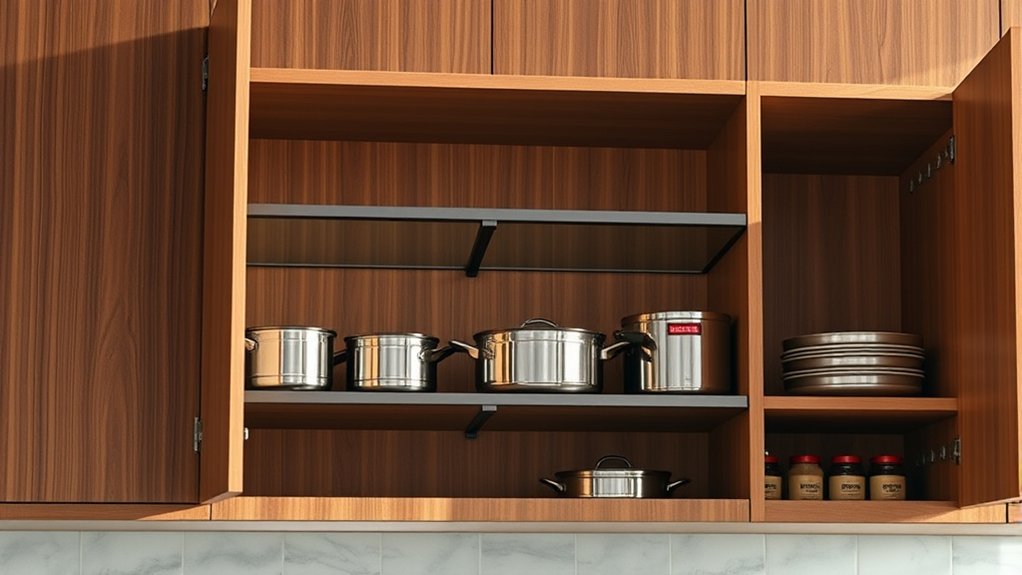
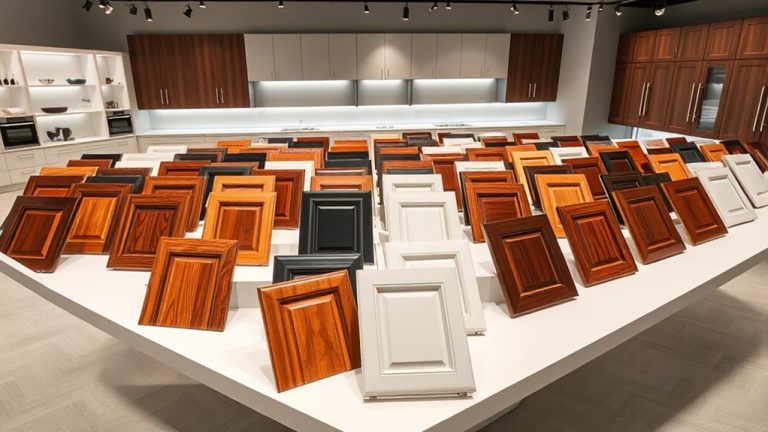
When it comes to load-bearing capacity, certain types of kitchen cabinets are better options. Usually, solid wood or plywood cabinets are the top choices because they’re strong and durable.
Solid wood and plywood cabinets offer unmatched strength and durability for heavy kitchen loads.
These materials can handle heavy loads without warping or cracking, so they last longer. Plus, you can add decorative finishes to boost their style while protecting against moisture and wear.
Cabinet accessories also matter for load-bearing. Heavy-duty hinges, sturdy drawer slides, and reinforced shelves help support weight better. You might also add metal braces or extra supports, especially in base cabinets meant for heavy items.
Choosing cabinets with these features ensures your kitchen can handle substantial loads without sacrificing looks or durability.
How Do Kitchen Cabinets Support Heavy Loads?
When it comes to supporting heavy loads, kitchen cabinets are built with reinforced materials that add extra strength. This way, they won’t buckle or bend under the weight. It’s also important to use proper mounting techniques, like sturdy screws and wall anchors, to keep everything stable and prevent sagging over time.
And don’t forget about how you load your shelves. Spreading out the weight evenly helps avoid putting too much stress on one spot, which can really help your cabinets last longer.
Reinforced Cabinet Materials
Reinforced cabinet materials are essential for supporting heavy loads in your kitchen. They ensure your cabinets can handle the weight of dishes, cookware, and pantry items without sagging or damage.
Using sturdy materials like plywood, high-density core particleboard, or metal reinforcements adds strength. These options also let you enjoy decorative finishes that boost your cabinet’s look.
Reinforced cabinets are less likely to warp, crack, or weaken over time. They keep their functionality and appearance intact for years to come.
Investing in quality materials means your cabinets can reliably support heavy loads while still offering the style you want. Ultimately, reinforced materials balance strength and beauty.
This makes your kitchen both functional and visually appealing.
Proper Mounting Techniques
Proper mounting techniques are essential for ensuring your kitchen cabinets can support heavy loads safely and securely. When planning your kitchen design, pay close attention to how the cabinets are installed, especially if you’re planning to store heavy items.
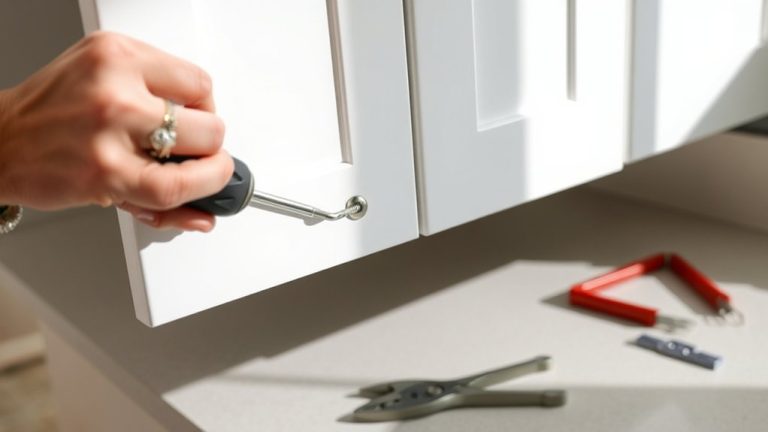
Use high-quality, appropriate fasteners and wall anchors that are compatible with your cabinet styles. Secure mounting brackets into wall studs rather than drywall alone, since studs provide the necessary support.
Make sure the cabinets are level and evenly spaced to prevent stress points. Properly anchoring cabinets reduces the risk of sagging or detachment under weight.
No matter your kitchen design, correct mounting techniques create a solid foundation for durable, load-bearing cabinets that will last over time and heavy use.
Weight Distribution Strategies
Ever wondered how kitchen cabinets can support heavy loads without sagging or falling apart? Weight distribution strategies are key. You should evenly spread the weight across the entire cabinet structure, not just the shelves.
Use sturdy, reinforced shelving materials that can handle more weight, especially in cabinets with decorative finishes or intricate styles. Installing multiple support brackets or dividers helps distribute weight more effectively, preventing stress on hinges and joints.
Furthermore, anchoring cabinets securely to wall studs ensures they hold heavier items safely. Choosing cabinet styles with solid backing or reinforced sides also boosts support.
Proper weight distribution not only protects your cabinets but also keeps them looking great. Whether you prefer sleek, modern designs or more ornate, decorative finishes, these tips will help keep everything sturdy.
What Factors Influence Your Cabinets’ Weight Capacity?
So, when it comes to how much weight your cabinets can handle, a few things come into play. First off, the materials used are a big deal—stronger materials usually mean better support. The type of material also matters; for example, solid wood tends to be sturdier than particleboard.
Then, there’s the construction quality and hardware. Well-made cabinets with solid hinges and brackets are better at holding heavier loads. And don’t forget about the support systems inside—things like extra braces or support panels can really make a difference in how much weight your cabinets can safely carry.
Material Strength and Type
Choosing the right material for your kitchen cabinets is essential because it directly affects their strength and weight capacity. Different materials offer varying durability, which influences how much weight they can support.
For example, solid hardwoods are strong and sturdy, making them suitable for heavy loads, while plywood combines strength with affordability. Particleboard is less durable but is often used for budget-friendly options.
When selecting materials, think about cabinet aesthetics and color options, as these impact your kitchen’s overall look. Your choice affects both function and style, so pick wisely.
Cabinet Construction Quality
Cabinet construction quality is key in determining how much weight your kitchen cabinets can handle. Well-built cabinets with sturdy joints, solid backing, and quality materials provide better support.
Construction affects not only weight capacity but also cabinet looks and colors. Durable materials keep their appearance longer, making your cabinets look good over time.
Cheaper construction can lead to sagging or damage when cabinets are loaded heavily. It’s important to consider the frame material, shelf support, and overall craftsmanship.
Here’s a quick summary of the key factors:
| Factor | Impact on Weight Capacity | Aesthetic Consideration |
|---|---|---|
| Frame Material | Stronger frames support more weight | May influence cabinet colors |
| Shelf Support | Reinforced supports hold heavier loads | Affects cabinet aesthetics |
| Joints & Fasteners | Secure joints prevent sagging | No impact on looks |
| Backing Material | Adds stability and supports weight | Minimal effect on colors |
Choose quality construction for cabinets that are both durable and stylish.
Hardware and Support Systems
Hardware and support systems are key in deciding how much weight your kitchen cabinets can handle. They give the structural reinforcement needed to support heavy loads.
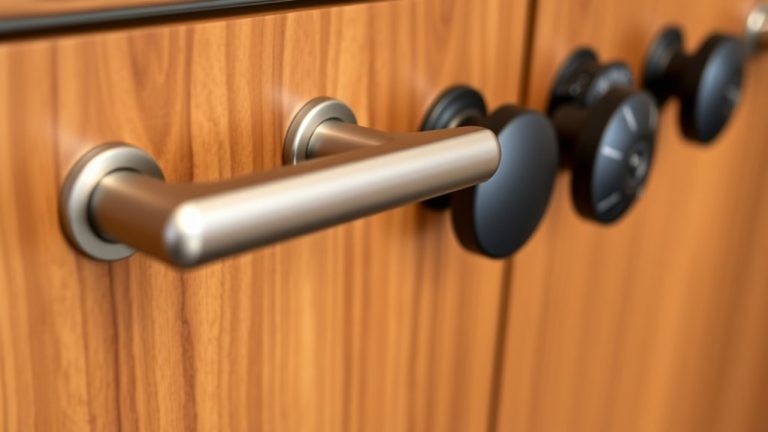
Strong hardware makes sure your cabinets stay secure, and sturdy support systems help prevent sagging. When choosing hardware, look for load-rated hinges and drawer slides designed for heavy use.
For support, consider adjustable shelving brackets or reinforced panels to add stability. These elements also impact the look of your cabinets, especially if you want a sleek, custom finish.
Proper hardware and support systems let you maximize storage without sacrificing durability. Keep these factors in mind for cabinets that are safe, functional, and visually appealing.
How Installation and Mounting Affect How Much Your Cabinets Can Hold
How your cabinets are installed and mounted plays a vital role in determining their weight capacity. Proper mounting ensures the weight is evenly distributed and supported by sturdy wall anchors and brackets.
If cabinets aren’t securely fastened, they may sag or detach, risking damage and safety hazards. The installation process also influences cabinet aesthetics and decorative finishes; well-mounted cabinets look seamless, while poor mounting can cause misalignment or uneven surfaces.
Using the right hardware, like heavy-duty screws and wall anchors suited for your wall type, is essential for maximizing support. The choice of mounting hardware affects the overall stability and longevity of your cabinets, allowing you to safely store heavier items.
When installation is done correctly, your cabinets not only look polished but also support the weight you need without compromise. Proper mounting is, thus, key to ensuring your cabinets’ durability and safe functionality.
How Much Weight Can Different Types of Kitchen Cabinets Support?
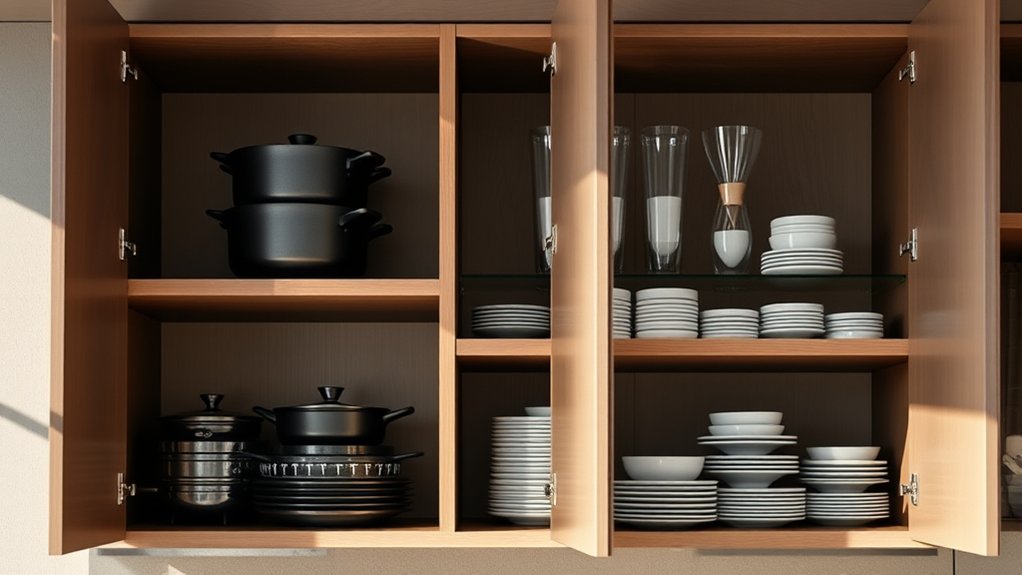
The type of kitchen cabinet you choose really affects how much weight it can handle. Solid wood cabinets are generally the strongest and can support heavier loads like large pots or stacked plates.
Solid wood cabinets support heavier loads like large pots and stacked plates.
Particleboard or MDF cabinets aren’t as sturdy and are better for lighter items such as glassware or small appliances. The material you pick impacts weight capacity, but decorative finishes and cabinet accessories also play a role over time.
For instance, decorative finishes can add protection, but if they’re poorly applied, they might weaken the structure. Choosing accessories like pull-out shelves or dividers helps distribute weight more evenly, boosting support.
Here’s a quick comparison:
- Solid wood cabinets can support up to 100-200 lbs depending on how they’re built.
- Particleboard or MDF usually handle around 50-100 lbs.
- Reinforced cabinets with sturdy accessories can support heavier loads, but always check the manufacturer’s guidelines.
How to Safely Store Heavy Items in Your Cabinets
To prevent damage or accidents, it’s essential to store heavy items in your cabinets carefully. Start by placing the heaviest objects on the bottom shelves to keep things stable and reduce strain on the cabinet structure.
Avoid overloading shelves beyond their weight limits, especially if your cabinets have delicate finishes. Use sturdy organizers or bins to distribute weight evenly and keep items secure.
Regularly check your cabinets for signs of strain or wear. Also, perform routine cleaning to remove dust and grime that could weaken finishes over time.
When handling heavy items, lift with your legs, not your back. This helps prevent injury and avoids dropping or damaging the cabinet surface.
Proper placement and careful handling will help preserve your cabinet finishes and extend their lifespan. This keeps your kitchen safe and functional for years to come.
Signs That Your Cabinets Are Overloaded or Struggling
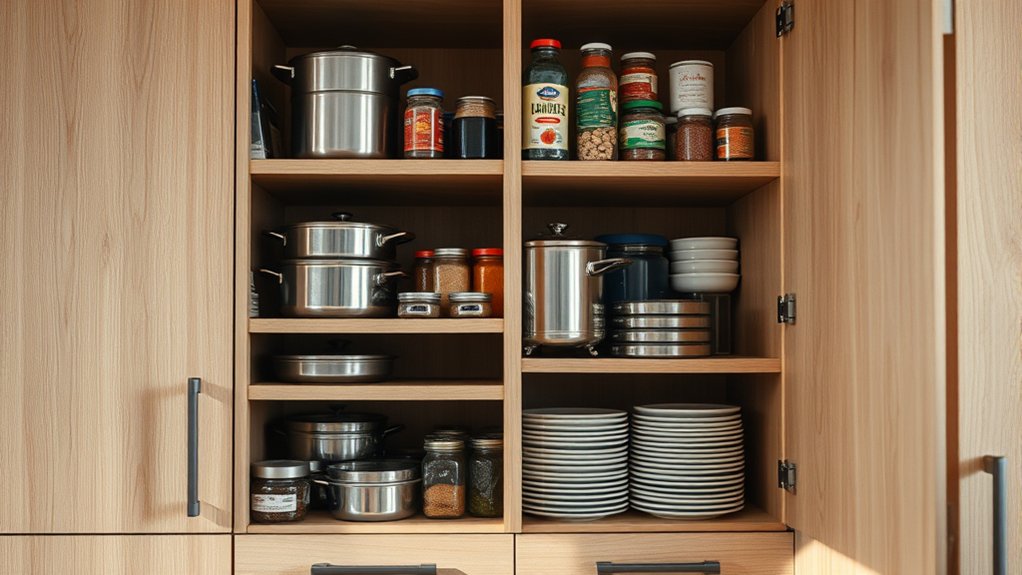
If your cabinets start to feel unusually difficult to open or close, it’s a clear sign they might be overloaded or struggling under too much weight. Overloading can cause misaligned doors or drawers, making everyday use frustrating. You might also notice the doors sagging or not closing properly.
Overloaded cabinets cause difficulty opening, misalignment, and sagging doors, signaling potential damage and the need for reassessment.
Improper placement of appliances can add extra stress, especially if heavy items are stored in upper cabinets. Keep an eye out for signs like sagging or misaligned doors and drawers, which indicate the cabinet frame is under too much strain.
Difficulty opening or closing the cabinets suggests hinges or hardware are strained or damaged. Cracks or damage to the cabinet frames show structural overload, risking long-term damage.
Pay attention to these signs, especially when planning your kitchen layout and storage. Addressing these issues early helps prevent further damage and keeps your cabinets in good shape.
Tips to Strengthen and Protect Your Kitchen Cabinets
Strengthening and protecting your kitchen cabinets starts with proper weight management and regular maintenance. First, plan your kitchen design carefully, making sure heavy appliances are placed on sturdy cabinets or countertops.
Distribute weight evenly across shelves to prevent stress on specific areas. Use adjustable shelves and reinforce joints with brackets for extra stability. Regularly check for signs of wear, loose screws, or sagging, and fix issues as soon as you notice them.
Keep doors aligned and hinges lubricated to avoid unnecessary strain. Place heavy appliances on bottom cabinets and consider reinforced cabinets for heavier items. Distribute weight evenly across shelves and avoid overloading upper cabinets.
Secure appliances to prevent shifting and choose appropriate cabinet materials for added durability. Regularly inspect for damage and maintain proper door alignment and hinges. These steps will help keep your cabinets strong, functional, and safe for years to come.
Common Mistakes That Reduce Your Cabinets’ Load Capacity
A lot of people make the mistake of overloading their cabinets, thinking they can handle more than they actually can. But pushing them beyond their capacity can weaken the entire structure over time. It’s also really important to pay attention to how you distribute the weight inside—if it’s uneven, it can cause stress in the wrong spots and lead to damage. And don’t forget about hardware—using low-quality hinges or screws can result in loose joints and reduce how much weight your cabinets can really hold.
Overloading Cabinets Frequently
Overloading kitchen cabinets is a common mistake that can quickly weaken their structure and reduce their load capacity. When you pack cabinets beyond their limit regularly, you risk damaging shelves and hinges, which hurts both functionality and the look of your kitchen.
To prevent this, avoid placing heavy items in the same spot over and over. Spread weight evenly across shelves to prevent stress and damage. Removing unnecessary items can also help reduce the overall weight.
Follow proper cabinet cleaning tips to maintain their structural integrity. Overloading not only weakens the cabinets but also makes access harder and increases the risk of accidents.
Keep cabinets within their weight limits to preserve their lifespan and appearance. This way, they stay both functional and visually appealing for longer.
Ignoring Weight Distribution
Ignoring how weight is distributed across your cabinets can really cut down their capacity and lifespan. When heavy items are placed unevenly, it puts extra stress on certain areas, which can cause damage over time.
Proper weight distribution helps your cabinets handle loads evenly, keeping them durable. To picture this, look at the table below:
| Area of Cabinet | Proper Weight Distribution | Impact on Durability |
|---|---|---|
| Top Shelf | Lighter items | Preserves structure |
| Middle Shelf | Evenly spread | Maintains strength |
| Bottom Shelf | Heaviest items | Prevents sagging |
| Door Hinges | Avoid overloading hinges | Extends hinge life |
Focusing on balanced weight distribution lets you make the most of your cabinet’s load capacity and helps them last longer. Ignoring this can lead to sagging, cracks, or even failure.
Neglecting Hardware Quality
Neglecting the quality of cabinet hardware can weaken their ability to support weight over time. Poor hardware quality, especially in material selection, leads to faster wear and potential failure.
Low-quality hinges, handles, and slides might not withstand frequent use or heavy loads, which can cause damage to your cabinets. To avoid this, pay attention to the hardware’s durability and craftsmanship.
Here are some key points to keep in mind:
- Choose hardware made from sturdy materials like stainless steel or solid brass.
- Avoid cheap, lightweight options that can bend or break under pressure.
- Regularly inspect and tighten hardware to maintain support capacity.
Investing in high-quality hardware helps your cabinets hold more weight safely and last longer.
When to Reinforce or Upgrade Your Kitchen Cabinets
Knowing when to reinforce or upgrade your kitchen cabinets is key to avoiding damage and keeping everything safe. If you notice sagging shelves or doors that won’t close right, it’s a sign you need to take action. Overloading your cabinets can weaken their structure and lead to costly repairs.
Keep an eye on how they look—visible warping or cracked surfaces mean it’s time for reinforcement or replacement. Upgrading your cabinets can also boost organization, making it easier to access and store heavy items safely.
Consider reinforcement if your hardware struggles under your usual load or if you’re adding heavier appliances or dishes. Upgrading makes sense if your cabinets are outdated or showing signs of wear. Addressing these issues early helps keep your kitchen safe, functional, and looking great.
Frequently Asked Questions
How Do I Measure My Cabinet’s Weight Capacity Accurately?
To measure your cabinet’s weight capacity accurately, start by checking the manufacturer’s specifications for durability. Then, think about how the load will be distributed; spreading the weight evenly across shelves helps prevent overloading any single point.
Use a measuring tape or scale if needed to gauge the weight of items you plan to place inside. Always consider the material of the cabinet and how strong its mounting is to ensure it can handle the total load safely.
Can Custom Cabinets Hold More Weight Than Stock Options?
Think of your cabinets as a sturdy bridge, built to hold a steady stream of weight. Custom cabinets often have better durability because they’re designed with precise load distribution in mind.
This means they can usually support more weight than stock options. Their tailored construction helps spread out the load evenly, reducing stress points.
Are There Specific Materials Better for Heavy Load Support?
You should choose cabinet material that’s designed for heavy load support, like solid hardwood or plywood. These materials offer higher load capacity and are stronger and more durable.
They’re ideal for storing heavy items. Avoid softer woods or particleboard if you need to support substantial weight.
How Often Should I Check for Cabinet Wear and Tear?
Your cabinets are like silent guardians of your kitchen, quietly bearing the load. You should check for wear and tear every six months, inspecting for loose hinges or sagging shelves.
During these checks, focus on cabinet cleaning and drawer organization, making sure everything’s in order. Regular inspections help prevent small issues from turning into big problems.
This keeps your cabinets sturdy and beautiful. Stay vigilant, and your kitchen will continue to serve you well.
What Are the Best Accessories for Supporting Heavy Items?
To support heavy items effectively, consider cabinet reinforcement accessories like sturdy shelf brackets, adjustable supports, and heavy-duty drawer slides. These help distribute weight more evenly across the cabinet’s structure, preventing sagging or damage.
Using the right accessories ensures your cabinets can safely handle heavy pots, appliances, or canned goods. Regularly check that supports are secure and in good condition to keep things stable and extend your cabinets’ lifespan.
Conclusion
To keep your kitchen cabinets sturdy, choose the right type, ensure proper installation, and avoid overloads. Regularly check for signs of strain, reinforce weak spots, and upgrade when necessary.
By doing these things, you protect your cabinets from damage, keep them functioning well, and make sure they support your needs. Knowing how much weight kitchen cabinets can hold helps you avoid overloading and extends their lifespan.
Keep your cabinets strong, your kitchen organized, and your mind at ease. Well-maintained cabinets are the foundation of a functional, beautiful kitchen.