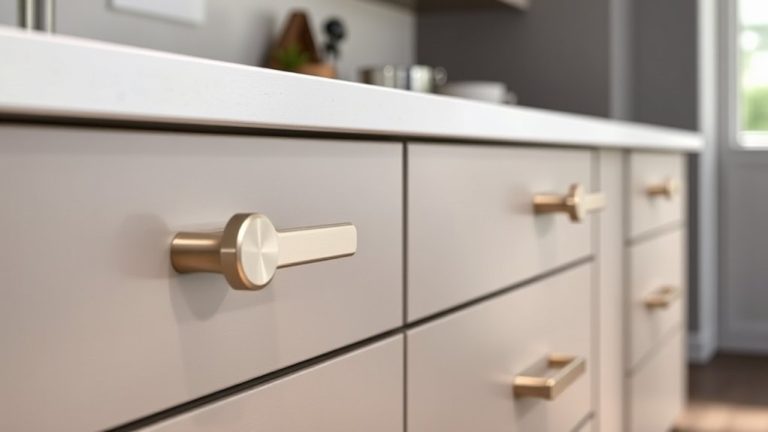
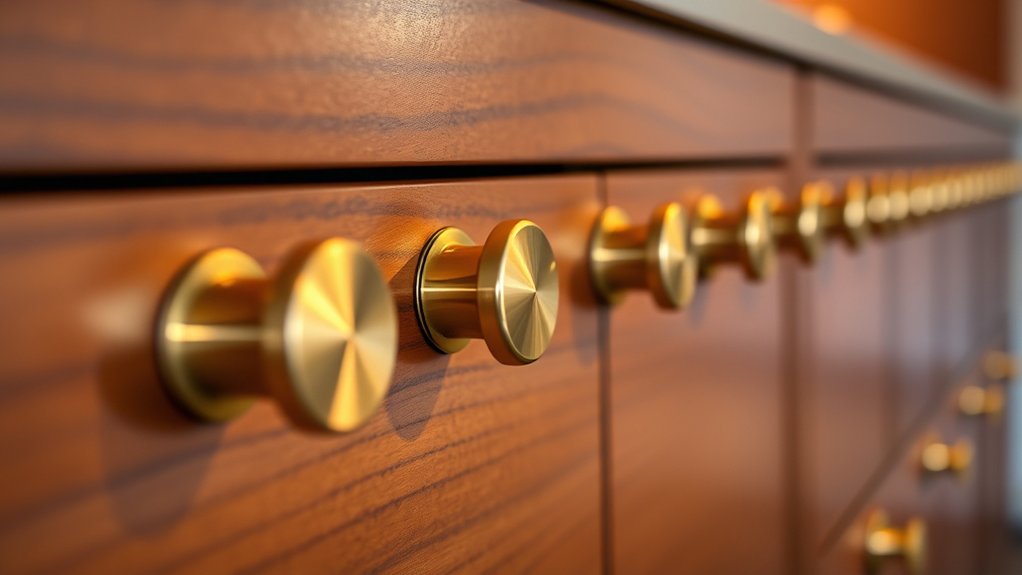
How to Choose the Best Place for Kitchen Cabinet Knobs
Are you feeling overwhelmed trying to figure out the best spot for your kitchen cabinet knobs? You’re not alone—many people struggle with finding the perfect placement that looks good and feels right to use.
To select the best spot for your kitchen cabinet knobs, measure about 2.5 to 3 inches from the edge of each door or drawer. Keeping placement consistent for a balanced look is important.
Consider your height and reach to guarantee knobs are easy to grab without stretching or bending.
Match knobs with your cabinet style and finishes for cohesion.
Proper spacing and alignment prevent mislooks and improve functionality.
If you want more tips, there’s always more to investigate.
Key Takeaways
- Measure 2-3 inches from the cabinet edge for consistent, visually appealing knob placement. This helps create a uniform look across all cabinets.
- Position knobs around 36 inches from the floor for easy access and comfortable gripping. It makes opening cabinets more convenient.
- Ensure even spacing and alignment for a cohesive, professional appearance. Take your time to measure carefully before attaching.
- Consider your cabinet size and style when choosing hardware. Pick knobs that suit the overall look and fit well on each door or drawer.
- Prioritize ease of use by placing knobs where they are reachable and comfortable to grip. This makes everyday use simple and enjoyable.
How Do You Find the Right Height for Kitchen Cabinet Knobs?
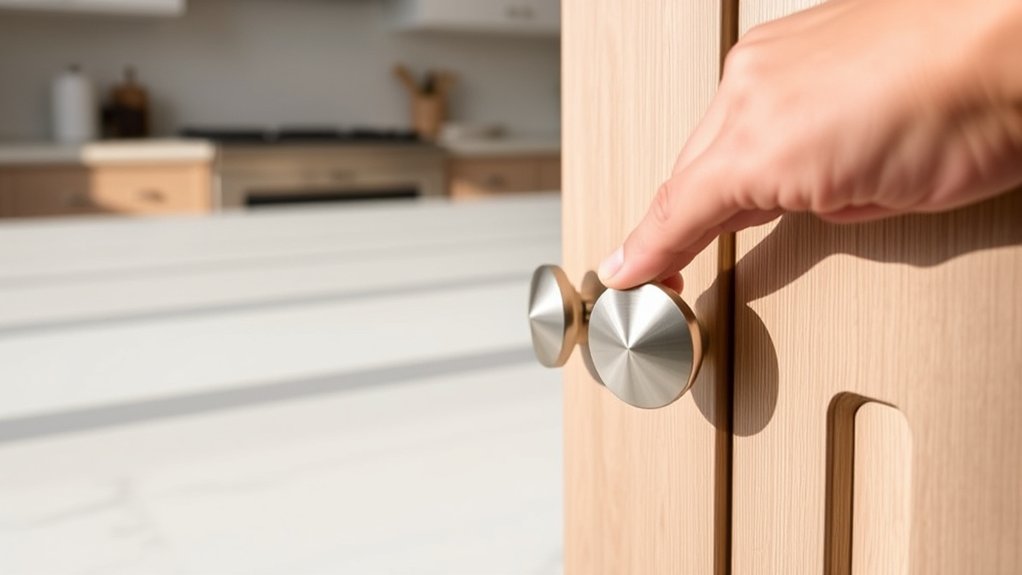
Finding the right height for your kitchen cabinet knobs is key for both function and style. When deciding where to place them, think about material options and your overall look.
Usually, knobs are installed about 2.5 to 3 inches from the edge of the cabinet door or drawer. This makes them easy to grab without hitting the frame.
Knobs are typically placed 2.5 to 3 inches from the cabinet edge for easy access and a clean look.
The material of your knobs can change the vibe—metal, glass, or ceramic each give a different look. For a modern feel, sleek metal knobs are a good pick. Vintage or farmhouse kitchens look great with ceramic or wooden options.
Consider your cabinet style too. A minimalist design might stick with simple, uniform placement. Decorative knobs, on the other hand, might warrant more strategic positioning to showcase their design.
Most importantly, make sure the knobs are comfortable to hold and look balanced with your cabinets. This way, they’re both practical and stylish.
Measuring and Marking Knob Placement Accurately
To make sure your cabinet knobs are both functional and look good, accurate measuring and marking are key before drilling. Start by picking knobs that match your style and material, like modern, rustic, or vintage.
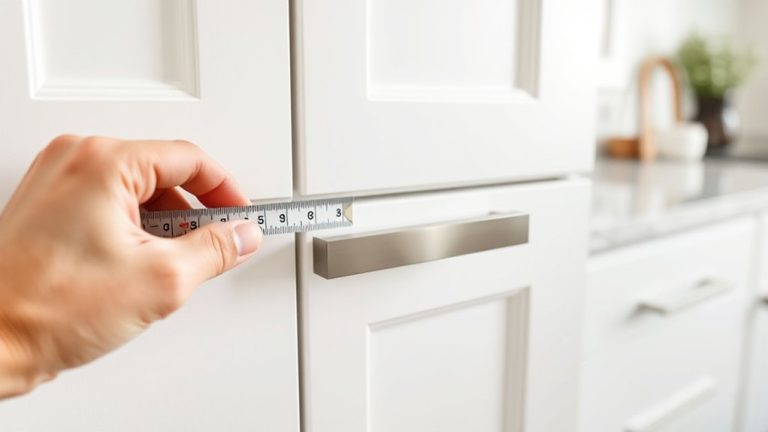
Measure the height and width where you want each knob, usually on the side of the drawer or door. Use a pencil and a ruler or tape measure to mark the exact spot. This helps keep everything consistent across your cabinets.
For a balanced look, align the knobs vertically with the center of the drawer front or door. Double-check your measurements before drilling to avoid any misalignment. If your cabinets have intricate details or delicate surfaces, take extra care to avoid damage.
Proper marking ensures the knobs sit perfectly and complement your overall design. It also makes them easier to use. Accurate measurement and marking are the foundation of a polished, cohesive kitchen look.
What Factors Affect Easy Access to Cabinet Knobs?
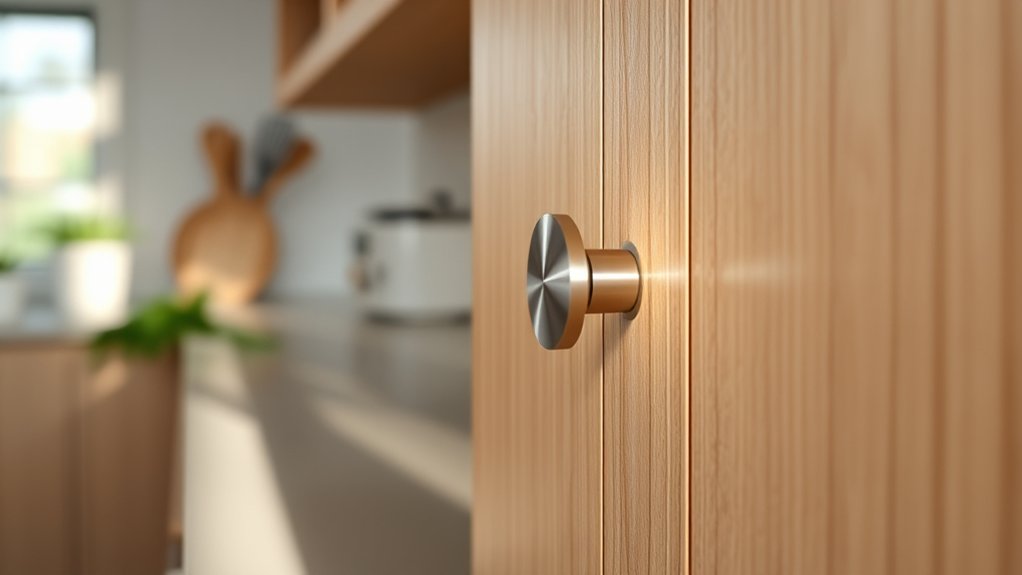
Your height and reach really matter when it comes to how easily you can get to cabinet knobs. If you’re taller or shorter than average, certain knobs might be more of a challenge than others.
Also, things like countertop clutter or open appliance doors can get in the way, making it harder to grab those knobs quickly and comfortably. Having enough space around the cabinets is key to smooth, hassle-free access.
Thinking about these factors can help you pick knobs that feel just right—comfortable, practical, and easy to use every day.
Height and Reach
When considering the height and reach of cabinet knobs, several factors can influence how easily you can access them. First, think about the typical height of your cabinets—placing knobs around 36 inches from the floor tends to be comfortable for most.
Second, consider your reach. If you’re shorter or taller than average, adjust accordingly to make things easier. Third, prioritize color coordination so knobs blend in or stand out, depending on your style.
Also, choose materials that are durable to guarantee longevity. Proper height placement minimizes strain and boosts accessibility, especially when combined with thoughtful color choices and sturdy materials.
Obstruction and Clearance
Obstructions and limited clearance can really affect how easily you can access cabinet knobs. When planning your cabinets, think about obstruction clearance—make sure nothing blocks the path to the knobs, like handles, appliances, or decorative items.
Poor clearance can make it hard to open cabinets, especially for people with limited mobility or smaller hands. Ensure there’s enough space around the knobs for a comfortable grip and easy operation.
If your cabinets are close to walls or appliances, choose knobs that are easy to reach without obstruction. Proper clearance makes using your cabinets smoother and reduces frustration.
How to Choose a Consistent Placement Style for a Cohesive Look
Choosing a consistent placement style for your cabinet knobs is key to creating a polished and harmonious kitchen look. When picking your placement, think about your overall design theme and try to keep it uniform across all cabinets. This helps tie everything together. To do this, focus on three main aspects:
- Positioning – Decide if knobs will be placed vertically centered or aligned with the edges, and keep that choice consistent on all cabinets.
- Decorative finishes – Match the style of your knobs with your cabinet hardware, whether it’s matte, brushed, or polished, to keep a cohesive look.
- Material choices – Pick knobs made from similar materials, like metal, ceramic, or glass, to create visual harmony.
How Cabinet Size and Shape Influence Knob Placement
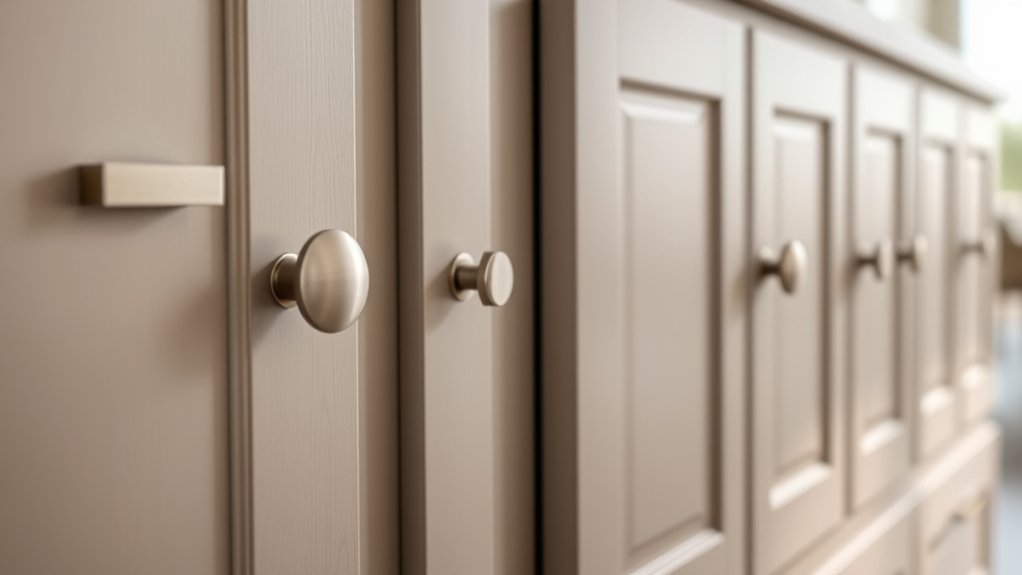
The size and shape of your cabinets are key to figuring out the best knob placement. Larger cabinets usually need bigger or more noticeable knobs so you can open them easily. Smaller cabinets look better with more subtle hardware.
Shaped cabinets, like those with curved or ornate fronts, might need custom placement to make their design stand out. The material of your cabinet also matters—wood cabinets go well with matte or brushed knobs, while glass or metal surfaces can highlight polished or textured knobs.
Think about your overall style too. Sleek, modern finishes work best with minimalist cabinets, while antique or rustic styles match traditional shapes. Proper knob placement makes your cabinets both easier to use and more visually balanced.
Use the table below as a guide for how cabinet size and shape influence knob placement:
| Cabinet Size | Shape | Material & Finishing | Placement Tips |
|---|---|---|---|
| Large | Rectangular | Wood, matte finish | Center on doors |
| Small | Curved | Glass, polished | Top corner for ease |
| Tall | Shaped | Metal, brushed | Vertical alignment |
| Wide | Ornate | Mixed materials | Evenly spaced |
Aligning Knobs for a Balanced and Symmetrical Kitchen
Have you ever noticed how aligned knobs can instantly make your kitchen look more polished and cohesive? Proper alignment ensures your cabinets appear balanced and symmetrical, boosting your overall design.
To achieve this, focus on a few key steps. First, measure carefully using a tape measure and a level to mark consistent heights and spacing, considering decorative finishes that add visual interest.
Next, keep consistency by aligning knobs at the same height across all cabinets. This emphasizes symmetry and flow. Durable knobs also resist shifting over time, helping maintain that perfect look.
Finally, check the alignment regularly. After installation, step back and verify the knobs’ positions, adjusting as needed. This attention to detail prevents crooked appearances and highlights your decorative choices.
Common Placement Mistakes and How to Fix Them
A lot of folks tend to make placement mistakes, like spacing knobs too far apart or putting them unevenly. And honestly, that can really throw off the look of the whole setup. It’s easy to overlook, but those small details matter.
Another common issue is misaligned patterns or ignoring how comfortable and functional the placement is. If it doesn’t feel right or isn’t practical to use, it can be pretty frustrating in the long run.
To fix this, take your time measuring everything carefully. And don’t forget to think about how easy it is to use—prioritize comfort and practicality. That way, you’ll end up with a look that’s both balanced and functional.
Improper Spacing Between Knobs
One common mistake when placing kitchen cabinet knobs is improper spacing, which can make your cabinets look uneven or cluttered. To avoid this, focus on consistent placement for a balanced look.
Consider these tips:
- Measure and mark the ideal distance from the edge, usually about 2-3 inches, to ensure a clean, uniform appearance.
- Keep knobs evenly spaced on each door or drawer, maintaining symmetry with decorative finishes for visual appeal.
- Use high-quality hardware with durable materials, so knobs stay secure and look great over time.
Proper spacing not only improves aesthetic appeal but also highlights the decorative finishes of your knobs. Consistent placement creates a sleek, cohesive look that raises your kitchen’s overall style.
Misaligned Placement Patterns
Misaligned placement patterns are a common mistake that can disrupt the visual harmony of your kitchen cabinets. When knobs aren’t evenly aligned or follow an inconsistent pattern, the overall look feels chaotic.
To avoid this, consider decorative alternatives that help guide placement, like templates or measuring tools. Using innovative mounting techniques guarantees uniform height and spacing, creating a clean, cohesive appearance.
Instead of randomly placing knobs, plan a consistent pattern—such as centered, top-aligned, or evenly spaced across drawers and doors. Proper planning and precise measurements are key.
When in doubt, take your time to mark positions carefully. This attention to detail improves the aesthetic appeal and creates a polished, professional look that boosts your entire kitchen design.
Ignoring Functionality and Comfort
Ignoring functionality and comfort can make your kitchen cabinets frustrating to use, even if they look perfect.
Focusing only on material choices might lead you to pick knobs that look great but aren’t practical.
To fix this, consider these steps:
- Think about your daily routines—place knobs where your hand naturally lands for easy access.
- Prioritize comfort by choosing shapes and sizes that fit well in your hand.
- Balance aesthetic appeal with material choices that are durable and easy to use, not just pretty.
Matching Knob Placement With Other Hardware and Design Elements
To create a cohesive look in your kitchen, it’s important to think about how your cabinet knobs align with other hardware and design elements. Material coordination and color harmony are key to achieving a unified style.
For example, if your faucets and drawer pulls are matte black, pick knobs with a similar finish to keep everything consistent. Considering different textures and finishes helps create a balanced and stylish space.
| Hardware Element | Design Consideration |
|---|---|
| Faucets | Match finish for a seamless look |
| Drawer pulls | Coordinate materials with knobs |
| Lighting fixtures | Choose colors that complement knobs |
| Backsplash | Select hues that enhance your theme |
| Countertops | Use accents that tie everything together |
Ensuring Knobs Are Ergonomically Easy to Reach and Use
Once you’ve coordinated your hardware and design elements, it’s important to think about how accessible your knobs are for everyday use. Making sure they have an ergonomic grip and are easy to reach makes your kitchen more comfortable and functional.
To do this, consider these points:
- Place knobs at a height and position that’s easy to reach without stretching or bending.
- Pick knobs with a shape and size that fit comfortably in your hand, supporting an ergonomic grip.
- Keep enough space around knobs so you can open and close cabinet doors easily, even when your hands are full or wet.
Personalize Your Kitchen With Perfectly Positioned Knobs
Personalizing your kitchen with perfectly positioned knobs starts with thoughtful placement that complements your workflow and style. Think about how you use each cabinet—placing knobs where they’re easy to grasp without stretching.
For a cohesive look, pick decorative finishes that match your vibe, like brushed nickel, matte black, or antique brass. These finishes add character and boost your kitchen’s overall design.
Remember to choose durable materials, like solid metal or high-quality resin, to handle daily use. Proper placement not only makes access easier but also highlights your kitchen’s design details.
A symmetrical arrangement creates a balanced look, while strategic placement can draw attention to specific features. By paying attention to both finishes and durability, you personalize your kitchen while keeping your knobs functional and beautiful for years.
Frequently Asked Questions
What Materials Are Best for Durable Cabinet Knobs?
For durable cabinet knobs, you want materials that are built to last. Metals like stainless steel or brass are great choices because they resist corrosion and wear better than plastic or resin.
When comparing knob materials, metal usually wins in resilience. It offers a longer lifespan and holds up better to daily use.
Investing in quality materials means your knobs will stay functional and attractive for years to come.
How Do Different Knob Styles Affect Kitchen Aesthetics?
Sure, because choosing the right knob style doesn’t matter at all, right? Wrong. Your vintage finishes scream charm, while modern minimalist knobs offer sleek simplicity.
The style you pick dramatically influences your kitchen’s vibe—classic or contemporary. So, welcome the contrast or harmony you desire.
Are There Safety Considerations for Children’s Access?
Yes, safety is essential when children can access kitchen cabinets. You should consider installing childproof locks on cabinets with knobs within their reach and adjust knob height to keep dangerous items out of their reach.
Placing knobs higher or using lever handles instead of traditional knobs can also help prevent accidental openings. Always make sure that knobs are securely attached and regularly check for any hazards to keep your kids safe.
How Can I Update Knobs Without Damaging Cabinets?
They say “a stitch in time saves nine,” and that’s true when updating knobs without damage. Use a gentle DIY installation method, like carefully unscrewing old knobs with a screwdriver, and avoid force.
For cleaning and maintenance, gently wipe the knobs with a damp cloth before updating. This approach prevents scratches and keeps your cabinets looking fresh, all while saving you money on repairs or replacements.
What Are the Latest Trends in Kitchen Cabinet Knobs?
You’ll find that the latest trends in kitchen cabinet knobs feature sleek, minimalist designs with trendy finishes like matte black, brushed gold, and antique brass. These hardware options add a modern touch and versatility to your space.
Opt for unique shapes or mixing metals to stay current. Contrasting finishes can create a bold statement and make your cabinets stand out.
Keep an eye on trending styles to ensure your kitchen feels fresh and stylish. Staying updated on these trends can really give your space a modern, polished look.
Conclusion
By carefully considering height, placement style, and cabinet shape, you’ll create a kitchen that’s both stunning and effortlessly functional. It’s almost like having a secret recipe for perfection.
Remember to measure twice, choose a cohesive style, and prioritize comfort for easy access. These small details make a big difference in your kitchen’s overall look and feel.
With these tips, your knobs will not only improve your space but also transform your kitchen into a masterpiece that truly stands out. The right kitchen cabinet knobs can make all the difference.
Get ready to turn heads—your dream kitchen is just a knob away!