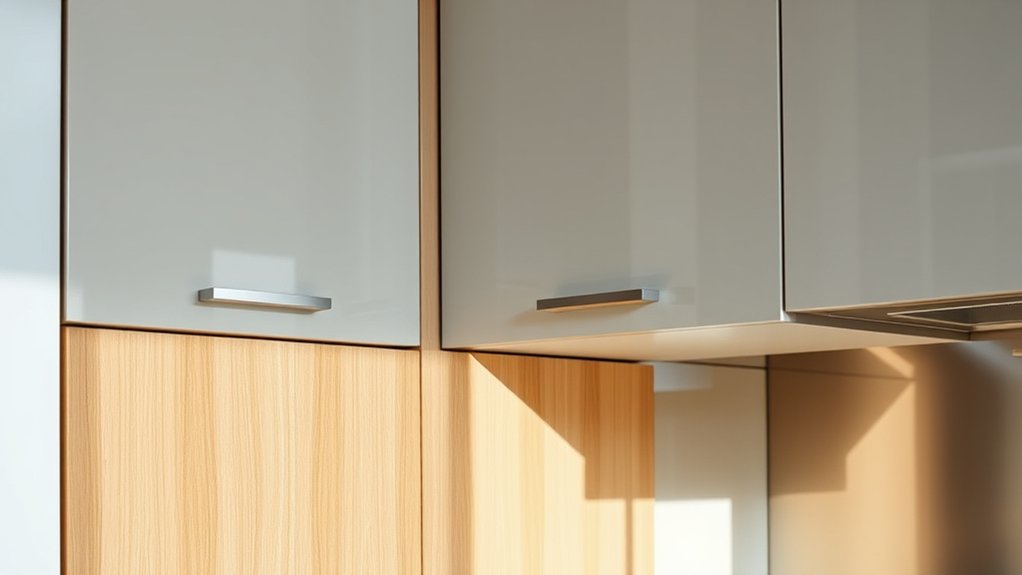
5 Factors That Determine How Much Kitchen Cabinets Cost
Are you feeling overwhelmed trying to figure out how much kitchen cabinets will cost? You’re not alone—many people struggle with understanding what influences the price of their dream cabinets.
Your kitchen cabinet costs depend on several key factors. The materials you choose, like solid wood or particleboard, impact the price and durability. Design features, such as intricate moldings or custom finishes, also raise costs.
The size of your cabinets and storage needs influence material and labor expenses. Plus, hardware and special finishes can add to your budget.
To better understand how these elements work together, keep exploring the details below.
Key Takeaways
- Material choice, like solid wood versus particleboard, really affects both the cost and how long the cabinets last.
- Customization, such as unique designs and special features, can make the overall price go up.
- The size and storage needs, like bigger or extra cabinets, increase the material and installation costs.
- Design details, including decorative moldings or glass doors, add to the price.
- Hardware and finish options, from basic to luxury, also impact your total budget.
What Affects the Cost of Kitchen Cabinets?
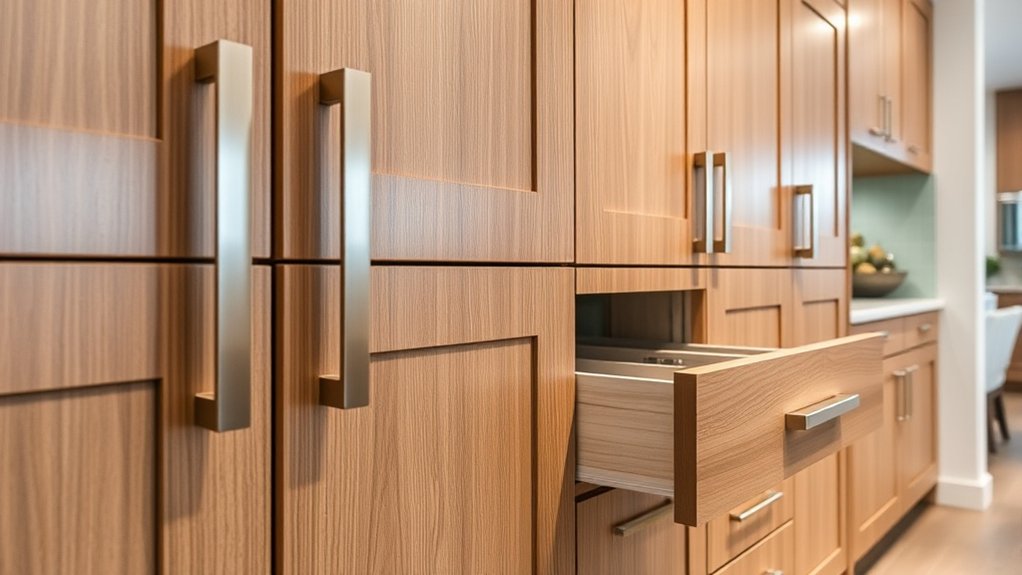
Several key factors influence the overall cost of kitchen cabinets, and understanding these can help you make informed decisions. One major factor is appliance integration, which involves customizing cabinets to seamlessly fit appliances like ovens, microwaves, or dishwashers. This feature often increases costs because it requires precise measurements and custom fabrication.
Eco-friendly options also impact the price. Cabinets made from sustainable or recycled materials tend to be more expensive upfront but offer long-term environmental benefits. These eco-conscious choices might include low-VOC finishes or FSC-certified wood.
Furthermore, the level of customization plays a role. Standard cabinets cost less than those built to specific specifications. The complexity of the design and added features, such as soft-close hinges or specialized storage solutions, can also raise expenses.
How Material Choices Influence Your Budget
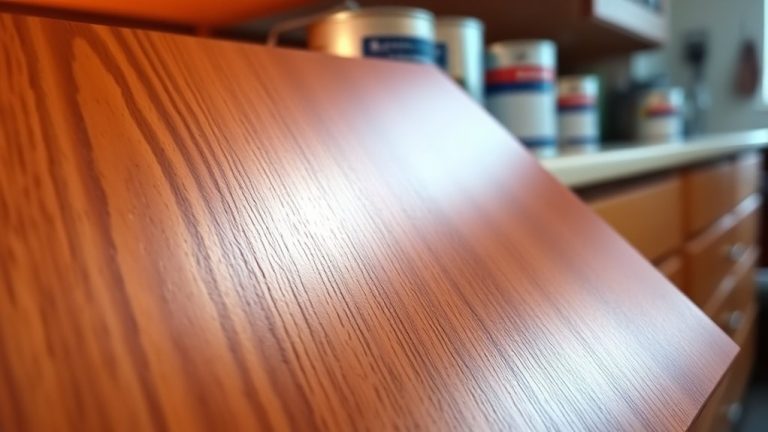
Your choice of materials directly impacts the overall cost of your kitchen cabinets. Different materials vary in durability, which affects how long your cabinets will last and how much you’ll spend on repairs or replacements.
Choosing the right materials affects your budget, durability, and long-term maintenance costs for kitchen cabinets.
For example, solid wood is very durable but usually more expensive, while particleboard is more budget-friendly but less resilient over time. Material maintenance also matters; some surfaces need regular sealing or special cleaners, which can add to ongoing costs.
Others, like laminate or painted finishes, are easier to care for and save you money in the long run. By choosing materials that balance durability and maintenance, you can manage your budget better.
Keep in mind that high-quality materials might cost more upfront but can save you money through fewer repairs and longer-lasting appeal. Your choices influence both your initial investment and ongoing expenses.
How Design Details and Features Impact Prices
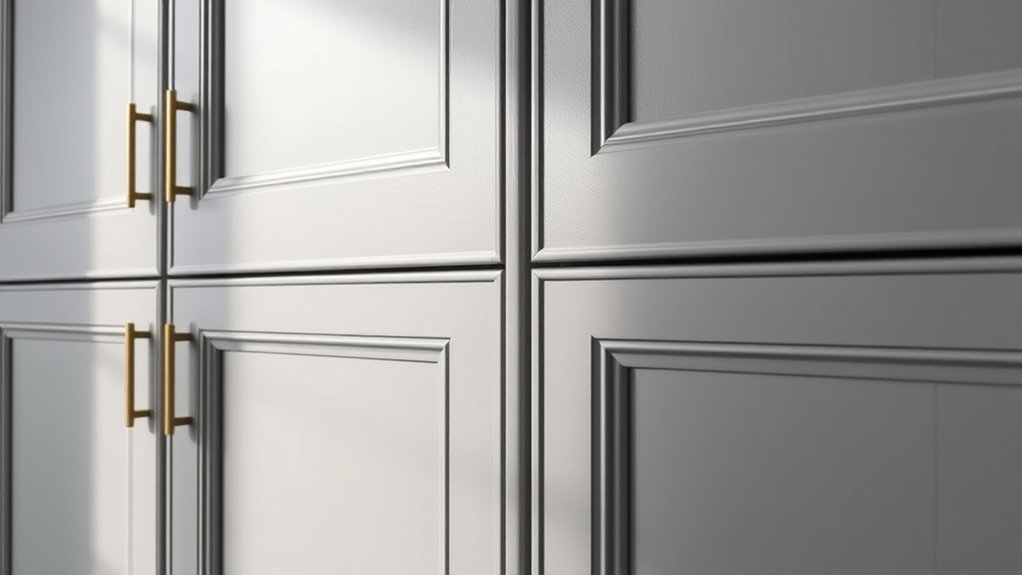
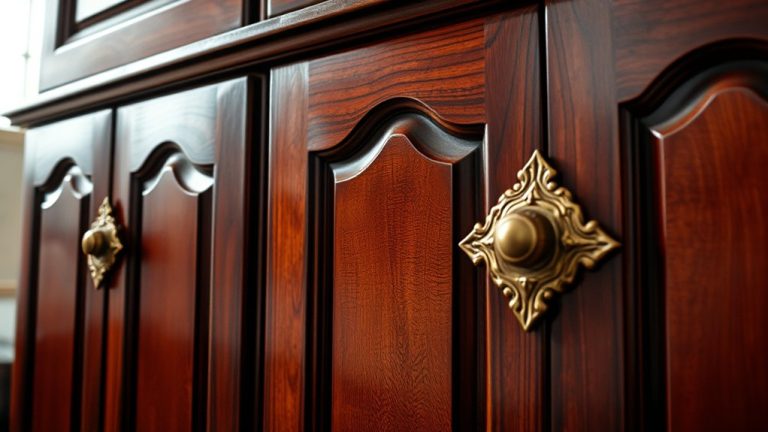
Design details and features can significantly affect the overall cost of your kitchen cabinets, adding both style and functionality. Your chosen cabinet style matters too; intricate designs, decorative moldings, and custom finishes tend to be more expensive than simpler options. For instance, traditional or ornate styles usually cost more than minimalist, flat-panel designs.
Interior lighting options like LED strips or built-in lights can also raise the price but greatly improve usability and give your kitchen a modern look. These features need extra wiring, fixtures, and installation, which add to the overall expense.
You might also want to consider features like glass-front doors, soft-close mechanisms, or custom hardware. All of these increase costs but can make your cabinets more convenient and stylish.
Ultimately, the more detailed and feature-rich your cabinets are, the higher your investment will be. Finding a balance between your desired design and your budget is key to creating a stylish yet affordable kitchen.
How Size and Storage Needs Change the Overall Cost
The size of your kitchen cabinets directly impacts the overall cost because larger units need more materials and labor. If you want extra storage, you’ll probably go for taller or wider cabinets, which boost material costs and take more time to install.
Larger cabinets also affect your choice of countertops, since bigger surfaces might need more durable or higher-end materials, increasing expenses. If you plan to include built-in appliances like ovens or refrigerators, you’ll need custom cabinetry that fits these seamlessly, which can add to the cost.
Choosing bigger cabinets for more storage might lead you to pick custom or semi-custom options, which tend to be more expensive than stock cabinets. Keep in mind that increasing size and capacity can also make the layout and installation more complex.
How Hardware, Finishes, and Customization Affect Your Total Expense
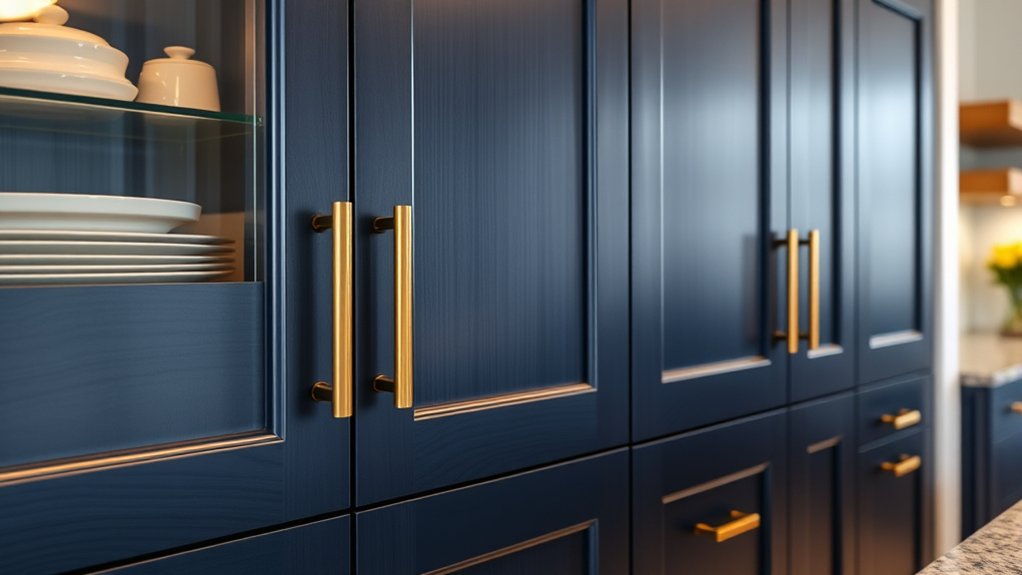
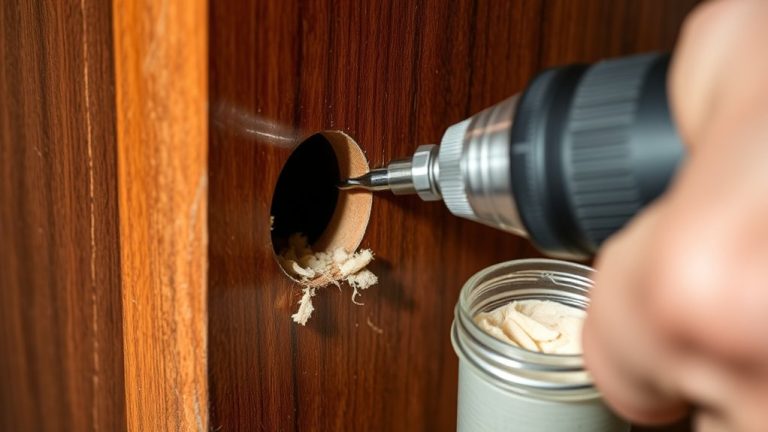
Have you thought about how hardware, finishes, and customization options can really impact your kitchen cabinet costs? The hardware you pick, like knobs, pulls, and hinges, can range from simple to luxurious, affecting your budget.
Finish options such as paint, stain, or veneer also come in different prices and durability levels. Customization choices, including unique designs or high-end materials, will add to the overall expense.
| Hardware Options | Finish Varieties | Customization Level |
|---|---|---|
| Basic knobs & hinges | Standard stain & paint | Stock cabinets |
| Mid-range hardware | Specialty finishes | Custom sizes |
| Luxury hardware | Exotic veneers | Fully custom designs |
| Durable, high-end options | Unique textures | Personalized features |
| Budget-friendly choices | Eco-friendly finishes | Artistic or intricate details |
Choosing premium hardware, special finishes, or extensive customization can significantly raise your total cabinet costs. It’s a good idea to balance your style preferences with your budget.
Frequently Asked Questions
How Long Does It Typically Take to Install New Kitchen Cabinets?
Installing new kitchen cabinets usually takes about 1 to 3 days, depending on your cabinet materials and the installation timeline. If you choose custom or high-end materials, it might take longer because of precise fitting and finishing.
For standard options, the process tends to be quicker. Your contractor will usually schedule the work efficiently, but factors like room size, cabinet complexity, and any adjustments needed can affect the overall timeline.
Are There Eco-Friendly Options for Affordable Kitchen Cabinets?
Yes, you can find affordable, eco-friendly options for kitchen cabinets. Look for sustainable materials like bamboo, recycled wood, or FSC-certified plywood, which are both budget-friendly and eco-conscious.
Choose eco-friendly finishes like low-VOC or water-based paints to reduce harmful emissions. By prioritizing sustainable materials and finishes, you’ll create a green, gorgeous kitchen without breaking the bank.
How Does the Location of the Project Influence Costs?
Your project’s location impacts costs because material prices and regional pricing vary.
If you’re in an area with high demand or limited suppliers, material costs tend to be higher, increasing your overall budget.
Conversely, regions with abundant resources or lower living costs can reduce expenses.
Can I Finance My Kitchen Cabinet Renovation?
Think of your kitchen renovation as planting a tree; financing options are the watering can that helps it grow. Yes, you can finance your kitchen cabinet upgrade through payment plans or loans offered by retailers or banks.
These options make it easier to spread costs over time, just like watering a tree gradually. Consider different financing plans to find one that fits your budget and helps bring your dream kitchen to life.
What Maintenance Is Required to Keep Cabinets Looking New?
To keep your cabinets looking new, regularly clean them with a gentle cabinet cleaner or a damp cloth to remove dirt and grease.
Address scratches promptly with scratch repair kits to prevent further damage. Avoid harsh abrasives or excessive moisture, which can harm the finish.
Conclusion
Ultimately, understanding these factors helps you make smarter choices for your kitchen. For example, choosing custom cabinets with high-end finishes might cost more upfront, but they can add significant value and durability to your space.
By weighing your needs and budget carefully, you can find the perfect balance. Don’t forget—small changes, like picking different hardware, can also make a big difference in your total kitchen cabinet costs.
This way, you get the kitchen you want without overspending. Recognizing these cost factors allows you to make better decisions and get the best value for your investment.