7 Steps to Unclog Your Kitchen Sink With Garbage Disposal
Dealing with a clogged kitchen sink with a garbage disposal is a common headache many homeowners face. If you’re tired of slow draining or unpleasant odors, you’re not alone—most people struggle with this at some point.
If your kitchen sink with a garbage disposal is clogged, start by turning off the power and clearing the area. Check for visible debris, then use a plunger to loosen the blockage.
Follow up with baking soda and vinegar to break down buildup, and flush with hot water.
If needed, insert a drain snake to clear stubborn clogs.
Want to master each step and keep your drain flowing smoothly? Keep exploring for detailed tips.
Key Takeaways
- Turn off the power to the disposal to stay safe before you start unclogging.
- Remove any visible debris from the disposal and check the inlet for blockages with a flashlight.
- Use tongs or pliers to carefully pull out foreign objects or buildup inside the inlet.
- Insert a drain snake into the drain, twist it to break up the clog, then carefully pull it out to remove debris.
- Finish by flushing the drain with hot water. You can also try pouring baking soda and vinegar to clear any leftover buildup.
How to Tell If Your Kitchen Sink Is Clogged
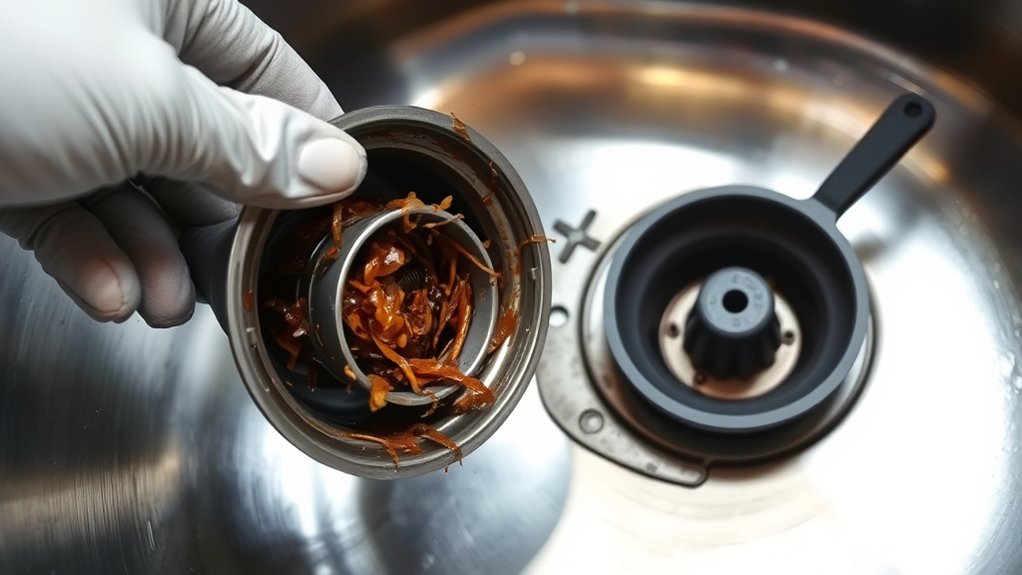
Wondering if your kitchen sink is clogged? You’ll notice slow drainage or water pooling in the basin, which are common signs of a blockage. Regular maintenance helps prevent clogs, but if water isn’t draining properly, it’s time to investigate.
Start by running water and watching how it flows. If it drains sluggishly or backs up, your sink might be clogged. A plunger can sometimes clear minor blockages, but persistent issues mean you should call a plumber.
Check under the sink for leaks or strange smells, which can also point to a clog or plumbing problem. Keep an eye on the water’s flow rate during use—if it’s much slower than usual, it’s a sign you need to act.
Recognizing these signs early can help prevent bigger problems later and keep your kitchen sink working smoothly.
Common Causes of Garbage Disposal Clogs
Clogs in your garbage disposal usually happen because of food waste piling up, or sometimes because of items that shouldn’t be put down the drain at all. Things like grease, oil, or non-food items can really cause problems. When you toss the wrong stuff in there, it can quickly lead to a blockage.
Getting to know what causes these clogs can help you avoid them in the future. That way, your disposal can keep working smoothly without any hiccups.
Food Waste Buildup
Food waste buildup is one of the most common causes of garbage disposal clogs. When you dump large amounts of food scraps, they can stack up and block the drain.
To keep things flowing smoothly, try these tips: Use food recycling and composting to divert scraps away from your disposal. Avoid putting fibrous or starchy foods like potato peels or rice down the drain. Break down big food chunks to help prevent buildup and ensure easy grinding.
Non-Disposal Items
Have you ever accidentally put non-food items into your garbage disposal? Items like utensils, bottle caps, or plastic pieces can cause serious clogs.
To clear these blockages, start with alternative cleaning methods, such as manually removing non-food debris. Use tongs or pliers to carefully extract foreign objects from the disposal or drain.
Avoid using harsh chemicals, which can damage your pipes. Regular non-food debris removal helps prevent future clogs and keeps your disposal functioning smoothly.
Always check the disposal before turning it on to verify no non-disposal items are present. If you suspect a foreign object is stuck, turn off the power and carefully retrieve it.
Preventative measures like these save you time and costly repairs down the line.
Oil and Grease
Oil and grease are some of the biggest causes of garbage disposal problems. When you pour cooking oils or grease down the drain, they cool and harden, leading to buildup inside your pipes and disposal.
This buildup narrows the passageways and often causes clogs. To avoid this, be careful about what you dispose of. Here are three simple tips:
- Never pour cooking oils straight into the sink.
- Let grease cool and harden before throwing it in the trash.
- Wipe excess grease from dishes with paper towels before washing.
Turn Off Power and Prepare Your Workspace
Before you start working on your sink, it’s important to turn off the power to avoid any accidents. Unplug the garbage disposal or switch off the circuit breaker dedicated to it. This safety step makes sure you won’t accidentally turn it on during maintenance.
Always disconnect power before working on your sink to prevent accidents and ensure safety during maintenance.
With the power off, you can focus on your task without worries. Take a moment to gather your tools and check for any signs they need maintenance, like dull blades or loose parts. Well-maintained tools make the job safer and easier.
Clear the area around the sink, removing dishes or clutter so you have a clean workspace. Always put safety first because working with electricity and plumbing can be risky if you’re not careful.
Once everything is in place, you’re ready to proceed with removing obstructions or inspecting the disposal for clogs. Staying organized and cautious helps minimize risks and makes the unclogging process smoother.
Remove Obstructions From Your Sink and Disposal
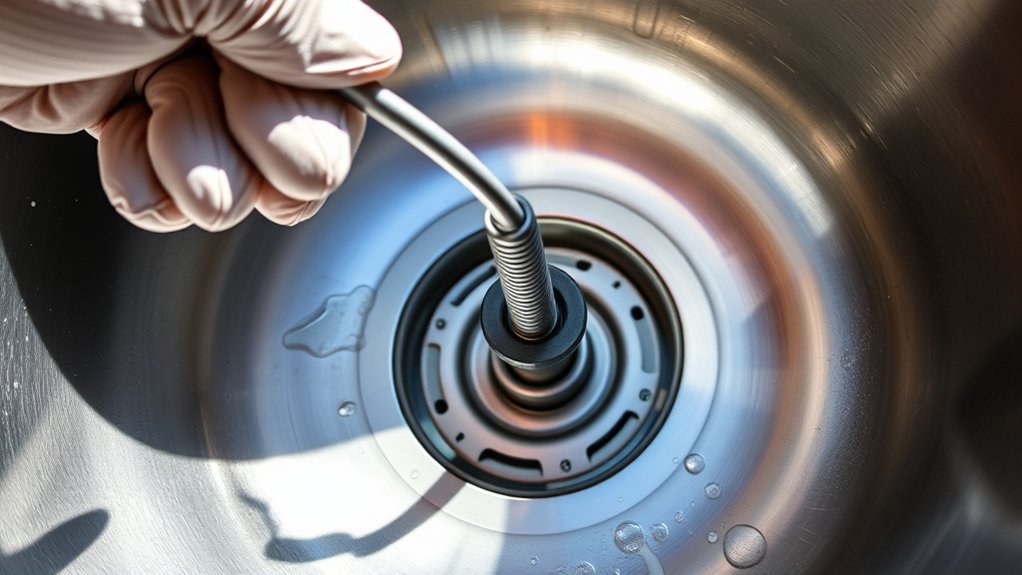
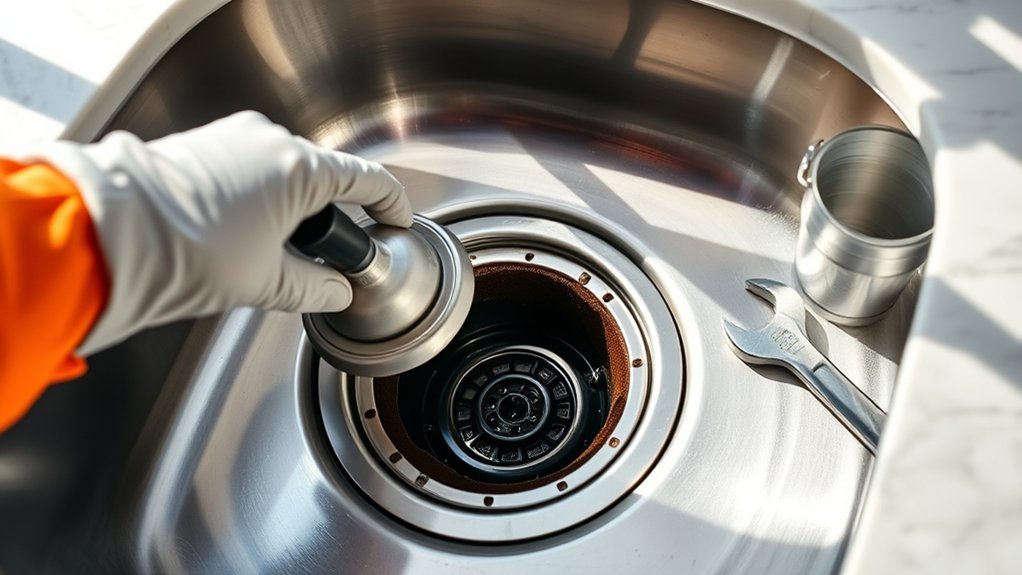
With the power turned off and your workspace prepared, it’s time to focus on removing obstructions from your sink and disposal. Clear out any visible debris and check for blockages in the sink drain. To improve kitchen sink maintenance and help with disposal troubleshooting, follow these steps:
- Inspect the Disposal: Look inside the disposal for any visible objects or buildup. Use tongs or pliers to carefully remove obstructions. Never put your hand inside.
- Check the Drain Trap: Remove the trap underneath the sink and clear out any debris or clogs. Rinse thoroughly before reassembling.
- Clear the Disposal Inlet: Use a flashlight to examine the inlet opening for obstructions. Clear away any buildup that might prevent proper operation.
Removing obstructions is key to effective kitchen sink maintenance and fixing disposal issues. These steps help restore normal function and prevent future clogs.
Use a Plunger to Clear the Clog
Using a plunger is often the most effective way to dislodge stubborn clogs in your kitchen sink.
First, make sure there’s enough water in the sink to cover the rubber part of the plunger. This helps create a good seal.
Ensure the sink has enough water to cover the plunger for a proper seal.
Position the cup firmly over the drain, ensuring there’s an effective seal around the opening. Push down gently at first, then pull up vigorously, repeating several times.
The pressure from these plunges can loosen the clog’s grip on the pipes. Be patient and consistent, as this method can clear most blockages without chemicals.
After a few plunges, lift the plunger and check if the water drains freely. If it’s still slow, just repeat the process.
Clean the Drain With Baking Soda and Vinegar
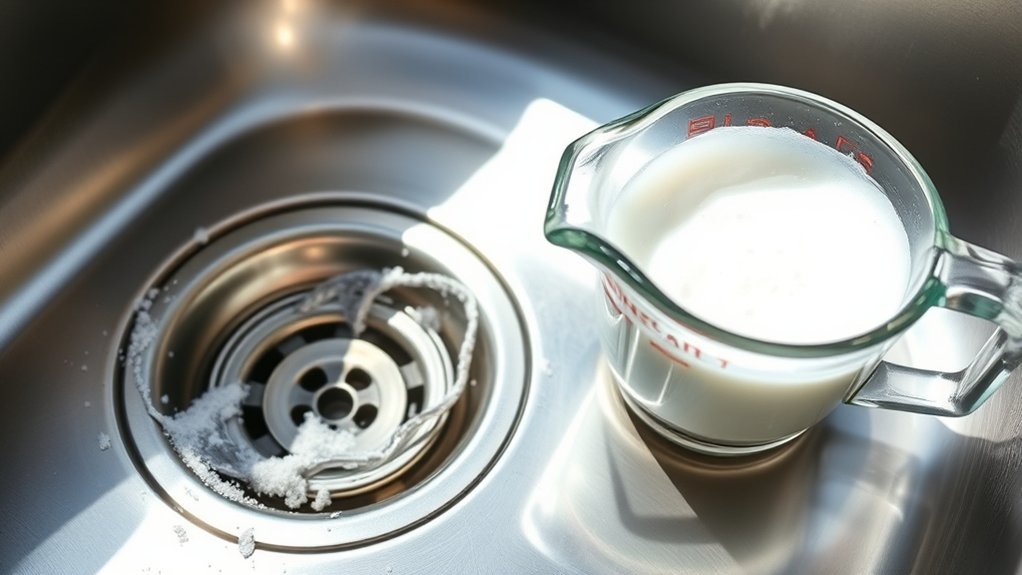
Have you ever wondered how baking soda and vinegar can work together to clear a stubborn drain? This eco-friendly cleaning method is simple, safe, and effective.
When you combine these ingredients, they create a fizzy reaction that helps break down grease, grime, and debris blocking your drain. Plus, baking soda benefits include deodorizing and cleaning without harsh chemicals.
Here’s how to do it:
- Pour 1/2 cup of baking soda directly into the drain.
- Follow with 1 cup of white vinegar, and let the mixture fizz for about 10-15 minutes.
- Flush the drain with hot water to clear out loosened debris.
This natural approach is a great way to maintain your garbage disposal while avoiding toxic cleaners. Regularly using baking soda and vinegar keeps your drain fresh, odor-free, and clog-free.
It’s an easy, eco-friendly routine that helps keep everything running smoothly.
Use a Drain Snake for Persistent Clogs
When baking soda and vinegar don’t do the trick, a drain snake becomes your go-to tool for stubborn clogs. To use it effectively, insert the snake into the drain, turning the handle clockwise as you push it further down.
Use a drain snake to effectively tackle stubborn clogs deep in your pipes.
This technique, called drain snake techniques, helps break up or dislodge the blockage. If you feel resistance, gently twist and pull back to catch the clog. Keep rotating and pushing until you feel the obstruction loosen or clear.
Once the clog is broken up, pull the snake out slowly, making sure to remove any debris. Using a drain snake is an excellent alternative clog removal method because it reaches deep into pipes where other methods can’t.
Remember to wear gloves and eye protection, as debris may splash. Regularly maintaining your drain with a snake can prevent future buildup, saving you time and effort on persistent blockages.
Frequently Asked Questions
When Should I Call a Professional Plumber Instead of DIYING?
You should call a professional plumber if your clog keeps coming back after you’ve tried DIY methods or if you notice ongoing drainage problems.
It’s also a good idea to schedule regular plumbing inspections to catch issues early and prevent bigger problems down the road.
If you’re facing an emergency like flooding or foul odors, don’t wait—get expert help right away.
A plumber can identify hidden issues, handle tricky clogs, and make sure your system is safe and working properly.
This can save you time and prevent costly damage in the long run.
Are There Specific Foods I Should Avoid Putting Down the Disposal?
You should avoid putting fibrous food types like celery or onion skins down your disposal. Starchy foods like pasta and rice can also cause problems.
Greasy items are best kept out too. Think twice before tossing avocado pits or egg shells—they may seem harmless but can cause clogs.
Treat your garbage disposal like royalty, and it’ll serve you well. Ignore these rules, and you’ll be calling a plumber faster than you can say “clog.”
How Often Should I Perform Maintenance on My Garbage Disposal?
You should perform maintenance on your garbage disposal at least once a month to keep it running smoothly and extend its lifespan. Regular cleaning, like grinding ice or citrus peels, helps prevent buildup and odors.
Following a consistent maintenance schedule keeps your disposal efficient and reduces the risk of clogs and costly repairs. Proper care not only maintains performance but also prolongs the disposal’s overall lifespan, saving you money in the long run.
Can Using Chemical Drain Cleaners Damage My Plumbing or Disposal?
Using chemical drain cleaners can cause damage to your plumbing and disposal, leading to corrosion or leaks. These harsh chemicals can weaken the pipes and components over time.
They may also impair disposal safety by damaging the unit’s parts. Instead, try natural methods like baking soda and vinegar or mechanical solutions such as a plunger or snake.
This way, you keep your disposal working properly and avoid the potential damage that aggressive chemicals can cause. It’s a safer, longer-lasting way to maintain your plumbing system.
What Safety Precautions Should I Follow When Working With a Garbage Disposal?
When working with a garbage disposal, it’s important to wear safety gear like gloves and goggles to protect yourself from potential hazards.
Always unplug the unit before doing any maintenance to prevent it from accidentally turning on.
Keep your hands away from moving parts and avoid using harsh chemicals that could damage your plumbing.
Be cautious of sharp blades and electrical components, and make sure to follow the manufacturer’s instructions carefully.
This way, you can stay safe and avoid injuries while repairing or unclogging your disposal.
Conclusion
By following these simple steps, you can effectively unclog your kitchen sink and keep your garbage disposal running smoothly. Think of it like troubleshooting a computer—identify the problem, clear obstructions, and use the right tools.
Just as a virus needs specific removal, stubborn clogs require patience and proper techniques. With a little effort, you’ll restore your sink’s flow, saving time and money while avoiding unnecessary repairs.
Now, you’re ready to tackle any clog head-on with confidence in your ability to unclog your kitchen sink and keep your garbage disposal in top shape!