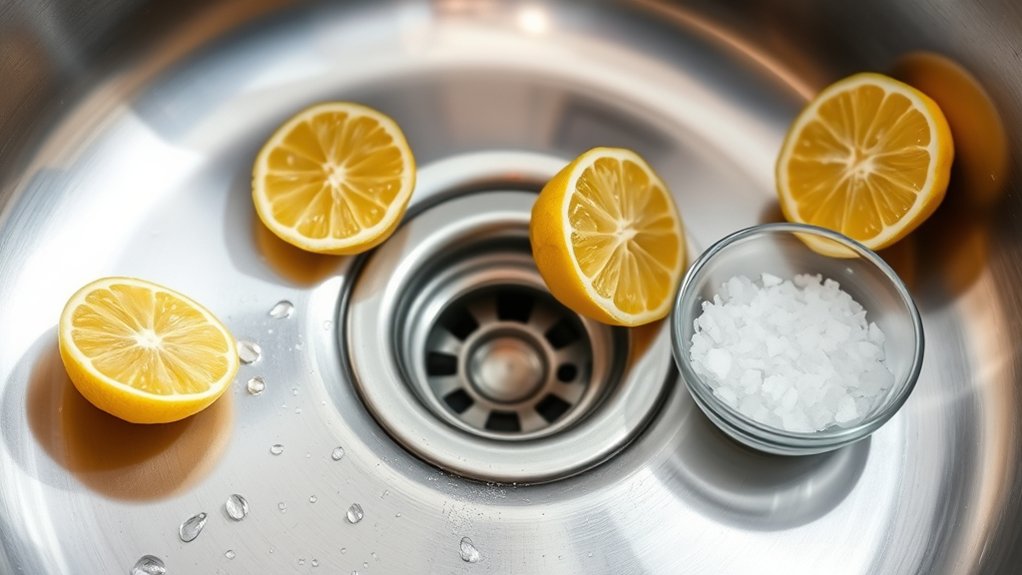
DIY Guide to Clean Kitchen Sink Drain Naturally
Many people struggle with keeping their kitchen sink drain clean and odor-free. It can be frustrating dealing with clogs or unpleasant smells that just won’t go away. Luckily, you’re not alone, and there are simple, natural ways to tackle these issues.
To naturally clean your kitchen sink drain, start by pouring boiling water down the drain to loosen grease and debris. Follow with a mixture of baking soda and vinegar, letting it fizz for about 15 minutes before flushing with hot water.
Use lemon juice or salt for extra freshness and grease cleaning. Regular maintenance with these ingredients helps prevent clogs and odors, ensuring a fresh, smooth-running drain.
There are more tips to keep your sink pristine.
Key Takeaways
- Use a baking soda and vinegar mixture to break down grease, grime, and odors naturally. It’s a simple, effective way to keep your drain clean without harsh chemicals.
- Regularly flush the drain with hot water to prevent buildup and help maintain a smooth flow. Doing this once a week can really make a difference.
- Create a natural cleaning paste with lemon juice and salt to tackle stubborn grease and freshen the drain. It’s a great, eco-friendly alternative to store-bought cleaners.
- Employ natural essential oils like tea tree or eucalyptus for their antimicrobial benefits during routine cleaning. Just a few drops can help keep your sink fresh and bacteria-free.
- Manually remove stubborn blockages with plumbing tools, avoiding harsh chemicals for a safe, eco-friendly approach. It’s often the most reliable way to clear tricky clogs.
Why Keep Your Kitchen Sink Drain Clean Naturally?
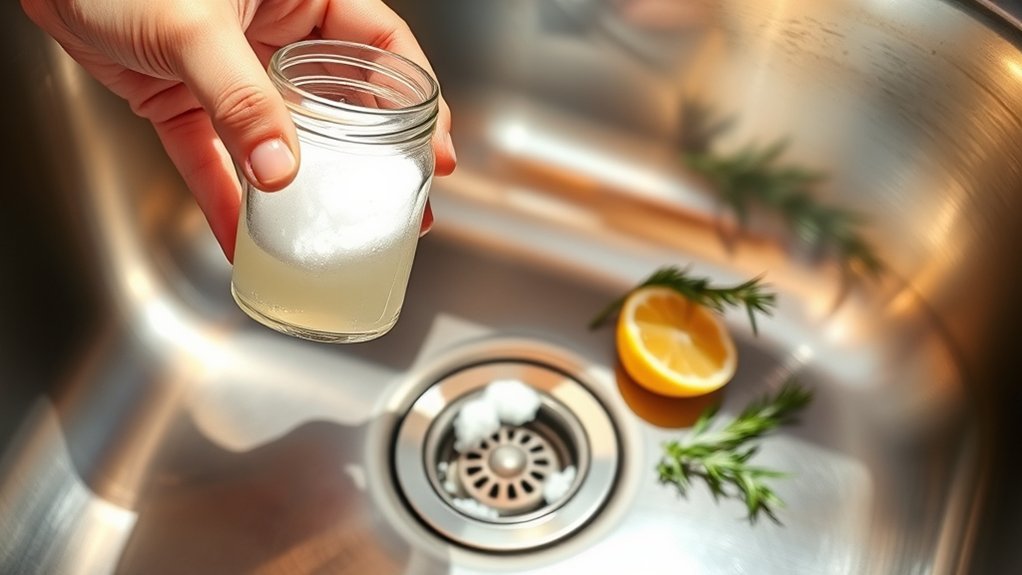
Keeping your kitchen sink drain clean naturally is important because it helps prevent clogs and odors without exposing yourself to harsh chemicals. When your drain stays clear, your kitchen looks more appealing and feels fresher.
A clean drain also helps keep your plumbing tools in good shape, reducing the risk of damage or costly repairs later on. Using natural methods like baking soda and vinegar is simple and effective.
It’s better for your environment and your family since you’re avoiding harmful chemicals. Regular maintenance keeps your drain flowing smoothly and stops unpleasant smells from ruining your kitchen vibe.
When you prioritize natural cleaning, you’re also caring for your plumbing tools, making future repairs or cleaning easier. Overall, keeping your sink drain clean naturally is a smart way to keep your kitchen beautiful and functional.
Common Causes of Clogged and Odorful Drains
Food debris can sometimes slip past your disposal and settle in the drain, which can cause clogs and unpleasant odors. It’s pretty common, especially if you’re not careful about what goes down the drain.
Plus, grease from cooking tends to build up over time. When it cools and hardens, it creates sticky blockages that are really tough to clear out later. Knowing these common issues can help you take steps to prevent drain problems before they get worse.
Food Debris Accumulation
When you rinse dishes and dispose of leftovers down the drain, tiny food particles can sneak past and settle inside the pipes. Over time, these food bits build up, causing clogs and bad smells.
Food scraps from waste disposal can stick to pipe walls, trapping other debris and slowing down drainage. To avoid this, don’t toss large food pieces down the drain and try using a strainer.
Regularly flushing the drain with hot water helps keep residues from building up. Here’s a quick overview of what causes food debris to accumulate and how it impacts your drain:
| Cause of Food Debris Build-up | Effect on Drain |
|---|---|
| Food scraps from waste disposal | Clogs and odors develop |
| Not using strainers | Larger particles enter pipes |
| Rinsing without scraping | Sticky residues form |
| Discarding greasy foods | Promotes debris buildup |
| Poor water flow | Food debris settles quickly |
Buildup of Grease
Grease and oily substances are some of the most common culprits behind clogged and smelly drains. When you cook, grease and oil residue often go down the drain, sticking to pipes and gradually creating a thick buildup.
Over time, this grease buildup traps food particles and debris, making the clog worse and causing unpleasant odors. Oil residue doesn’t dissolve easily in water, so it clings to the pipe walls, narrowing the passage and slowing drainage.
To prevent this, avoid pouring excess grease down the drain. Instead, let the grease cool and solidify, then scrape it into the trash. Regularly flushing your drain with hot water or a natural solution like baking soda and vinegar can help break down grease buildup and keep your pipes clear and odor-free.
Essential Natural Ingredients for DIY Drain Cleaning
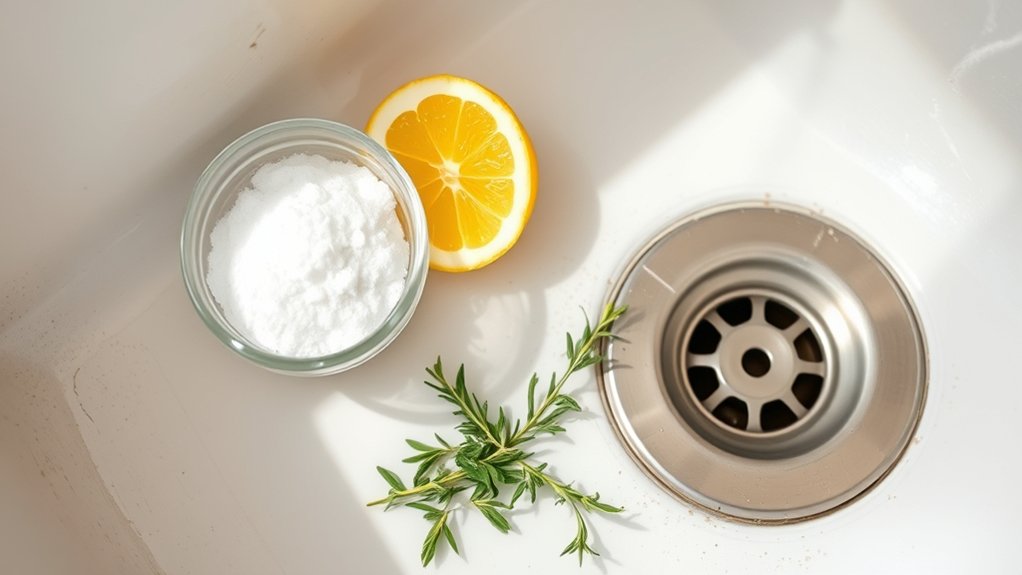
To effectively clean your kitchen sink drain naturally, you’ll want to gather some essential ingredients that work together to break down buildup and eliminate odors. Common natural ingredients include baking soda, vinegar, lemon juice, salt, and essential oils. These are eco-friendly, safe, and cost-effective compared to commercial options.
Here’s a quick overview:
| Ingredient | Purpose |
|---|---|
| Baking Soda | Acts as a gentle abrasive and deodorizer |
| Vinegar | Breaks down grime and disinfects |
| Lemon Juice | Freshens smells and cuts grease |
| Salt | Scrubs away stubborn residue |
| Essential Oils | Adds scent and antimicrobial properties |
Using these ingredients, you can create an effective natural cleaning routine without harsh chemicals or eco-unfriendly gadgets. They’re simple, easy to find, and gentle on your plumbing and the environment.
How to Clear Your Drain Using Baking Soda and Vinegar
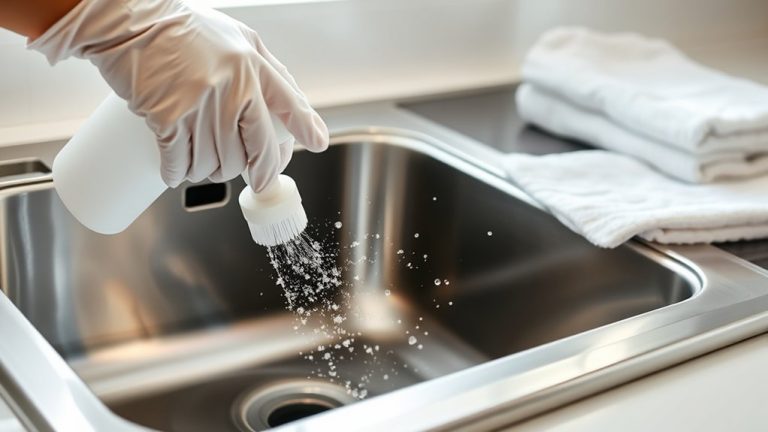
First, grab about half a cup of baking soda and pour it right into your drain. It might look a little funny, but don’t worry—it’s the first step to clear things out.
Next, slowly pour in a cup of vinegar. You’ll see it start to fizz and bubble—that’s totally normal and actually helpful because it helps break down the grime and buildup inside your pipes.
Let that mixture sit for a few minutes to do its magic. Afterward, flush your drain with some hot water to rinse everything away and keep things flowing smoothly.
Baking Soda Preparation
Preparing your baking soda mixture is simple and effective for clearing a clogged sink. Start with about half a cup of baking soda, which acts as a natural deodorizer and scrubs away grime. You don’t need any fancy equipment—just measure the baking soda directly into your drain or a small bowl.
This natural deodorizer not only neutralizes unpleasant odors but also helps break down buildup inside your pipes. For a more thorough clean, you can mix the baking soda with a little warm water to form a paste, making it easier to pour directly into the drain.
Once prepared, you’re ready to combine it with vinegar for a powerful, natural cleaning reaction that clears the clog and freshens your sink.
Vinegar Pouring Process
Once you’ve poured your baking soda into the drain, carefully add vinegar directly on top. This triggers a natural foaming reaction that helps break down grease and debris.
Pour slowly and directly into the drain opening to get the best results. As it fizzes, the mixture agitates the clog, promoting natural drain cleaning.
Keep the drain covered with a plug or cloth for about 5-10 minutes to contain the reaction. Here’s a quick overview:
| Step | Action | Purpose |
|---|---|---|
| 1 | Pour baking soda into drain | Prepare for reaction |
| 2 | Add vinegar directly on top | Activate foaming action |
| 3 | Cover drain and wait | Boost cleaning process |
This vinegar pouring method is simple, eco-friendly, and effective for maintaining a healthy kitchen drain.
How Hot Water Keeps Your Sink Smelling Fresh
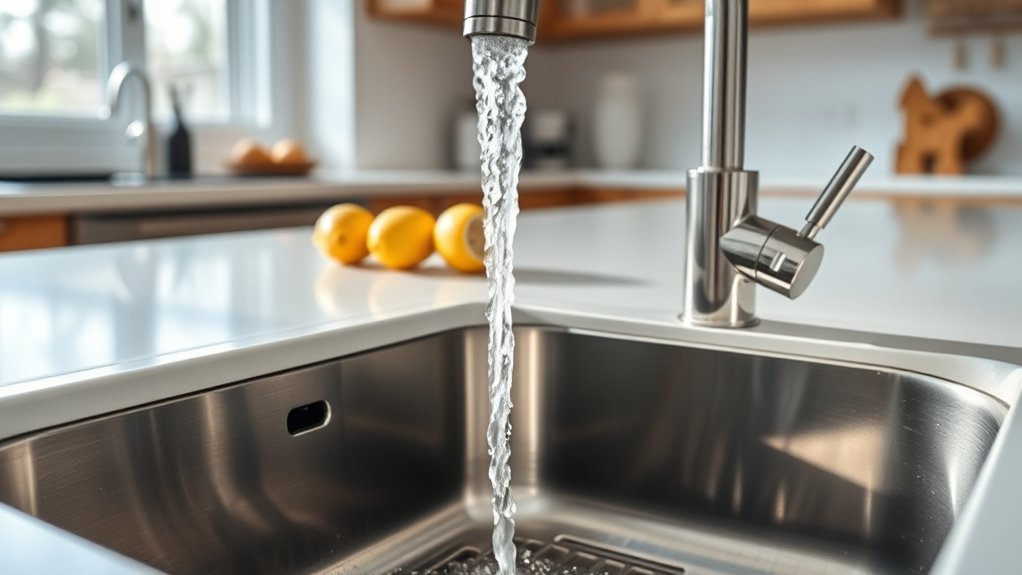
Hot water is one of the simplest yet most effective ways to keep your sink smelling fresh. Regularly pouring hot water down your drain helps with drain maintenance by flushing away grease, soap scum, and food particles that can cause odors over time.
When hot water flows through the pipes, it breaks down stubborn residues and prevents buildup that can trap bacteria and foul smells. This simple routine keeps your drain clear and odor-free without harsh chemicals.
For best results, pour a generous amount of hot water down the drain at least once a day, especially after cooking or washing dishes. This practice not only maintains your drain’s cleanliness but also prolongs its lifespan.
How to Make Eco-Friendly Drain Cleaners at Home
Want to keep your drains clean without harming the environment? You can make your own eco-friendly drain cleaners right at home using simple ingredients like baking soda, vinegar, and lemon juice. These natural combos are great at breaking down grime and buildup, all while being gentle on your plumbing and the planet.
And the best part? You don’t need any harsh chemicals that can be toxic or damaging. Just a few easy steps and safe cleaning techniques, and your drains will stay clear and fresh without any worries. It’s a simple, eco-friendly way to keep things flowing smoothly!
Natural Ingredients Combinations
Creating eco-friendly drain cleaners at home is easy when you combine natural ingredients known for their cleaning power. These mixtures not only clear out clogs but also keep your kitchen decor fresh and your appliances well-maintained. To make effective combinations, try:
- Baking soda and vinegar. Pour baking soda down the drain, then add vinegar. Let it fizz for 15 minutes before flushing with hot water.
- Lemon juice and salt. Mix lemon juice with salt to create a natural scrubbing paste that dissolves grease and grime.
- Borax and essential oils. Combine borax with a few drops of tea tree or eucalyptus oil for a powerful, antibacterial cleaner.
Use these blends regularly to keep your kitchen clean and avoid harsh chemicals that can hurt your plumbing and decor.
Safe Cleaning Techniques
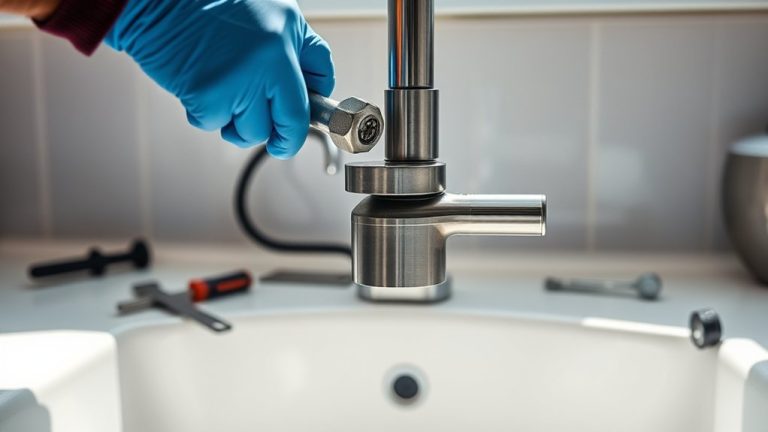
Using natural ingredients not only helps you avoid harsh chemicals but also guarantees your cleaning methods are safe for your family and the environment. When doing DIY drain cleaning, make sure you use plumbing tools carefully to avoid damage.
For extra safety, apply silicone sealant around the drain if you notice leaks or gaps. This creates a secure, chemical-free barrier. Always turn off the water supply before inspecting or disassembling the pipes, and handle tools carefully.
Choose gentle, eco-friendly solutions like baking soda and vinegar instead of harsh chemical drain cleaners. Keep your workspace well-ventilated and wear gloves to protect your skin. These techniques help you clean effectively without risking harm to your home or the environment.
Natural Tips to Prevent Clogs and Odors
To keep your kitchen sink drain free of clogs and odors, using natural methods is both effective and eco-friendly. Incorporate simple habits to prevent buildup and keep your space fresh. Here are some tips:
- Use hot water and baking soda regularly. Pour boiling water down the drain, then follow with baking soda to break down grease and neutralize odors.
- Avoid pouring fats and oil down the drain. These solidify and cause clogs, so dispose of them in the trash instead.
- Enhance your kitchen decor with natural remedies. Place lemon slices or herbs like rosemary near the sink. They add a fresh scent and serve as subtle reminders of good cooking habits that help keep your drain clean.
This simple routine keeps your drain clear, supports eco-friendly habits, and keeps your kitchen inviting and odor-free.
When to Use Commercial Drain Cleaners Safely
While natural methods work well for regular drain maintenance, there are times when commercial drain cleaners become necessary, especially during stubborn clogs. When you decide to use a commercial alternative, prioritize chemical safety by reading labels carefully.
These products contain potent chemicals that can be harsh on your pipes and hazardous if mishandled. Use gloves and eye protection, and ensure proper ventilation during application.
Reserve commercial cleaners for severe blockages that natural remedies can’t resolve. Avoid overusing them, as repeated use can damage your plumbing over time.
If you choose to use a commercial drain cleaner, follow the manufacturer’s instructions precisely to minimize risks. Remember, these products are designed for tough clogs, but safety always comes first.
When used correctly and sparingly, commercial alternatives can be an effective way to clear stubborn drains without compromising safety.
Troubleshooting Persistent Drain Odors and Blockages
Persistent drain odors and blockages can be frustrating, but addressing them early can prevent bigger plumbing problems. First, improve air circulation around your sink by opening windows or using a fan. Better airflow helps disperse those lingering smells.
Next, do a quick plumbing check to spot potential clogs or leaks that might trap debris and cause odors. Look for standing water or slow drainage, which usually mean there’s a blockage.
Finally, try these simple DIY tips:
- Pour a mix of baking soda and vinegar down the drain to break up buildup.
- Follow up with hot water to flush out loosened debris.
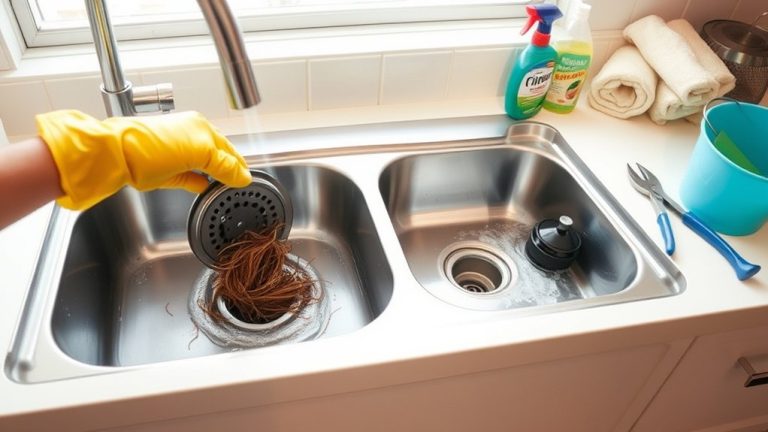
- Use a plumbing brush or snake to remove stubborn blockages by hand.
Regularly checking for air circulation issues and inspecting your plumbing can keep odors away and prevent future clogs. Catching these signs early helps keep your sink fresh and working smoothly.
Simple Maintenance Habits for a Healthy Kitchen Sink
Maintaining a clean and functional kitchen sink doesn’t have to be complicated. Simple habits keep your sink working well and make your kitchen look nicer.
Rinse the sink after each use to prevent buildup and wipe down surfaces to avoid stains. Use natural cleaning solutions like vinegar and baking soda once a month to keep drains clear and smelling fresh.
Proper appliance care, such as cleaning the garbage disposal, helps prevent clogs and extends its lifespan.
| Habit | Benefit | Example |
|---|---|---|
| Rinse after each use | Prevents residue buildup | Hot water flush after washing dishes |
| Weekly deep cleaning | Keeps it clean and odor-free | Baking soda and vinegar treatment |
| Avoid pouring grease | Prevents clogs | Dispose of fats in trash |
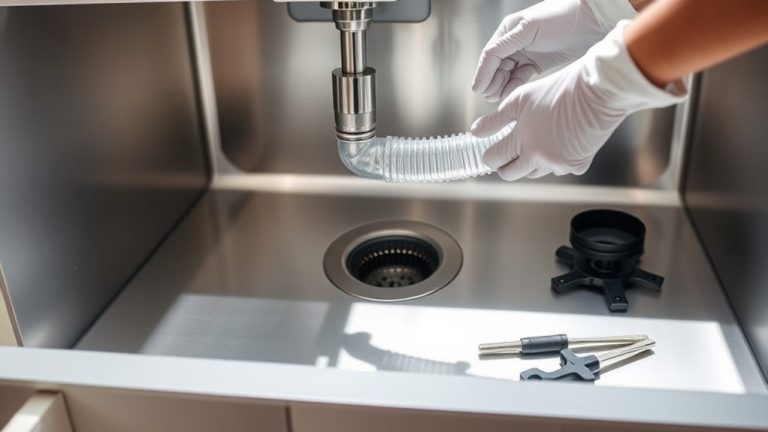
| Check and clean traps regularly | Keeps drainage flowing smoothly | Remove debris from drain trap |
These habits keep your sink functioning well, look good, and help avoid appliance problems.
Frequently Asked Questions
How Often Should I Clean My Kitchen Sink Drain Naturally?
You should clean your sink drain naturally every one to two months to keep up with sink maintenance and prevent buildup.
Regular natural cleaning helps remove debris and odors, keeping your drain clear and fresh. If you notice slow drainage or unpleasant smells, try cleaning more often.
Using homemade solutions like baking soda and vinegar can effectively maintain your drain’s health without harsh chemicals. This keeps your kitchen hygienic and eco-friendly.
Can Natural Drain Cleaners Damage My Pipes?
Natural drain cleaners are generally safe and unlikely to damage your pipes, especially when used correctly. They work through gentle chemical reactions that break down organic buildup without causing pipe corrosion.
Unlike harsh chemical cleaners, natural options don’t erode pipe material or cause long-term damage. You can confidently use baking soda and vinegar to clean your drain, knowing they won’t harm your plumbing system or lead to corrosion over time.
Are There Any Natural Remedies for Stubborn Drain Clogs?
Yes, there are natural remedies for stubborn drain clogs. You can try herbal remedies like peppermint or eucalyptus oils, which might help loosen debris.
Homemade enzyme solutions made from natural ingredients like fruit peels and sugar can actively break down organic matter and clear your drain naturally.
Pour these solutions down your drain and let them sit overnight. They’re effective, eco-friendly, and gentle on your pipes, offering a safe way to tackle stubborn clogs.
What Are Signs My Drain Needs Professional Cleaning?
If your drain feels sluggish, it’s like a traffic jam in your plumbing highway, signaling you need professional help.
Signs include foul odors, gurgling sounds, or water pooling.
These issues indicate that chemical reactions within your pipes are causing buildup or blockages, making plumbing maintenance essential.
Don’t ignore these signals, or you risk further damage. Calling a professional keeps your drain flowing smoothly and prevents costly repairs.
Can Natural Methods Prevent Future Drain Odors Effectively?
Yes, natural methods like herbal deodorizers and baking soda solutions can effectively prevent future drain odors.
You should regularly sprinkle baking soda down the drain, then follow with vinegar to neutralize smells and break down buildup.
Herbal deodorizers, such as eucalyptus or tea tree oil, can freshen the air and inhibit odor-causing bacteria.
Using these natural remedies consistently keeps your drain smelling clean and helps prevent odors before they start.
Conclusion
Keeping your kitchen sink drain clean naturally is a smart choice that saves you money and keeps your home safe. Regularly using simple remedies like baking soda, vinegar, and hot water can prevent odors and clogs before they happen.
Don’t forget, a little maintenance goes a long way. Think of it as tending to your very own aqueduct! These small steps keep your sink fresh and working properly.
By following these tips, you’ll ensure your sink stays clean and functional. Using natural methods for drain cleaning is an easy way to maintain a healthy, odor-free kitchen sink.