10 Steps to Disinfect Your Kitchen Sink
Feeling overwhelmed by the constant mess and germs in your kitchen sink? You’re not alone—many people struggle with keeping this everyday spot clean and disinfected.
Luckily, there’s a simple, effective routine you can follow to keep it spotless and germ-free.
To disinfect your kitchen sink in 10 steps, start by clearing out any dishes and debris. Rinse the sink with warm water, then spray or pour disinfectant evenly over all surfaces, ensuring coverage of corners and seams.
Let it sit for the recommended time before scrubbing away grime with a brush or sponge. Rinse thoroughly, dry with a clean cloth, and inspect for any residue.
Disinfect daily for the best results—if you follow these steps, you’ll uncover even more tips to keep it spotless.
Key Takeaways
- Clear the sink of dishes and debris before cleaning so you can disinfect thoroughly.
- Rinse the sink with warm water to wash away loose grime and prep the surface.
- Apply an effective disinfectant, like a bleach solution or vinegar, making sure to cover the entire area.
- Let the disinfectant sit for the recommended contact time without touching the sink.
- Rinse the sink well with water and dry it with a clean cloth to remove residue and stop bacteria from growing.
Why Regularly Disinfect Your Kitchen Sink Matters
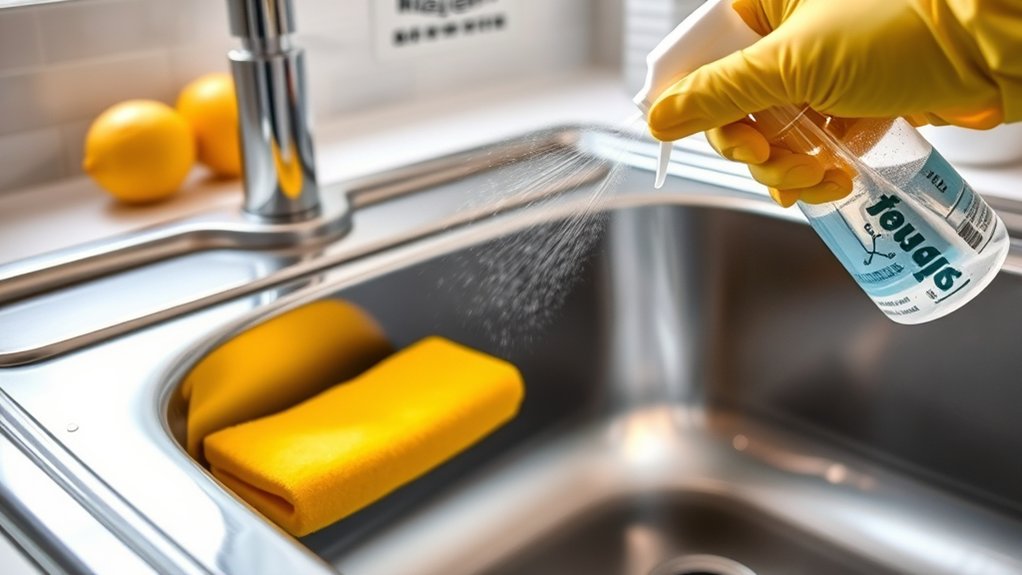
Regularly disinfecting your kitchen sink is important because it’s a prime spot for bacteria, mold, and other germs to grow. The damp, warm environment makes it easy for these germs to hide and multiply.
Regular disinfection prevents germs from hiding and multiplying in your kitchen sink.
When you prepare food or wash dishes, bacteria from the sink can spread to your hands, utensils, and other surfaces. Without proper cleaning, these germs can cause illnesses and infections.
Disinfecting your sink regularly helps keep harmful pathogens away and ensures your kitchen stays clean and safe. If you ignore sink maintenance, bacteria can multiply quickly, making it harder to keep everything hygienic.
By making a habit of disinfecting your sink, you reduce the risk of foodborne illnesses. It’s a simple step that plays a big role in keeping your entire kitchen healthy.
Staying consistent with this task prevents germs from building up and keeps your sink and kitchen fresh and sanitary. It’s an easy way to protect your family and maintain a clean cooking space.
Gather Supplies Like Disinfectants, Scrub Brushes, and Gloves
Before you begin disinfecting, it’s a good idea to gather all the supplies you’ll need. This includes effective disinfectants, scrub brushes, and gloves. Picking the right disinfectant is important—whether it’s a bleach-based solution or vinegar, make sure it’s suitable for your sink material.
Once you have everything, don’t forget to put on gloves to protect your skin. Having all these essentials ready to go makes the cleaning process smoother and safer, so you can get your sink sparkling without any hassle.
Essential Disinfectant Types
What disinfectant should you choose to effectively clean your kitchen sink? For everyday cleaning, household disinfectants like bleach solutions, hydrogen peroxide, or commercial disinfectants are reliable options. They kill germs quickly and are easy to use.
If you prefer natural remedies, options like white vinegar and baking soda can be effective for routine sanitation, though they may not eliminate all bacteria. Keep in mind that some natural remedies are less potent against certain pathogens, so for deeper disinfection, stronger household disinfectants are preferable.
Always follow the manufacturer’s instructions for dilution and contact time. Having a variety of disinfectants on hand allows you to choose the best option depending on your needs, ensuring your sink stays hygienic and safe.
Proper Protective Gear
To guarantee safe and effective cleaning of your kitchen sink, gathering the right protective gear is essential. Start by wearing protective gloves to shield your skin from harsh disinfectants and bacteria. Gloves prevent irritation and reduce the risk of cross-contamination.
Also, consider using face masks, especially if you’re working with strong fumes or chemical disinfectants. Face masks help protect your respiratory system and prevent inhaling harmful vapors. Make sure your gloves fit well and are made from durable material like rubber or latex.
Keep the masks snug and secure to avoid exposure. Using proper protective gear not only keeps you safe but also ensures you can clean thoroughly without worry. Always wash your hands afterward, even if you wore gloves.
Clear Out and Rinse Your Sink Before Disinfecting
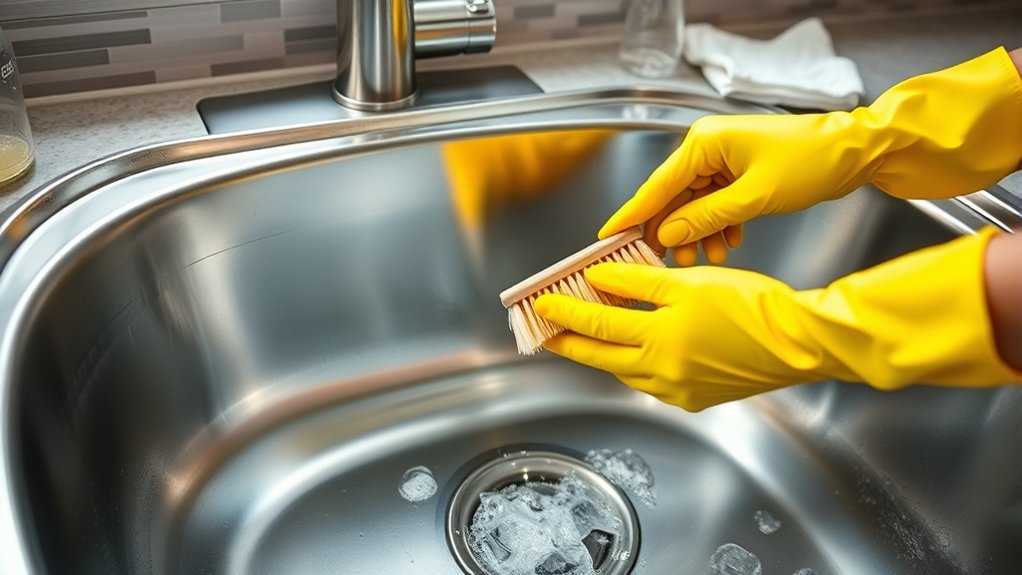
Start by removing any dishes, food scraps, and debris from your sink area. Clearing out clutter makes it easier to rinse thoroughly and gets your sink ready for effective disinfecting.
Next, rinse your sink with warm water; it should be comfortably hot but not scalding. Warm water helps loosen grime and grease, especially on different sink materials like stainless steel, porcelain, or composite.
To deepen your prep, consider these points:
- Remove loose debris to prevent spreading bacteria
- Use warm water to break down residue effectively
- Pay attention to sink material for the best cleaning
- Rinse all surfaces thoroughly, including corners and drain areas
- Keep water flowing to wash away loosened dirt
A proper rinse clears surface debris and residues before disinfecting, making the whole process more effective and efficient.
How to Properly Apply Disinfectants to Your Sink
Once your sink is thoroughly rinsed and free of debris, it’s important to apply disinfectant properly to make sure germs are effectively eliminated.
Start by spraying or pouring the disinfectant evenly over all surfaces of the sink, including the sides, basin, and drain area. Use enough disinfectant to cover every inch; this helps ensure maximum effectiveness.
Follow the manufacturer’s instructions for the correct amount and contact time, as improper application can reduce germ-killing power. Use a clean cloth or sponge to spread the disinfectant, paying special attention to corners and crevices where bacteria hide.
Make sure to coat all areas thoroughly but avoid oversaturating. Proper application techniques help the disinfectant work efficiently, killing germs and preventing cross-contamination.
Once applied, let the disinfectant sit for the recommended time before rinsing or wiping away, depending on the product’s instructions.
Let the Disinfectant Sit for Maximum Germ-Killing Effect
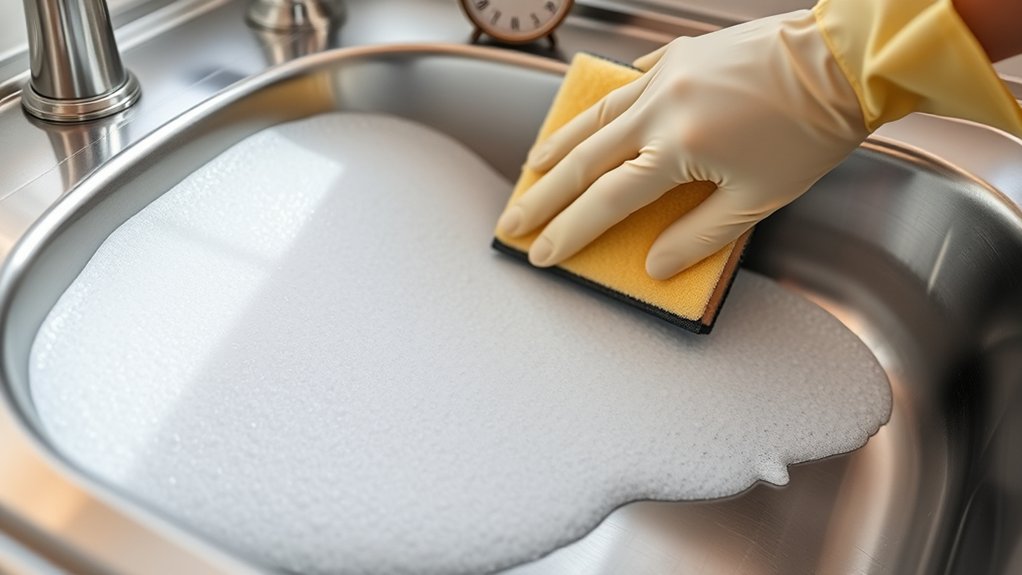
After applying the disinfectant, it’s important to let it sit for a while to effectively kill germs. This waiting time helps the disinfectant work its magic and thoroughly eliminate bacteria and viruses.
During this period, the disinfectant penetrates surfaces and does its job. To get the best results, avoid rinsing or wiping immediately after applying it.
Keep these tips in mind:
- Follow the manufacturer’s recommended contact time for maximum germ elimination.
- Use a timer to ensure the disinfectant sits long enough.
- Keep the sink dry and free of obstructions to prevent contamination.
- Apply enough disinfectant to cover all surfaces thoroughly.
- Don’t touch the sink during this time to let the disinfectant do its thing.
Scrub Away Residue and Grime for a Deep Clean
To guarantee your sink is truly clean, you need to scrub away any residue and grime that may have built up, especially in hard-to-reach corners.
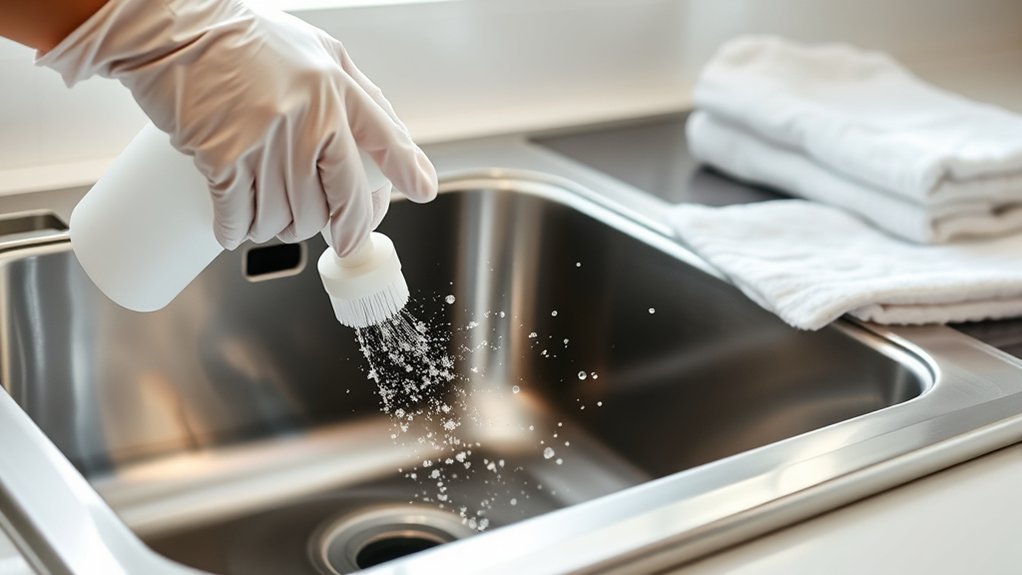
Use a scrub brush or sponge with a paste of baking soda and water to target stubborn kitchen stains and grease. Focus on areas around the drain, edges, and faucet, where grime tends to collect.
Proper scrubbing helps lift away residue, making your sink look fresh and preventing buildup.
| Residue Type | Effective Scrubbing Technique |
|---|---|
| Kitchen stain removal | Use baking soda paste and a soft brush |
| Grease elimination | Apply vinegar or commercial degreaser |
| Hard water deposits | Scrub with a lemon or vinegar solution |
| Soap scum | Use a sponge with abrasive side |
| Food particles | Rinse and scrub with hot water |
Deep cleaning ensures your sink stays spotless and hygienic.
Rinse Thoroughly to Remove Residual Chemicals
Rinsing your sink thoroughly is key to removing any leftover chemicals or cleaning agents that could cause damage or buildup over time. Making sure all residues are gone helps keep your sink safe for food prep and looking its best.
Thorough rinsing removes residues, protecting your sink’s surface and ensuring it’s safe for food preparation.
This step also boosts chemical safety by preventing lingering substances that might cause skin irritation or harm. To rinse effectively, turn on warm water and let it flow over all surfaces, including corners and joints.
Here are some tips to help you out:
- Use a gentle stream to avoid splashing and ensure thorough coverage
- Pay attention to hard-to-reach areas and seams
- Rinse for at least 30 seconds to clear residual chemicals
- Check for any visible residue or soap film, then rinse again if needed
- Use clean water to prevent recontamination
Dry Your Sink to Prevent Water Spots and Bacterial Growth
Drying your sink thoroughly is essential to prevent water spots and inhibit bacterial growth. When water remains on the surface, it leaves spots that can be tricky to remove and may dull the sink’s appearance.
More importantly, standing water creates a perfect environment for bacteria to thrive. After cleaning, wipe down your sink with a clean, dry cloth or paper towel, paying close attention to corners and seams where water can hide.
Ensuring your sink is completely dry helps eliminate residual moisture, reducing the risk of bacterial buildup that can cause odors or health concerns.
Consistent drying not only maintains a shiny, spotless surface but also promotes a healthier kitchen environment. By making this step a routine part of your cleaning, you prevent water spots from forming and keep bacteria at bay.
This simple habit safeguards your home and family from potential germs and keeps your sink looking its best.
How Often Should You Disinfect Your Kitchen Sink?
Regularly disinfecting your kitchen sink is key to keeping bacteria and germs away. How often you do it depends on your kitchen activity and organization. If you cook a lot or have a busy household, aim to disinfect daily or every other day.
Less active kitchens can stick to weekly cleaning. Regular disinfection helps prevent bacterial buildup and keeps your plumbing in good shape.
Think about these factors: heavy cooking or food prep means more frequent cleaning. A cluttered or disorganized sink can hide more germs.
If you notice odors, it’s definitely time to disinfect. Good kitchen organization also reduces mess and bacteria spread.
Sticking to a routine makes sure your sink stays clean and works well, helping avoid costly plumbing repairs later. How often you disinfect really depends on how you use and organize your kitchen.
Daily Tips to Keep Your Sink Sparkling and Germ-Free
Want to keep your sink looking shiny and germs at bay? Just set up a regular cleaning routine using your favorite disinfectant. It’s a simple step that can make a big difference.
Make sure to wipe down all the surfaces thoroughly and dry them off properly. This helps prevent mold and bacteria from sneaking in and causing issues. With a little consistency, keeping your sink spotless and hygienic becomes quick and hassle-free.
Regular Cleaning Routine
Maintaining a clean sink every day prevents grime and germs from building up, making it easier to keep your kitchen hygienic. A regular cleaning routine also helps with cooking safety and keeps your plumbing in good shape by preventing clogs and bacteria growth.
To keep your sink sparkling, try these simple daily habits: rinse the sink thoroughly after each use, wipe down surfaces with a damp cloth, and remove food particles and debris promptly.
Use hot water to flush the drains regularly, and sanitize with a mild, natural cleaner once a week.
These easy steps help cut down bacteria, prevent odors, and keep your sink looking fresh. Regular cleaning not only makes your kitchen safer but also helps avoid costly plumbing repairs.
Sticking to your routine makes sink upkeep quick and effective, so it stays clean and functional with minimal effort.
Use of Disinfectants
Using disinfectants is key to keeping your sink truly germ-free, especially after handling raw foods or messy ingredients.
To get the best results, pick a disinfectant proven to kill bacteria and viruses effectively. Always follow the manufacturer’s instructions for dilution and contact time to make sure germs are completely eliminated.
Be careful with chemicals by wearing gloves and ensuring good ventilation while applying disinfectants. Avoid mixing different products because harmful reactions could happen.
Store disinfectants out of reach of children and pets to keep everyone safe. Regularly disinfect your sink with the right products to prevent bacteria buildup and keep your kitchen hygienic.
Using disinfectants properly and handling them safely helps keep your sink clean, safe, and ready for your next cooking session.
Proper Drying Techniques
After disinfecting your sink, proper drying guarantees no moisture remains that could encourage bacteria growth. To keep your sink spotless, focus on effective drying techniques.
Air drying is a convenient option—just leave the drain open and let natural airflow evaporate any residual moisture. Alternatively, choose a clean, lint-free cloth that absorbs water quickly without leaving streaks.
Make sure to dry all surfaces thoroughly, including corners and faucet handles, to prevent mold and germs. Regularly replacing your towels helps avoid bacteria buildup.
Using a microfiber cloth can boost your drying efficiency and leave your sink gleaming. Proper drying not only keeps your sink clean but also helps extend its finish’s lifespan.
Frequently Asked Questions
Can I Use Natural Remedies Like Vinegar or Baking Soda Instead of Commercial Disinfectants?
Yes, you can use natural alternatives like vinegar and baking soda as eco-friendly disinfectants for your kitchen sink. Vinegar’s acidity helps kill bacteria, while baking soda deodorizes and cleans.
Although they may not be as strong as commercial disinfectants, they’re still effective for regular cleaning. Plus, they’re safer for your family and the environment.
Just make sure to rinse thoroughly and use these natural remedies consistently for a cleaner, greener kitchen.
Is It Necessary to Wear Gloves Every Time I Disinfect My Sink?
You don’t always need to wear gloves every time you disinfect your sink, but gloves are important if you’re using strong disinfectants or have sensitive skin.
Wearing gloves helps protect you from potential irritants and reduces contact with harmful chemicals.
Always follow disinfectant instructions, like reading labels and making sure the area is well-ventilated.
If you’re using gentler natural remedies like vinegar, gloves are less necessary but can still give you extra protection.
What Are the Signs That My Sink Needs Disinfecting Immediately?
Ironically, your sink often shows signs it needs disinfecting, even when you forget how often to clean it. If it smells strange, has visible grime, or stains, it’s time to take action.
Food residue, water spots on surfaces, or mold around the drain mean you need to clean it ASAP. These signs show your sink’s hygiene has slipped.
Disinfecting right away can stop bacteria from building up and keep your kitchen safe and fresh. Don’t wait until it’s too late—spot these signs and clean!
How Do I Disinfect a Stainless Steel Sink Without Scratching It?
To disinfect your stainless steel sink without scratching, start by rinsing it thoroughly and using a gentle cleaner.
Use a soft cloth or sponge for polishing, avoiding abrasive scrubbers that can cause scratches.
Always wipe in the direction of the grain, which helps prevent scratches and keeps the surface smooth.
After cleaning, rinse well and dry with a soft towel to reduce water spots and keep your sink shiny and new.
Can Disinfecting My Sink Too Often Cause Damage or Odors?
Disinfecting your sink too often usually won’t cause damage if you use gentle, non-abrasive cleaners suitable for your sink material.
But, doing it excessively can sometimes lead to odors, especially if residues build up or if you’re using harsh chemicals repeatedly.
It’s best to find a balance in how often you disinfect, based on your sink type and household needs.
Regular cleaning with mild solutions helps keep things hygienic without risking damage or unpleasant smells.
Conclusion
Think of your kitchen sink as the heart of your home. It’s where life flows and germs can hide. Regular disinfecting keeps it sparkling and safe, just like tending a garden ensures healthy blooms.
I once neglected mine for a week, and it reminded me how quickly bacteria can grow unseen. By following these simple steps, you’ll safeguard your loved ones and keep your kitchen vibrant.
Because a clean sink is the foundation of a healthy home, making disinfecting a regular habit is essential.