7 Simple Steps to Fix Your Kitchen Sink Drain
Dealing with a clogged or slow kitchen sink drain is a common frustration many homeowners face. You’re not alone—lots of people struggle with keeping their drains clear and flowing smoothly.
To fix your kitchen sink drain, start by checking for visible clogs and water pressure issues. Remove any surface debris and use a drain snake or plunger to clear deeper blockages.
Try a natural mix of baking soda and vinegar to break down grease, then flush with hot water.
Don’t forget to clean the P-trap underneath and inspect for worn washers. Regular maintenance helps prevent future problems—stick around to uncover more tips to keep your drain flowing smoothly.
Key Takeaways
- Inspect and remove surface debris like hair and food from the drain opening.
- Use a plunger with hot water to dislodge minor clogs through controlled plunging.
- Remove the P-trap, clear out any gunk, rinse it well, and reassemble securely.
- Apply natural remedies like baking soda and vinegar to help break down grease and grime.
- Regularly use drain strainers and flush with hot water to prevent future clogs.
Identify What’s Causing Your Sink Drain to Clog
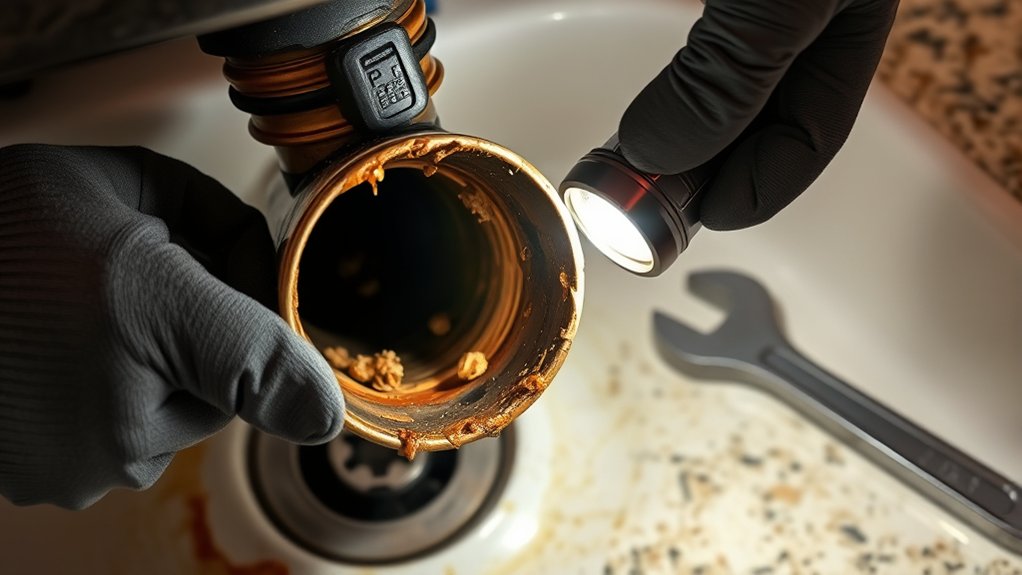
To effectively fix your clogged sink drain, you first need to figure out what’s causing the blockage. Start by checking the water pressure; if it suddenly drops, that can be a sign of a blockage restricting flow.
Keep in mind that the pipe material affects how debris builds up. Old metal pipes are more prone to corrosion and buildup, while plastic pipes usually resist corrosion but can still trap debris.
Next, look at how the water drains. Slow drainage suggests a partial clog, whereas a complete stoppage points to a bigger blockage.
Also, think about what’s been poured down recently. Grease, food particles, and soap scum are common culprits. Knowing the water pressure and pipe material helps you identify where the clog might be and what caused it.
This understanding will help you choose the best next steps to clear the drain efficiently.
Remove Visible Clogs and Debris
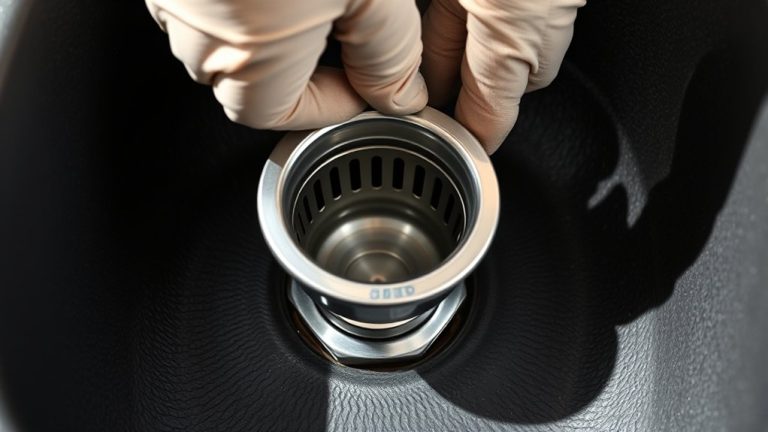
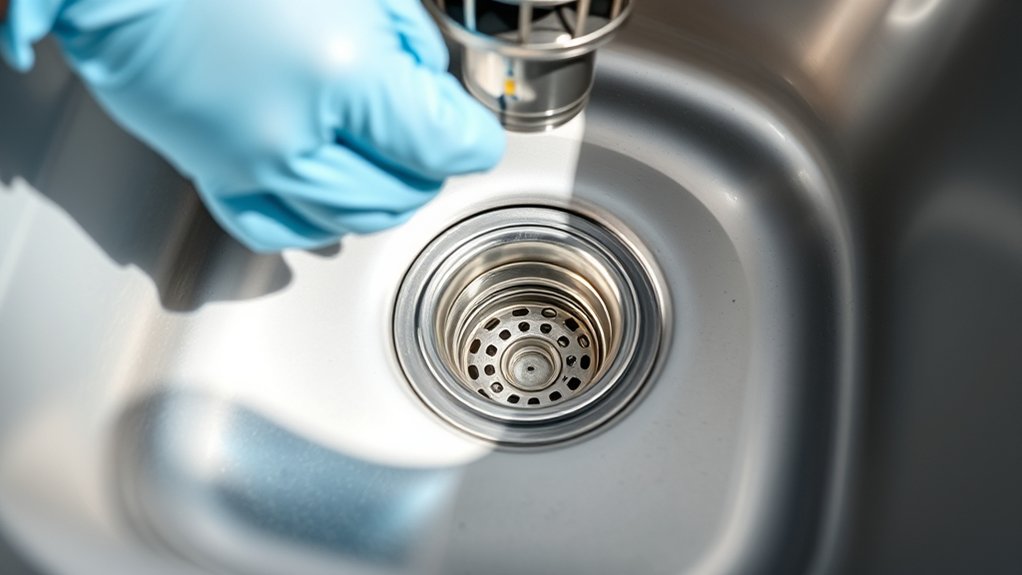
First things first, grab a pair of gloves and take a look at the drain opening. Remove any obvious surface blockages like hair or food debris—that’s usually the easiest fix. If that doesn’t do the trick, you might want to try using a drain snake to reach a little deeper and break up those stubborn clogs.
For a more thorough clean, it’s a good idea to remove the trap beneath the sink. Clear out any debris you find there, give everything a good wash, and then put it all back together. This simple step can often make a big difference in keeping your drain flowing smoothly.
Clear Surface Blockages
When you notice water draining slowly or backing up, it’s often caused by visible blockages on the surface of your sink. These blockages can include food debris, soap scum, or grime that build up over time. Removing these will improve drainage and prevent issues like surface stains or countertop damage.
To do this effectively:
- Wipe down the sink with a damp cloth to remove loose debris.
- Use a gentle scrub brush and mild cleaner to tackle stubborn spots.
- Pay attention to edges and corners where debris tends to hide.
Regular cleaning prevents surface stains and keeps your countertop looking fresh. Clearing surface blockages not only boosts drainage but also helps preserve the appearance and integrity of your sink area.
Use a Drain Snake
A drain snake is a handy tool for removing stubborn clogs and debris that have settled further down the pipe. When drain maintenance gets tricky, using a drain snake helps you reach and dislodge blockages beyond the surface.
Just insert the snake into the drain and turn the handle to break up or hook the clog. This method works well for clearing visible obstructions and preventing future buildup.
Pipe inspection becomes easier once you’ve cleared the debris, so you can spot any damage or narrowing in the pipe. Be careful to avoid damaging the pipe walls while working.
Regularly using a drain snake can keep your sink flowing smoothly and help extend the lifespan of your plumbing system.
Remove and Clean Trap
To remove visible clogs and debris, you’ll need to detach the trap beneath your sink. Trap removal involves loosening the nuts holding the trap in place, then carefully sliding it out.
Once removed, you can clean the trap to clear out any buildup or debris causing the clog. Here are some tips to make the process easier:
Use a bucket to catch water and debris during trap removal. Wear gloves to stay clean and protect your hands. Clean the trap thoroughly with a brush or old toothbrush.
After cleaning, reassemble the trap securely, making sure all connections are tight. This simple trap removal and cleaning will help restore proper drainage and prevent future clogs.
Try Using a Plunger to Clear the Drain
If your sink drain is clogged, a plunger can often do the trick. Start by filling the sink with a little water to create a seal around the plunger.
Use firm but controlled plunger techniques—press down sharply and lift without breaking the seal. This action increases drain pressure and helps loosen the blockage.
Make sure the rubber cup covers the drain completely for maximum effectiveness. Keep the plunger steady and maintain consistent pressure for about 15-20 seconds, then lift it to see if the water begins to drain.
Repeat as needed, applying steady pressure each time. If the clog persists, try repositioning the plunger to ensure a tight seal and focus on maintaining consistent drain pressure.
Avoid using excessive force, which can damage the pipes. With patience and proper plunger techniques, you can often clear minor clogs without harsh chemicals or tools.
Apply Baking Soda and Vinegar for Natural Drain Cleaning
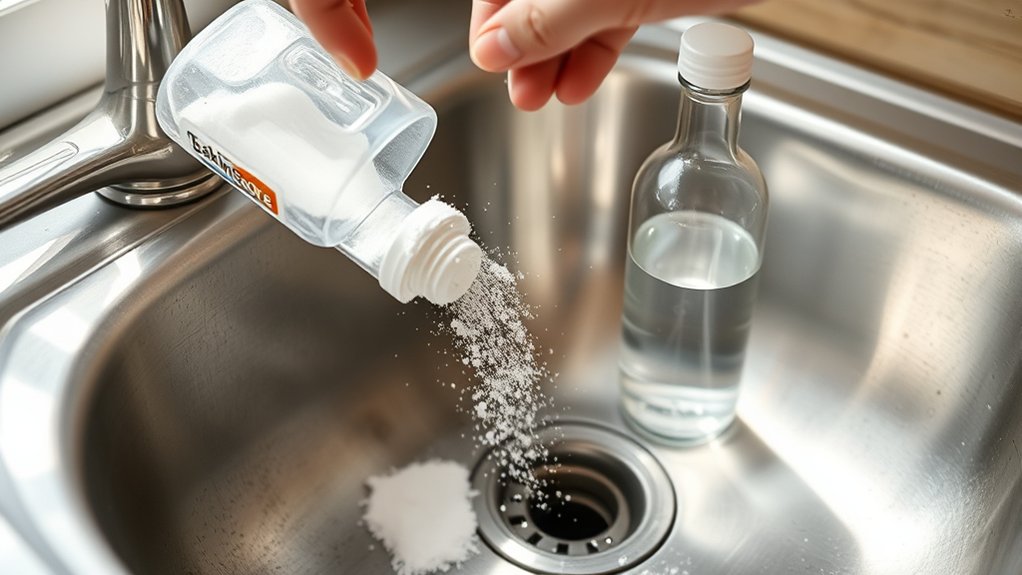
Using baking soda and vinegar is a really safe and eco-friendly way to clear out your drain without resorting to harsh chemicals. It’s actually pretty simple to do, and if you follow a few easy steps, you can get your drain flowing smoothly again. Plus, it’s a great way to help prevent future clogs from forming.
Just a quick heads-up—make sure you’re taking some safety precautions, like wearing gloves and eye protection, because even natural stuff can splash. Once you’re set, the process is straightforward: pour baking soda down the drain, then add vinegar. You’ll notice it fizzing up—that’s a good sign that it’s working to break down whatever’s blocking your pipes. After letting it sit for a little while, rinse with hot water, and you should see a noticeable difference. It’s a simple, natural method that keeps your drains clear without any nasty chemicals!
Benefits of Natural Cleaning
Natural cleaning methods like baking soda and vinegar offer a safe and effective way to maintain your kitchen sink drain. They provide eco-friendly solutions that are gentle on the environment and your plumbing.
Using chemical-free methods helps prevent damage to pipes and reduces exposure to harmful substances. Benefits include being safer for your family and pets, cost-effective, and readily available.
These natural solutions not only clean effectively but also promote sustainability. You don’t have to rely on harsh chemicals that can cause corrosion or health issues.
Instead, baking soda and vinegar work together to break down grease and grime. They keep your drain clear and fresh without any toxic residues.
Step-by-Step Application
To effectively clean your drain with baking soda and vinegar, start by removing any standing water from the sink. This helps the cleaning agents work directly on the clog or buildup.
Pour about half a cup of baking soda directly into the drain, making sure it reaches the interior of the pipe. Follow with half a cup of vinegar, which will fizz and loosen debris.
Cover the drain with a plug or a damp cloth to contain the reaction. Let it sit for 15-30 minutes so the mixture can break down grime.
After that, flush the drain with hot water. This simple process works well with various kitchen appliances and won’t disturb your decor, making it an eco-friendly way to clear minor blockages.
Safety Precautions
Although baking soda and vinegar are generally safe for cleaning your drain, it’s important to take some precautions to prevent accidents or damage. First, avoid contact with electrical outlets or appliances nearby to ensure electrical safety.
Second, be aware of the chemical hazard; although safe in small amounts, mixing too much can cause bubbling and splashing.
To stay safe, consider these tips:
- Keep children and pets away from the area during the process
- Wear gloves to protect your skin from potential irritation
- Use protective eyewear to prevent splashes in your eyes
Check and Clean Your Sink’s P-Trap
Your sink’s P-trap is often the culprit when drainage slows down or odors start to smell. It’s made from materials like plastic or metal, so it’s important to check it regularly.
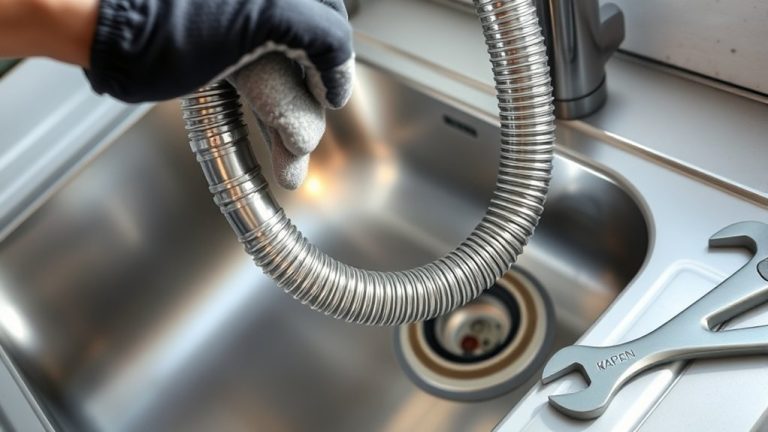
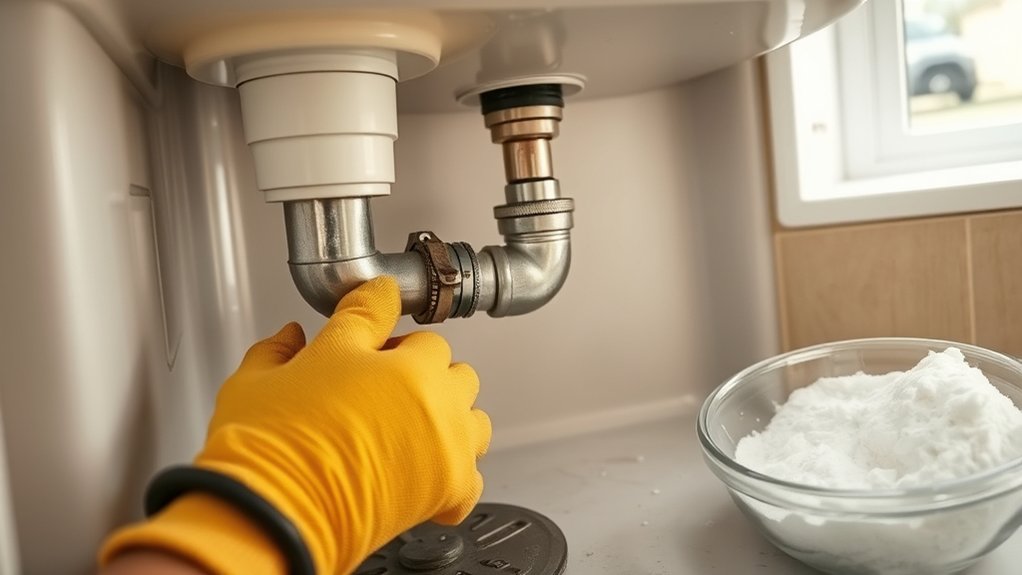
To inspect and clean the P-trap, gather your plumbing tools—an adjustable wrench, a bucket, and gloves. Place the bucket underneath the trap to catch water and debris.
Loosen the slip nuts on both ends of the trap with the wrench, then carefully remove it. Clear out any gunk, hair, or soap scum inside using a brush or cloth. Rinse the trap thoroughly with water.
Before putting everything back, check the washers and replace any worn parts. Once it’s clean and dry, reattach the trap securely. Tighten the slip nuts and make sure there are no leaks.
Regularly cleaning your P-trap helps keep drainage flowing smoothly and prevents foul odors from building up.
Flush With Hot Water or Use a Drain Snake for Persistent Clogs
When stubborn clogs stick around despite cleaning your P-trap, flushing the drain with hot water or using a drain snake can often do the trick. Hot water helps loosen grease, soap scum, and minor blockages, especially when it’s at a high but safe temperature for your pipes. Pouring hot water in stages encourages debris to move along the drain.
Stubborn clogs? Try hot water or a drain snake to loosen buildup and clear your pipes effectively.
If hot water doesn’t clear the clog, a drain snake can physically dislodge stubborn buildup deep inside the pipe. It’s a more direct approach that can reach past minor obstructions.
Here are some tips:
- Use water at a safe, high temperature to break down greasy clogs.
- Try enzyme-based cleaners before resorting to harsh chemicals.
- Be cautious with chemical drain cleaners, as they can damage pipes over time.
Both methods are effective and can help you avoid costly repairs or damage from harsh chemicals.
Maintain Your Drain to Prevent Future Clogs
Regular maintenance of your drain can prevent stubborn clogs from forming in the first place. To do this, consider how your kitchen design impacts drainage. Keep debris and grease out of the sink by using a drain strainer, especially if your kitchen layout encourages frequent use of appliances like dishwashers or disposers.
Confirm your pipes are properly connected and compatible with your appliances to avoid leaks or blockages that can lead to clogs. Periodically flush the drain with hot water or a mixture of baking soda and vinegar to break down buildup.
Avoid pouring fats, oils, or large food particles down the drain, as these can cause future issues. Properly maintaining your drain not only keeps it flowing smoothly but also prolongs the life of your plumbing system.
Adapting your kitchen design for better appliance compatibility can considerably reduce the chances of future clogs, saving you time and effort.
Frequently Asked Questions
How Often Should I Clean My Kitchen Sink Drain?
You should clean your kitchen sink drain at least once a month for good drain maintenance and to prevent clogs. Regular cleaning helps remove buildup of grease, soap scum, and debris that can cause odors or slow drainage.
If you notice slow drainage or bad smells, try cleaning more often. Using hot water, baking soda, and vinegar can keep your drain fresh between deep cleanings.
Sticking to a regular routine keeps your sink working smoothly and helps avoid bigger problems later on.
Can Hair Cause My Sink Drain to Clog Frequently?
Yes, hair buildup can cause your sink drain to clog frequently, like a slow-moving river. When hair collects, it traps debris and creates a stubborn blockage.
This can lead to slow drainage or even complete clogs. Plus, as hair decomposes, it can cause drain odors, making your kitchen smell less fresh.
Regularly cleaning your drain and using a drain guard can help prevent hair from building up and keep your sink flowing smoothly.
Is It Safe to Use Chemical Drain Cleaners?
Using chemical drain cleaners isn’t always safe because they can harm your plumbing and the environment. They often contain harsh chemicals that may cause skin or eye irritation and pollute water sources.
For chemical safety, consider natural alternatives like baking soda and vinegar. These options are eco-friendly and less likely to damage your pipes or the environment, making them a smarter choice for clearing your kitchen sink drain safely.
How Do I Prevent Future Sink Clogs Naturally?
Did you know that using natural remedies can reduce sink clogs by up to 80%? To prevent future blockages, try flushing your drain with hot water regularly.
Consider using bioenzymatic cleaners weekly to naturally break down organic buildup. Avoid pouring fats or grease down the drain, as they can cause clogs over time.
Instead, opt for eco-friendly solutions like baking soda and vinegar. They work effectively to keep your pipes clear without harsh chemicals.
When Should I Call a Professional Plumber?
You should call a professional plumber during plumbing emergencies or if your DIY repairs don’t fix the issue.
If your sink stays clogged after trying basic fixes, or if you notice persistent leaks, it’s time to get expert help.
Don’t risk making things worse—professional plumbers have the right tools and skills for complex problems, keeping your plumbing system safe and working properly.
Acting quickly can save you from costly damages down the road.
Conclusion
By following these simple steps, you can keep your kitchen sink drain clear and running smoothly. Curiously, some experts believe that regularly pouring boiling water down the drain can prevent buildup by dissolving grease before it clogs.
So, don’t just fix your drain when it’s blocked. Make it a routine to keep things flowing effortlessly. With a little effort, you’ll save time and avoid costly repairs down the line.
Keeping your kitchen sink drain in good shape is easier than you think. Regular maintenance prevents problems before they start, saving you money and hassle.
Remember, a little prevention goes a long way. Using simple tips like boiling water can help keep your drain clear and functioning perfectly.