What Should You Know About Putting Ceramic in the Oven?
Many people struggle with knowing if their ceramic dishes are safe to use in the oven. It can be confusing to figure out which ceramics will withstand high heat without cracking or breaking. You’re not alone—proper handling and knowledge can make all the difference.
Before putting ceramic in the oven, guarantee it’s oven-safe by checking labels or manufacturer guidance. Handle it carefully to avoid cracks or chips, and inspect for any damage before use.
Remember, rapid temperature changes can cause thermal shock, so always heat gradually and avoid exceeding recommended temperatures.
Proper care and cautious handling will keep your ceramics safe and durable. Want to know how to identify safe ceramics and prevent common mistakes? Keep going for essential tips.
Key Takeaways
- Always check that the ceramic is labeled or marked as oven-safe before you use it.
- Look for any cracks, chips, or damage to avoid breakage when heating.
- Be careful with sudden temperature changes to prevent thermal shock and cracking.
- Gradually preheat the oven and slowly heat or cool the ceramic piece.
- Hand wash it and handle with care to avoid chipping or damaging decorative finishes.
Which Ceramic Dishes Are Safe to Use in the Oven?
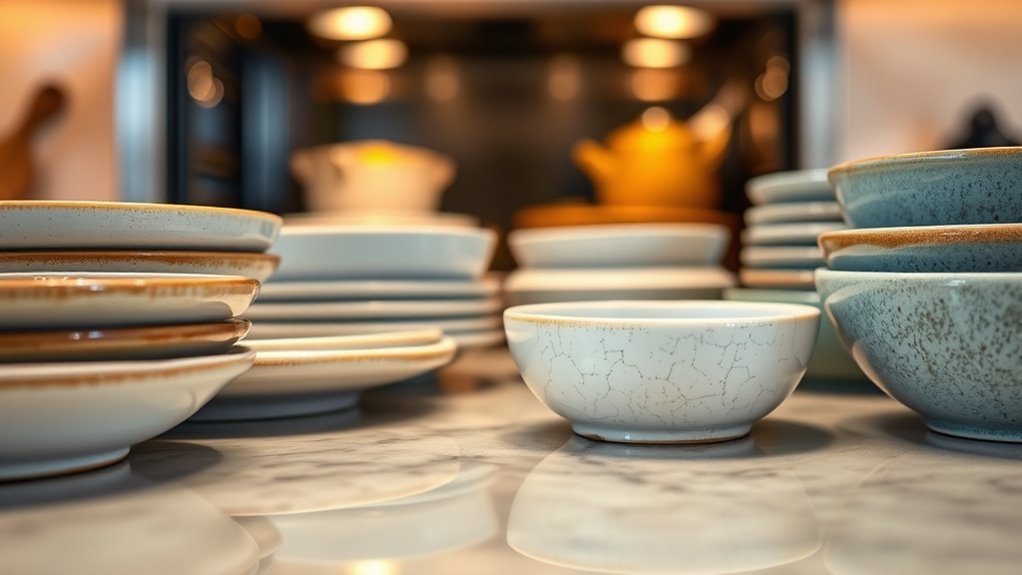
Not all ceramic dishes are safe for oven use, so it’s important to check their labels before placing them inside. Oven-safe ceramics usually have simple or minimal decorative patterns, since elaborate designs can mean they don’t handle high heat well.
Dishes made from high-quality, tempered ceramic or stoneware are generally oven-safe because they’re designed to withstand high temperatures. Avoid dishes with metallic glazes or decorations, as metal can cause sparks or damage in the oven.
Also, steer clear of ceramics with cracks or chips. These weaken the material and increase the risk of breakage. Always look for labels or manufacturer instructions that specify oven safety.
If you’re unsure, try testing a small section or contact the manufacturer. Choosing the right ceramic dish helps keep your oven use safe and your food intact.
How to Identify Oven-Safe Ceramic
Want to know if your ceramic dish is oven-safe? First, take a look at the bottom or the packaging for any labels or symbols. Usually, if it’s oven-safe, there will be a little icon showing an oven or some words indicating it’s heat-resistant. It’s a quick way to get peace of mind before popping it in the oven.
You can also get a sense of its heat tolerance by checking the material. Oven-safe ceramics are typically made from durable, heat-resistant clay or porcelain. If you’re unsure, a gentle scratch or chip test can help—just be careful, and avoid damaging the piece. If it holds up without cracking or chipping, that’s a good sign it can handle the heat safely. These simple checks make sure you’re using your ceramics safely and confidently in the oven.
Check for Manufacturer Labels
Checking for manufacturer labels is one of the easiest ways to see if your ceramic dish is oven-safe. Look for markings on the bottom or on the packaging that mention heat tolerance or oven safety.
These labels are especially useful if your piece is decorative or part of ceramic art, where the design might hide safety info. Keep an eye out for symbols like an oven, a temperature limit, or words like “oven-safe.”
If you see these, your ceramic piece is probably safe for oven use. Check the bottom for stamped or printed labels, read any packaging or instructions, and see if the label mentions oven or heat resistance.
Always double-check these labels before putting your ceramics in the oven.
Recognize Heat-Resistant Materials
Recognizing heat-resistant materials is key when figuring out if your ceramic piece is oven-safe. Look for clues like sturdy construction and signs of high-quality glazing techniques.
Oven-safe ceramics often have decorative patterns baked into the glaze, not just painted on. These patterns, along with smooth, even glazing, suggest the piece can handle high temperatures.
To tell if ceramics are oven-safe, check for markings or labels from the manufacturer. Here’s a quick guide:
| Feature | Indicator |
|---|---|
| Decorative patterns | Baked into glaze, fade resistant, oven-safe look |
| Glazing techniques | Thick, even glaze without cracks or crazing |
| Material composition | Usually stoneware or porcelain |
| Manufacturer labels | Oven-safe symbols or markings |
Always verify these signs before putting your ceramic in the oven.
Conduct Scratch and Chip Test
Performing a scratch and chip test is a good way to see if your ceramic piece can handle oven use. Carefully look at the surface, especially where there are decorative patterns or glaze.
Gently scratch the surface with a fingernail or a coin. If it scratches easily, it’s probably not oven-safe. Also, check for chips or cracks around the edges, which can show weak spots.
Here are some key points to keep in mind:
- Test areas with intricate decorative patterns for durability.
- Look for any crazing or cracking in the glaze.
- Make sure the surface feels smooth and sturdy without any loose parts.
Preparing Your Ceramic for Oven Use
Before you pop your ceramic piece into the oven, give it a quick once-over to see if there are any cracks or chips. Those tiny flaws can sometimes get worse when heated up, so it’s better to be safe than sorry.
Next, make sure you clean it thoroughly—dirt and grease can cause problems when things get hot, so a good wash is always a smart move.
And before you crank up the heat, it’s a good idea to check if your ceramic can handle the oven’s temperature. This way, you won’t get any surprises or accidents during your cooking session.
Inspect for Cracks or Chips
Have you checked your ceramic piece thoroughly for any cracks or chips? Crack detection and chip inspection are essential before oven use because damaged ceramics can break further or cause safety issues.
Carefully examine the entire surface under good lighting, feeling for any rough spots or weak areas. Look for fine cracks that might be invisible at first glance.
Check the edges and corners for chips or missing pieces, which can worsen with heat. If you find any cracks or chips, avoid using the item in the oven to prevent accidents.
Clean Thoroughly Before Use
After inspecting your ceramic piece for cracks or chips, the next step is to clean it thoroughly. Proper cleaning makes sure no dirt, grease, or residues are left behind that could affect cooking or stain removal.
Use warm, soapy water and a soft sponge to gently wipe the surface. For stubborn stains, a mixture of baking soda and water can help lift discoloration without damaging the surface.
Rinse thoroughly to remove any soap or residue. Avoid abrasive scrubbers that could scratch the ceramic. Confirming your piece is spotless not only improves its appearance but also prevents odors and bacteria buildup.
A clean ceramic piece will perform better in the oven and last longer. Taking this step guarantees your ceramic is prepped and safe for oven use.
Test Oven Compatibility
To make sure your ceramic piece can handle the oven, it’s important to test its compatibility first. This step is crucial for both ceramic art and decorative ceramics to prevent damage or cracking.
Start by checking the manufacturer’s guidelines for oven use. Then, perform a simple test: place the ceramic in a cold oven, then gradually heat it to the desired temperature.
Watch for any signs of stress or cracks during heating. Here’s what to keep in mind:
- Confirm the ceramic is labeled oven-safe
- Avoid sudden temperature changes
- Test with a low-temperature bake first
How to Handle Ceramic Dishes to Prevent Cracks
Handling ceramic dishes carefully is essential to prevent cracks when placing them in the oven. Always lift the dish from the sides rather than the handles, which can be fragile. When handling ceramic decoration, be gentle to avoid chipping or breaking delicate designs.
Before oven use, check your dish for any cracks or chips, as these weaken the structure. Proper ceramic cleaning is vital; avoid sudden temperature changes after washing, which can cause thermal stress.
Use mild detergents and soft sponges to keep the glaze and decoration intact. This helps prevent damage that might lead to cracks later. When moving dishes from the sink to the oven, let them air dry thoroughly to avoid water spots that can weaken the ceramic.
Understanding Temperature Limits and Preventing Thermal Shock
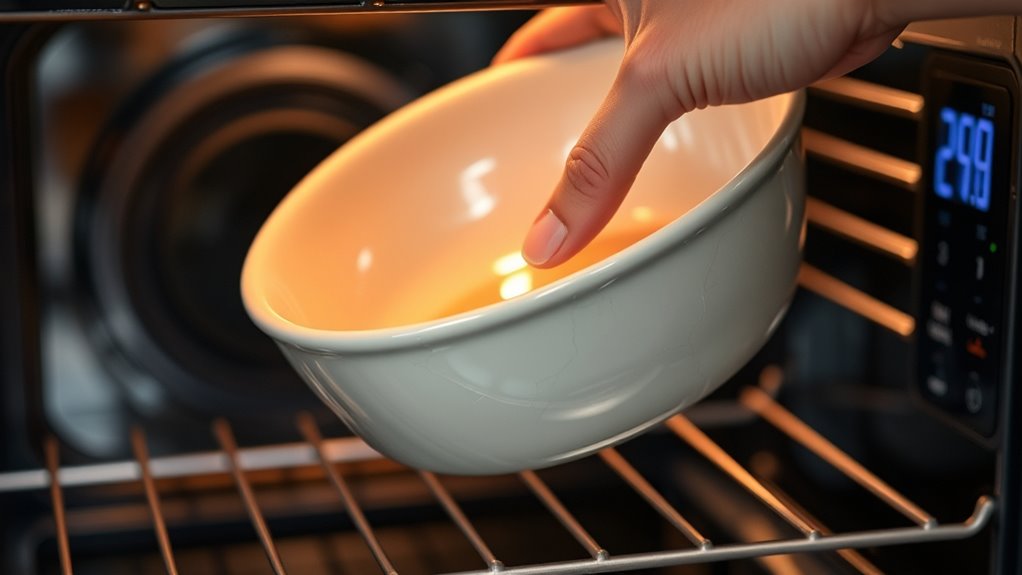
It’s really important to know the safe temperature ranges for your ceramic dishes so you don’t accidentally cause any cracks. If they get too hot or too cold too quickly, it can be tough on the material.
One big thing to watch out for is sudden temperature changes. For example, don’t take a dish straight from the fridge and put it directly into a hot oven. That kind of rapid shift can lead to thermal shock, which might crack or break your ceramics. Just a little patience and gradual temperature adjustments can help keep your dishes safe and in good shape.
Safe Temperature Ranges
Understanding the safe temperature ranges for ceramic items is key to preventing damage during oven use. Going beyond these limits can lead to cracking or breaking, which nobody wants.
Check your ceramic piece’s specific temperature recommendations to stay within safe bounds. This knowledge helps you cook better and store your ceramics properly, making them last longer.
Remember these important points: always look at the manufacturer guidelines for maximum temperature limits. Use gradual heating and cooling to avoid thermal shock.
And avoid sudden temperature changes, like putting a hot dish directly into cold water. Being gentle with temperature shifts keeps your ceramics safe and intact.
Avoiding Rapid Temperature Changes
Since ceramic materials are sensitive to sudden temperature changes, it’s important to avoid rapid shifts that can cause thermal shock. For ceramic art and decorative ceramics, quick temperature changes can crack or break the piece.
Always preheat your oven gradually if the ceramic is cold, and avoid placing a hot ceramic piece directly into a cold oven. When baking or firing, let your ceramic items warm up slowly to match the oven temperature.
Sudden changes, like removing a hot ceramic from the oven and placing it on a cold surface, increase the risk of damage. By understanding and respecting temperature limits, you help protect your decorative ceramics and keep them in good condition.
Consistent, gradual temperature adjustments are key to maintaining the beauty and durability of your ceramic art.
The Do’s and Don’ts of Heating Ceramic in the Oven
Heating ceramic in the oven can be safe and effective if you follow the right guidelines, but there are important do’s and don’ts to keep in mind. First, always check the material composition of your ceramic ware—some ceramics with decorative patterns may not be oven-safe.
Avoid sudden temperature changes, as they can cause cracking or breakage. When heating, start with a low temperature and gradually increase it. Never use ceramics that are chipped or cracked, as they weaken and can shatter under heat.
Also, confirm your ceramic piece is labeled oven-safe, especially if it features decorative patterns that may not withstand high heat.
Do’s:
- Verify the material composition and oven safety label
- Gradually increase oven temperature
- Use ceramics without chips or cracks
Don’ts:
- Expose ceramics with decorative patterns to sudden temperature shifts
- Use non-oven-safe ceramic ware
- Overheat beyond recommended temperatures
Caring for and Maintaining Oven-Safe Ceramic Ware
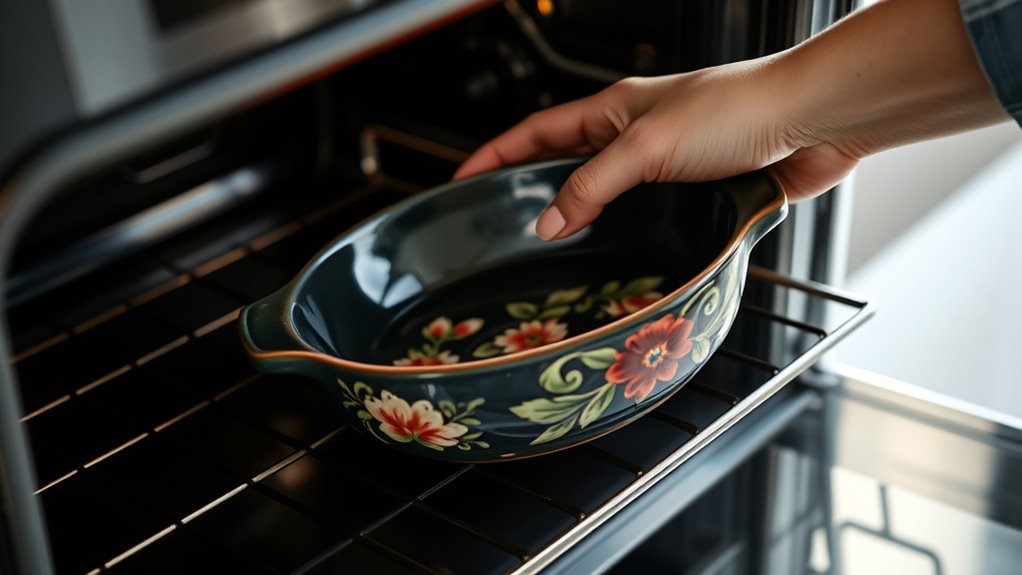
Proper care and maintenance are essential to keep your oven-safe ceramic ware in good condition and guarantee it lasts for years. Whether it’s functional cookware or decorative pottery, handling it carefully prevents cracks and keeps it looking great.
If your ceramic art has intricate designs, avoid abrasive cleaning tools that could damage the surface. Hand wash your pieces with mild soap and warm water, and steer clear of sudden temperature changes that can cause thermal shock.
Storing your ceramic ware in a stable environment helps protect it from moisture and temperature fluctuations. For decorative pottery, place it somewhere safe away from heavy traffic to prevent accidental chips or breakage.
Regularly check for cracks or chips, and if you notice any damage, handle the piece with extra care. Proper maintenance not only prolongs your ceramic art’s life but also keeps it beautiful for years to come.
Common Mistakes When Using Ceramic in the Oven
Many common mistakes happen when using ceramic in the oven, often because people underestimate how sensitive these materials can be to certain conditions. If you’re into ceramic artistry or using ceramic for decorative uses, it’s essential to handle it correctly.
One mistake is exposing ceramic ware to sudden temperature changes, which can cause cracking or breaking. Another is using ceramic that isn’t labeled oven-safe, risking damage or safety hazards. Overheating ceramic pieces can also weaken their structure, especially if they’re glazed or decorated.
To avoid these pitfalls, keep these tips in mind:
- Always check if your ceramic is oven-safe before baking.
- Avoid sudden temperature shifts and preheat your oven gradually.
- Be cautious with decorative uses that involve high heat or direct flame.
What to Do If Your Ceramic Cracks or Breaks
If your ceramic piece cracks or breaks, handle it carefully to prevent further damage or injury. Ceramic durability varies, and even heat-resistant ceramics can develop cracks over time or from sudden temperature changes.
First, assess the damage. Small cracks might still be safe to use if the structure isn’t compromised, but larger breaks should be discarded. Never try to repair broken ceramic with glue, as it can weaken the piece and pose safety risks.
When cleaning or inspecting, wear gloves to avoid cuts from sharp edges. Remember, heat resistance doesn’t mean the ceramic is indestructible; cracks can weaken its ability to handle oven heat.
Most importantly, prioritize safety. If you’re unsure about the ceramic’s integrity, it’s best to replace it. Proper care and understanding of ceramic durability can help prevent future breakage and keep oven use safe.
Is Your Ceramic Oven-Ready? Questions to Ask Before Cooking
Before you start cooking, it’s important to make sure your ceramic dish is truly oven-ready. Check if the ceramic glaze is specifically rated for oven use because some glazes can crack or peel when heated.
Think about the dish’s heat expansion properties. Ceramic materials can expand and contract, so ensure your piece is designed to handle high temperatures without cracking.
Ask yourself these questions:
- Is the ceramic dish labeled as oven-safe?
- Has it been tested for heat expansion and thermal shock?
- Are there any cracks or chips that could worsen with heat?
If you’re unsure about any of these points, it’s safer to avoid using it in the oven. Properly oven-ready ceramics are specially made to handle high temperatures and reduce the risk of damage.
Confirming these factors helps prevent accidents and keeps your dish intact during cooking.
Frequently Asked Questions
Can Ceramic Dishes Go From Freezer to Oven Safely?
Yes, ceramic dishes can go from freezer to oven safely if they are freezer-compatible and you stay within their temperature limits. Just check the manufacturer’s guidelines to confirm if they are safe for both freezing and oven use.
Avoid sudden temperature changes, like putting a frozen dish directly into a hot oven, because this can cause cracking. It’s best to gradually bring the dish to room temperature before putting it in the oven. This helps keep your ceramicware intact and safe to use.
Does Glazed Ceramic Affect Oven Safety or Heat Distribution?
Glazed ceramic acts like a delicate dance partner in your oven. Its glaze composition and thermal expansion can influence safety and heat distribution. If poorly made, the glaze may crack or shatter under heat stress.
To keep your ceramic safe, make sure it’s oven-safe and avoid rapid temperature changes. Properly formulated glazed ceramics distribute heat evenly, but always check manufacturer guidelines to prevent accidents and preserve your dish’s integrity.
Are There Specific Cleaning Agents Harmful to Oven-Safe Ceramic?
You should avoid harsh cleaning chemicals on oven-safe ceramic, as they can leave harmful residues. Use mild dish soap or specialized ceramic cleaners to prevent damage and ensure safety.
Strong chemicals like bleach or abrasive scrubbers might degrade the ceramic or leave harmful residues, so it’s best to steer clear of them. Always rinse thoroughly after cleaning.
Choose gentle, non-abrasive tools to maintain your ceramic’s integrity and safety. This helps keep your oven-safe ceramic in good shape and prevents any potential damage.
How Long Can Ceramic Dishes Be Exposed to High Oven Temperatures?
You can generally expose ceramic dishes to high oven temperatures for about 30 minutes to an hour without issues, but don’t push your luck.
Ceramic’s heat resistance and material durability vary depending on the type, so always check the manufacturer guidelines.
Think of it as testing the waters—if your ceramic is rated for high heat, it should hold up well.
But keep in mind, prolonged exposure might lead to cracks or damage over time.
Can Ceramic Bakeware Be Used in Convection Ovens?
Yes, ceramic bakeware can be used in convection ovens. The ceramic material can handle typical oven temperatures, but it’s a good idea to check the manufacturer’s instructions for specific temperature limits.
Convection ovens circulate hot air efficiently, so make sure your ceramic dish is oven-safe and that you don’t expose it to sudden temperature changes.
Always preheat the oven properly and avoid extreme temperature shifts to prevent cracking or damage.
Conclusion
So, when you’re ready to bring your ceramic dishes into the oven, remember to choose wisely, handle with care, and keep the temperature in check.
Treat your ceramic ware gently, and they’ll reward you with lasting beauty and functionality. With a little attention and patience, you’ll create delicious meals without worry.
After all, a well-loved piece of ceramic can be a true kitchen companion, ready to serve your culinary adventures for years to come.