How You Cook Brisket in the Oven: A Step-by-Step Guide
Cooking a perfect brisket in the oven can feel intimidating, especially if you’re aiming for that melt-in-your-mouth tenderness. You’re not alone—many people struggle with getting it just right. But don’t worry, with a few simple steps, you’ll be able to master oven-cooked brisket at home.
To cook brisket in the oven, start by choosing a well-marbled cut and letting it reach room temperature. Season it with your favorite dry rub or marinade and then bring it to the right internal temperature, around 40°F, before roasting.
Cook it low and slow until it reaches 195-205°F, then rest and slice against the grain for maximum tenderness. If you want step-by-step tips to perfect your brisket, keep going for detailed guidance.
Key Takeaways
- Select a well-marbled brisket cut, season or marinate it, then bring it to room temperature before cooking. This helps the meat cook evenly.
- Preheat your oven and use a thermometer to keep track of the internal temperature. Aim for 195°F–205°F for that perfect tenderness.
- Roast the brisket fat-side up, covered or tented, until it’s tender. Keep the oven temperature steady to ensure even cooking.
- Rest the meat for 15-20 minutes before slicing. Cut against the grain for the best tenderness and presentation.
- Use proper tools, avoid opening the oven too often, and monitor the internal temperature for the best results.
How to Choose the Best Cut of Brisket for Oven Cooking
Choosing the right cut of brisket is key to oven cooking success. When picking your brisket, think about the flavor you want—some cuts are richer and more marbled, giving you a juicy, tender result. Leaner cuts are better if you prefer lighter seasonings.
Look for a well-marbled piece with good fat distribution. This helps keep the meat moist during slow cooking. Understanding cooking techniques also guides your choice. Tougher cuts with more connective tissue, like the point cut, do well with low and slow methods, which break down collagen for tenderness.
The flat cut is leaner and easier to slice. It’s perfect if you want a leaner finish. Keep in mind that the size and shape of the cut affect cooking time and how you season or pair flavors.
Choosing a brisket with the right mix of fat and muscle ensures your oven-cooked brisket is flavorful, tender, and fits your preferred flavor pairing.
How to Properly Temper Your Brisket Before Cooking
Before you cook your brisket, it’s essential to properly temper it to guarantee even cooking and ideal tenderness. Proper meat preparation starts with bringing the brisket to room temperature, which helps with consistent heat distribution during cooking.
Remove the brisket from the refrigerator about 1 to 2 hours before cooking, letting it gradually warm up. This step improves temperature control and prevents the outside from overcooking before the inside reaches the right doneness.
Use a meat thermometer to check that the temperature has stabilized around room temperature, usually between 60-70°F. Tempering minimizes temperature shock, ensuring even cooking and a tender texture.
Tips for Seasoning and Marinating Your Brisket for Flavor
To maximize flavor, focus on seasoning and marinating your brisket properly. Effective marinade techniques can boost flavor and make your brisket tender and juicy.
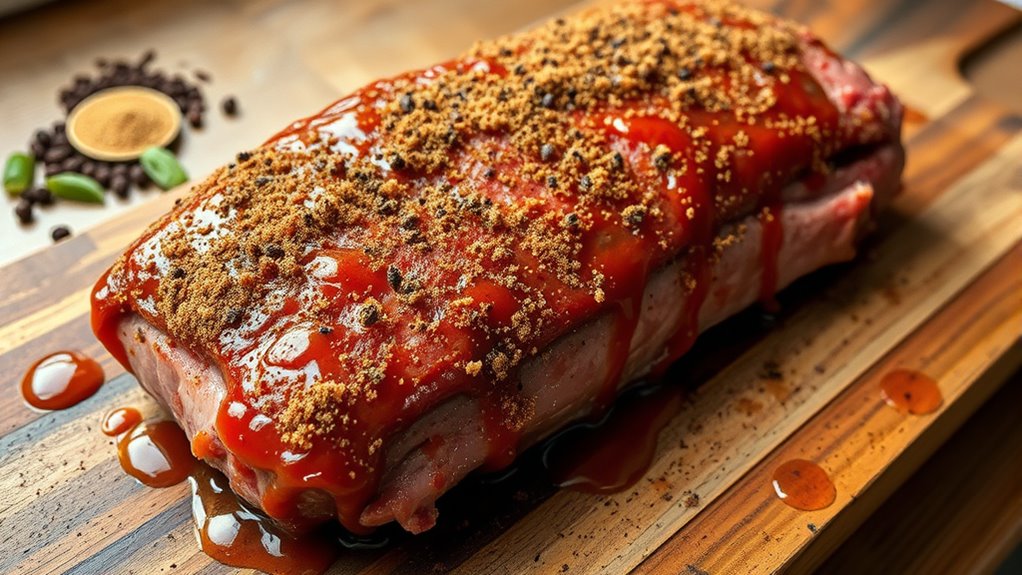
Start by choosing a marinade with salty, sweet, and savory elements—think soy sauce, garlic, brown sugar, or Worcestershire sauce. Marinate the brisket for at least 4 hours, ideally overnight, so the flavors can penetrate deeply.
Use a plastic bag or a shallow dish to ensure even coverage. When seasoning, create a dry rub with spices like paprika, cumin, pepper, and onion powder. Apply it generously all over the meat.
Let the seasoning sit on the surface for 30 minutes before cooking. This helps develop a flavorful crust. Remember, balancing marinade and seasoning is key to highlighting the meat’s natural flavor.
The goal is for each bite to be flavorful, tender, and satisfying.
How to Bring Brisket to the Right Temperature Before Cooking
Bringing your brisket to the right temperature before cooking helps ensure even doneness and tenderness. First, check how your brisket has been stored. If it’s in the fridge, let it sit at room temperature for about 30-60 minutes. This step helps the meat cook more evenly.
Next, focus on the cooking temperature. If your brisket is cold from the fridge, bring it up to around 40°F (4°C). This prevents uneven cooking.
To do this effectively:
- Take the brisket out of the fridge and let it sit uncovered for 20-30 minutes.
- Use a meat thermometer to keep an eye on the internal temperature.
- Once it hits your target temperature, adjust your oven’s settings accordingly.
This process helps you get consistent results and prevents overcooking. Proper temperature management starts with good storage and ends with precise temperature control before roasting.
Step-by-Step Guide to Oven-Roasting Brisket for Tenderness
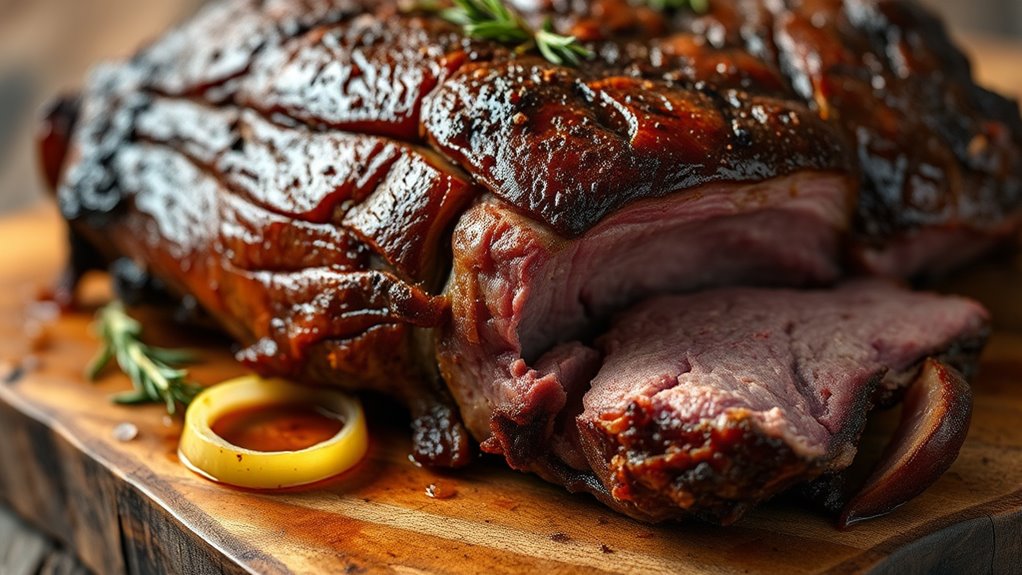
Want to end up with a tender, flavorful brisket? The first thing you want to do is pick the right cut and prep it just right. It’s important to make sure everything cooks evenly, so pay close attention to how you season and position the meat in your oven. Just follow these simple steps, and you’ll be on your way to a delicious, melt-in-your-mouth brisket!
Choosing the Right Cut
Choosing the right cut of brisket is key to getting tender, flavorful results when oven-roasting. Look for well-marbled meat, which helps keep it juicy and rich.
The flat cut is leaner and easier to slice, making it perfect for tender slices. The point cut is fattier and better suited for shredding or making stews.
When you’re selecting your brisket, think about these things:
- Marbling: More fat means more flavor and tenderness.
- Thickness: Pick a piece that’s evenly thick for consistent cooking.
- Freshness: Check for bright color and firm texture to ensure it’s fresh and safe to eat.
Using the right cut not only improves your cooking but also helps ensure food safety. This way, you’ll get a juicy, delicious brisket every time.
Preparing the Brisket Properly
Once you’ve picked out the right cut of brisket, the next step is preparing it properly so it turns out tender and flavorful. Start by trimming off any excess fat, but leave some on to keep the meat moist and add flavor during cooking. Look for a well-marbled cut for the best tenderness.
When preparing, think about your preferred cooking method—whether you want to season simply or marinate to enhance the flavor. Apply a dry rub or marinade evenly over all sides of the meat.
Let the brisket rest at room temperature for about 30 minutes before cooking. Proper preparation is key to a juicy, tender brisket, so take your time with selecting and seasoning to get the most flavor and tenderness during oven roasting.
Ensuring Even Cooking
Achieving even cooking throughout the brisket is key for tender, flavorful results. Use proper techniques that promote even heat distribution.
First, let the brisket rest at room temperature for about 30 minutes before roasting. Then, place it fat-side up in the center of the oven to ensure consistent heat exposure.
Using a meat thermometer can help monitor the internal temperature, so you avoid overcooking or undercooking. These steps help prevent dry spots and uneven tenderness.
You can also tent the brisket with foil during cooking or rotate it halfway through. These small tweaks make sure your brisket cooks evenly, giving you a juicy, flavorful meal every time.
How to Keep Your Brisket Juicy and Moist During Baking
To keep your brisket juicy and moist during baking, it’s important to carefully monitor the cooking temperature and avoid overcooking. Proper techniques are key to retaining moisture.
Start by cooking the brisket at a low temperature, around 275°F. This helps break down connective tissue without drying out the meat.
Wrapping the brisket in foil or butcher paper during cooking traps moisture, preventing it from escaping and keeping the meat tender.
Basting the brisket with its own juices or a little broth can also help improve moisture retention.
Adding some fat, like bacon or a fatty rub, helps keep the meat moist as it cooks.
How to Check If Your Brisket Is Done and Ready to Serve
After carefully monitoring your brisket’s cooking process and making sure it stays moist, the next step is to see if it’s ready to serve. You want to check the meat’s texture and internal temperature.
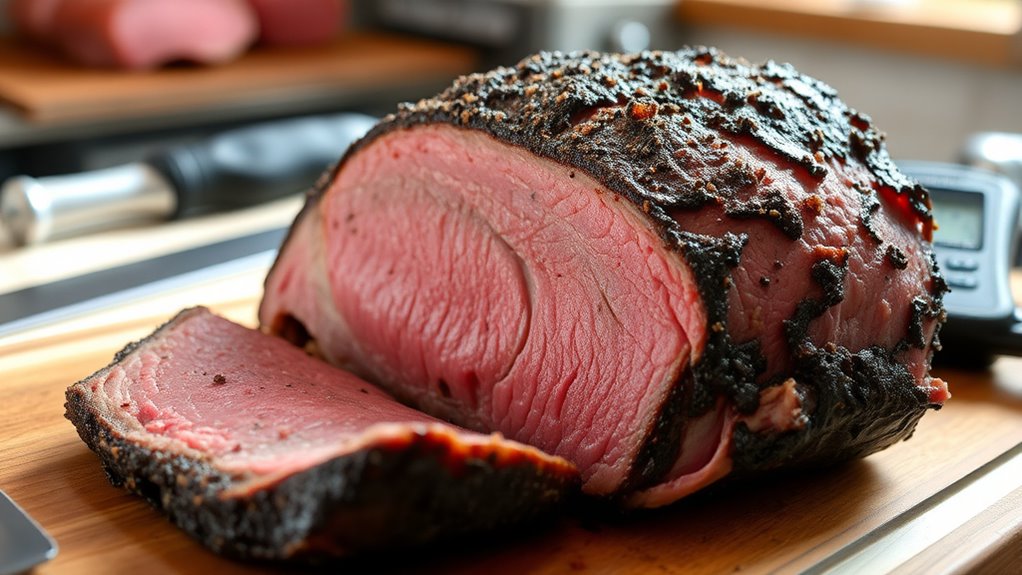
Start by using a meat thermometer to check the temperature. Brisket is done when it reaches around 195°F to 205°F. Then, insert a probe or fork into the meat—if it slides in easily and feels tender, that’s a good sign.
Finally, look at the meat’s texture. It should be soft and slightly pull apart, not tough or rubbery. If it meets these criteria, your brisket is ready to enjoy.
Resting and Slicing Your Brisket for Maximum Flavor
Once your brisket is cooked to perfection, it’s important to let it rest before slicing. Resting helps the juices redistribute, keeping the meat moist and flavorful.
Rest your brisket to lock in juices and enhance flavor before slicing.
Wrap the brisket loosely in foil and let it sit for at least 15-20 minutes. This step firms up the meat and makes carving easier, so it doesn’t fall apart.
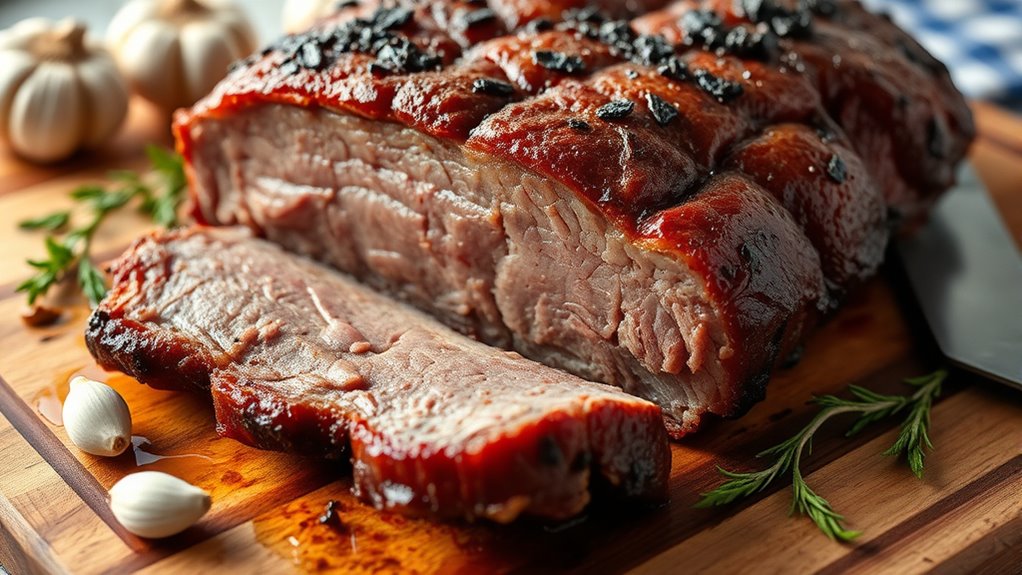
When you’re ready to carve, start by slicing against the grain to get the most tender bites. Use a sharp knife for clean, even cuts that show off the layers of the meat.
Proper resting improves both flavor and texture, making your brisket more enjoyable. Take your time during slicing to get neat, uniform pieces.
Resting and slicing correctly turn a perfectly cooked brisket into an unforgettable meal, highlighting all the flavors you developed during cooking.
Common Mistakes to Avoid When Cooking Brisket in the Oven
Even with perfect resting and slicing, mistakes during cooking can ruin your brisket. One common error is rushing the cooking time, which can make the meat tough and undercooked. Using the wrong kitchen tools, like a dull knife or an improper roasting pan, can also make slicing difficult and prevent even cooking.
Neglecting to keep an eye on the oven temperature can lead to uneven cooking or dryness.
To avoid these pitfalls:
- Follow proper cooking techniques by using a reliable meat thermometer to ensure the internal temperature reaches the right range.
- Use the right kitchen tools, like a sturdy roasting pan and sharp knives, to make the process easier.
- Keep the oven temperature steady and avoid opening the door too often, which can drop the heat and extend cooking time.
Tips for Customizing Flavor With Different Seasonings and Rubs
Experimenting with different seasonings and rubs is a great way to personalize your brisket and boost its flavor. Start with versatile blends like paprika, garlic powder, onion powder, salt, and pepper, then tweak them to suit your taste.
When applying your rub, make sure to cover the meat evenly by gently massaging it in. This helps the flavors soak in and creates a tasty crust. For a smoky, spicy kick, add chili powder, cumin, or cayenne pepper to your mix.
If you prefer a sweeter profile, include brown sugar or honey powder. Feel free to explore herbs like thyme or rosemary for extra depth. The key is balancing your seasonings and applying them evenly before cooking.
Adjust your seasoning blend to match what you love, and don’t be afraid to try new combinations. That’s how you’ll discover your perfect brisket flavor.
Frequently Asked Questions
How Long Should I Cook Brisket in the Oven?
You should cook your brisket in the oven for about 1 to 1.5 hours per pound at 275°F.
Slow cooking helps break down connective tissue, which makes the meat more tender.
Check for doneness by making sure the meat is fork-tender and pulls apart easily.
Adjust the cooking time as needed depending on the size of your brisket and how tender you want it.
What Oven Temperature Is Best for Brisket?
You should set your oven to a low temperature, around 275°F to 300°F, for ideal cooking techniques and flavor improvement.
This gentle heat allows the brisket to cook slowly, breaking down connective tissue for tenderness.
Maintaining this temperature guarantees juicy, flavorful results.
Keep in mind, slow roasting at these temperatures helps develop rich flavors, making your brisket melt-in-your-mouth delicious every time.
Can I Cook Brisket Ahead of Time and Reheat?
Yes, you can cook brisket ahead of time and reheat it. For meal prep, let the brisket cool completely, then store it in an airtight container or wrap it tightly.
Freezing tips include using heavy-duty freezer bags or vacuum-sealing for the best results. When reheating, do so gently in the oven or microwave to keep it moist and flavorful.
This way, your brisket stays tender and delicious for later enjoyment.
How Do I Prevent My Brisket From Drying Out?
To prevent your brisket from drying out, be sure to use plenty of brisket seasoning to boost flavor and help lock in moisture.
Wrap the brisket tightly in foil or butcher paper while cooking, and baste it now and then to keep it moist.
After cooking, let the meat rest so the juices can redistribute throughout. This step keeps the meat tender and juicy, giving you a flavorful dish.
What Side Dishes Pair Well With Oven-Cooked Brisket?
You should pair your oven-cooked brisket with hearty vegetable sides like roasted carrots, green beans, or a fresh salad to balance the richness.
Starchy accompaniments such as mashed potatoes, baked sweet potatoes, or cornbread complement the meat perfectly.
These options amplify the meal’s flavor and provide a satisfying contrast to the tender brisket, making your dinner both flavorful and well-rounded.
Conclusion
Now that you’ve got the steps down, your oven-cooked brisket will turn out tender and flavorful every time. Remember, patience is key—good things come to those who wait.
With careful seasoning, proper temperature, and a little practice, you’ll master this classic dish. A well-cooked brisket is worth the effort and will impress everyone at the table.
As the saying goes, “A journey of a thousand miles begins with a single step.” So start today and enjoy the delicious results of your effort.
Happy cooking! Your oven-cooked brisket awaits to be enjoyed.