Why Is CorningWare Safe to Go in the Oven?
Many people love using CorningWare for cooking and baking, but they worry about whether it’s safe to put in the oven. You’re not alone—this is a common concern for those wanting durable, reliable cookware.
The good news is, CorningWare is designed to handle oven heat safely.
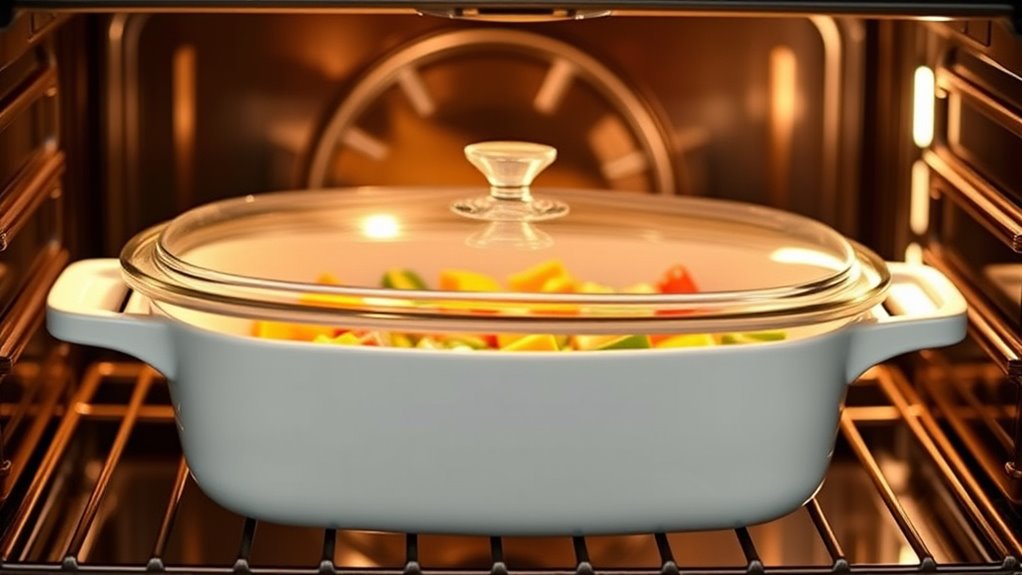
CorningWare is safe for oven use because it’s made from Pyroceram, a heat-resistant glass-ceramic that can handle high temperatures and rapid temperature changes without cracking.
Its thick, durable walls and thermal shock-resistant properties allow it to withstand oven heat safely.
Proper handling and avoiding sudden temperature shifts are key.
If you want to know how to maximize its safety and longevity, keep exploring the details below.
Key Takeaways
- Made from Pyroceram, a heat-resistant glass-ceramic that can handle high temperatures without cracking.
- Its low thermal expansion means it can safely manage rapid temperature changes.
- Designed to resist thermal shock, so it won’t get damaged during oven use.
- Built with thick, sturdy walls for even heat distribution and durability.
- Free from harmful chemicals, making it safe for contact with high oven temperatures.
What Makes CorningWare Oven-Safe?
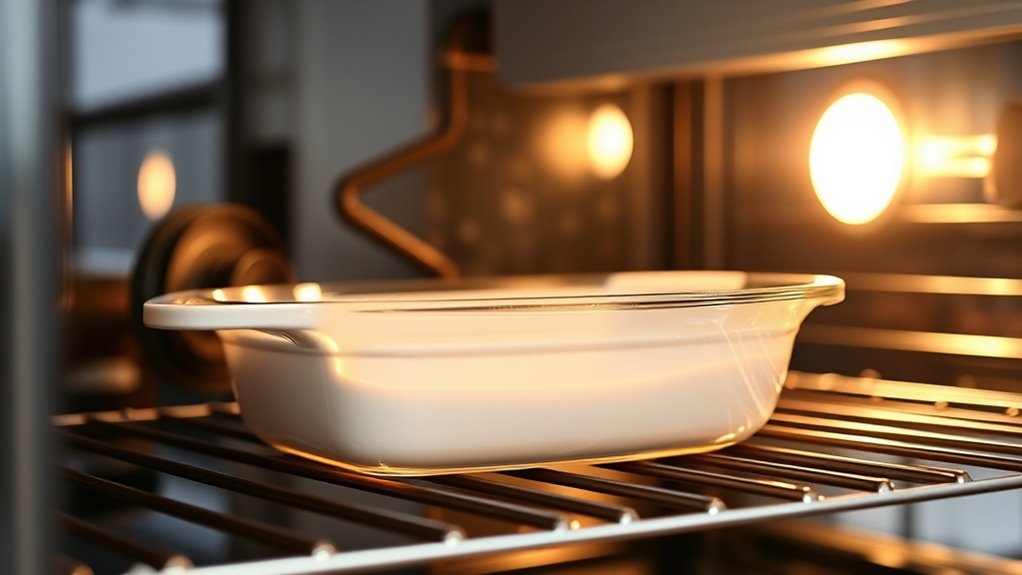
CorningWare is oven-safe because it’s made from a special type of glass-ceramic called Pyroceram, which can handle high temperatures without breaking or warping. This material is really durable, making it perfect for oven use.
CorningWare’s Pyroceram glass-ceramic withstands high heat without breaking or warping, ensuring safe, durable oven use.
When you use CorningWare, you can trust it won’t crack or shatter under heat, which helps keep your kitchen safe. It’s designed to endure sudden temperature changes, so thermal shock won’t cause problems like it does with some other dishes.
This sturdy construction makes it safe to handle and reduces the risk of accidents. Thanks to its durability, CorningWare is great for baking, roasting, and reheating. Its resistance to high temperatures and thermal stress makes it a reliable choice for home cooks.
All in all, the strength and heat resistance of CorningWare are what make it a safe, long-lasting option for your kitchen.
What Is CorningWare Made Of and Why Does It Matter?
Understanding what CorningWare is made of helps explain why it’s so safe and durable in the oven. Its main material is a special glass-ceramic called Pyroceram, known for its heat resistance and strength.
This ceramic allows CorningWare to handle high temperatures without cracking or shattering, making it perfect for baking and roasting. It can withstand thermal stress, so it won’t break during sudden temperature changes.
Unlike regular glass, Pyroceram doesn’t absorb moisture or weaken over time, which means your cookware lasts longer and performs consistently. Plus, it’s free from harmful chemicals like BPA or lead, making it safe for food contact.
Knowing what CorningWare is made of helps you feel confident about its oven use. It combines safety and durability, making it a trusted choice for your cooking and baking needs.
How Does CorningWare Handle Thermal Shocks?
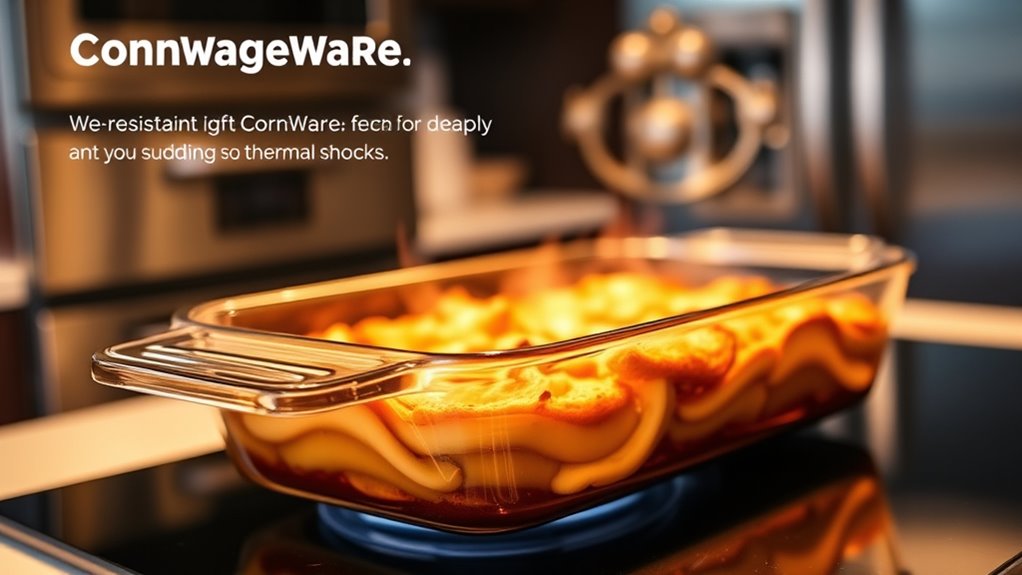
Because of its unique composition, CorningWare handles thermal shocks remarkably well. Its glass is carefully engineered to expand and contract without cracking or breaking.
When you move it from the fridge to a hot oven, the material expands and contracts, but its structure absorbs these stresses efficiently. This resilience comes from the specific blend of borosilicate glass, which has a low coefficient of thermal expansion.
Unlike regular glass, CorningWare’s composition allows it to withstand rapid temperature changes without damage. The even distribution of stress prevents cracks from forming.
You can confidently transfer your dish from cold to hot environments. Its glass structure is designed to handle these stresses, making it highly durable during thermal shocks.
This ability to resist thermal shock makes CorningWare a reliable choice for oven-to-table use and everyday cooking.
Can I Use CorningWare at High Oven Temperatures?
While CorningWare is known for its ability to handle rapid temperature changes, it’s important to consider the maximum oven temperatures it can safely withstand. Generally, CorningWare is safe at oven temperatures up to 450°F (232°C).
CorningWare is safe up to 450°F (232°C) but always check your specific piece for temperature restrictions.
Its glass durability allows it to endure high heat without cracking or breaking, making it suitable for baking and roasting. However, exceeding the recommended temperature can compromise the glass’s integrity.
Proper heat distribution is another strength of CorningWare, ensuring even cooking without hot spots. This even heat transfer minimizes the risk of thermal stress.
Still, avoid sudden temperature jumps, like moving it directly from the freezer to a hot oven. While CorningWare handles high oven temperatures well within its limits, sticking to manufacturer guidelines guarantees safety and longevity.
Always check your specific piece for any temperature restrictions before using it at high heat.
How to Use Your CorningWare Safely in the Oven
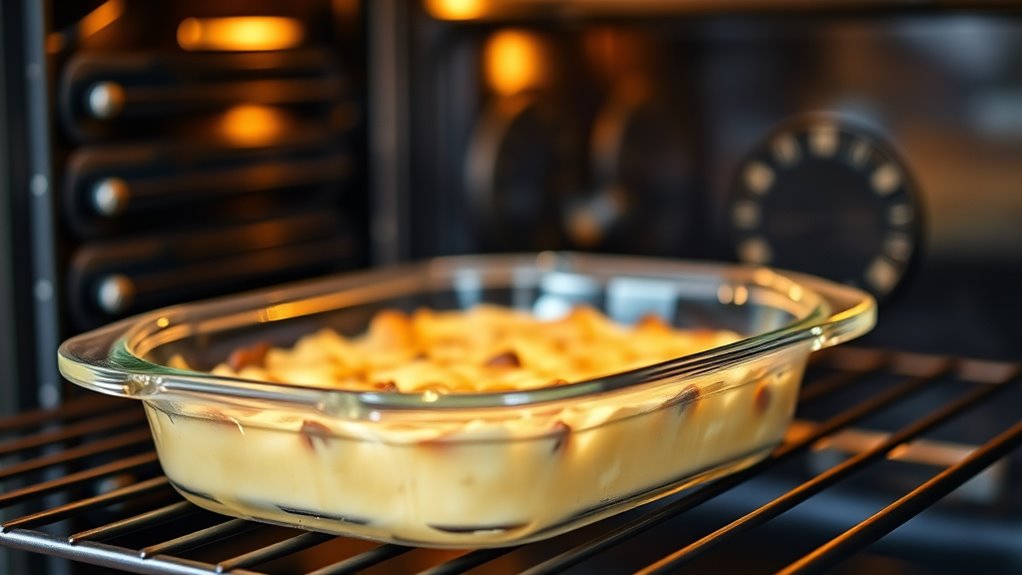
To use your CorningWare safely in the oven, just make sure you stick to the recommended temperature limits. It’s best not to go beyond those levels to avoid any risk of damage. Also, try not to expose it to sudden temperature changes — for example, don’t take it straight from the fridge and put it straight into a hot oven.
When you’re handling it, use oven-safe accessories like trivets and proper utensils. That way, you’ll prevent any accidental damage and keep everything safe and secure while you’re cooking.
Proper Temperature Settings
Ensuring you set the right temperature is key to using your CorningWare safely in the oven. Keeping the oven at recommended temperatures helps preserve both the cookware’s durability and your kitchen’s look.
Typically, CorningWare can handle oven temperatures up to 450°F, but always check the manufacturer’s guidelines. Avoid going over this limit to prevent thermal shock or damage.
Using a reliable oven thermometer helps you maintain consistent, safe temperatures. Clear temperature settings also help with even cooking and prevent warping or cracking.
Avoid Sudden Temperature Changes
Maintaining consistent temperatures is essential when using CorningWare in the oven. Sudden temperature fluctuations can cause the glass to expand or contract rapidly, increasing the risk of cracking or breaking.
To protect your cookware’s longevity, avoid transferring it directly from a hot oven to a cold surface or vice versa. Don’t add cold liquids or place cold food into hot CorningWare without allowing it to gradually adjust to the temperature.
Preheat the oven and let the dish cool slowly if you’re switching between different temperatures. These precautions help prevent stress on the glass and reduce the chance of damage.
Use Appropriate Cookware Accessories
Using the right cookware accessories is essential for safe and effective oven use with your CorningWare. Choose utensils and accessories designed specifically for oven use to keep your cookware durable and safe.
Avoid metal utensils that can scratch or damage the glass-ceramic surface. Instead, opt for silicone, wood, or heat-resistant plastic tools that won’t harm the material.
When handling hot CorningWare, always use oven mitts or pot holders. This helps prevent burns and protects the cookware’s integrity.
Additionally, avoid placing CorningWare on direct heat sources like stovetops or open flames. Doing so can compromise its safety and durability.
Using proper accessories helps preserve the strength of the glass-ceramic. This ensures your CorningWare remains safe for oven use and lasts longer.
What Are the Temperature Limits for CorningWare?
CorningWare is designed to handle a wide range of temperatures, but it’s important to stay within recommended limits to prevent damage or safety hazards. Generally, CorningWare can handle oven temperatures up to 450°F (232°C), making it versatile for baking and roasting.
Exceeding this temperature can cause the glass-ceramic material to crack or shatter, which can be dangerous and damage your cookware. To keep your cookware in good shape and ensure safety, follow these tips:
Avoid sudden temperature changes, like transferring hot ware directly onto cold surfaces. Do not use CorningWare under a broiler unless it’s specifically labeled oven-safe. Always check manufacturer guidelines for the exact temperature limits of your piece.
Staying within these limits helps maintain the integrity of your cookware, keeps your kitchen looking sleek, and ensures safe oven use. Be sure to verify your specific piece’s temperature recommendations for the best results.
How to Identify Authentic, Oven-Safe CorningWare
Want to make sure your CorningWare is truly oven-safe? It’s pretty simple—just look for authentic markings and labels on the bottom of the dish or on the packaging. These details are good clues that you’re dealing with the real deal.
You should also take a quick look at the material and how it’s built. Genuine CorningWare usually has thick, durable glass and a seamless design, which are signs of high quality. Recognizing these features can give you the confidence that your piece is oven-safe and ready for your next cooking adventure.
Authentic Markings and Labels
Authentic, oven-safe CorningWare can be easily spotted by its markings and labels. These help confirm you’re getting the real deal and keep your kitchen looking great with genuine pieces.
Look for a clear, embossed or printed brand name “CorningWare” on the bottom or side. That’s the first sign of authenticity.
You should also see the model number and “Made in USA” marking. These details show the product’s quality and origin.
Additionally, check for symbols or oven-safe icons. They indicate the piece is suitable for oven use and safe to bake with.
These markings ensure you’re buying real, oven-safe CorningWare, which is important for safety and performance.
Taking a moment to check labels not only protects your kitchen but also keeps your collection looking authentic and high-quality.
Material and Construction Features
Examining the material and construction features of CorningWare is essential to verify you’re dealing with a genuine, oven-safe piece. Authentic CorningWare usually features a durable glass-ceramic material that can handle high temperatures.
You’ll notice decorative patterns or plain surfaces, often with a smooth, glossy finish. Color options range from classic white to vibrant hues, but only certain patterns are oven-safe. Look for clear, crisp patterns that are embedded into the material, not just painted on.
| Feature | Description |
|---|---|
| Decorative patterns | Embedded, durable, and oven-safe designs |
| Color options | Limited to oven-safe, heat-resistant hues |
| Material | Glass-ceramic that resists thermal shock |
| Construction | Thick, sturdy walls indicating quality and safety |
Common Mistakes That Can Damage CorningWare in the Oven
One common mistake that can damage CorningWare in the oven is exposing it to sudden temperature changes. This can cause thermal shock, leading to cracks or breaks, which affects both safety and your kitchen’s look. To avoid this, don’t move hot CorningWare directly from the freezer to a hot oven. Let it warm gradually instead.
Avoid sudden temperature changes to prevent thermal shock and damage to your CorningWare.
Here are some other mistakes to watch out for:
Using CorningWare on direct stovetop heat is a big no-no. It goes against its material design compared to glass-ceramic and can cause damage.
Overloading the dish can put stress on the material and increase the risk of cracking.
Lastly, make sure to follow the manufacturer’s guidelines for oven use, including temperature limits. Ignoring these can also lead to damage.
How to Clean and Care for Your CorningWare for Long-Term Use
To keep your CorningWare looking its best and ensure it lasts for years, it’s important to use the right cleaning techniques and store it properly. When you’re cleaning, go for gentle methods—avoid abrasive scrubbers that can scratch the glass. Instead, use soft sponges or cloths to keep it looking shiny and new.
And don’t forget about storing! Be careful when stacking or placing your pieces, as bumps and knocks can lead to chips or cracks over time. By taking these simple steps, you’ll help your CorningWare stay in great shape for many years to come.
Proper Cleaning Techniques
Proper cleaning is essential to keep your CorningWare looking its best and guarantee it lasts for years. To maintain cooking safety and stove compatibility, follow these tips:
- Hand wash your CorningWare with warm, soapy water to avoid scratches and preserve its surface.
- Avoid abrasive scrubbers or harsh chemicals, which can damage the glass-ceramic material.
- For stubborn stains, soak the dish in baking soda and water before gently scrubbing.
Always let your dish cool completely before cleaning to prevent thermal shock. Proper cleaning prevents residue buildup that could compromise stove compatibility or cause safety issues. Regular maintenance ensures your CorningWare remains safe, durable, and beautiful for everyday use.
Safe Storage Practices
Ever wondered how to keep your CorningWare in top condition for years to come? Proper storage is key. Store your pieces in a cool, dry place and avoid sudden temperature changes that can cause cracking.
To keep them looking and safe to use, clean thoroughly after each use, especially if you’ve cooked with strong flavors or sauces. When organizing your kitchen, designate a specific spot for your CorningWare to prevent accidental chips or breakage.
For those with dietary restrictions, avoid stacking heavy items on delicate surfaces to help preserve their integrity. Use the table below to guide your storage decisions:
| Storage Tip | Explanation |
|---|---|
| Keep in a dry area | Prevents moisture buildup and damage |
| Avoid stacking heavily | Protects from chips and cracks |
| Use soft padding | Prevents scratches and chips |
| Maintain consistent temperature | Avoids thermal shock that causes cracks |
| Designate storage space | Improves kitchen organization and safety |
Final Tips for Safe and Effective Oven Baking With Corningware
Before placing your CorningWare dish in the oven, make sure it’s at room temperature to prevent thermal shock, which can cause cracking. To guarantee safe and effective baking, follow these tips:
- Use your CorningWare for more than just traditional dishes—its culinary versatility shines with modern recipes and favorites from the past.
- Avoid sudden temperature changes; don’t transfer hot CorningWare directly from the stove or fridge into the oven.
- Always check for cracks or chips before baking, as damaged pieces are more likely to break and can pose safety risks.
Frequently Asked Questions
Can Corningware Be Used on a Stovetop or Open Flame?
CorningWare isn’t designed for stovetop or open-flame use because it has durability limitations. While it’s great for baking in the oven, it’s not meant to handle direct heat sources like stoves or flames.
Applying direct heat can cause thermal shock, which might lead to cracking or breaking. To keep your CorningWare safe, stick to oven baking and avoid using it on stovetops or open flames.
Make sure to follow these safety guidelines to prevent damage and ensure your cookware lasts longer.
Is Corningware Microwave-Safe for Reheating Leftovers?
Yes, CorningWare is microwave-safe for reheating leftovers. Its durability and heat resistance allow it to handle microwave temperatures without cracking or breaking.
You can confidently reheat your food in CorningWare, knowing it’s designed to withstand the heat. Just avoid sudden temperature changes, like moving it straight from the freezer to the microwave.
This helps maintain its longevity and performance over time.
How Does Corningware Compare to Other Oven-Safe Glassware?
You’ll find CorningWare stands out because of its high temperature resistance and durable material composition. Unlike regular glassware, it’s designed to withstand oven temperatures without cracking or breaking. Its unique glass-ceramic blend offers superior heat tolerance, making it safer and more reliable for oven use.
Compared to other oven-safe glassware, CorningWare’s strength and resilience guarantee your dishes heat evenly and stay intact. This means you can cook with confidence, knowing your cookware is built to handle the heat.
Can I Put Cold Corningware Directly Into a Hot Oven?
You can put cold CorningWare directly into a hot oven thanks to its excellent thermal shock resistance. Did you know that CorningWare is designed to handle quick changes from cold to hot without cracking?
This durability means you don’t have to warm it up gradually. Just follow the manufacturer’s guidelines, avoid extreme temperature shifts, and your dish will handle the transition smoothly.
It makes cooking and baking more convenient without the worry of damaging your dish.
Are There Any Specific Brands or Types of Corningware to Avoid?
You should avoid certain brands or types of CorningWare that lack proven brand safety or have questionable material durability.
Stick to authentic, well-known brands, especially those made from tempered glass or borosilicate, which can withstand high oven temperatures.
Check labels carefully for any signs of inferior materials or non-oven-safe warnings.
Conclusion
With proper use, your CorningWare is safe and reliable in the oven, even at high temperatures. Some people worry about cracking or breaking, but if you follow the guidelines—like avoiding sudden temperature changes—you’ll enjoy stress-free baking.
Think of it as your trusted kitchen companion, designed to withstand the heat and last for years. Just handle it with care, and you’ll confidently create delicious meals without a second thought about safety.
CorningWare is safe to go in the oven because it’s made from heat-resistant glass-ceramic materials. This allows it to handle high temperatures without cracking or breaking.