What Happens When You Put a Skillet in the Oven?
Many home cooks struggle with getting even heat and preventing sticking when using their skillets. If you’re looking to improve your cooking results, understanding how to properly use your skillet in the oven can make a big difference.
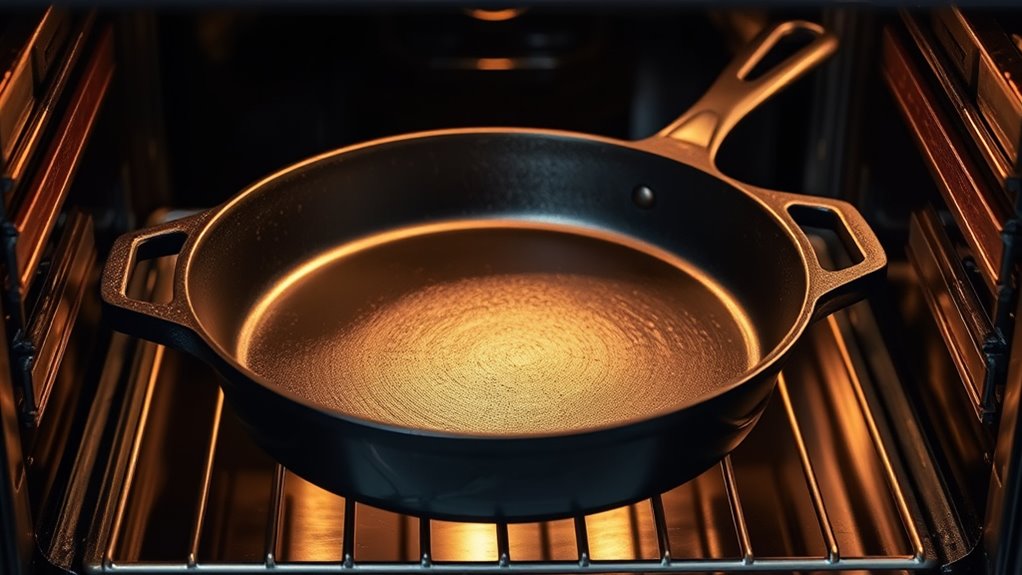
When you put a skillet in the oven, it heats up, which can deepen its seasoning, making it non-stick and more durable over time. It also promotes even heat distribution, improving cooking results.
Be sure your skillet is oven-safe—check handles, coatings, and manufacturer instructions—to avoid damage.
Different materials, like cast iron or copper, react distinctly to heat. If you want to know how to use your skillet safely and achieve the best results, keep exploring.
Key Takeaways
- The skillet heats evenly, which helps with consistent cooking and better heat distribution across the surface.
- Oven-safe skillets can handle high temperatures, making baking, roasting, or broiling much easier.
- When properly seasoned, cast iron develops a natural non-stick layer that improves cooking performance in the oven.
- Keep in mind that handles and lids can get hot, so you’ll want to use protective gear or be cautious when handling them.
- Using pans that aren’t oven-safe can cause damage, degrade coatings, or create safety hazards.
How Do Different Skillet Materials React to Oven Heat?
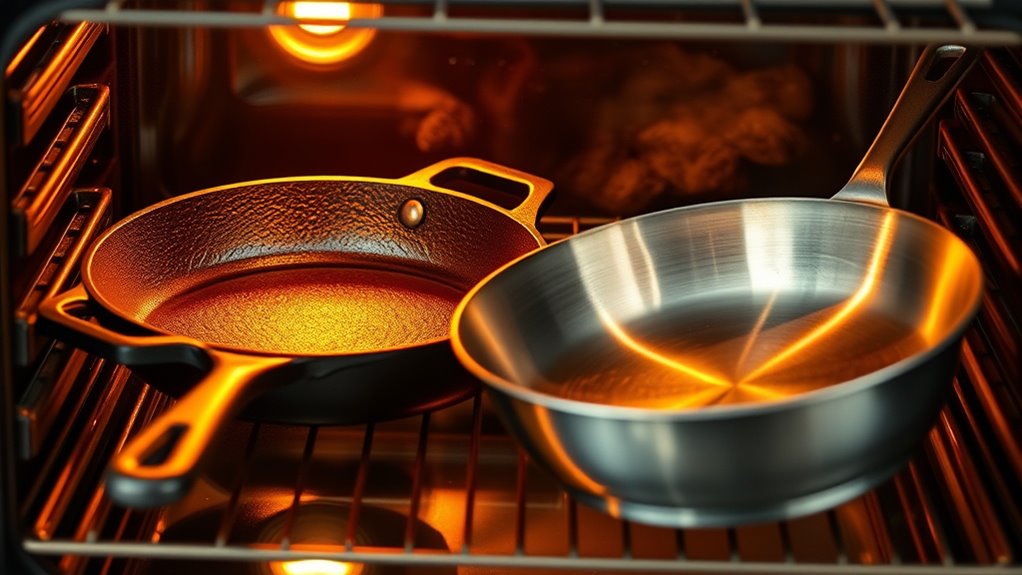
Different skillet materials respond differently to oven heat, so understanding these reactions can help you choose the right one for your cooking needs. Skillet durability varies depending on the material; some withstand high temperatures better than others.
Understanding skillet materials helps prevent damage and ensures optimal cooking performance.
For example, cast iron is incredibly durable and can handle extreme oven heat without damage. That makes it perfect for roasting or baking. Stainless steel also offers good heat resistance and durability, but it may not distribute heat as evenly as cast iron.
Non-stick and aluminum skillets tend to be less heat-resistant and can warp or degrade over time if exposed to high oven temperatures. Heat distribution plays a vital role in cooking performance. Materials like copper excel here, providing even heat across the surface.
Knowing how your skillet reacts to oven heat helps you prevent warping, cracking, or uneven cooking. This ensures your cookware lasts longer and performs well in various recipes.
Are All Skillets Oven-Safe? How to Check Your Cookware
Not all skillets are designed to withstand oven temperatures, so it’s important to check if yours is oven-safe before putting it in the oven. Look at the manufacturer’s instructions or labels on the skillet—most oven-safe cookware will clearly say so.
If you’re unsure, check the materials. Cast iron, stainless steel, and some enameled skillets usually handle oven heat well, which helps them last longer. But non-stick skillets with plastic or rubber handles generally aren’t oven-safe.
To be safe, you can do a quick heat test by gradually increasing the oven temperature. Always be cautious and prioritize safety when testing. Proper cleaning matters too; avoid harsh abrasives that could damage the skillet and reduce its oven resilience.
Knowing whether your skillet is oven-safe helps prevent accidents, keeps it in good shape longer, and ensures you get the most out of your cookware for years to come.
What Changes Happen to a Skillet When You Put It in the Oven?
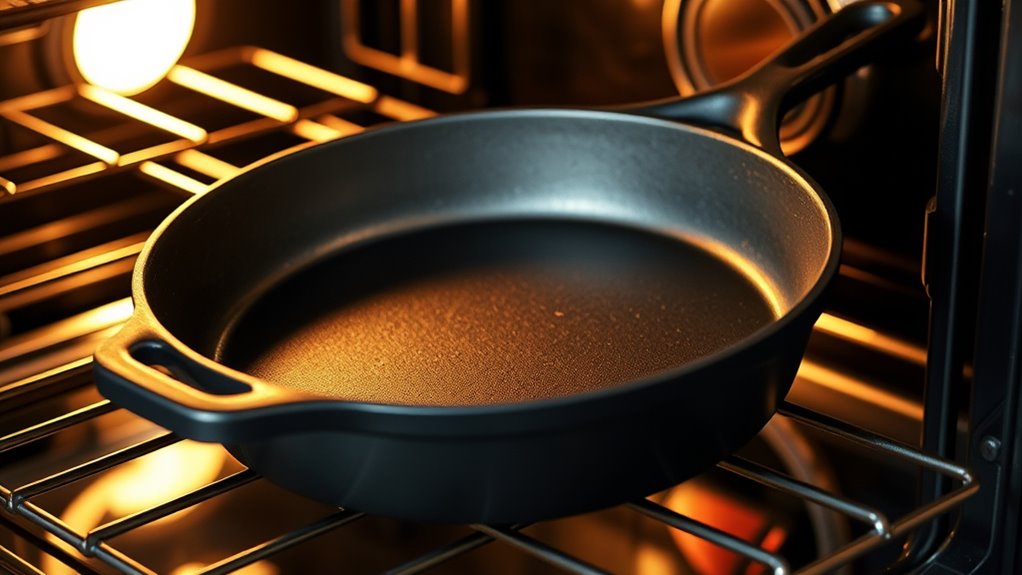
When you put a skillet in the oven, it undergoes several changes that affect its structure and performance. The heat from the oven helps improve skillet seasoning by allowing the oil layer to bond more deeply to the surface, creating a natural non-stick coating. This process boosts the skillet’s durability and cooking performance over time.
Furthermore, the even heat distribution in the oven helps the skillet heat uniformly, reducing hot spots that can cause uneven cooking. If your skillet has a handle or lid, they may also experience changes. Metal handles can become hotter, so caution is necessary.
The oven environment can also help loosen any residual rust or buildup, especially on cast iron skillets, further improving their performance. Overall, putting a skillet in the oven can strengthen its seasoning, promote better heat distribution, and prolong its lifespan. This makes it a valuable step in skillet maintenance.
How Material Type Affects Skillet Performance in the Oven
The material of your skillet really affects how it performs in the oven. Different types offer varying durability and heat conduction, which impacts your cooking results and how long the skillet lasts.
For example, cast iron is super durable and distributes heat evenly, making it perfect for oven use. Stainless steel heats up quickly but might not spread heat as evenly.
| Material | Material Durability | Heat Conductivity |
|---|---|---|
| Cast Iron | Very high | Excellent |
| Stainless Steel | Moderate | Good |
| Aluminum | Moderate to high | Superior |
Choosing the right material depends on what you need. Cast iron can handle high temps and lasts for decades, while aluminum heats up fast but may warp over time.
Knowing these differences helps you pick a skillet that performs well and stays durable in the oven.
Can Non-Stick Coatings Handle Oven Temperatures? Risks and Tips
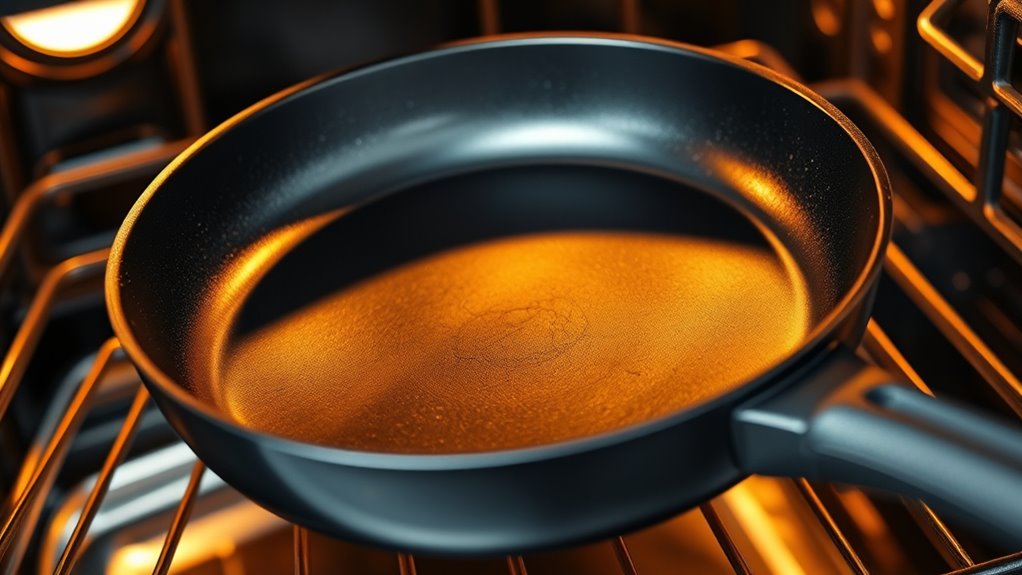
Many non-stick coatings are made to handle oven temperatures, but it’s important to check the manufacturer’s instructions before putting your skillet in the oven. Durability varies, and some coatings can take higher heat without problems.
Exposing non-stick coatings to too much heat can weaken the surface, making it less safe and less effective. Overheating might cause the coating to break down, releasing potentially harmful fumes and reducing its non-stick qualities.
To keep your coating safe, stay within the recommended temperature range—usually around 350°F to 500°F depending on the product. An oven thermometer can help you keep track of the temperature.
Avoid preheating the oven with an empty skillet, as this can cause the coating to deteriorate quickly. Properly maintaining your skillet by following temperature guidelines helps it stay durable and safe for oven use.
How to Safely Prepare Your Skillet for Oven Cooking
Preparing your skillet for oven cooking starts with a quick check to make sure it’s clean and free of any food residue or rust. A clean skillet helps with even heat transfer and prevents sticking.
Ensure your skillet is spotless and free of rust for optimal heat and non-stick performance during oven cooking.
If needed, wash it with warm water and a gentle scrub, then dry it thoroughly. Take a look at the seasoning— a well-seasoned skillet offers a natural non-stick surface and adds flavor.
If the seasoning looks dull or worn, it’s a good idea to re-season it before putting it in the oven. Also, check the handle insulation to ensure it’s intact and safe for oven temperatures.
Some handles are coated with plastic or rubber that could melt or release fumes if they aren’t oven-safe. If your skillet has a heat-resistant handle or cover, it’s good to go.
Always double-check that the handle material can tolerate high heat. Proper prep helps your skillet perform well and stay safe during oven cooking.
Proper Care and Maintenance of Oven-Safe Skillets
To keep your oven-safe skillet in top shape, regular cleaning and proper storage are essential. For cast iron skillets, rinse with warm water and avoid soap, which can strip seasoning. Dry thoroughly to prevent rust and apply a light coat of oil before storing.
Season your cast iron periodically to maintain its non-stick surface. Copper cookware requires gentle cleaning with a soft cloth and mild soap to preserve its shiny finish. Avoid abrasive scrubbers that can scratch the surface.
Store your skillets in a dry, cool place, stacking carefully to prevent damage. For cast iron, keep the skillet where it won’t get knocked over or chipped. Copper cookware benefits from tarnish-resistant polish to maintain its gleam.
Proper care extends the life of your oven-safe skillet, whether cast iron or copper, ensuring it remains reliable and beautiful for years to come.
Common Mistakes When Using Skillets in the Oven: And How to Avoid Them
Using a skillet in the oven can be super handy, but it’s easy to make mistakes that can damage your pan or mess up your dish. One common mistake is skipping the proper seasoning steps, which can cause sticking or rust to form. Make sure your skillet is well-seasoned before putting it in the oven, especially if it’s cast iron, to keep a natural non-stick surface.
Another thing to watch out for is handle safety. You need oven-safe handles because using one that isn’t designed for oven heat can cause burns or damage. Overcrowding the pan or placing it directly on a rack without a tray can also lead to uneven cooking or spills.
Finally, don’t forget to check your oven temperature or adjust cook times when using a skillet. Not doing so can result in burnt or undercooked food. To avoid these mistakes, follow seasoning instructions, make sure your handle is oven-safe, and keep an eye on your oven settings.
Is Your Skillet Suitable for Broiling or Baking? What to Know
Before putting your skillet in the oven for broiling or baking, it’s important to check if it’s suitable for high heat and direct contact with heat sources.
Cast iron skillets are great for this—they’re built to handle high temperatures without getting damaged and they distribute heat evenly. This makes them perfect for broiling or baking at high heat.
Non-stick skillets vary in how much heat they can handle. Many aren’t designed for oven use, especially at high temperatures, because the coating can break down or release fumes.
Always check your skillet’s manufacturer instructions to see if it’s oven-safe. If it’s cast iron, you’re probably good to go. For non-stick pans, look for ones labeled oven-safe and don’t exceed the recommended temperatures.
Expert Tips for Perfectly Using Skillets in the Oven
Achieving perfect results with your skillet in the oven often comes down to a few simple but essential tips. First, make sure your skillet has well-seasoned skillet seasoning, which helps prevent sticking and improves flavor. Always check if the handle insulation stays cool enough to handle safely, especially during longer baking times.
For even heat distribution, preheat your oven and give the skillet time to reach the desired temperature. Use oven mitts or handle covers to protect your hands from hot handles.
Finally, avoid drastic temperature changes that could warp your skillet. Gradually adjust the oven temperature if needed. By focusing on proper skillet seasoning, handle insulation, and careful temperature control, you’ll guarantee your skillet performs at its best in the oven every time.
These tips help you cook confidently and achieve delicious, evenly cooked results with minimal fuss.
Frequently Asked Questions
Can You Put a Cast Iron Skillet in a Convection Oven?
Yes, you can put a cast iron skillet in a convection oven. Just make sure your skillet is oven-safe and properly seasoned for cast iron maintenance.
Before placing it in the oven, check for any cracks or damage. Always prioritize oven safety by using oven mitts and avoiding sudden temperature changes.
This method helps with even heating and seasoning, making your cast iron skillet last longer and perform better.
How Do Oven Temperatures Affect Skillet Seasoning?
Oven temperatures act like a conductor guiding your skillet’s seasoning layers, either strengthening or stripping them away.
When you heat your skillet too high, it can cause the seasoning to burn or flake off. Moderate temperatures help build a resilient, non-stick surface.
Make sure to adjust the temperature carefully, especially during seasoning, to preserve those layers. This keeps your skillet performing at its best.
Is It Safe to Put a Hot Skillet Directly Into Cold Water?
You shouldn’t put a hot skillet directly into cold water because it can cause thermal shock. This sudden change in temperature might warp or crack your skillet.
Instead, let it cool gradually on the stove or a rack. This gentle cooling helps prevent rust and damage, keeping your skillet in good shape.
Always give your skillet time to cool naturally before cleaning or storing. It helps maintain its seasoning and extends its lifespan.
Can Non-Metal Skillets Be Used in the Oven?
Think of non-metal cookware as delicate dancers, graceful but needing the right stage. You can use non-metal skillets in the oven if they’re oven-compatible, meaning they’re designed for oven use.
Always check the manufacturer’s instructions. Some non-metal cookware, like silicone or ceramic, can handle high temperatures, but others might warp or damage.
When in doubt, choose oven-safe options to guarantee safety and prevent damage.
How Long Can a Skillet Stay in the Oven Safely?
You can generally keep a skillet in the oven safely for up to two hours, but it really depends on its oven safety and durability. Always check the manufacturer’s instructions to avoid any damage.
Overextending the time could cause warping or damage, especially if the skillet isn’t designed for oven use. To keep it in good shape, stick to the recommended oven times and use oven mitts when handling it to prevent burns.
Conclusion
Putting a skillet in the oven can be a game-changer if you know what you’re doing. Just remember, not all skillets are cut from the same cloth—check your cookware’s safety guidelines first.
With proper care and attention, you can avoid pitfalls and make your skillet work for baking, roasting, or broiling. Think of it as a recipe—follow the instructions, and you’ll have everything cooking perfectly without any surprises.
Knowing when and how to put a skillet in the oven can really expand your cooking options. It’s a handy trick to have up your sleeve, especially with the right skillet and proper techniques.