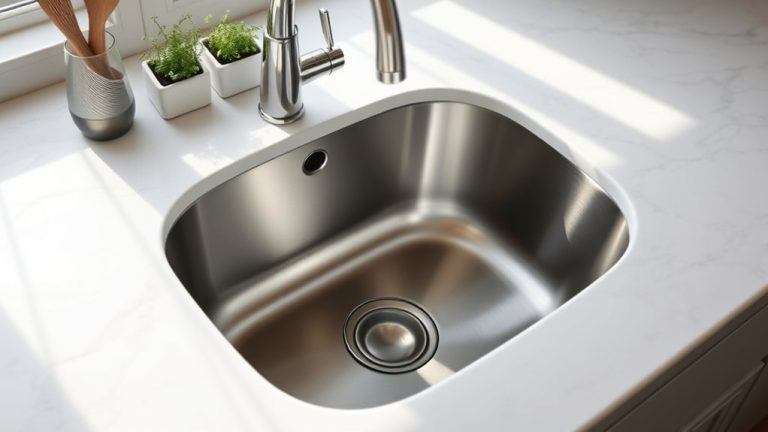
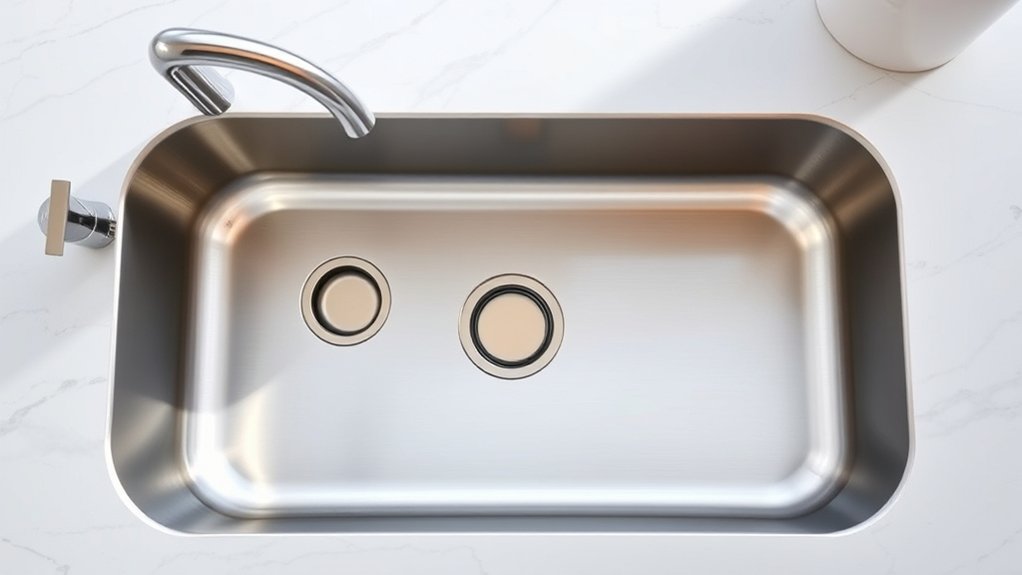
Standard Kitchen Sink Widths
Are you feeling overwhelmed trying to find the perfect kitchen sink width? You’re not alone—many people struggle with choosing the right size that fits their space and needs. Finding a sink that looks great and functions well can be tricky, especially with so many options out there.
Standard kitchen sink widths typically range from 22 to 33 inches, with 30 inches being the most popular size for average kitchens. Smaller options like 15 to 18 inches suit tight spaces, while larger prep sinks often measure 21 inches or more.
Choosing the right width depends on your kitchen size, tasks, and style preferences.
If you want to find the perfect fit, keep exploring to uncover more tips and trends.
Key Takeaways
- Standard kitchen sink widths usually range from 22 to 33 inches, fitting different kitchen sizes and layouts.
- The 30-inch sink is the most popular choice for average kitchens, offering a good balance of space and functionality.
- Smaller sinks, around 15 to 18 inches, work well in compact or minimalist kitchens.
- Larger, prep-style sinks are often 21 inches or more, making them great for handling big pots and lots of food prep.
- Custom sizes are also available but might need special installation and can cost more.
What Are Standard Kitchen Sink Widths and Why Do They Matter?
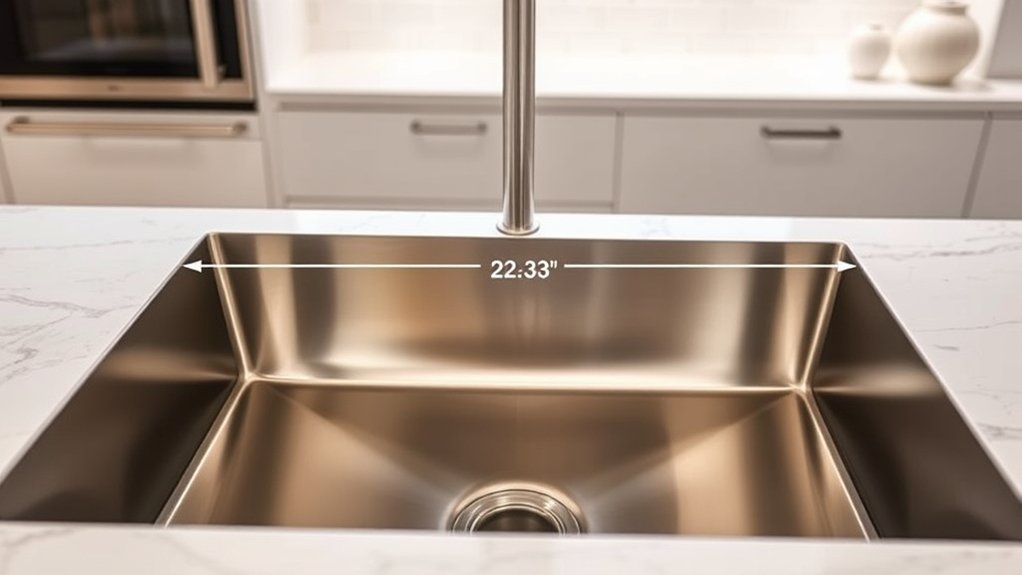
Have you ever wondered why kitchen sink sizes seem to follow certain standards? It’s because these sizes are designed to fit common kitchen layouts and guarantee seamless functionality. Standard widths typically range from 22 to 33 inches, offering options that suit various space constraints and user needs.
Knowing these sizes helps you select a sink that complements your kitchen’s design and flow. Beyond size, consider color coordination—matching your sink’s finish with your countertops or cabinetry creates a cohesive look.
Material durability also plays an essential role. Choose sturdy materials like stainless steel or composite to withstand daily wear and tear. Opting for standard widths simplifies installation and replacement, saving you time and effort.
Common Kitchen Sink Sizes and Their Uses
You’ll notice that standard kitchen sink widths come in a variety of sizes to suit different needs. Whether you’re working with a small space or need plenty of room for prep work, there’s a sink that fits perfectly. Smaller sinks are great if you’re tight on counter space, making the most of limited area. On the other hand, larger sinks are ideal when you need to wash bigger items or handle more dishes at once.
Getting the right size is all about understanding your kitchen’s layout and what you’ll be using the sink for. Picking the perfect fit not only makes your workspace more efficient but also ensures your kitchen looks and functions just the way you want it.
Standard Width Variations
What are the typical widths of kitchen sinks, and how do they suit different spaces and needs? Standard widths range from 22 to 33 inches, fitting various kitchen sizes and functions.
A 22-inch sink works well in compact or apartment kitchens, while larger options like 30 or 33 inches are great for busy households or professional kitchens.
When choosing, think about color options that match your decor—stainless steel, black, or even custom hues. Material durability is also important.
Stainless steel is resilient against dents and scratches, while composite materials resist stains and chipping. Larger widths give you more workspace and make cleaning easier.
Just make sure your cabinets and countertops can support the size you pick. Choosing the right width enhances both usability and the look of your kitchen space.
Ideal For Small Spaces
In small kitchens, space-saving sink sizes are often the best choice to maximize functionality without crowding the room. Compact sinks, typically 15 to 18 inches wide, fit well into tight spaces while still providing essential utility.
They work with various decorative styles, from sleek modern designs to vintage-inspired looks, enhancing your kitchen’s aesthetics. Material options like stainless steel, composite granite, or fireclay offer durability and style that match your decor.
Here’s a quick comparison:
| Size | Material Options | Decorative Style Compatibility |
|---|---|---|
| 15-18 inches | Stainless steel, composite | Modern, minimalist |
| 18-21 inches | Fireclay, stainless steel | Classic, traditional |
| 21+ inches | Composite, stainless steel | Versatile, contemporary |
Choosing the right size depends on your space and style preferences.
Large Sinks For Prep
Large sinks for prep are essential in busy kitchens where space for chopping, rinsing, and stacking ingredients is crucial. They give you plenty of room to handle prep work efficiently, making your cooking smoother.
When choosing a large sink, think about how it fits with your kitchen decor. Stainless steel offers a sleek look, while composite materials add warmth. These sinks often serve as a central plumbing fixture, so make sure your plumbing fixtures match the size and depth.
A bigger sink can fit larger pots and trays, which helps reduce clutter and streamlines your workflow. Whether you’re cooking daily or hosting gatherings, a spacious prep sink boosts both function and style.
It’s a practical upgrade that combines utility with the aesthetic appeal of your kitchen.
How to Choose the Right Sink Width for Your Kitchen Size
Choosing the right sink width depends on your kitchen’s size and your daily needs.
If you have a compact kitchen, go for narrower sinks that save space without losing functionality.
Larger kitchens can handle wider sinks, giving you more room for washing and prep work.
Think about the design style of your kitchen—whether it’s modern or traditional—and pick a sink that matches.
Material durability matters too. Stainless steel and composite materials resist damage and last longer.
Measure your counter space carefully before choosing a width. A sink that’s too wide can make the space feel cramped.
On the other hand, a sink that’s too narrow might limit how much you can do.
Consider how often you do dishes or prep food, as these habits influence the best width for you.
Find a good balance between practicality and style so your sink fits seamlessly into your kitchen layout.
Make sure it doesn’t overwhelm the space or underperform during busy times.
Should You Opt for a Narrow or Wide Kitchen Sink?
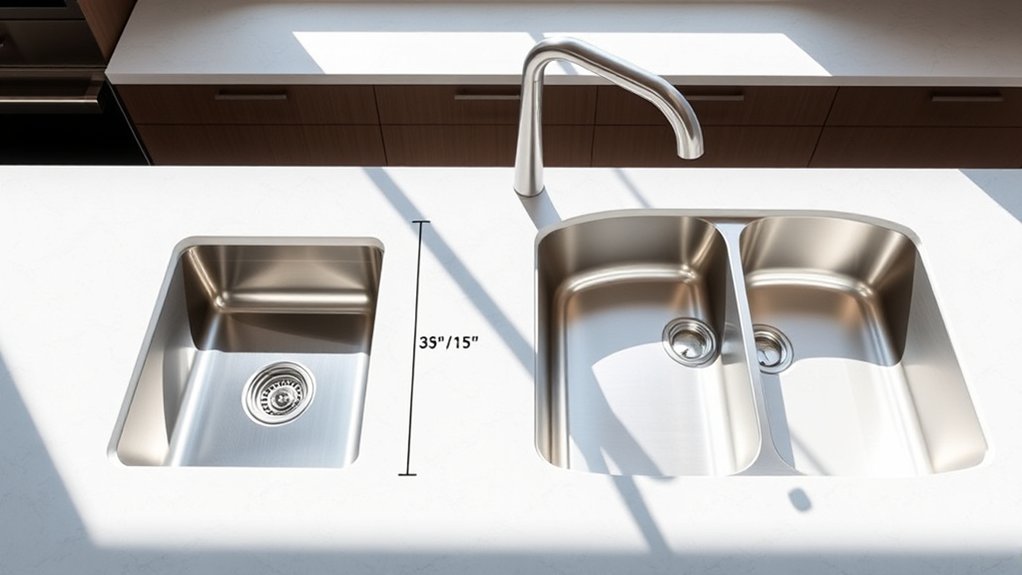
Deciding between a narrow or wide kitchen sink depends on how you use your space and your daily routines. A wider sink gives you more room for washing big pots, pans, and bulky items, which is perfect if you handle large loads often.
On the other hand, a narrow sink works better in smaller kitchens or if you mostly rinse veggies and wash smaller dishes. When choosing, consider color options too. Bright white sinks can make a small space feel livelier, while darker finishes add contrast and hide stains more easily.
Material durability is also important. Stainless steel resists corrosion and impacts, making it a popular choice. Composite materials tend to be more scratch and chip resistant. Think about your cooking habits and cleaning needs to pick the right width.
A wider sink might feel more practical but can take up more space. A narrow sink saves room but might limit what you can wash at once. Choose based on your daily routines and how much space you want to dedicate to your sink.
Measuring Your Kitchen to Find the Perfect Sink Width
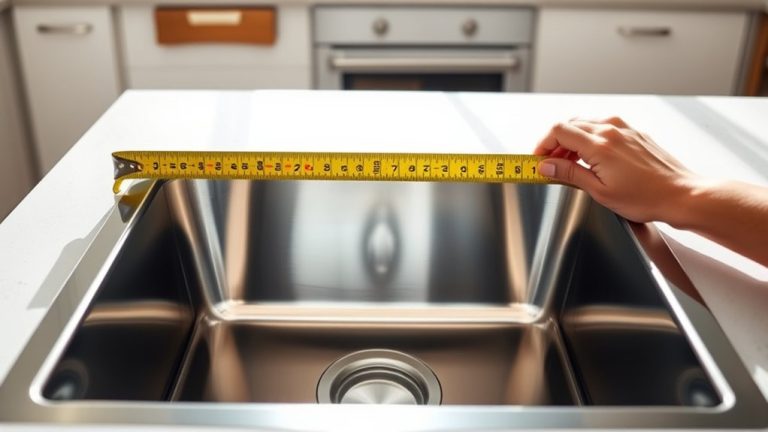
When you’re figuring out the right sink size, first grab a tape measure and check out how much space you have on your countertop. You want to make sure the sink fits nicely without making the area feel cramped.
Then, think about where you want to position the sink and how it will affect your daily routine. Placing it in the right spot can make your kitchen chores a lot easier and more efficient.
Finally, consider how much you use your sink each day. Picking a width that’s just right will give you enough room for your needs without taking up too much space. It’s all about finding that sweet spot between practicality and comfort.
Measure Countertop Space
Before selecting a sink, you need to measure your countertop space accurately. Start by determining the available width and depth, making sure there’s enough room for the sink without overcrowding.
Consider the countertop’s durability—strong materials can support larger or heavier sinks, while fragile surfaces may limit size options. Measure from wall to wall and note any obstructions like cabinetry or appliances that could affect the fit.
Keep in mind the water flow rate needed; a larger sink might require more plumbing capacity. Accurate measurements help you avoid choosing a sink that’s too big or too small, ensuring proper functionality and good looks.
Taking these steps guarantees your sink fits perfectly while keeping your countertop in good shape.
Determine Sink Placement
Once you’ve measured your countertop space, the next step is to figure out the best spot for your sink. Think about how easy it will be to access, how it fits into your workflow, and how close it is to other appliances.
Consider the look you’re going for too. Sinks come in different colors that can match your decor. Also, choose a material that’s durable, like stainless steel, fireclay, or granite composite, to ensure it lasts.
Use this table to help guide your placement:
| Aspect | Considerations | Tips |
|---|---|---|
| Location | Near dishwasher or prep areas | Maximize efficiency |
| Centering or Off-center | Symmetry or offset for design or space needs | Balance aesthetics and function |
| Clearance | Enough space for cleaning and movement | Avoid cramped areas |
This approach will help your sink fit perfectly, both in function and style.
Consider Usage Requirements
Knowing your kitchen’s usage needs is key to choosing the right sink width. To do this well, think about how you use your sink every day. Here are some important factors to keep in mind:
- Meal Prep & Cleanup: If you often wash large pots or multiple dishes, a wider sink gives you more space and helps keep things tidy.
- Design Aesthetics: Pick a sink width that matches your kitchen’s style. Wider sinks make a bold statement, while narrower ones blend in more smoothly.
- Material Durability: Choose a sink that can handle your daily tasks, whether that’s heavy-duty stainless steel or tough composite materials. Thinking about your needs ensures your sink looks good and performs well for years to come.
Can You Customize Non-Standard Sink Widths?
While standard sink widths are usually fixed, customizing non-standard sizes is often doable if you work with an experienced manufacturer or installer. You’ll find a range of material options like stainless steel, composite, or fireclay, which can affect the customization process.
Keep in mind that changing the width may create installation challenges, especially if your existing cabinetry or countertops aren’t designed for non-standard sizes. Custom sinks need precise measurements and tailored fabrication, which can increase costs and extend lead times.
You might also need to modify your countertop cutout or cabinetry to fit the new size. It’s important to discuss your specific needs with a professional who understands both the materials and potential installation hurdles.
With the right expertise, customizing a non-standard sink width can add a personal touch to your kitchen while ensuring a proper fit and reliable function.
How Sink Widths Impact Installation and Countertop Fit
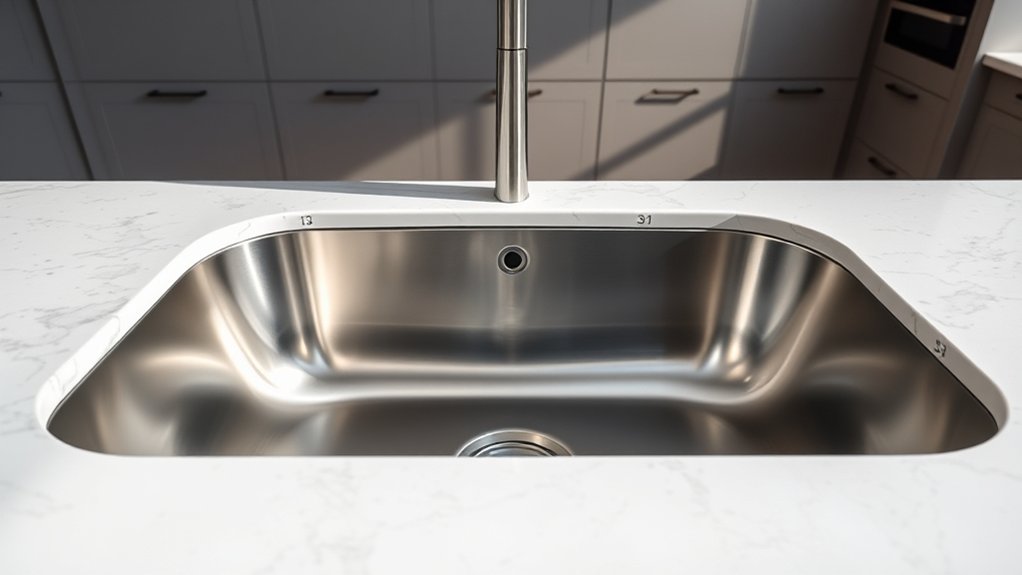
The width of your sink directly affects how smoothly your installation goes and how well it fits within your countertop. Larger or non-standard widths can cause installation challenges, especially if your countertop opening isn’t compatible.
Material durability also plays a role, as thicker, more robust materials like granite or stainless steel may need precise cuts and adjustments to avoid issues during installation.
Here are three key points to keep in mind:
- Fit and Compatibility: Narrower sinks are easier to install and align with standard countertop openings, making the process simpler.
- Material Durability: Heavier materials require accurate measurements to prevent cracks or misfits during installation.
- Countertop Adjustments: Unusual sink widths might need custom cuts, which can increase complexity and the chance of improper fitting if measurements aren’t exact.
Choosing the right sink width helps make your installation straightforward, reduces material issues, and ensures a secure, professional fit within your countertop.
Matching Your Sink Width With Your Kitchen Style
Choosing a sink width that complements your kitchen style improves both functionality and aesthetic appeal. For modern kitchens, sleek designs with minimalist decorative finishes work best, emphasizing clean lines and a streamlined look.
Traditional or rustic styles benefit from wider sinks with ornate details and warm finishes, creating a cozy atmosphere. Material durability is key. Stainless steel offers longevity and resistance to scratches, while composite materials provide a warm, decorative finish that withstands daily use.
| Kitchen Style | Recommended Sink Width | Decorative Finishes |
|---|---|---|
| Modern | 22-33 inches | Matte or brushed metal |
| Traditional | 33-36 inches | Polished or antique finishes |
| Rustic | 36+ inches | Earth tones, textured surfaces |
| Minimalist | 22-30 inches | Sleek, simple designs |
| Eclectic | Any width, based on design | Varied, bold finishes |
Match your sink width with your style for a functional, visually appealing kitchen.
Pros and Cons of Narrow vs. Wide Kitchen Sinks
Narrow sinks are great if you’re working with a smaller kitchen because they save space and fit nicely into tighter spots. But keep in mind, they might not be ideal if you usually wash large pots or lots of dishes at once—they can be a bit limiting in that sense.
On the other hand, wide sinks give you plenty of room for big pots and multiple tasks at the same time. The only catch is, they tend to take up more counter space and can be a bit more tricky to clean around. Think about how you use your kitchen every day and what kind of maintenance you’re comfortable with—this will help you figure out which size is the best fit for you.
Space Efficiency Benefits
While narrow kitchen sinks save valuable counter space, they can also limit your workspace and make washing larger items more cumbersome. To get the most out of your space, consider these benefits:
1. Compact Design
Fits into smaller kitchens, leaving more room for countertops and appliances. Plus, there are many color options to match your decor.
2. Material Durability
Narrow sinks are often made from sturdy materials like stainless steel or composite, so they last even with limited space.
3. Enhanced Organization
Smaller sinks encourage better organization, helping reduce clutter and making your daily tasks quicker.
While narrow sinks make your space more efficient, they might make it harder to handle big pots and pans comfortably. Weigh these benefits against your cooking habits and kitchen layout.
Cleaning and Maintenance Ease
When it comes to cleaning and maintaining your kitchen sink, the size can really affect how easy or difficult the task is. Narrow sinks are generally easier to clean because they fit into tight spaces and don’t require much scrubbing.
Wide sinks, on the other hand, have more surface area, which can make some spots harder to reach. Decorative finishes like matte or polished surfaces may show water spots or stains more easily on larger sinks.
Water-saving features, such as aerators, are simpler to clean in narrow models. The table below highlights the key differences:
| Feature | Narrow Sink | Wide Sink |
|---|---|---|
| Cleaning Ease | Easier to wipe and scrub | More surface to clean |
| Maintenance | Less effort needed | More prone to buildup |
| Decorative Finishes | Show water spots less visibly | Require frequent wiping |
Versatility in Usage
Choosing between narrow and wide kitchen sinks really depends on how you plan to use them. A wider sink gives you more versatility, making it easier to handle large pots and multiple dishes at once.
Consider these points:
- Color options: Wide sinks often come in a bigger variety of colors, so you can easily match your kitchen decor.
- Material durability: Both types can be durable, but wider sinks usually use thicker materials to support heavier loads.
- Cleaning convenience: Narrow sinks are simpler to clean and maintain, while wide sinks might take a bit more effort but offer more flexibility for different tasks.
Your choice ultimately depends on your daily routines and style preferences, balancing practicality with how your kitchen looks.
What’s Next for Kitchen Sink Sizes? Future Trends to Watch
As homeowners and designers focus on both functionality and looks, kitchen sink sizes are set to change in some exciting ways. Future trends include smart technology for better water control and touchless operation, making tasks easier and reducing waste.
Eco-friendly materials will also be a big part of the future. Sustainable composites and recycled metals are gaining popularity because they’re durable and better for the environment.
Here’s how these trends could influence your sink choices:
| Trend | Impact | Example Features |
|---|---|---|
| Smart Technology | More automation, efficiency, water savings | Touchless controls, sensors |
| Eco-Friendly Materials | Sustainability and durability | Recycled stainless steel, composites |
| Custom Sizes | Fits your needs perfectly | Modular, adaptable designs |
Sinks will become smarter, greener, and more customizable, fitting today’s lifestyle and eco-conscious mindset.
Frequently Asked Questions
Are There Any Industry Standards for Non-Traditional Sink Widths?
Yes, there are no strict industry standards for non-traditional sink widths, giving you flexibility. When choosing alternative installation methods, think about how wider or narrower sinks will affect space and plumbing.
Aesthetic design considerations also come into play; a unique width can add modern charm or rustic appeal. You can customize widths to fit your kitchen’s layout and style, ensuring both functionality and visual harmony without being bound by standard measurements.
How Do Sink Widths Affect Plumbing and Drainage Installation?
You should know that wider sinks often require more pipe clearance, making installation trickier. A 2022 survey found that 65% of plumbers report difficulty with non-standard widths.
Your sink’s width impacts plumbing and drainage because it influences mounting compatibility and the space needed for proper pipe alignment. If the sink is too wide or narrow, you might struggle to connect plumbing fixtures securely and guarantee efficient drainage.
Can Custom Sink Widths Be More Cost-Effective Than Standard Sizes?
Custom sink widths can be more cost-effective if you prioritize design flexibility and specific space needs. While standard sizes often come with bulk discounts, custom options let you optimize your kitchen layout without unnecessary expenses.
You avoid overpaying for a larger standard sink that doesn’t fit, and you can choose materials and features tailored to your needs. This can potentially save you money in the long run.
What Are the Best Materials for Narrow Versus Wide Sinks?
When choosing materials, think of it as hitting two birds with one stone. For narrow sinks, stainless steel is a great choice because it’s durable and has a sleek look, perfect for limited space.
Wide sinks do well with composite granite or fireclay. These materials combine durability with a stylish appearance, adding elegance and resilience to your sink.
Both options resist stains and scratches, helping your sink stay beautiful longer. Ultimately, pick materials that balance durability and style for your specific sink size.
How Does Sink Width Influence Overall Kitchen Ergonomics and Workflow?
A wider sink enhances ergonomic design by giving you plenty of space for washing and prepping, which reduces strain and makes tasks easier. It also helps with spatial efficiency, so you can move comfortably without feeling cramped.
On the other hand, narrower sinks save space but might limit what you can do comfortably. Picking the right width depends on your kitchen size and how you like to work in your space.
Ultimately, you want a sink that supports smooth, efficient movement and minimizes awkward reaches, making your kitchen both functional and comfortable.
Conclusion
Choosing the right kitchen sink width isn’t just about fitting the space. It’s also about improving your entire kitchen experience.
Understanding standard sizes and how they match your needs can help you make smarter choices.
Are you ready to pick a sink that perfectly complements your kitchen’s style and functionality?
Remember, the right sink can really make a difference in your daily routine.
So, why settle for less when your ideal kitchen setup, including the perfect sink width, is within reach?