What Size Kitchen Sink Fits in a 33-Inch Corner Cabinet?
Thinking about upgrading your kitchen sink but feeling overwhelmed by the options? You’re not alone—many people struggle with finding the right fit for their corner cabinets. It can be tricky to balance style, size, and functionality without the right guidance.
A 33-inch corner cabinet typically fits sinks measuring between 24 to 30 inches wide. You’ll want to accurately measure the interior dimensions, including width, depth, and height, to guarantee a proper fit.
Double-check clearance for appliances and accessories. The most common options are single or double-basin sinks, depending on your needs.
To find the perfect size and style for your space, investigate more tips on measuring and selecting the right sink for your corner cabinet.
Key Takeaways
- A kitchen sink measuring 24 to 30 inches wide usually fits well within a 33-inch corner cabinet.
- Be sure to measure the interior width, depth, and height carefully, including curves and corners, for an accurate fit.
- Pick a sink with a maximum width of 30 inches to leave enough space for clearance and proper installation.
- Think about space for accessories like disposals and dishwashers when choosing the right sink size.
- Consider undermount or slim-profile sinks to make the most of available space and ensure a seamless fit.
What Are the Standard Sizes for Kitchen Sinks in 33-Inch Corner Cabinets?
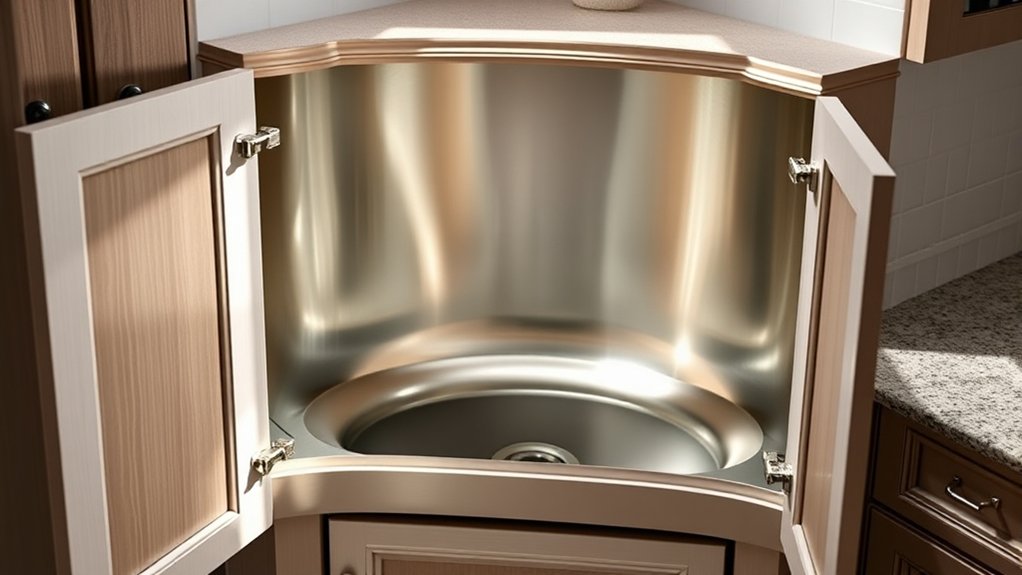
When choosing a kitchen sink for a 33-inch corner cabinet, it’s important to know the standard sizes available. Most sinks made for this space measure between 24 to 30 inches wide, with depths usually from 18 to 22 inches.
For a 33-inch corner cabinet, choose a sink between 24 to 30 inches wide for optimal fit and function.
You’ll find single-basin models that help maximize space and double-basin options for multitasking. Just keep in mind that the size you pick should leave enough room for appliances like dishwashers or garbage disposals.
Picking the right size also depends on your workflow and how easy it is to clean. The goal is to reduce clutter and make daily tasks smoother. When shopping, measure your cabinet carefully and check the specifications.
If you’re unsure about what fits, don’t hesitate to ask professionals or look at manufacturer guidelines. Choosing a properly sized sink improves your kitchen’s functionality and keeps things organized.
Proper sizing is essential for seamless kitchen operation and maintaining your appliances.
How Do You Measure Your 33-Inch Corner Cabinet for a Sink?
To measure your 33-inch corner cabinet for a sink, you’ll want to start by taking a good look at the interior dimensions. That means measuring the width, depth, and height inside the cabinet. Don’t forget to include any curves or corners because they can change how much space you actually have to work with.
It’s really important to be as precise as possible with these measurements. When you get accurate numbers, you’ll know for sure that your new sink will fit perfectly without any surprises. So, take your time, double-check your measurements, and you’ll be all set!
Measure Cabinet Interior Dimensions
Before choosing a sink for your 33-inch corner cabinet, you need to accurately measure its interior dimensions. Start by measuring the width, depth, and height with a tape measure.
Be sure to measure from wall to wall for width, from the back to the front for depth, and from the bottom to the top for height. Record these measurements carefully.
This guarantees your new sink fits without disrupting your kitchen decor or appliance placement. Keep in mind that corner cabinets often have irregular shapes, so measure at multiple points to find the smallest dimensions.
Accurate measurements help you select a sink that maximizes space and functionality while maintaining a balanced, stylish look in your kitchen.
Account for Corners and Curves
Since corner and curved sections can make measurements tricky, it’s important to be extra careful when measuring your 33-inch corner cabinet. These areas can hide irregularities that might affect how your sink fits, especially with different countertop materials.
Make sure to measure the widest points around curves and corners, not just the straight edges. This way, you’ll avoid surprises during installation. When choosing your sink, check its compatibility with your faucet and how its shape interacts with the cabinet’s curves.
Paying attention to these details helps prevent gaps or misfits. Feel confident your sink will fit seamlessly, turning your space into a functional and beautiful area.
Avoid costly mistakes that could delay your kitchen upgrade. Enjoy peace of mind with precise measurements made for your unique cabinet.
Finally, creating a cohesive look will make your kitchen feel more polished and personalized.
Which Sink Configurations Work Best in a 33-Inch Corner Cabinet?
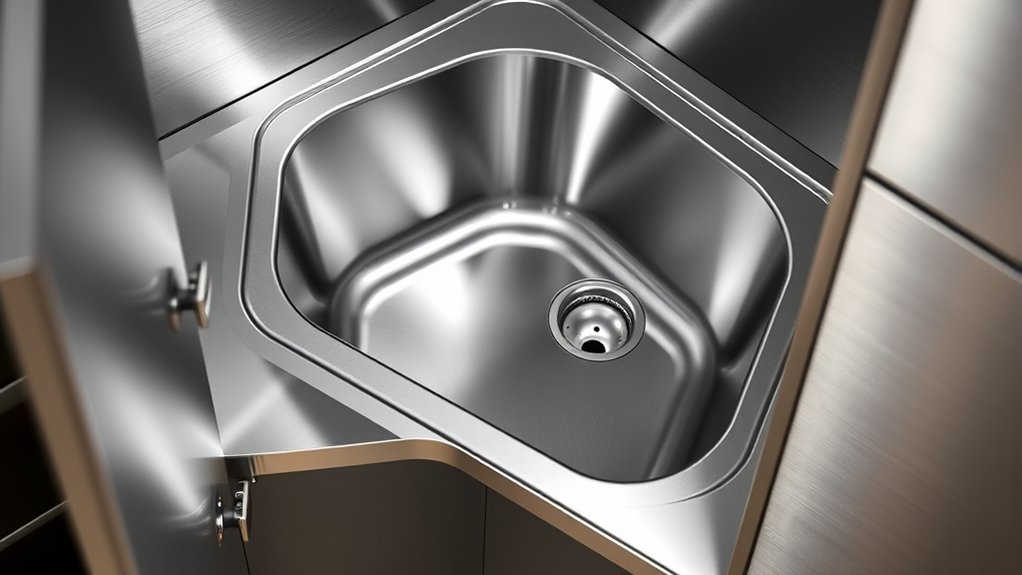
When you’re working with a 33-inch corner cabinet, picking the right sink shape can really make a difference. It’s all about making the most of that limited space while keeping things functional.
You’ll want to think about whether a double or single compartment sink fits your cooking and cleaning routines best. Double sinks are great if you often wash dishes and prep food at the same time, while single sinks can be more spacious and easier to clean.
Considering the best configurations for your setup will help you maximize every inch of your corner cabinet and make your kitchen more efficient.
Optimal Corner Sink Shapes
When selecting a corner sink for a 33-inch cabinet, the shape you pick can really impact how your space functions and looks. The right shape can boost your kitchen’s style and match your appliances, making everything feel cohesive.
Consider these top corner sink shapes:
- Corner Apron-Front Sinks offer a charming, rustic vibe that adds warmth to your kitchen.
- L-Shaped Sinks help maximize corner space while keeping access easy.
- Radius or Curved Corners give a softer, more elegant look that suits modern decor.
- Deep, Single-Basin Sinks are practical, making it simple to handle large pots and pans.
Choosing the right shape makes your kitchen both stylish and efficient. The best setup balances looks and function, giving your space a fresh, inviting feel.
Double vs. Single Compartments
In a 33-inch corner cabinet, choosing between a double or single compartment sink really depends on how you use your kitchen and the space you have.
A double compartment sink gives you more flexibility with appliances, letting you do multiple things at once—like washing dishes in one side and rinsing in the other. It also creates a seamless look on your countertop and offers more workspace.
On the other hand, a single compartment sink maximizes open space, making it easier to fit into tight corners and simplifying installation.
If you handle large pots or tend to multitask a lot, a double basin is probably your best bet.
For smaller households or if your countertops are limited, a single basin reduces clutter and still keeps things functional.
In the end, think about your daily routines and the space you have to choose the best sink for your corner cabinet.
Installing in Limited Space
Maximizing space in a 33-inch corner cabinet means choosing a sink that fits smoothly without crowding your workspace. Compact, corner-sink designs work well because they give you access without taking up too much counter space.
Pick a sink with decorative fixtures to add personality, making even small setups look stylish. Consider color schemes that brighten or unify your kitchen, helping it feel more open and inviting.
To evoke emotion and stay practical, look for sleek, space-saving corner sinks that make the most of every inch. Fixtures that match your style can add charm and personality, too.
Bright, neutral colors can make your kitchen appear larger and less cluttered. And innovative designs that blend functionality with visual appeal will help you create a space that’s both beautiful and practical, even in limited space.
What Are the Top Material Options for Corner Kitchen Sinks?
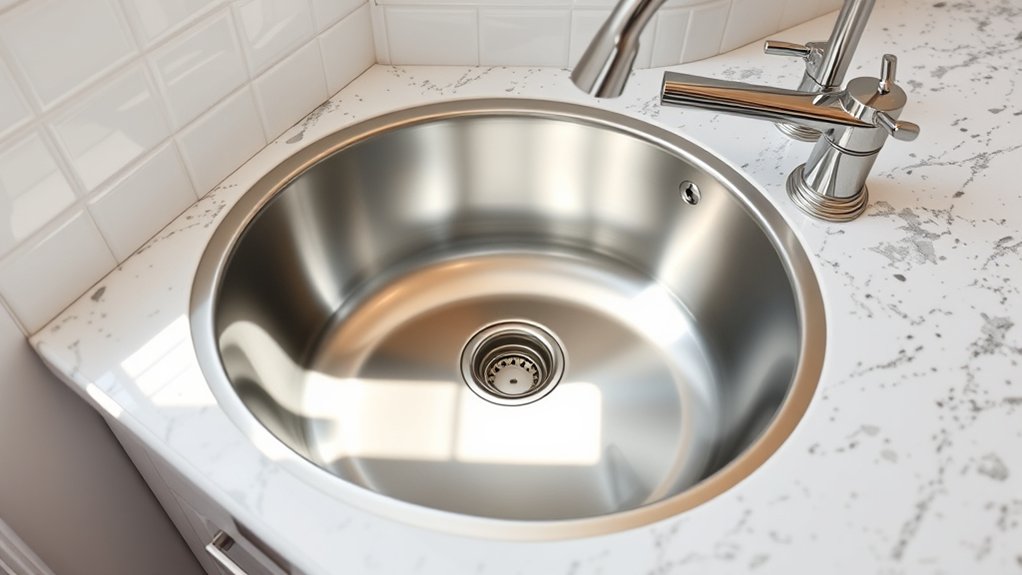
Choosing the right material for your corner kitchen sink can really impact how durable it is and how it looks. Popular options include stainless steel, which is strong, sleek, and easy to maintain. It works well with various appliances and comes in different finishes, from shiny to brushed, fitting many kitchen styles.
Fireclay sinks are another great choice. They’re durable, have a classic glossy look, and resist stains and scratches. They’re a bit heavier but add a timeless charm to your kitchen.
Composite granite sinks are known for their resilience and come in many colors. This makes it easy to match them with your cabinets and countertops.
Finally, cast iron sinks coated with enamel are very durable and have a smooth surface. They come in a variety of shades and can blend nicely with your kitchen decor.
When choosing your material, think about your overall kitchen style, how often you’ll use the sink, and how well the material matches your appliances and color scheme.
Should You Choose a Double or Single Bowl Sink? Key Factors to Consider
Thinking about whether to go with a double or single bowl sink? Well, first things first, take a look at how much space you have in your kitchen. You want to make sure whatever you choose fits nicely in your corner cabinet without feeling cramped.
Next, consider your daily routines. Do you often find yourself washing big pots and pans? Or do you prefer keeping veggies and dishes separate? That can really help you decide which setup makes your life easier.
And don’t forget about cleaning. Some find single bowl sinks easier to scrub down, while others like the flexibility of a double bowl for organizing their chores. Ultimately, it’s all about what works best for your kitchen habits and space.
Space Requirements and Fit
Deciding between a single or double bowl sink for your 33-inch corner cabinet depends mainly on the space available and how you plan to use it. Think about what appliances will work with your setup and how durable your countertop needs to be for long-term use.
A double bowl gives you more flexibility but takes up more room, which could limit space for other appliances or storage. A single bowl maximizes countertop space and makes installation simpler, though it might sacrifice some convenience.
Keep in mind that larger sinks can put extra strain on countertops if they aren’t designed for durability. Measure carefully to make sure the sink fits comfortably without crowding.
Choosing the right size impacts your kitchen’s efficiency and overall look. It’s all about balancing your needs with the dimensions of your cabinet.
- Feel confident in your space planning
- Avoid costly mishaps or modifications
- Maximize functionality and style
- Create a durable, long-lasting kitchen
Usage and Convenience Preferences
Your daily kitchen routines can really influence whether a single or double bowl sink is better for your corner cabinet. If you often handle large pots or juggle multiple tasks, a double bowl provides more flexibility.
On the other hand, if you prefer simpler cleanup, a single bowl might be more convenient. Think about where your appliances go too; double bowls can separate prep and washing areas, while single bowls save space.
Countertop materials also matter—stainless steel works well with modern designs, while composite options are more durable. Here’s a quick comparison:
| Feature | Single Bowl | Double Bowl | Best For |
|---|---|---|---|
| Space Efficiency | Compact | Slightly larger | Small kitchens |
| Multi-tasking | Limited | Versatile | Heavy dishwashing |
| Appliance Placement | Flexible | May need reorganization | Busy households |
| Countertop Compatibility | Universal | Same as single bowl | All countertop types |
| Ease of Use | Simple | Offers separation for tasks | Multi-use kitchens |
Maintenance and Cleaning Ease
Choosing between a double or single bowl sink often comes down to how easy they are to maintain and clean. A single bowl sink simplifies cleaning with fewer corners, making it easier to wipe down and rinse thoroughly.
A double bowl offers flexibility but may require more frequent cleaning of divider areas. To keep your sink in top shape, follow a regular maintenance schedule, including cleaning tips like using gentle scrubbers and non-abrasive cleaners.
Consider your routine and choose what minimizes hassle. Feel confident with a sink that’s quick to clean and maintain.
Enjoy less time scrubbing stubborn stains. Prevent buildup with simple daily rinses. Keep your kitchen shining with minimal effort.
How to Maximize Space With Your Corner Kitchen Sink
Maximizing space with a corner kitchen sink involves strategic planning and smart design choices. One effective way is to choose a decorative backsplash that complements your sink area, adding visual interest without clutter. This can create the illusion of more space and draw attention upward, making the corner feel larger.
Updating your cabinet paint to a light or neutral color can brighten the area, making it seem more open. Consider installing a slim or undermount sink that fits perfectly within your 33-inch corner cabinet to maximize available space.
Use organizers inside the cabinet to keep items tidy and accessible, avoiding clutter that can make the space feel cramped. Incorporate shelves or hooks on the walls near the sink for frequently used tools, freeing up counter space.
These design choices work together to make your corner kitchen sink both functional and visually appealing, making the most of every inch of your compact corner.
Common Challenges When Fitting a Sink in a 33-Inch Corner Cabinet
Fitting a sink into a 33-inch corner cabinet often brings up several challenges, especially when trying to balance functionality with limited space. You might find it hard to locate a sink that fits without sacrificing storage or visual appeal.
Limited space can make installing decorative accents tricky, risking a cluttered look. Plus, poor lighting options can make the area feel cramped and uninviting.
Accessing plumbing or installing fixtures can also be tough, adding extra stress to the project. The tight fit can be frustrating when trying to ensure everything works smoothly.
Common issues include choosing a sink size that’s too big or too small or not considering the angles of the corner cabinet. To improve the design, think about lighting that brightens the space and decorative accents that enhance the look without overcrowding.
Being aware of these challenges helps you plan better, making sure your corner cabinet stays both functional and attractive.
How to Ensure Proper Plumbing Clearance and Easy Access
Ensuring proper plumbing clearance and easy access is key when installing a sink in a 33-inch corner cabinet. Cramped spaces can make maintenance and repairs tricky, so planning ahead is important.
Make sure to position pipes and shutoff valves where they won’t be blocked by cabinet walls or the sink itself. This makes future repairs much simpler and less frustrating.
Choose countertop materials that are easy to drill or cut without damaging the surface. This helps you fit plumbing fixtures neatly and keeps everything looking clean.
Avoid tight bends in supply lines and drain pipes, as they can restrict flow and make access harder. Use flexible hoses or extension pipes if needed to maintain proper clearance.
Step-by-Step Guide to Installing Your Corner Sink
Installing a corner sink in a 33-inch cabinet requires careful preparation and step-by-step attention to detail. Start by measuring your space precisely to make sure your sink fits comfortably.
Turn off your water supply before disconnecting the existing plumbing. Position your decorative backsplash to complement your new sink, creating a stunning focal point.
Connect the drain and supply lines, ensuring everything is secure and leak-free. Adjust your kitchen lighting to highlight your new setup, making it both functional and attractive.
Stay motivated by visualizing the beautiful, functional corner you’re creating. Keep these key steps in mind:
- Double-check measurements before cutting or installing
- Securely fasten the sink to prevent leaks
- Carefully connect plumbing to avoid water damage
- Incorporate lighting and backsplash to boost aesthetic appeal
With patience, your corner will transform into a stylish, efficient workspace that enhances your entire kitchen.
Final Tips for Choosing the Perfect Size and Style for Your Kitchen
Choosing the right size and style for your kitchen sink can really impact both how it looks and how well it works.
Pick a sink that matches your overall design, whether you’re going for modern, rustic, or traditional.
Make sure the style works with your cabinets and countertops for a unified look.
If you’re planning to install a garbage disposal or other in-sink accessories, check that the size fits these features comfortably.
Think about your daily routines—do you need a deep basin for big pots or a double bowl for multitasking?
Balance practicality with visual harmony to create a space that’s both functional and stylish.
Remember, the perfect sink isn’t just about size; it’s about how well it fits with your kitchen’s flow and design.
Take your time to pick a style that elevates your space and suits your everyday needs.
Frequently Asked Questions
Can a Larger Sink Be Installed Without Modifying the Cabinet?
You can install a larger sink without changing the cabinet, but it really depends on your cabinet’s internal size.
When you’re installing the sink, make sure to measure carefully so it fits within the space you have.
If the new sink is bigger than your cabinet can hold, you might need to make some small modifications, like trimming or adjusting the interior.
Always double-check your measurements, and if you’re unsure about making any changes or ensuring a good fit, it’s a good idea to talk to a professional.
What Are the Most Common Mistakes When Measuring for a Corner Sink?
Are you confident your measuring techniques are spot on? The most common mistakes when measuring for a corner sink involve not accurately accounting for sink dimensions or forgetting to measure the cabinet’s interior width and depth precisely.
You might also overlook the clearance space needed for plumbing or misjudge the angles. Always double-check your measurements, use a tape measure, and compare them with the sink’s specs to make sure it fits perfectly.
This way, you can avoid costly errors and ensure a smooth installation.
How Does Sink Depth Affect Cabinet Space and Usability?
Sink depth directly impacts your cabinet space and usability. A deeper sink, often made from sturdy materials like stainless steel or composite, can reduce counter space and make plumbing fixtures more accessible. But it might limit storage below.
Shallow sinks save cabinet room and are easier to clean. However, they may not be suitable for heavy-duty tasks. Think about your needs and how much space you want to free up.
When choosing the right depth, consider your sink material and how accessible the plumbing fixtures will be. This way, you can find a balance that works best for your kitchen.
Are There Special Considerations for Installing a Farmhouse or Apron-Front Sink?
Installing a farmhouse or apron-front sink is like fitting a masterpiece into your kitchen. For farmhouse installation, make sure your cabinet can support the weight, especially if it’s cast iron.
Think about apron front maintenance too, since these sinks need regular cleaning to keep their charming look. Measure carefully and plan for extra space for the faucet and plumbing.
Proper preparation makes sure your stunning sink becomes a functional centerpiece, not a hassle.
What Accessories Can Enhance Corner Kitchen Sink Functionality?
You can improve your corner kitchen sink’s functionality with accessories like a pull-out faucet, which offers better reach and convenience, and a sink grid to protect the surface.
When choosing accessories, consider faucet compatibility to guarantee proper installation. Use sink installation tips to prevent leaks and optimize space.
Adding a cutting board or drying rack that fits the sink’s dimensions can make your workspace more efficient and organized.
Conclusion
Choosing the right sink for your 33-inch corner cabinet is like finding the perfect puzzle piece. It needs to fit just right to complete your kitchen’s picture.
Measure carefully and consider your needs before making a decision. Think about what size and style will work best for your space and daily routines.
Materials also matter. Pick something durable and matching your kitchen’s look for a seamless feel.
With a little planning, you’ll find a sink that fits perfectly and makes your space more functional.
Remember, the right size and style will anchor your kitchen like the cornerstone of a beautiful home. For a 33-inch corner cabinet, a sink around 30 to 33 inches usually fits well, but double-check your measurements before buying.