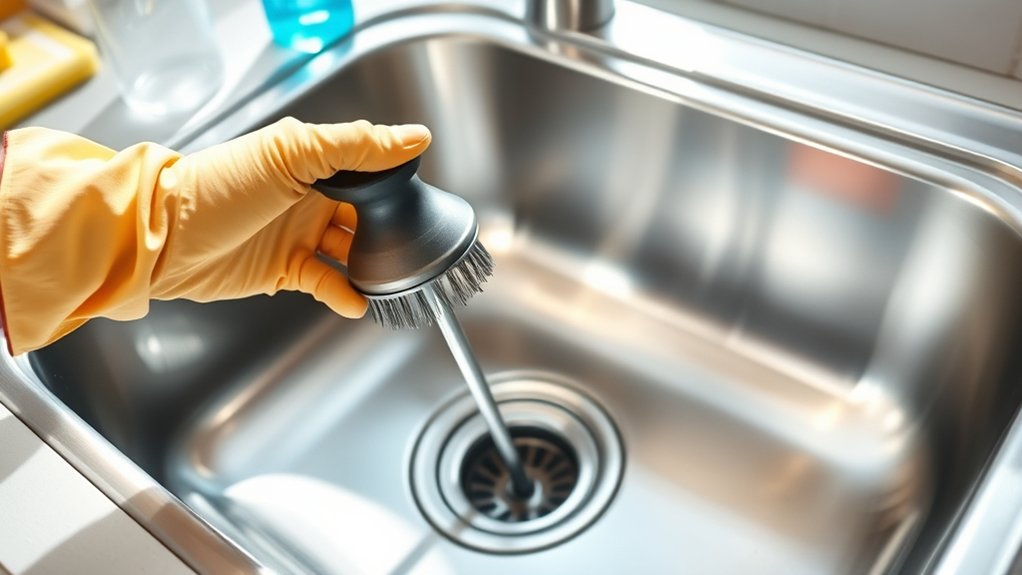
7 Easy Steps to Clean Your Kitchen Sink Drain
Many people struggle with keeping their kitchen sink drain clean and odor-free, and you’re not alone in this. A clogged or smelly drain can be frustrating and make your kitchen less inviting.
To clean your kitchen sink drain easily, start by gathering supplies like a scrub brush, sponge, dish soap, and microfiber cloth, then clear your sink area.
Next, check for causes like hair, food, or grease, and remove any visible debris with gloves.
Use hot water combined with baking soda and vinegar or natural cleaners to flush out buildup, and finish by rinsing with hot water.
For more tips on keeping it fresh and clear, keep going.
Key Takeaways
- Remove visible debris and food particles from the drain and surrounding area.
- Use a toothbrush or soft brush to scrub around the drain edges and surface.
- Pour a mixture of baking soda and vinegar into the drain to break down buildup.
- Flush the drain with hot water or dish soap to clear any remaining residue.
- Install a drain strainer and maintain it regularly to prevent future clogs and odors.
Gather Supplies and Prepare Your Sink Area
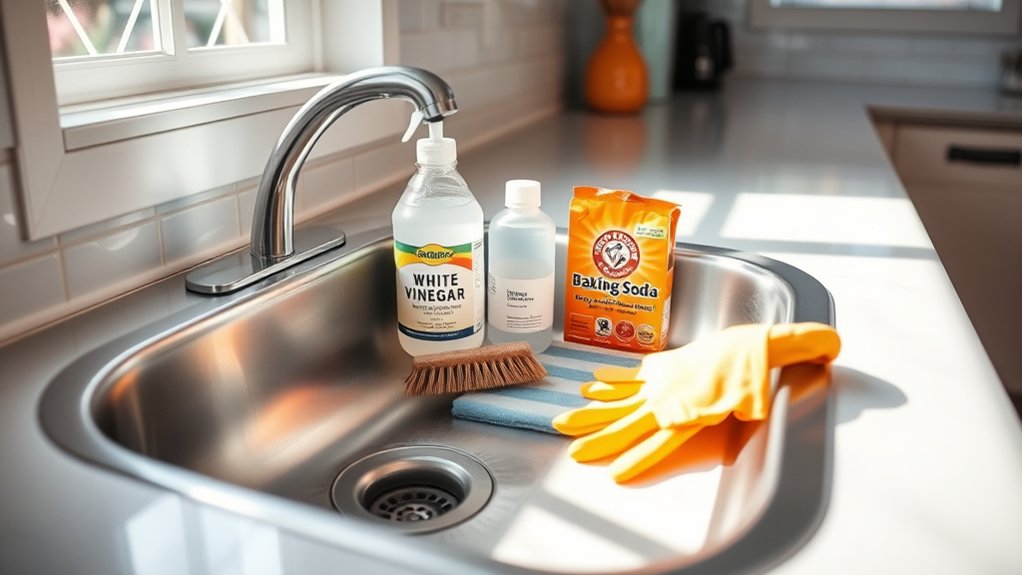
Before you start cleaning, gather all the supplies you’ll need and clear the sink area. Having the right tools on hand makes the job easier.
Gather your cleaning supplies and clear the sink area to make the job easier and more efficient.
Grab a scrub brush, a sponge, and a container of dish soap or mild cleaner. You might also want a toothbrush for those tight spots and a microfiber cloth for polishing.
Clear away any dishes, food scraps, or clutter from the sink and countertop. This gives you enough space to work and helps prevent cross-contamination.
Check that your cleaning tools are clean and in good condition. This way, you avoid spreading germs and keep everything sanitary.
Organizing everything before you begin makes the whole process smoother and more efficient. Once your supplies are ready and the area is clear, you’re all set to clean confidently.
Proper preparation lays a solid foundation for a sparkling clean sink.
Find Out What’s Causing Your Drain Odors and Clogs
Once you’ve gathered your supplies and cleared the sink area, the next step is to figure out what’s causing the odors and clogs. Start by inspecting your drain for signs of buildup or slow drainage, which might mean there’s a blockage.
Pay attention to the pipe materials because plastic pipes tend to trap debris more easily than metal ones, affecting both drainage and odors. Clogs often come from hair, grease, or food particles sticking to the pipe walls and creating foul smells.
Use the table below to get a better idea of common causes:
| Cause | Pipe Material | Effect on Drainage |
|---|---|---|
| Hair & Food | Plastic or PVC | Clogs & odors |
| Grease | Metal | Slow drain, odor |
| Soap Scum | Any | Buildup, clog |
Remove Debris and Clean the Drain Surface
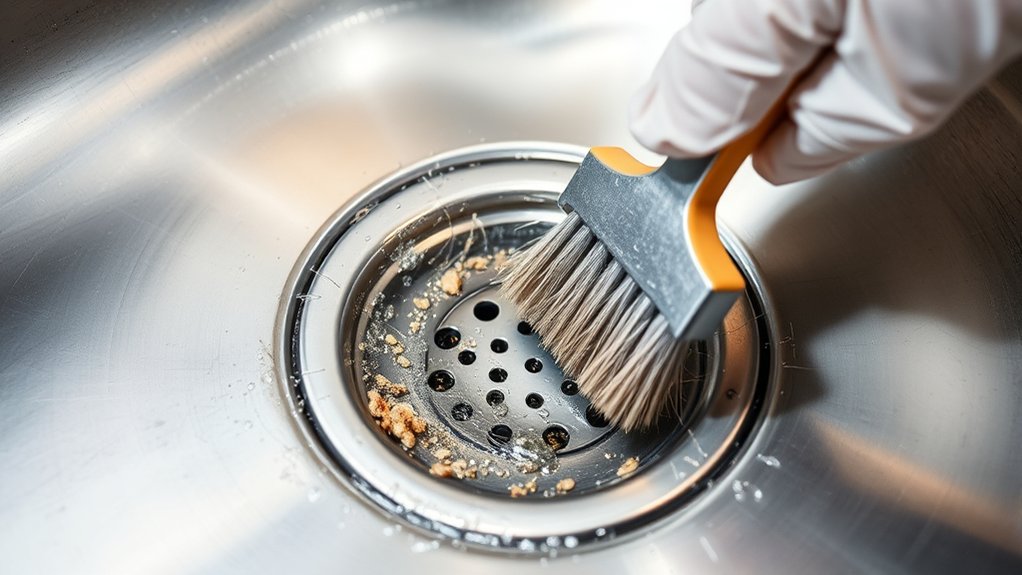
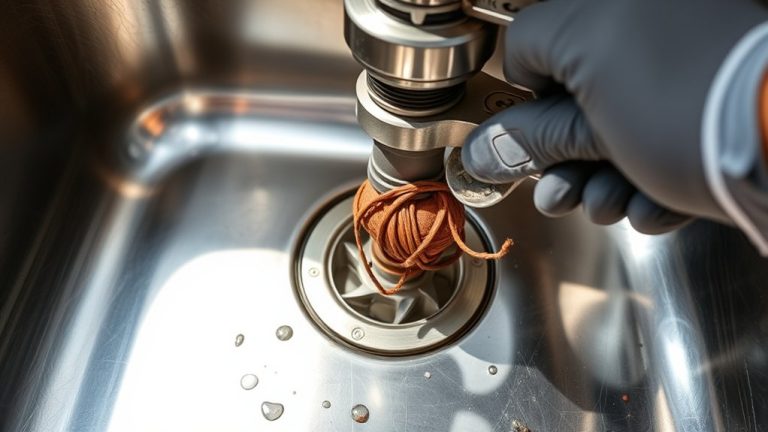
To effectively remove debris and clean the drain surface, start by removing any visible obstructions from the sink. Clear out hair, food particles, and soap scum that may be blocking the drain or sitting on the surface. This step helps prevent odors and clogs by tackling buildup early.
Remove visible debris to prevent odors and clogs before cleaning your drain surface.
Follow these steps:
- Use gloves to grasp and remove debris from the drain opening.
- Wipe down the drain surface with a damp cloth or sponge to get rid of any lingering grime.
- Use a soft brush or old toothbrush to scrub around the drain edges, loosening stubborn debris.
Safely Use Natural and Chemical Drain Cleaners
Using the right drain cleaners is essential for keeping your sink clear and odor-free, but it’s just as important to use them safely. Natural remedies like baking soda and vinegar are gentle options that can break down minor clogs without harsh chemicals.
When using chemical solutions, always follow the manufacturer’s instructions carefully. Wear gloves and make sure the area is well-ventilated. Never mix different chemical cleaners, as this can produce dangerous fumes or reactions.
If you choose natural remedies, pour baking soda into the drain, then add vinegar. Let it fizz for a few minutes before rinsing with hot water. Chemical solutions often contain strong acids or alkalis, so handle them carefully to avoid skin and eye irritation.
Keep chemical cleaners out of reach of children and pets. Whether you go natural or chemical, safety should always come first to prevent accidents and protect your plumbing.
Flush Your Drain With Hot Water and Baking Soda
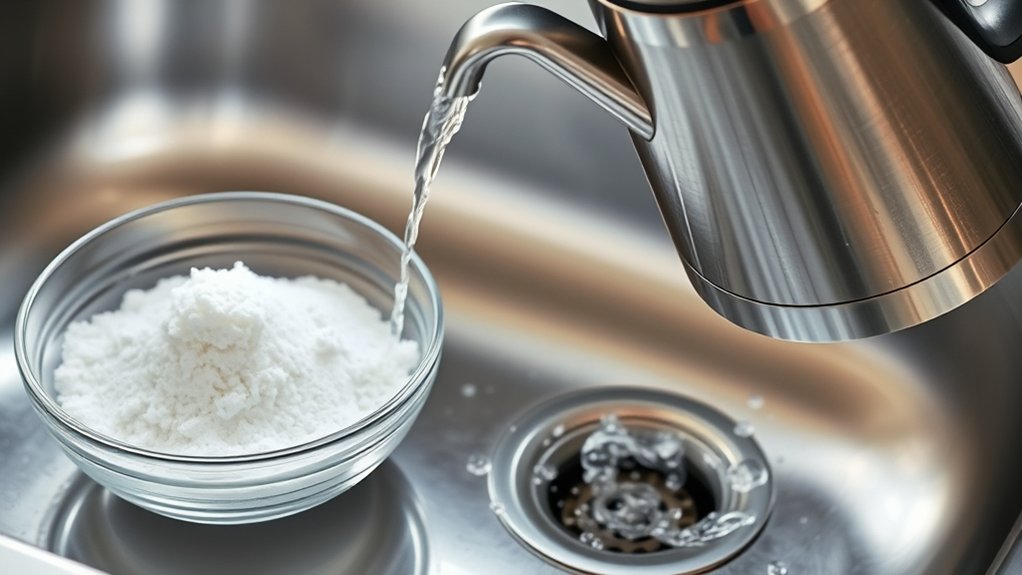
Have you tried flushing your drain with hot water and baking soda to clear minor clogs? This simple method can help with buildup caused by grease, soap residue, or debris. When you pour hot water down the drain, it helps loosen blockages and improve drain ventilation, reducing pressure that can lead to pipe corrosion over time.
Flushing drains with hot water and baking soda helps clear minor clogs and prevents pipe corrosion.
Baking soda acts as a natural abrasive and deodorizer, breaking down grime and neutralizing odors. Here’s how to do it:
- Boil a kettle of water and carefully pour it into the drain.
- Follow with half a cup of baking soda.
- Finish by pouring another cup of hot water to rinse everything through.
This process keeps your pipes clear, prevents minor clogs, and supports proper drain ventilation, which is vital for avoiding corrosion and maintaining a healthy drainage system.
Easy Tips to Keep Your Sink Drain Fresh and Clear
Keeping your sink drain fresh and clear doesn’t have to be complicated. Regular drain maintenance is key to preventing odors and clogs.
Start by pouring a mixture of hot water and a few drops of dish soap down the drain weekly to flush away residue. Use a natural deodorizer like vinegar and baking soda to neutralize odors.
Simply sprinkle baking soda, then add vinegar, and let it sit for a few minutes before rinsing with hot water. Avoid leaving food scraps or grease in the sink, as they can cause buildup over time.
Installing a drain strainer traps debris and reduces the risk of blockages. After cleaning, always run hot water to clear out remaining particles.
These simple steps promote odor prevention and keep your drain functioning smoothly, saving you time and effort in the long run. Consistent maintenance guarantees your sink stays fresh and free of unpleasant smells.
Troubleshoot Persistent Odors and Blockages
If your sink is still giving off bad odors or draining really slowly, it’s probably time to figure out what’s going on. Sometimes, you might notice smells like rotten eggs or sour notes—that’s a good hint that there’s a specific issue to address.
Next up, you’ll want to clear out any stubborn blockages that might be causing the problem. Doing this can really help get your drain back to working smoothly and smelling fresh again.
Identifying Common Odors
Persistent odors in your kitchen sink drain often signal underlying blockages or buildup that trap debris and bacteria. To identify where the smell is coming from, pay attention to different types of odors.
- Rotten Egg Smell – Usually indicates hydrogen sulfide gas from decaying organic matter. It’s often caused by trapped food or grease.
- Sour or Vinegar-Like Odor – Commonly signals mold, bacteria, or soap scum buildup.
- Musty or Stale Smell – Often due to dampness, mold, or lingering kitchen fragrances that haven’t been properly cleaned.
Clearing Persistent Blockages
When odors refuse to fade despite regular cleaning, stubborn blockages are often to blame. To improve drain maintenance, you’ll need to clear these persistent clogs.
Start by inspecting the trap and removing any visible debris. Use plumbing tools like a plunger or a drain snake to dislodge deeper blockages.
Apply steady pressure with the plunger to loosen stubborn buildup. Insert the snake into the drain, twisting to break up the clog.
Remember, persistent blockages may require multiple attempts or professional help. Regular drain maintenance prevents future issues and keeps odors at bay.
Keep a set of plumbing tools handy for quick fixes. Don’t ignore slow-draining sinks—they’re often signs of underlying blockages.
Clearing these ensures your sink stays odor-free and fully functional.
Frequently Asked Questions
How Often Should I Clean My Kitchen Sink Drain?
You should clean your kitchen sink drain at least once a month to keep things running smoothly. Regular cleaning helps prevent clogs, odors, and grime buildup.
If you notice your sink draining slowly or smells are worse than usual, consider cleaning it more often. Staying consistent with your cleaning routine keeps your sink hygienic and your plumbing in good shape.
Doing this regularly can save you from costly repairs later on. It’s a simple step that makes a big difference in maintaining your kitchen.
Can I Use Lemon Juice Instead of Vinegar?
Yes, you can use lemon juice as a vinegar substitution for cleaning your sink drain. Lemon cleaning is effective because its natural acidity helps break down grease and eliminate odors.
While vinegar is commonly used, lemon juice provides a fresh scent and similar cleaning power. Just squeeze some fresh lemon or use bottled lemon juice, pour it down the drain, and let it sit to naturally disinfect and freshen your sink.
Are There Eco-Friendly Drain Cleaning Options?
Yes, eco-friendly drain cleaning options are available. You can choose biodegradable solutions that break down naturally, which helps reduce environmental impact.
Natural enzymes are another great option. They digest organic debris in your drain, helping prevent clogs without using harsh chemicals.
These alternatives are safe for your pipes, family, and the planet. Using biodegradable solutions or natural enzymes regularly keeps your drain clean and odor-free.
Plus, it makes your kitchen more sustainable and healthier overall.
What Are Signs of a Severely Clogged Drain?
If your drain is severely clogged, you’ll notice hair buildup blocking water flow and foul odors coming from the sink.
Water may drain slowly or not at all, and you might hear gurgling sounds. Persistent backups or bad smells are clear signs.
You should address these issues promptly with cleaning methods like boiling water, a plunger, or eco-friendly drain cleaners to prevent further damage and keep your kitchen fresh.
When Should I Call a Professional Plumber?
You should call a professional plumber when you experience plumbing emergencies or if your drain repair services aren’t fixing the problem.
If your sink remains clogged despite your efforts or water backs up quickly, it’s time to seek expert help.
Don’t wait too long because ignoring these signs can lead to more extensive damage.
A plumber can diagnose issues accurately and provide the necessary repairs to prevent future problems.
Conclusion
Now that you’ve tackled your sink drain with these simple steps, think of your drain as a well-tuned orchestra—every part working in harmony to keep your kitchen fresh and inviting. Regular cleaning and maintenance prevent minor issues from turning into a clog or odor nightmare.
Keep up with these easy habits, and your sink will stay as clear as a mountain stream, ready to serve you without a hitch. Taking care of your kitchen sink drain ensures it functions smoothly and stays odor-free.
With a little regular effort, your drain will continue to work perfectly, making your kitchen a more pleasant place to be. Happy cleaning!