What Happens When Parchment Paper Goes in the Oven?
Many home bakers and cooks worry about their kitchen safety and the proper way to use parchment paper in the oven. If you’re unsure about how hot your parchment paper can go or worried about it catching fire, you’re not alone. It’s a common concern, but understanding how to use it safely can make your baking experience much easier.
When you put parchment paper in the oven, it’s designed to handle temperatures up to around 420°F (215°C), but exceeding this can cause it to scorch, smoke, or even catch fire.
While it helps prevent sticking and promotes even baking, high heat or direct flames increase fire risk and may damage the paper.
To stay safe, always check the label and avoid placing parchment near direct heat sources—if you continue, you’ll see how to use it safely.
Key Takeaways
- Parchment paper is designed to handle oven temperatures up to 420°F–450°F, so it won’t burn or catch fire if used correctly.
- If you go beyond these temperature limits, the paper can burn, smoke, or even ignite, which is a fire hazard.
- Parchment helps distribute heat evenly and keeps food from sticking, making your baking turn out better.
- Be cautious when using parchment near open flames or in broilers, as it can easily burn or catch fire.
- When used properly, parchment can be reused safely, but always check for damage and avoid exposing it to direct heat sources.
What Is Parchment Paper and How Does It Work in the Oven?
Parchment paper is a coated, non-stick sheet used in baking and cooking. Its main purpose is to make cleanup easier and prevent food from sticking to pans.
Using parchment paper offers several baking benefits, like even heat distribution and preventing burning or over-browning. It also helps you get cleaner results with delicate baked goods like cookies or pastries.
This versatile tool can be used for lining baking sheets, wrapping foods for steaming, or even making en papillote dishes. The coating on the paper stops moisture and fats from seeping through, keeping your food intact.
Parchment paper is perfect for lining, wrapping, and creating en papillote dishes, keeping food moist and intact.
Thanks to its ability to withstand oven heat and provide a non-stick surface, parchment paper simplifies many baking and cooking tasks. It saves you time and effort in the kitchen.
How Hot Can Parchment Paper Safely Get?
Have you ever wondered how hot parchment paper can safely get in the oven? Usually, it’s designed to handle temperatures up to 420°F (215°C), making it suitable for most baking tasks.
But pushing beyond this limit can cause it to burn or even catch fire. That’s why it’s important to follow safety guidelines and check the packaging for maximum temperature recommendations.
Here’s a quick reference table to help you out:
| Temperature Range | Safety Tip | Baking Tip |
|---|---|---|
| Up to 420°F | Use for most baking needs | Keep an eye on your oven temperature |
| 420°F to 450°F | Caution; monitor closely | Avoid prolonged exposure |
| Above 450°F | Not recommended; risk of burning or fire | Use silicone mats instead |
| Any uncertain temp | Follow manufacturer instructions carefully | Use an oven thermometer |
Sticking to these tips will help you stay safe and get the best results in your baking!
Why Does Parchment Paper Sometimes Smoke or Burn?
You might notice parchment paper smoking or even burning sometimes, and that’s usually because it’s exposed to temperatures that are too high for it or if it comes into contact with open flames. Even just a little bit of extra heat can cause the paper to break down and produce smoke.
To keep your baking safe and hassle-free, it’s a good idea to stick to the recommended temperature ranges on the package. And try to keep open flames away from the parchment — that way, you won’t have to worry about it catching fire or smoking unexpectedly.
Heat Tolerance Limits
Understanding the heat tolerance limits of parchment paper is important because going beyond its maximum temperature can cause smoke or even fires.
Parchment paper’s heat resistance mainly depends on its material, usually silicone-treated cellulose. Most are rated for temperatures up to 420-450°F (215-230°C).
Exceeding this range weakens the paper’s structure, increasing the chances of smoking or burning. The silicone coating helps boost heat resistance but isn’t fireproof.
If you use parchment at high temperatures or for a long time, you risk damaging it. Always check the manufacturer’s guidelines for the maximum temperature.
Sticking to the recommended temperature ensures your parchment paper is safe to use without smoke or fire hazards.
Exposure to Open Flames
While parchment paper is designed to handle high oven temperatures, direct exposure to open flames can make it smoke or even catch fire unexpectedly.
Flame exposure happens if you accidentally place the paper too close to a grill, broiler, or open flame, which can lead to a fire.
To stay safe, always keep parchment away from direct heat sources and never leave it unattended near open flames.
Be careful of these common issues: holding the paper too close to a gas flame or broiler, using parchment on a grill without proper positioning, or ignoring smoke or sparks near open flames.
Taking these precautions helps prevent fires and keeps your oven use safe. Remember, while parchment is heat-resistant, it’s not flame-proof.
Can Parchment Paper Catch Fire in the Oven?
You might be wondering if parchment paper can catch fire in the oven. Well, it really depends on how you’re using it. Parchment paper has its limits, especially when it comes to temperature. If you go beyond those limits, there’s a chance it could ignite.
So, it’s good to know what the safe temperature range is—usually around 420 to 450 degrees Fahrenheit. Staying within that range helps prevent any fire risk. Also, make sure to keep the paper away from open flames or heating elements.
Following some simple usage tips can keep your baking safe and hassle-free. For example, don’t reuse parchment paper that’s been burned or heavily stained, and avoid using it under a broiler. With a little care, you can bake comfortably knowing your parchment paper isn’t going to catch fire.
Temperature Limits for Parchment
Parchment paper is generally safe to use in the oven as long as you keep the temperature within its recommended limits. Most parchment paper can handle temperatures around 420–450°F (215–230°C).
Exceeding this range increases the risk of the paper burning or catching fire. Always check the packaging for specific temperature guidelines when using parchment for different baking techniques.
To stay safe, avoid exposing parchment to direct flame or broiler heat. Use it only within the specified temperature range and be cautious with recipes that require high temperatures or longer baking times.
Following these tips helps prevent accidents and ensures your parchment works well during baking.
Fire Risk Factors
Although parchment paper is designed to withstand high temperatures, it can catch fire if exposed to direct flames or if the oven temperature exceeds its safe limits. To reduce fire risks, always keep the paper away from heating elements and open flames.
Never use parchment paper in a broiler or under a grill, where the heat is intense. Practicing fire prevention means monitoring your oven’s temperature and avoiding overcrowding, which can cause overheating.
Implement safety measures like keeping an eye on the oven while baking and making sure the parchment is properly placed on baking sheets. Remember, even though parchment is heat-resistant, exceeding its temperature threshold can ignite it.
Following safety guidelines is essential to prevent fires and keep your baking safe.
Proper Usage Tips
Proper usage of parchment paper can help prevent accidents in the oven, especially the risk of fire. To stay safe, always follow baking techniques that keep your oven environment secure.
Make sure you don’t exceed the recommended temperature, usually around 420°F (215°C). Keep parchment paper away from open flames and heating elements, and avoid using it under broilers.
If you’re concerned about fire risks, consider parchment alternatives like silicone baking mats or aluminum foil, which can handle higher temperatures safely. Here are some tips:
- Use parchment paper only within recommended temperature limits
- Keep it at least a few inches away from heating elements
- Opt for silicone mats or foil for high-heat applications
These precautions help you bake safely and effectively.
How to Use Parchment Paper Safely When Baking or Roasting
To use parchment paper safely when baking or roasting, make sure it’s labeled as oven-safe and designed to handle high temperatures. This way, you won’t have to worry about unexpected burning or smoke.
When baking, keep the paper flat and avoid overloading your baking sheets. This helps prevent it from curling or tearing during the process.
Here’s a quick guide for safe use:
| Tip | Explanation |
|---|---|
| Temperature Limits | Use parchment paper within its heat threshold, usually 420–450°F. |
| Avoid Direct Flames | Keep paper away from burners or open flames to prevent ignition. |
| Use Light Coatings | Avoid heavy greasing that can cause smoking or sticking. |
| Proper Placement | Center the paper on baking sheets for even heat distribution. |
Signs That Parchment Paper Is Overheated or Burning
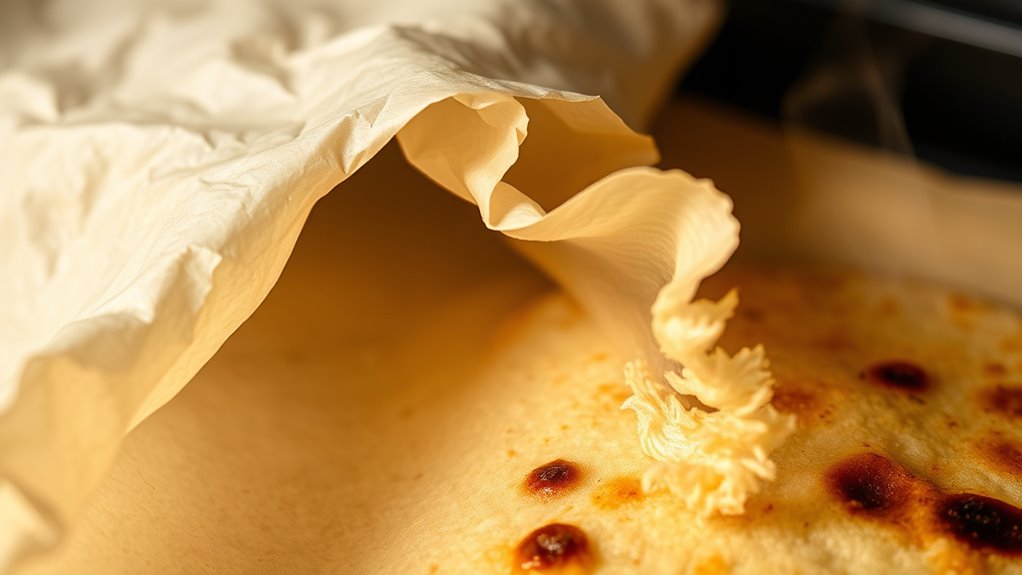
When parchment paper starts to overheat or burn, you’ll notice clear visual and olfactory signals. You might see the paper turn brown or black quickly, which is a sign it’s getting too hot.
You’ll also smell a strong, acrid odor that indicates overheating. If you notice smoke or a haze in your oven, it’s time to remove the parchment right away.
Watch for other signs like edges curling or bubbling excessively. Darkening spots or visible flames are also clear indicators.
A smoky or burnt smell filling the air is another warning sign that your parchment paper has exceeded safe temperature limits.
Continuing to bake with overheated parchment can cause fire hazards or damage. Recognizing these signs early helps you prevent accidents and keep your baking safe.
Always stay attentive while baking, especially when using parchment paper at high temperatures.
Are There Different Types of Parchment Paper and Their Heat Limits?
Different types of parchment paper can have different heat tolerances and coatings, so it’s good to know what you’re working with. For example, unbleached and bleached parchment paper go through different chemical processes, and this can affect how much heat they can handle.
Silicone-coated parchment papers tend to have higher heat limits, which makes them a popular choice for baking at higher temperatures. So, depending on what you’re baking, choosing the right type of parchment paper can make a difference in how well it performs and how safe it is to use at certain temperatures.
Unbleached Vs. Bleached Options
Unbleached and bleached parchment papers are the two main types you’ll find, each with its own characteristics and heat limits.
Unbleached parchment has a natural, tan color and offers benefits like fewer chemicals and a more eco-friendly option. Bleached parchment is whiter and processed with chemicals, which may raise concerns about potential residues.
Both types are generally safe at typical baking temperatures, but unbleached benefits include being more natural and environmentally friendly. Bleached concerns revolve around chemical processing, though it often has a slightly smoother surface.
- Unbleached parchment is ideal for organic baking and eco-conscious choices
- Bleached parchment provides a brighter appearance and smooth surface
- Both types usually withstand standard oven temperatures, but it’s always good to check packaging for specific limits
Temperature Tolerance Limits
Parchment paper is designed to handle certain oven temperatures, but not all types are created equal. Some have higher heat tolerance, which can improve baking efficiency and reduce the risk of burning or sticking.
Standard parchment paper usually withstands temperatures up to 420°F (215°C), making it suitable for most baking needs. Specialty parchment with a silicone coating can often tolerate a bit higher, around 450°F (232°C).
Exceeding these limits can cause charring, release harmful fumes, and compromise food safety. Knowing your parchment’s heat limits helps you avoid accidents and ensures even, efficient cooking.
Always check the packaging for specific temperature guidelines to maximize safety and baking performance.
Silicone-Coated Variations
Silicone-coated parchment paper often offers higher heat tolerance compared to standard options, making it a popular choice for various baking tasks. The silicone benefits include improved non-stick properties and increased durability, which are perfect for high-temperature baking.
These variations can usually withstand temperatures up to 420°F (215°C) or more, depending on the brand. When choosing silicone-coated parchment, consider these factors:
- Higher heat limits make it suitable for roasting and baking at raised temperatures.
- Its reusable nature allows for multiple uses, reducing waste.
- An improved non-stick surface simplifies cleanup and prevents food from sticking.
Thanks to these silicone benefits, coated parchment is great for applications needing durability and heat resistance. It gives you more flexibility in your baking adventures.
How Does Parchment Paper Affect Your Food During Baking?
Have you ever wondered how parchment paper influences the way your food turns out in the oven? It plays a big role in baking benefits and food safety. Parchment prevents sticking, making sure your baked goods come off easily and keep their shape.
It also helps distribute heat evenly, so everything bakes consistently. Plus, using parchment reduces the need for extra fats or sprays, making your baked items healthier.
Here’s a closer look:
| Benefit | Impact |
|---|---|
| Baking benefits | Keeps food from sticking and promotes even baking |
| Food safety | Prevents cross-contamination and reduces burns |
| Ease of cleanup | Less mess and faster cleanup |
| Healthier baking | Cuts down on added fats and supports better nutrition |
How to Prevent Parchment Paper From Burning or Smoldering
While parchment paper offers many advantages during baking, it’s important to prevent it from burning or smoldering, especially at high temperatures. To ensure effective burn prevention and safe baking, follow these tips.
First, always check the manufacturer’s recommended maximum temperature. Most parchment paper is safe up to 420°F (215°C). Avoid placing parchment too close to direct heat sources like broilers or open flames.
Always check the manufacturer’s max temperature; most parchment is safe up to 420°F (215°C).
Consider using silicone baking mats for high-heat tasks, which reduces the risk of burning. Also, monitor your oven’s temperature with an accurate thermometer to prevent accidental overheating.
Properly positioning your baking sheets can help maintain even heat distribution, minimizing the chances of smoldering. By taking these precautions, you keep your baking safe while preserving your parchment paper’s integrity and avoiding hazards.
Can You Reuse Parchment Paper? Cleaning and Reusing Tips
Ever wondered if you can get multiple uses out of parchment paper? The answer is yes, but you need to be careful with cleaning.
After baking, check if the parchment is still free of heavy grease, food residue, or tears. If it’s in good shape, you can try reusing it by wiping off crumbs and surface oils with a damp cloth or paper towel.
For a deeper clean, gently rinse the parchment in cool water to remove stubborn grease, then let it air dry completely before reuse. Keep in mind, parchment paper’s durability drops each time you reuse it, especially if it’s been exposed to high heat or sharp foods.
Avoid reusing heavily soiled or burned sheets to prevent smoke or burning during your next bake. Proper cleaning helps extend its life, but always inspect before reuse to stay safe and ensure good results.
When in doubt, it’s best to use fresh parchment for the best baking experience.
Frequently Asked Questions
Can Parchment Paper Be Used on Broilers or at High Temperatures?
You shouldn’t use parchment paper under the broiler or at high temperatures because it can catch fire. This can turn your kitchen into a danger zone quickly.
Stick to broiling tips like using a broiler-safe pan and keeping a close eye on your food. Follow high temperature guidelines and avoid parchment paper in direct heat.
Instead, opt for aluminum foil or oven-safe trays. They protect your food without risking a fiery mishap.
Does Parchment Paper Release Harmful Chemicals When Heated?
Parchment paper is generally safe when heated, but there are some concerns about its chemical makeup. It’s coated with silicone, which can release tiny amounts of fumes at very high temperatures, raising safety questions.
That said, typical baking temperatures usually stay within safe limits. To be cautious, use parchment paper at the recommended temperatures and avoid exposing it to direct flames or broilers.
Always check the product label for specific temperature guidelines to stay safe.
How Does Parchment Paper Affect Cooking Times and Results?
When you use parchment paper, it helps with cooking efficiency and heat distribution, often cutting down on cooking times.
You might notice your baked goods come out more evenly, with better texture and color.
But be careful not to go beyond the recommended temperatures, or results might be unpredictable.
Just keep an eye on your oven settings, and parchment paper will subtly improve your cooking.
It makes each dish more perfect and helps ensure consistent, tasty results.
Is It Safe to Use Parchment Paper With Non-Stick or Silicone Baking Mats?
Yes, you can safely use parchment paper with non-stick or silicone baking mats, but be aware of their heat limits. Parchment paper is a good baking option because it distributes heat evenly and prevents sticking.
Just remember not to go over its temperature limit, which is usually around 420°F (215°C). Using these tools together can work great, but keep an eye on your baking times and temperatures.
This helps prevent safety issues or damage to your bakeware. So, as long as you stay within those limits, it’s a safe and effective combination.
Can Parchment Paper Be Recycled or Disposed of Safely After Use?
You might be surprised to learn that parchment paper isn’t typically recyclable because of its silicone coating. So, safe disposal usually means tossing it in the trash.
However, if your local facilities accept it, you can consider composting unbleached, uncoated parchment paper. Always check your disposal methods to make sure you’re minimizing waste.
Conclusion
So, next time you toss that innocent-looking parchment paper into the oven, remember it’s basically the drama queen of baking supplies—smoking, burning, and risking fiery chaos if pushed too far.
Treat it with respect, follow the heat limits, and keep a watchful eye. Otherwise, you might end up with a kitchen full of smoke and a lesson in “what not to do.”
Happy baking, and may your parchment stay cool, calm, and burn-free! Using parchment paper in the oven is safe as long as you stick within the recommended temperature limits.