How to Adjust Kitchen Cabinet Doors Easily
Are your kitchen cabinet doors not closing properly or looking uneven? You’re not alone—many people struggle with keeping their cabinets aligned and functioning smoothly.
Luckily, adjusting your cabinet doors is easier than you think.
To adjust your kitchen cabinet doors easily, start by identifying your hinge type—European or surface-mounted—and gather the right tools like screwdrivers and a level.
Check for misalignment, uneven gaps, or doors sticking.
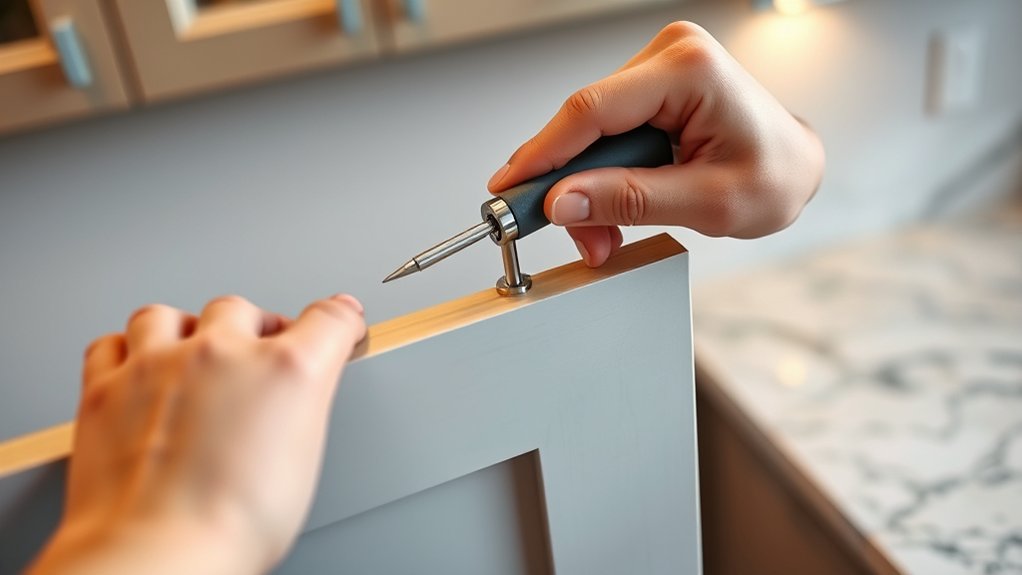
Adjust the hinges by turning the screws clockwise or counterclockwise to correct height, side-to-side, or tension issues.
Regular upkeep helps prevent future problems.
Keep going for detailed tips to make the adjustment process even simpler and more effective.
Key Takeaways
- Identify your hinge types and gather the essential tools like screwdrivers, a level, and a measuring tape for accurate adjustments.
- Check for loose screws, tighten them, then adjust the hinge screws to align your doors both vertically and horizontally.
- Use a level to make sure the door is plumb, and turn the hinge adjustment screws clockwise or counterclockwise for fine-tuning.
- Make sure handles and hardware are secure, and lubricate the hinges to prevent squeaks and keep their movement smooth.
- Regularly maintain hinges and hardware to prevent misalignment and catch issues early for long-term smooth operation.
How to Tell if Your Cabinet Doors Need Adjustment : Quick Signs to Watch For
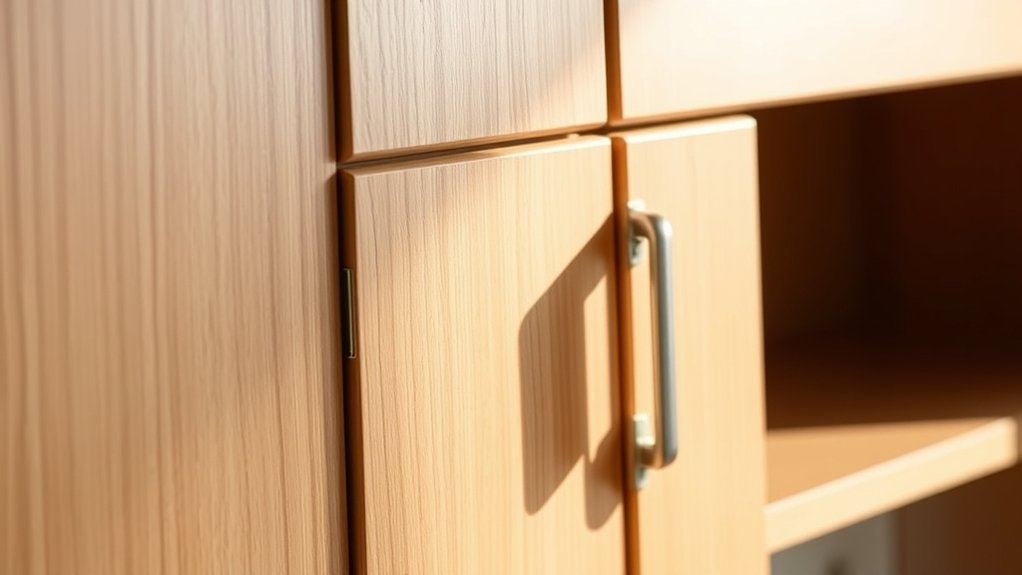
If your cabinet doors aren’t closing smoothly or seem misaligned, it’s a sign they might need some adjustment. You might notice gaps between doors or uneven spacing—that can be pretty distracting and mess with the overall look.
Check if the hinges are loose or wobbly. These can cause misalignment and also affect how your decorative hardware works. Also, look at the cabinet finishes—peeling or chipping paint often means the door isn’t sitting quite right.
Loose hinges and chipped paint indicate misaligned cabinet doors needing adjustment.
If your cabinet doors stick or don’t line up with the frame, it’s probably time to make some adjustments. Sometimes, misaligned doors are hidden behind nice hardware, so they’re easier to miss at first.
Pay attention to these quick signs—uneven gaps, sticking doors, or hardware that no longer lines up. Catching issues early helps you keep your cabinets looking sleek and working well.
Knowing Your Cabinet Hinge Types Before You Adjust
Knowing the different types of cabinet hinges is important before you start making adjustments, as each one needs a specific approach. Recognizing your hinge type helps you know how to tweak or maintain them properly.
Common hinge types include butt hinges, European concealed hinges, and surface-mounted hinges. European hinges are popular for modern cabinets and often have adjustment screws for fine-tuning door alignment.
Surface-mounted hinges are easier to access and adjust but might be less discreet. Each hinge type has unique features, so it’s crucial to identify which one you have before attempting any maintenance.
Proper identification ensures you use the right tools and techniques, which helps prevent damage and keeps things running smoothly. Understanding your hinge type makes it easier to make precise adjustments and keep your cabinet doors in good shape.
Gather the Essential Tools for Easy Cabinet Door Adjustments
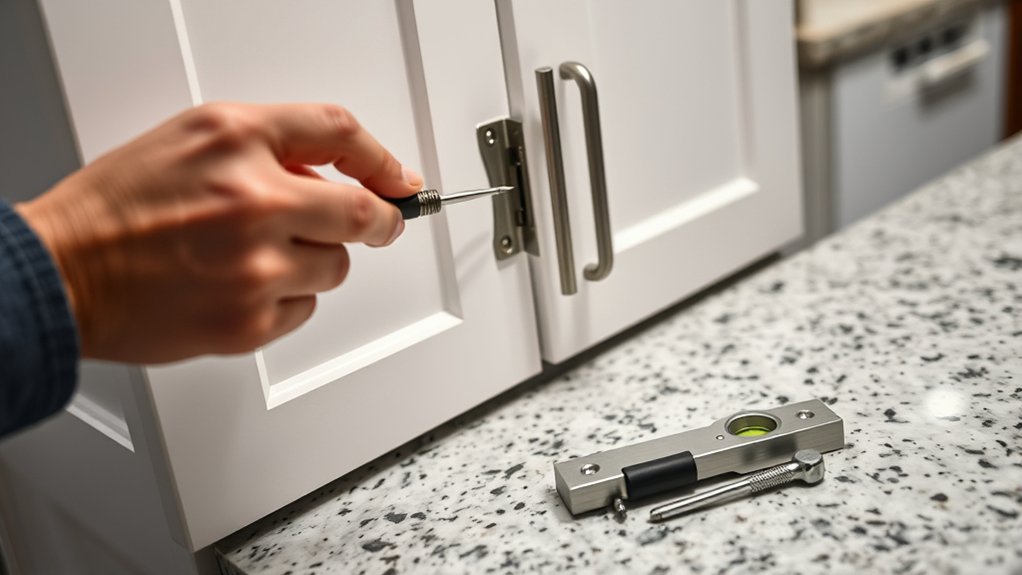
Before you start adjusting your cabinet doors, it’s important to gather the right tools to make the process easier and smoother. You’ll need a Phillips screwdriver and a flat-head screwdriver to loosen or tighten hinges and screws.
Keep a small level handy to check that your doors are properly aligned. If your cabinets have decorative hardware, have a screwdriver ready to remove or adjust knobs and pulls.
For better visibility, turn on your kitchen lighting or use a portable light source to illuminate tight spaces. A measuring tape is helpful for confirming even gaps and proper alignment.
If you’re planning to replace or upgrade hardware, gather your new decorative pieces beforehand. Having these tools ready will help you work more efficiently and avoid unnecessary trips to the toolbox.
With everything prepared, adjusting your cabinet doors will be much easier and more professional-looking. Properly equipped, you’ll ensure your kitchen looks its best.
How to Adjust Cabinet Door Height and Vertical Alignment
First, take a good look at your cabinet doors and see how they sit. Are they level and aligned the way you want? If they’re not quite right, don’t worry—you can fix it by adjusting the hinges.
Just a few small tweaks can make a big difference, helping your doors sit flush and look nice and neat. It’s a pretty straightforward process, so you’ll be able to get everything looking perfect in no time!
Checking Current Door Position
To guarantee your cabinet doors are properly aligned, start by checking their current position. Look at the gap between the door and the cabinet frame, making sure it’s even all along.
Pay attention to how the doors sit next to each other, especially if they have decorative finishes that can highlight any misalignment. Check the height and vertical position of the doors, and note if anything looks uneven.
Keep in mind that some cabinet materials can expand or contract with changes in temperature or humidity, which might affect the alignment. Use a level or straightedge to verify if the doors are plumb and well-positioned.
Taking these steps helps you see if you need to tighten hinges or make other adjustments to get a smooth, uniform look.
Adjusting Hinges for Alignment
If the cabinet doors aren’t sitting evenly, adjusting the hinges is usually all you need to fix their height and vertical alignment. Start by finding the hinge adjustment screws, which are typically on the side of the hinge.
Use a screwdriver to turn these screws—clockwise to lift the door or counterclockwise to lower it. For side-to-side adjustment, turn the screws that control horizontal movement.
Keep in mind that decorative hardware might hide some hinge screws, so you might need to remove or loosen it carefully. The type of cabinet material also matters; softer woods may need gentle force.
Make small adjustments, then step back and check the door’s position. With patience, your doors will sit perfectly aligned, giving your kitchen a polished look.
How to Correct Horizontal Misalignment of Cabinet Doors
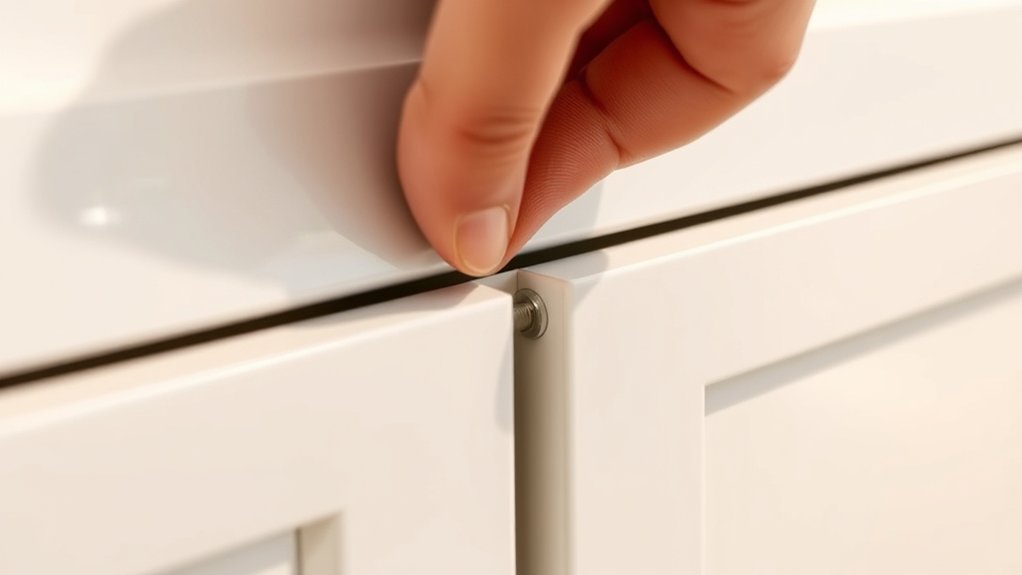
Horizontal misalignment of cabinet doors is a common issue that can make your kitchen look uneven and untidy. To fix this, start by checking the hardware, like handles or knobs, to make sure they’re securely attached. Loose hardware can cause doors to shift out of alignment.
Next, look at how the doors sit in relation to each other and the cabinet frame. If they’re uneven, adjust the hinges or mounting plates to straighten them out. Sometimes, lighting can cast shadows that highlight misalignment, so turn it off to see the true gaps better.
Use a level or straightedge to guide your adjustments. Make small tweaks until the doors are evenly aligned. Remember, tiny adjustments can make a big difference, and taking your time helps achieve a professional look.
Properly aligned doors will improve your kitchen’s overall appearance and make opening and closing smoother.
Fixing Squeaky or Loose Cabinet Doors : What You Need to Know
Having squeaky or loose cabinet doors can be pretty annoying, right? Sometimes it’s just a matter of worn hinges, loose screws, or maybe hinges that need some lubrication. The key is figuring out what’s causing the problem so you can fix it properly.
Once you know what’s going on, you can take the right steps—like tightening up screws, giving those hinges a good lubrication, or replacing any parts that are worn out. The sooner you address these issues, the better your cabinets will work—quietly and smoothly!
Identifying the Issue
Before trying to adjust your cabinet doors, it’s important to figure out if they’re squeaky or loose. Squeaky doors usually make noise when you open or close them, often because of friction between hardware or worn hinges.
Loose doors might wobble or sit unevenly, usually due to loose screws or misaligned hinges. Check the cabinet materials—like wood, MDF, or laminate—since different materials respond differently to adjustments.
Look at the hardware closely, paying attention to any loose or damaged decorative parts that could be causing problems. Figuring out whether it’s squeaky or loose helps you pick the right fix.
Getting this diagnosis right saves you time and prevents unnecessary adjustments or repairs.
Proper Fixing Techniques
Once you’ve identified whether your cabinet doors are squeaky or loose, you can move on to fixing them effectively. Start by checking the cabinet materials and decorative finishes, since these affect your repair approach.
For squeaky hinges, tighten or lubricate them with a silicone spray or light oil. Just be careful not to damage delicate finishes. If the doors are loose, tighten the screws carefully, avoiding over-tightening that could crack or mar the decorative surface.
If your doors won’t stay aligned, try adjusting the hinges by loosening and repositioning them slightly. Use the right tools to prevent stripping screws or damaging the cabinet material.
Proper fixing techniques help preserve the look and integrity of your cabinets while resolving squeaks and looseness efficiently.
Adjusting Door Tension and How Doors Close Tight
If your cabinet doors aren’t closing properly or feel too loose, adjusting the door tension can often fix the issue. You might need to tighten or loosen the hinges to ensure smooth, secure closing. This is especially important when installing decorative hardware or cabinet accessories, which can affect door alignment and tension.
To tighten the tension, find the adjustment screws on the hinges, usually on the side or back. Turning these screws clockwise will increase tension, making the door close tighter. Loosening them will reduce tension for a softer close.
Proper tension helps doors stay closed without slamming or gaps. Remember, small adjustments can make a big difference in achieving perfect alignment and closing. If needed, you can also adjust the closing speed or soft-close mechanisms to prevent slamming and ensure a gentle shut.
Regularly check and tweak these settings to keep your kitchen looking neat and functioning smoothly. You can tighten or loosen hinge screws, adjust tension screws for a firmer or softer close, or fine-tune decorative hardware placement. Using cabinet accessories can also improve closure.
Always test the door after each adjustment to see how it feels. Making these small tweaks regularly will help your doors stay in top shape and work just right.
Troubleshooting Common Issues During Cabinet Door Adjustment
Adjusting cabinet doors can sometimes cause unexpected issues, like doors not lining up properly or not closing smoothly. When this happens, it can mess up the look of your cabinets and make storage less functional.
To troubleshoot, check these common problems:
| Issue | Possible Cause | Solution |
|---|---|---|
| Door not aligning evenly | Hinges are misadjusted | Recheck and tighten hinge screws |
| Doors not closing flush | Latch or catch misaligned | Adjust latch height or position |
| Squeaking or sticking | Dirt or worn hinges | Lubricate hinges or replace if needed |
Think of your cabinets like a neat display:
| Cabinet door | Properly aligned | Creative storage |
|---|---|---|
| Misaligned | Slight gap | Cluttered look |
| Sticky hinge | Squeak | Disrupted decor |
Fix these issues quickly to keep your kitchen looking sharp and working smoothly.
Tips to Prevent Future Cabinet Door Misalignment
To prevent your cabinet doors from misaligning in the future, proper installation and regular maintenance are key. Start by choosing high-quality decorative hardware that fits well and is installed correctly, since loose or poorly fitted hardware can cause misalignment.
Keep your cabinet paint in good shape; chipped or peeling paint can make adjustments trickier and lead to uneven doors. Regularly check and tighten hinges and screws to keep everything aligned properly.
Avoid overloading your cabinets, which can warp doors and hinges over time. When installing new hardware, carefully mark screw holes to ensure consistent placement. If you notice slight misalignments, make adjustments right away to prevent them from worsening.
Maintaining hinges and hardware properly helps keep your doors aligned and reduces the need for frequent adjustments. With consistent care and attention to detail, you’ll extend the life of your cabinets and keep your doors looking polished.
When to Call a Professional for Cabinet Door Repairs
If your cabinet doors keep misaligning even after you’ve tried adjusting them a few times, it might be a good idea to call in a professional. Sometimes, those small tweaks just aren’t enough, and you could be dealing with underlying issues that need expert attention.
You should also reach out for help if you notice any cracks or structural damage in the cabinet framework. Ignoring these problems can lead to more serious damage later on, which could end up costing you more to fix. Catching these issues early makes all the difference!
Persistent Alignment Issues
Persistent alignment issues can be really frustrating, especially when simple tweaks don’t do the trick. If your cabinet doors stay crooked even after adjusting the hinges, it might be time to consider calling in a professional.
Sometimes, misalignment comes from worn hinges or damaged frames that need more than just a quick fix. Before you make that call, try cleaning your decorative hardware and hinges, as dirt or debris can block smooth movement.
If the doors still won’t line up after cleaning and minor tweaks, a pro can assess for structural problems or suggest replacements. Keep an eye out for signs like excessive hinge wear, warped frames, damaged mounting points, persistent sagging, or unresponsive hardware.
Structural Damage Concerns
When cabinet doors are warped, cracked, or sagging even after adjustments, it’s a sign that there might be structural damage. Over time, factors like humidity, age, or poor quality can weaken the material and cause issues.
Ignoring these signs can make the problem worse, affecting both how your kitchen looks and how well it works. If the damage seems extensive or the doors don’t line up after adjustments, it’s time to call in a professional.
They can check if the framework, hinges, or mounting surfaces need repair or replacement. Addressing these issues early helps keep your cabinets sturdy and looking great, while also maintaining your kitchen’s safety.
Frequently Asked Questions
Can I Adjust Cabinet Doors Without Removing the Hinges?
Yes, you can adjust cabinet doors without removing the hinges. To fix hinge alignment issues or door sagging, tighten the hinge screws or use a screwdriver to make small adjustments.
If the door still isn’t aligned, try shifting the hinge slightly or adjusting the hinge pins. This lets you correct sagging or misalignment quickly, without taking the hinges off completely.
What Are the Signs of Damaged Cabinet Hinges?
If your cabinet doors suddenly seem to sag like a sinking ship or they won’t stay closed, those are clear signs of damaged hinges.
You might also notice creaking sounds or uneven gaps, which indicate it’s time to replace the hinges to get your cabinets looking and functioning right again.
Ignoring these signs can lead to more damage, so it’s best to fix them quickly. That way, your cabinets will stay smooth and sharp-looking for longer.
How Often Should I Check and Adjust Cabinet Doors?
You should check and adjust your cabinet doors every six months to keep them properly aligned.
During these checks, look for loose hinges or signs that the doors are misaligned.
If needed, apply hinge lubrication to help the doors swing smoothly again.
Regularly inspecting your cabinet doors makes sure they stay aligned and work well, preventing damage.
Adjustments can stop doors from sagging or sticking, helping your kitchen stay neat and functional.
Are There Specific Tools Recommended for Different Hinge Types?
Think of your cabinet hinges as different musical instruments needing specific tools for a perfect tune. For hinge repair and lubrication, you’ll want a Phillips and flat-head screwdriver, Allen wrenches, or a hex key for certain hinge types.
Always have a soft cloth and lubricant for smooth movement. Using the right tools guarantees your hinges stay in harmony, preventing squeaks and misalignments.
Making adjustments will be seamless and effective when you choose the right tools for each hinge type.
Can Adjusting Cabinet Doors Improve Energy Efficiency?
Adjusting your cabinet doors can definitely help improve energy efficiency by reducing drafts and air leaks. When you line up the doors correctly, it cuts down on gaps that hurt insulation.
This means your home stays warmer in winter and cooler in summer. Tightening hinges and making sure the doors close smoothly also boost insulation.
It’s a simple fix that not only makes your cabinets look better but also helps save energy and keeps your living space more comfortable.
Conclusion
Regularly checking your cabinet doors can prevent misalignments, saving you both time and money.
Did you know that over 60% of homeowners experience cabinet door issues within five years of installation?
By understanding simple adjustments, you can keep your kitchen looking neat and functioning smoothly.
With just a few basic tools and tips, you’re fully capable of maintaining perfect cabinet alignment — no professional needed.
Stay proactive, and your cabinets will stay beautiful for years to come.
Remember, adjusting your kitchen cabinet doors is easy and a great way to keep your space looking its best.