What You Need to Know About Glass Plates You Put in the Oven
Many people struggle with using glass plates in the oven safely. It’s easy to worry about cracking or shattering, especially if you’re not sure which ones are oven-safe. Don’t worry—you’re not alone in this. With a few simple tips, you can confidently use glass plates in your oven and keep your kitchen safe.
When using glass plates in the oven, make sure they’re labeled or designed as oven-safe, like borosilicate or tempered glass. Avoid sudden temperature changes, such as moving hot plates to cold water, to prevent cracks or shattering.
Always handle with care, use oven mitts, and place plates away from direct heat. If you want to stay safe and extend your glassware’s life, uncover essential tips that can help you prevent damage.
Key Takeaways
- Make sure glass plates are labeled or marked as oven-safe before you use them.
- Choose tempered or borosilicate glass for better heat resistance and safety.
- Avoid sudden temperature changes to prevent thermal shock and cracking.
- Handle hot glass plates with oven mitts and place them carefully on the oven rack.
- Regularly check for cracks or damage, and safely dispose of any broken or compromised glassware.
Are All Glass Plates Oven-Safe?
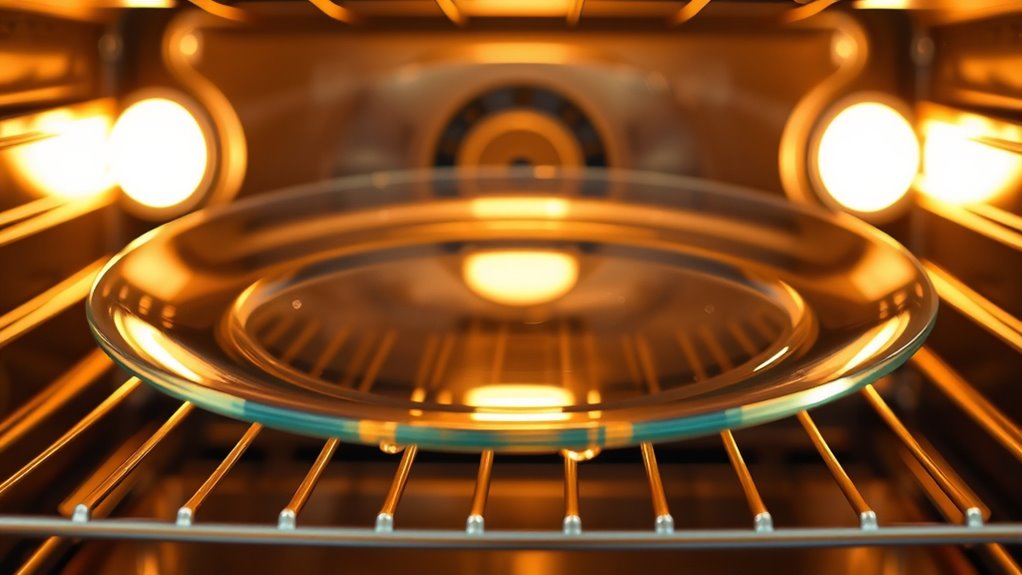
Not all glass plates are designed to withstand the high temperatures of an oven. When considering oven use, it’s essential to verify if your glassware is labeled oven-safe.
Many glass plates are thin or made from materials unsuitable for direct heat, risking breakage or shattering. Proper glass cleaning is vital before oven use—residue or dirt can cause uneven heating or damage.
Thin or unsuitable glass can break easily; clean thoroughly to prevent uneven heating or damage before oven use.
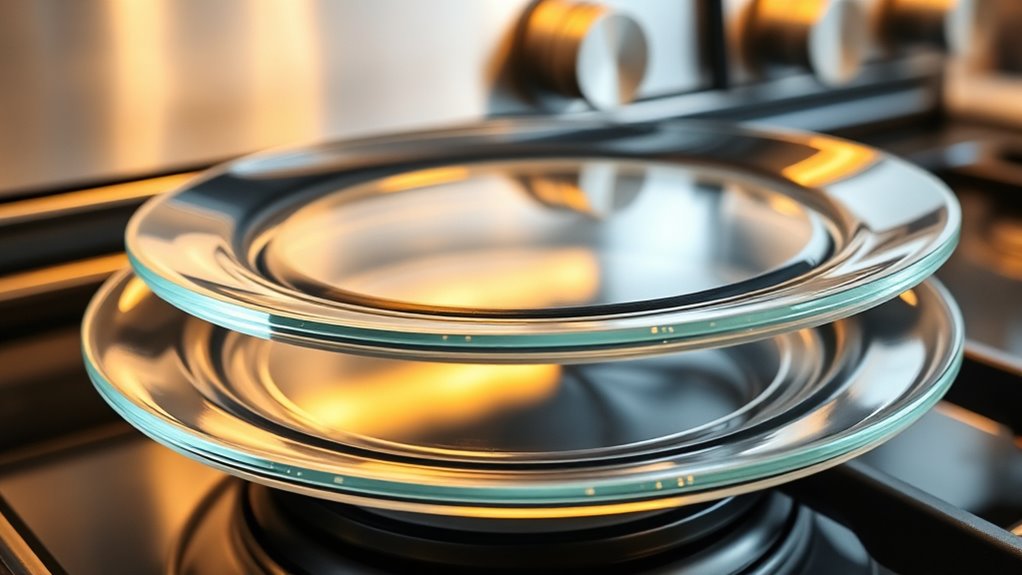
Moreover, plate stacking matters. Avoid stacking hot glass plates, as the weight and heat can stress the glass, leading to cracks. Always check manufacturer instructions for oven safety, as some glass types like tempered or borosilicate are more heat-resistant.
If you’re unsure, it’s best to err on the side of caution. Using non-oven-safe glass in the oven can be dangerous, resulting in broken glass and potential injuries. Make sure your glassware is explicitly labeled for oven use to guarantee safety and peak performance.
How to Identify Oven-Safe Glass Plates at Home
Wondering how to tell if your glass plates are oven-safe without a label? Look closely at any decorative patterns or color variations. Oven-safe glass usually has a uniform look, with consistent colors and designs.
If the decorative patterns are painted or printed on the surface, they might not handle high heat well and could peel or burn. But if the patterns are part of the glass itself, like etched or embedded designs, they’re more likely to be oven-safe.
Check for subtle color differences. Consistent coloring generally means the glass was made to withstand oven temperatures. Also, look at the edges—smooth, reinforced edges suggest the plate is durable enough for oven use.
When you’re unsure, do a simple heat test. Gradually warm the glass in a preheated oven at a low temperature. Then, check for any cracks or warping. Using these visual clues and cautious testing can help you confidently identify oven-safe glass plates at home.
Types of Glass: Tempered, Borosilicate, and Regular Glass Explained
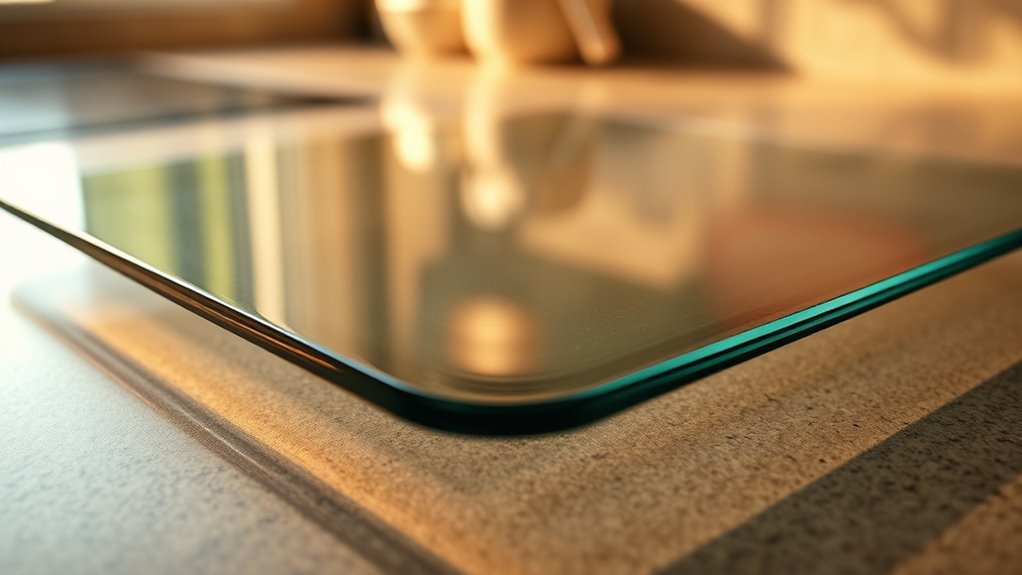
Understanding the different types of glass used for ovenware is important because each one has unique properties that affect safety and performance. Tempered glass is made through a heat process that makes it very resistant to sudden temperature changes.
Different oven-safe glasses vary in durability and safety based on their manufacturing processes.
Borosilicate glass is created with a special manufacturing process that gives it exceptional heat resistance, so it can handle thermal shocks without breaking. Regular glass, on the other hand, is less durable and more likely to crack when temperatures fluctuate.
Knowing these differences helps you pick the right type for your oven needs. Here are some key points to keep in mind:
- Tempered glass is designed to break into small, blunt pieces for safety.
- Borosilicate glass handles high heat and thermal shocks well.
- Regular glass has lower heat resistance and can shatter unexpectedly.
- The manufacturing process influences how durable oven-safe glass is.
- Always check if your glassware is oven-safe based on its heat resistance.
How to Use Oven-Safe Glass Plates Safely
Before you use your glass plate in the oven, it’s a good idea to check if it has an oven-safe label. This just helps make sure it’s meant for baking and won’t get damaged. Also, try not to expose the plate to sudden temperature changes. For example, don’t take a cold plate straight from the fridge and put it into a hot oven—that can cause it to crack.
When placing the plate in the oven, make sure it sits properly on the rack. Keep it away from direct contact with the heating elements to stay safe. Following these simple tips can help you use your oven-safe glass plates without any worries!
Check for Oven-Safe Label
Before using your glass plate in the oven, check for an oven-safe label or symbol on the bottom or packaging. This ensures your plate is designed to handle high temperatures safely. Look for symbols like a flame, oven, or words such as “oven safe.”
Confirming this helps prevent accidents, especially if your plate has unique designs like glass art or matches your kitchen decor. Not all glass plates are suitable for oven use, so verifying the label is really important.
It’s a simple step that can save you time and keep your kitchen safe. Always follow the manufacturer’s instructions for the best results and safety. This small check makes your baking experience worry-free and helps preserve your glass art pieces’ beauty.
Avoid Sudden Temperature Changes
Even if your glass plate is labeled oven-safe, it’s important to avoid exposing it to sudden temperature changes. Rapid shifts can cause cracking or shattering, ruining your kitchen look and making glass cleaning more difficult. To prevent this, gradually warm or cool your plate. Use a heat diffuser or place the plate in a preheated oven slowly.
Likewise, when removing it, let it cool down gradually before washing. Avoid placing cold glass in a hot oven to prevent thermal shock and cracking. Do not pour cold liquids on hot glass, as this can cause stress and breakage.
Always let your glass cool before cleaning to avoid sudden temperature stress. Using warm water for cleaning helps maintain the glass’s integrity and keeps it looking good.
Use Proper Placement
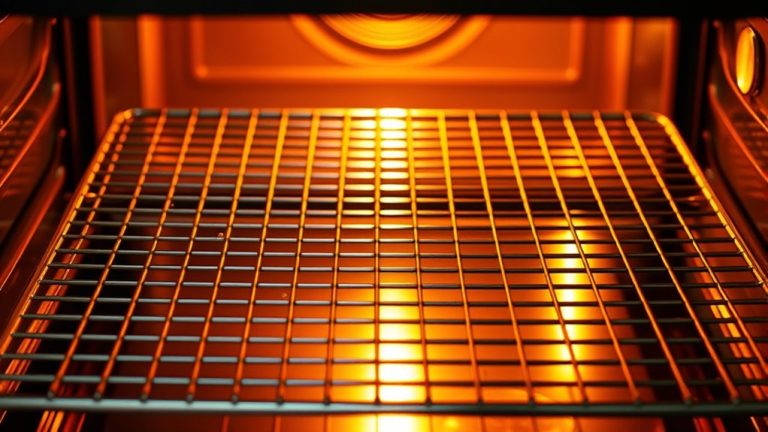
To guarantee your oven-safe glass plates stay intact and perform well, proper placement inside the oven is essential. Correct positioning helps prevent accidents and promotes glass maintenance, ensuring long-lasting use. Always place your glass plates on the center rack for even heat distribution.
Avoid overcrowding your oven with cookware, which can cause uneven cooking or cracking. Keep the glass away from direct flames or heating elements to prevent thermal shock. Use oven mitts when handling hot plates to avoid burns.
Common Mistakes That Can Break Your Glass Plate in the Oven
One of the biggest mistakes you might make is exposing your glass plate to sudden temperature changes. That can actually cause it to crack or shatter unexpectedly. So, it’s best to avoid taking a hot plate straight out of the oven and placing it on a cold surface or vice versa.
Also, using glass that isn’t oven-safe or stuffing too much onto the plate can lead to breakage while you’re cooking. It’s a good idea to check if your glassware is oven-friendly and not overload the plate.
Sudden Temperature Changes
Sudden temperature changes are one of the quickest ways to crack or shatter your glass oven plate. When exposed to rapid shifts, your plate experiences thermal shock, which can cause it to break. To avoid this, don’t transfer the plate directly from hot to cold or vice versa.
Be careful about placing a cold plate into a hot oven, adding cold liquids to a hot plate, or cooling a hot plate with cold water. Using the microwave before oven baking or exposing the plate to drafts or air conditioning can also cause problems.
These actions create uneven temperature distribution, increasing the risk of thermal stress and damage. Always allow your glass plate to warm or cool gradually for safe oven use.
Using Non-Oven Safe Glass
Have you ever used a glass dish that wasn’t labeled as oven-safe and wondered why it cracked or shattered during baking? Using non-oven safe glass can cause unexpected breakage because it’s often made from materials that aren’t as durable under heat.
These glasses often show color variations, which can indicate lower quality or different compositions that aren’t meant to handle oven temperatures. When exposed to high heat, non-oven safe glass can expand unevenly and crack.
That can lead to damage to your dish or even injury. Always check for labels or manufacturer instructions before using any glassware in the oven. The material’s durability really matters.
Oven-safe glass is specifically designed to handle thermal stress, unlike regular glass. To stay safe and avoid mishaps, stick to proper oven-safe glassware for baking.
Overloading the Plate
Overloading your glass plate might seem convenient, but it can quickly lead to cracks or breakage in the oven. Excess weight puts stress on the plate’s structure, which can reduce its durability and cause damage.
To keep oven safety intact, try to avoid these common mistakes:
- Piling too many heavy or dense foods on one plate
- Filling the plate beyond its recommended capacity
- Stacking multiple plates with food inside the oven
- Using the plate to carry large quantities at once
- Ignoring manufacturer weight limits and instructions
Care Tips to Keep Your Oven-Ready Glass Plates in Good Shape
To keep your oven-ready glass plates in good condition, handle them carefully and follow proper cleaning routines.
Avoid sudden temperature changes, like putting a hot plate into cold water, to prevent cracking. Let the plate cool before washing it to protect its integrity.
When cleaning, use warm water and a mild detergent. Steer clear of abrasive scrubbers that can scratch the surface.
Regular cleaning helps maintain clarity, making your dishes look even more appealing. Be sure to remove food debris or grease after use, especially before oven cleaning.
Use a soft cloth or sponge for thorough cleaning without applying too much pressure. Proper care extends the life of your glass plates and keeps them looking attractive for your next meal.
Alternatives to Glass Plates for Baking and Roasting
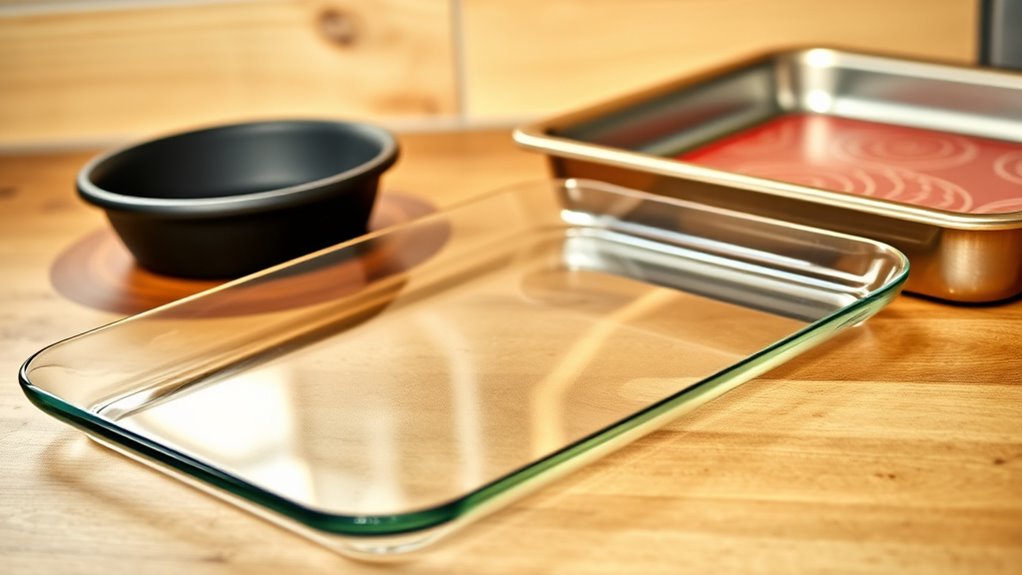
When looking for alternatives to glass plates for baking and roasting, you have several options, each offering unique benefits depending on your needs. Different materials can handle various oven temperatures and may need specific care.
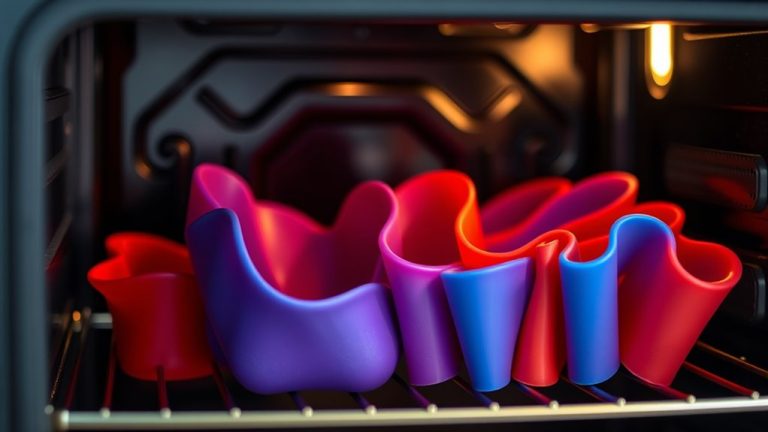
Ceramic and stoneware dishes heat evenly and are great for slow roasting. Metal pans are durable and heat up quickly, making them perfect for a variety of recipes. Silicone baking mats are non-stick, easy to clean, and flexible, which is handy for many baked goods.
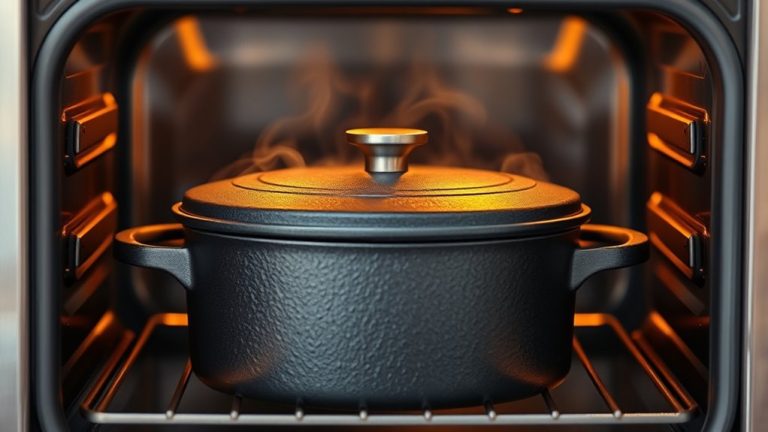
Cast iron skillets provide excellent heat retention and are ideal for searing and roasting. Silicone molds are lightweight and versatile, suitable for high oven temperatures too. Just remember to check the oven temperature limits for each material to avoid damage or safety issues.
Proper upkeep of your baking tools, like avoiding sudden temperature changes, helps them last longer and ensures even cooking every time.
Safety Tips for Baking With Glass Plates
When you’re baking with glass plates, it’s a good idea to preheat your oven gradually. This gentle warming helps prevent the glass from cracking unexpectedly. Also, double-check that your glass plates are oven-safe—that way, you’re not risking any dangerous breakage.
Preheat Gradually To Avoid Breakage
Preheating glass plates gradually is essential to prevent thermal shock and potential breakage. Sudden temperature changes can cause glass art or decorative panels to crack or shatter.
To stay safe, avoid putting cold glass directly into a hot oven. Instead, slowly warm the oven and glass to guarantee even heat distribution.
This helps preserve the integrity of your glassware and prevents costly accidents. Remember, even if your glass plate looks sturdy, quick temperature shifts can still cause damage.
Start with a cold oven and slowly increase the temperature. Avoid placing cold glass directly into a hot oven.
If your oven allows, use a gradual heating cycle. Check manufacturer instructions for specific guidelines.
Handle glass art carefully after baking to prevent stress cracks.
Use Oven-Safe Glass Only
Using only oven-safe glass guarantees your baked goods stay safe and intact. Non-oven-safe glass can shatter or crack under high heat, risking injury and ruining your food.
Always check for labels or symbols indicating the glass is oven-safe before baking. This is especially important if your glass plate has decorative patterns, as some decorations aren’t heat-resistant.
Proper glass cleaning is essential. Avoid abrasive scrubbers that can damage the surface, especially around decorative areas. Clean your glass thoroughly with mild soap and warm water, and dry it well before use.
What to Do If Your Glass Plate Cracks or Breaks
If your glass plate cracks or breaks, handle the situation carefully to prevent injury or more damage. First, remove the broken pieces from the oven carefully, wearing gloves if needed.
Dispose of the shards safely by wrapping them in newspaper or a thick cloth before throwing them away. Do not try to clean or reuse cracked plates, as cracks can hide bacteria and weaken the structure.
Wrap broken glass in newspaper or cloth before disposal to ensure safe, responsible cleanup.
Cracked glass plates can’t be safely customized or used for cleaning purposes, so it’s best to replace them promptly. Use a broom and dustpan to sweep up tiny shards.
Avoid running your fingers over cracked areas to prevent cuts. Wash your hands thoroughly after cleanup. Check your other plates for signs of damage as well.
It’s a good idea to keep a stock of replacement oven-safe glass plates for convenience. Handling broken glass with caution keeps you safe and helps maintain your kitchen tools’ integrity.
Expert Tips for Baking Successfully With Glass Plates
To achieve perfect results when baking with glass plates, it’s important to handle them properly and make the most of their features. Start by choosing a glass plate with the right thickness; thicker glass distributes heat better and is less likely to crack under high temperatures.
Pay attention to decorative patterns on the glass, as they can sometimes cause uneven heating. Make sure these patterns won’t interfere with even cooking. Always preheat your oven and gradually place the glass plate inside to avoid thermal shock.
Use oven mitts when handling hot plates to stay safe. It’s best to avoid sudden temperature changes, like going straight from the fridge to the oven. Keep in mind that some decorative patterns might fade or crack over time, especially with frequent use.
Proper care and understanding of your glass plate’s properties will help you bake confidently. With the right techniques, you’ll be able to create delicious, evenly cooked dishes every time.
Frequently Asked Questions
Can I Use Any Glass Plate in the Oven if It Looks Oven-Safe?
You can’t assume any glass plate is oven-safe just because it looks like it. Check the glass thickness and material composition first. Thicker glass and borosilicate or tempered materials are better suited for oven use.
Regular glass or thin plates might crack or shatter under heat. Always verify manufacturer instructions before using. Avoid using non-oven-safe glass to prevent accidents or damage.
Safety comes first when selecting oven-ready glassware.
How Do I Prevent Thermal Shock When Removing Glass Plates From the Oven?
A stitch in time saves nine, so to prevent thermal shock when removing glass plates from the oven, handle them carefully. Use oven mitts to protect your hands and avoid sudden temperature changes.
Let the plate cool gradually on a heat-resistant surface. Don’t plunge hot glass into cold water, as this can cause cracking. Always check for cracks before handling.
Following these simple safety tips helps safeguard your glassware and prevents accidents. Taking your time makes all the difference in keeping your glass plates intact.
Are There Specific Cleaning Methods to Extend the Life of Oven-Safe Glass Plates?
To extend the life of your oven-safe glass plates, avoid harsh scrubbing and opt for dishwasher cleaning with gentle detergent. Using a silicone coating on the plates can provide extra protection against chips and scratches.
Regularly inspect for cracks and hand wash when necessary, especially after baking at high temperatures. These practices help prevent damage, ensuring your glass plates stay durable and safe for future use.
Can Glass Plates Go From Freezer to Oven Safely?
Did you know that most oven-safe glass plates can go directly from freezer to oven? You should check for microwave compatibility and dishwasher safety first, though.
If the plate is labeled oven-safe, it’s designed to handle quick temperature shifts. Always avoid sudden temperature changes to prevent cracking.
Using oven-safe glass plates safely from freezer to oven guarantees you get versatile, durable dishware that meets your needs.
What Signs Indicate a Glass Plate Is No Longer Safe to Use?
If your glass plate shows cracks, chips, or shattered pieces, it’s no longer safe to use. These signs can compromise oven safety and glass durability.
You might also notice warping or cloudiness, which indicates a weakened structure. Always inspect your glassware before using it.
Avoid exposing it to sudden temperature changes. When in doubt, replace the plate. Using compromised glass can cause accidents and damage your oven.
Conclusion
So, now that you’re armed with the knowledge to navigate the delicate dance of glass in the oven, you can confidently turn up the heat without fear.
Think of your glass plates as trusted companions—fragile yet resilient—ready to transform your baking adventures. Handle them with care, respect their limits, and they’ll serve you well.
They can bake your treats to perfection, like a master artist shaping a masterpiece from fragile glass and fiery passion. Glass plates in the oven are a fantastic tool when used correctly.